

Aave Price: Standard Chartered Says AAVE Could Hit $3,500 by 2030 — Here’s How It Gets There
TLDR
- Standard Chartered analyst Geoff Kendrick initiated coverage of AAVE with a $3,500 price target by end of 2030.
- The target implies roughly a 50x increase from AAVE’s current price near $70–$76.
- Kendrick says Aave has recovered from April’s KelpDAO exploit, which put the protocol at risk of $230 million in losses.
- The forecast relies on tokenized real-world assets growing 37x by 2030, reaching around $2.7 trillion.
- Staged targets place AAVE at $180 by end of 2026, rising to $600, $1,200, and $2,200 in subsequent years.
Standard Chartered’s head of digital assets research, Geoff Kendrick, has initiated coverage of Aave with a long-term price target of $3,500 by the end of 2030. At AAVE’s current price near $76, that would represent a roughly 50-fold increase.
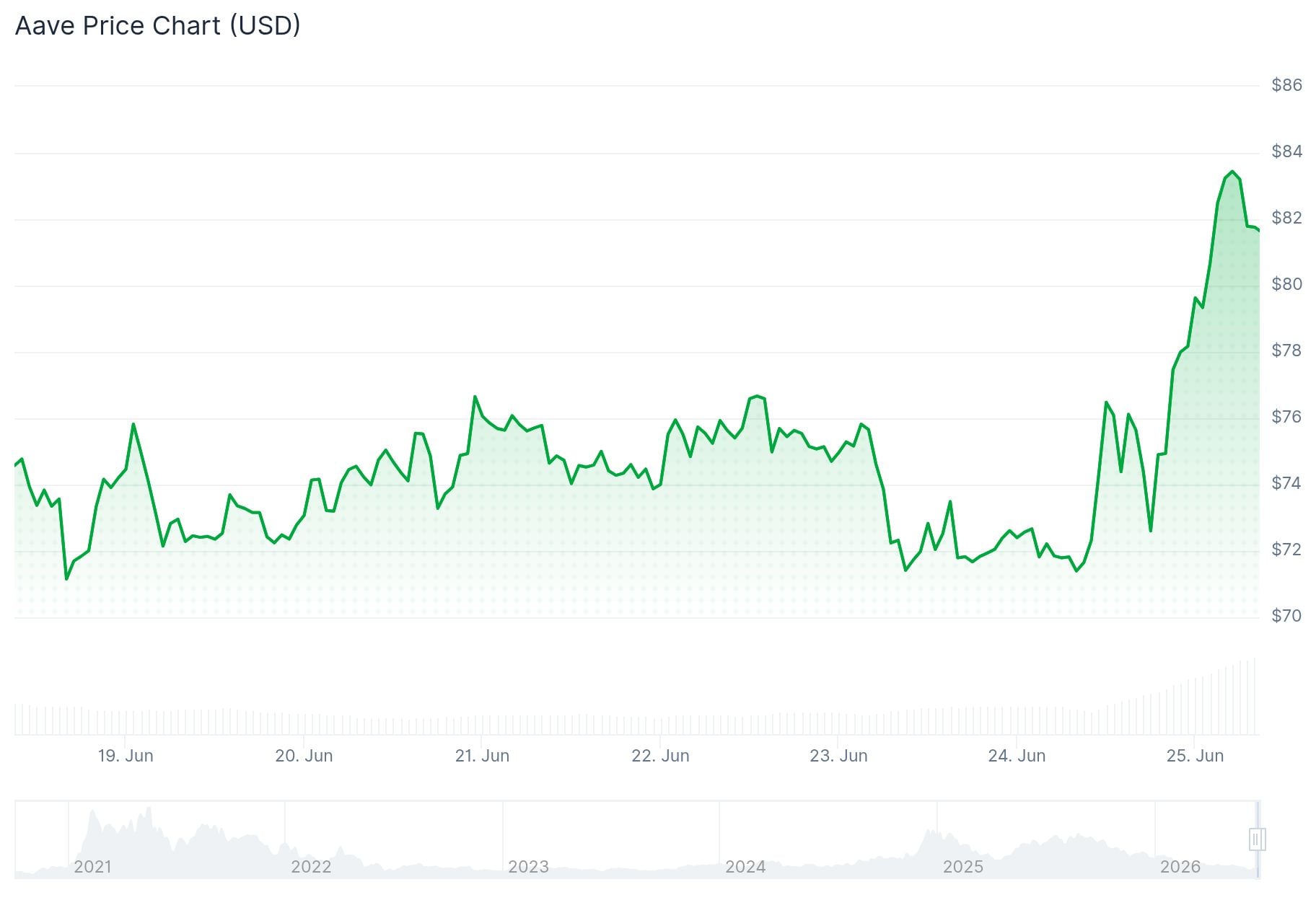 Aave Price
The forecast comes with a staged roadmap. Kendrick expects AAVE to reach $180 by end of 2026, $600 by end of 2027, $1,200 by end of 2028, and $2,200 by end of 2029 before hitting $3,500 in 2030.
Kendrick described Aave as an automated, blockchain-based bank. It runs entirely through smart contracts, with no employees or discretionary lending decisions involved.
At its peak in October 2025, Aave held around $75 billion in deposits. Kendrick noted that figure would have placed the protocol among the 30 largest banks in the United States by deposit size.
The protocol took a hit earlier this year. In April, attackers drained roughly $292 million in rsETH from a LayerZero-powered bridge and used the stolen tokens as collateral on Aave and other DeFi platforms.
The incident put Aave at risk of up to $230 million in losses. Deposits fell sharply, and active loans declined. Aave froze rsETH-related markets in response.
Tokenized Assets and Aave Horizon
Standard Chartered’s long-term case depends heavily on growth in tokenized real-world assets. The bank projects those assets will increase 37 times by 2030, reaching around $2.7 trillion.
Kendrick said Aave’s revenue model ties directly to lending volume and deposits, meaning that growth in the tokenized asset market could translate into higher protocol income and, in turn, gains for the AAVE token.
Aave Horizon, a permissioned lending platform, is part of that story. It is designed to let approved institutions borrow against tokenized real-world assets. As of the end of May, Horizon had around $163 million in active loans, compared to a wider tokenized real-world asset market estimated at $30 billion.
Aave’s GHO stablecoin also plays a role. GHO supply has grown to around $600 million since its 2023 launch. All GHO-related fees go directly to the protocol rather than being shared with outside liquidity providers.
Technical Picture and Other Analyst Views
AAVE has recovered from early-June lows near $58–$60, trading around $76 at the time of writing. That puts it around 6.5% higher over the past 24 hours.
The 4-hour chart still shows a broader bearish structure following a steep drop from above $100 in May. Key resistance sits near $75.50–$76.00. A clean break above that level could open a move toward $78–$80.
Grayscale Research Estimate
Grayscale Research has separately said AAVE may be undervalued near $75. The firm estimates fair value could rise toward $175 within one year, based on a scenario involving stronger regulatory clarity and increased tokenized asset adoption.
Standard Chartered views current deposit levels as a trough and expects capital to return to the protocol as conditions in DeFi improve.
At press time, AAVE was trading near $76.49.
The post Aave Price: Standard Chartered Says AAVE Could Hit $3,500 by 2030 — Here’s How It Gets There appeared first on CoinCentral.


You May Also Like

Top U.S. economist says Gold reversal is imminent

Bitcoin, Gold, and U.S. Stocks Dive as Trump Pledges to Hit Iran ‘Extremely Hard’

Dow Jones futures plunge as risk aversion increases after Trump’s comments



