

Oil Prices Drop Back to Pre-War Levels as Hormuz Traffic Recovers
TLDR
- Brent crude fell to $72.42 and WTI to $69.27, the lowest since before the U.S.-Iran conflict began
- Oil has now dropped for four straight sessions, erasing most of the geopolitical risk premium built up during the war
- Tanker traffic through the Strait of Hormuz is recovering, with about 20 million barrels exiting daily under military protection
- Goldman Sachs says the market is pricing in expected future surpluses as Gulf oil exports rebound to 63% of normal levels
- U.S. crude inventories fell by 6.1 million barrels, hitting the lowest level since January 2025
Oil prices have fallen back to where they were before the U.S.-Iran war, as tanker traffic through the Strait of Hormuz picks up and supply fears ease.
Brent crude dropped 1.8% to $72.42 a barrel on Thursday. West Texas Intermediate fell 1.5% to $69.27. Both contracts hit their lowest levels since February 27, the day before the conflict started.
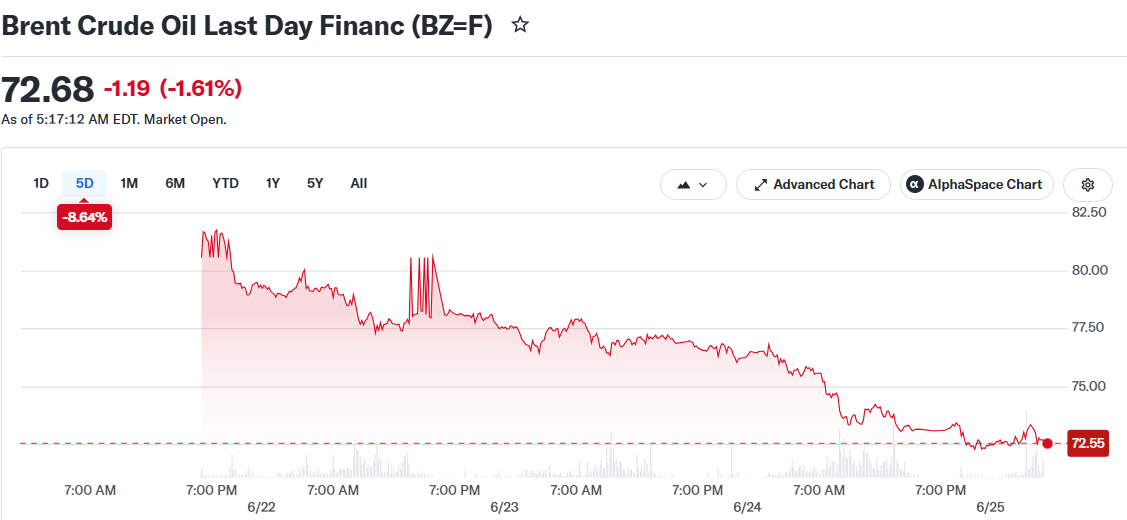 Brent Crude Oil Last Day Financ (BZ=F)
Prices fell nearly 4% in the previous session alone. Most of the risk premium that built up during the war has now been wiped out.
Hormuz Traffic Returns to Near-Normal
The Strait of Hormuz is one of the most important oil shipping routes in the world. About one fifth of global oil consumption passes through it each day.
U.S. Energy Secretary Chris Wright said flows through the strait were close to normal. Around 20 million barrels of oil exited the waterway in the past 24 hours, moving under military protection.
Shipping data showed more tankers resuming transit through the strait. Several vessels that had been stuck in the Gulf also restarted their voyages.
Expectations around Iranian oil exports also helped push prices lower. Temporary U.S. sanctions relief and easing regional tensions raised hopes that Iranian supply could return to the market sooner than expected.
This is a sharp reversal from earlier this year. At the height of the crisis, Brent crude climbed above $120 a barrel as Hormuz disruptions raised fears of a prolonged supply crunch.
Goldman Sachs analysts said the market is “extrapolating the swift recovery of Mideast supply and already pricing expected future surpluses.” The bank said total Gulf oil exports have rebounded to 63% of normal levels.
Goldman also said the market is moving away from the idea that long-dated oil prices need to carry a lasting security premium.
U.S. Inventory Data Adds Mixed Signal
U.S. crude inventory data released Wednesday added another layer to the picture.
Commercial crude stocks fell by 6.1 million barrels for the week ending June 19, bringing total inventories to 412.1 million barrels. That is the lowest level since January 2025 and a bigger draw than analysts had forecast.
Stocks at the Cushing, Oklahoma delivery hub also fell by 1.1 million barrels, dropping to the lowest level since 2014.
On the other hand, gasoline inventories rose by 2.1 million barrels. Distillate stocks, which include diesel and heating oil, increased by 3.1 million barrels.
Analysts cautioned that the situation remains fragile. Any renewed tensions between the U.S. and Iran could quickly bring supply fears back.
As of the latest session, oil prices continue to reflect a market that believes the worst of the supply disruption may be over.
The post Oil Prices Drop Back to Pre-War Levels as Hormuz Traffic Recovers appeared first on CoinCentral.


You May Also Like

Supreme Court Allows Trump Admin To Remove Deportation Protections For Syrians & Haitians

Hormuz traffic sees sharp uptick but not back to normal

Go Ride Launches Corporate Fleet Program for World Cup 2026 Ground Transport in Los Angeles



