

When to Leave Your Portfolio Alone
I used AI as an editorial assistant to help organize and refine my thoughts; the underlying ideas and personal experiences remain my own.
Rebalancing sounds simple. Pick your target allocation and, whenever a holding drifts too far, trade back to target.
That’s how I thought about it as I started managing my risk portfolio. The problem was that I never stopped to ask what “too far” meant. I found myself reacting to routine market movements that had little effect on my long-term plan. Eventually, I realized the real challenge wasn’t how to rebalance. It was knowing when to leave my portfolio alone.
My first change was to stop thinking of a target as a precise number and start thinking of it as a range. If I wanted a fund to be 20% of my portfolio, there was no reason to trade the moment it reached 20.5%. Markets are noisy. My portfolio didn’t need constant correction.
Later, I came across Larry Swedroe’s rebalancing guideline, often called the 5/25 rule. It says to rebalance when a holding moves either five percentage points from its target or by 25% of its target allocation, whichever comes first. The second part is what appealed to me. A 20% allocation gets a four-percentage-point band, while a 4% allocation gets just a one-point band. Each is allowed to drift by the same relative amount.
That simple idea changed how I think about rebalancing. Instead of reacting to every market move, I now wait until the portfolio has drifted in a meaningful way.
Over time, I learned two more lessons. First, I ignore tiny trades. If the adjustment is insignificant, it’s usually not worth the effort. Second, I let cash flows do as much of the rebalancing as possible. New contributions go to whichever holdings are furthest below target. Withdrawals come from those furthest above target. Often, that restores balance without selling appreciated investments.
Finally, I pay attention to taxes. The same rebalance can produce very different tax bills depending on which account I use and which shares I sell. Whenever possible, I rebalance where the tax consequences are smallest.
I don’t pretend it’s the only sensible approach. But it has one quality I value above all: most of the time, it tells me to do nothing. That’s exactly what I want. A good rebalancing strategy shouldn’t keep me busy. It should keep me disciplined.
The post When to Leave Your Portfolio Alone appeared first on HumbleDollar.
You May Also Like

What Makes the Best Bitcoin App in the USA? A Beginner’s Guide for 2026

SpaceX Set to Join Nasdaq-100 in One of the Fastest Index Additions Ever
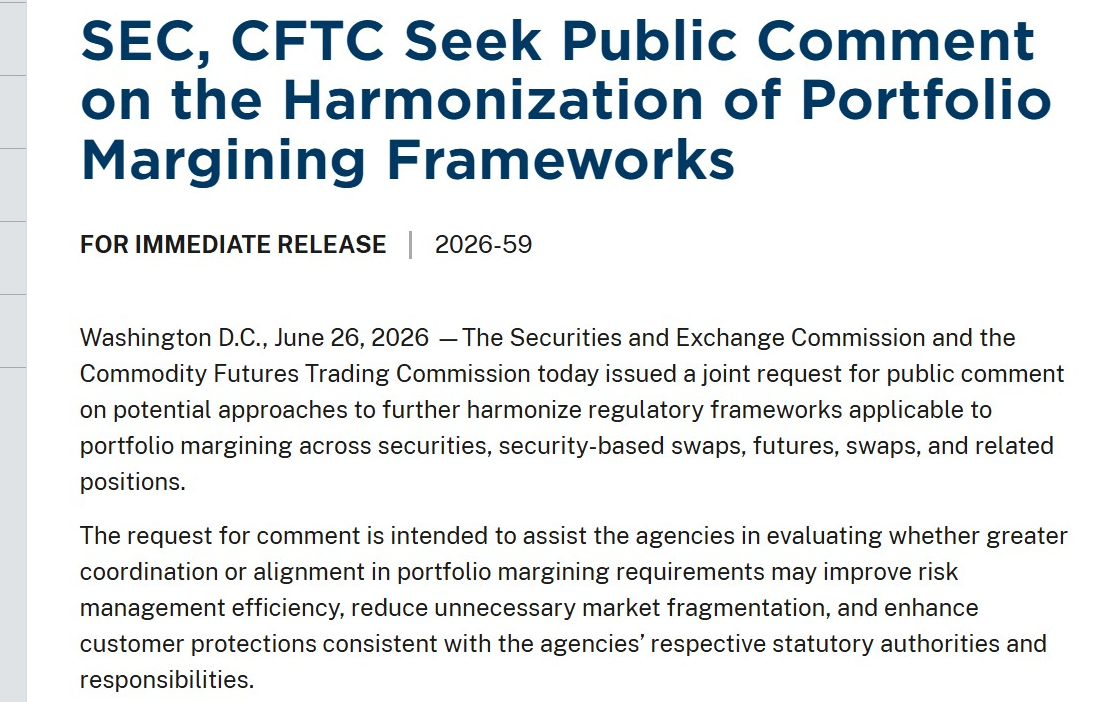
Crypto News: SEC and CFTC Seek Public Input on Crypto Derivatives Rules

