Vinny Lingham Says Saylor May Hurt Bitcoin More than FTX
Vinny Lingham, the co-founder of Praxos Capital and a figure once called the “Oracle” in crypto circles, recently revisited a bold prediction he made two years ago. Appearing on Laura Shin’s Unchained podcast on June 25, 2026, Lingham explained why he still believes Michael Saylor’s actions could harm bitcoin more than the FTX collapse did.
Lingham first posted this warning on X in October 2024. At the time, MicroStrategy — now known as Strategy — was trading near its all-time high of $473.83. The prediction drew plenty of mockery. But as of this week, MSTR has dropped over 80% from that peak, sitting around $90.70. Lingham noted that what seemed like an unpopular opinion 18 months ago is now sparking serious questions.
The ‘Saylor Scheme’ and Complex Capital Structures
Lingham doesn’t call Strategy a Ponzi scheme outright. Instead, he’s coined his own term: a “Saylor scheme.” He describes a capital structure built on debt and multiple layers of preferred securities. “He issued STRC, STRD, STRK … and several others. When one offering stopped working, he simply introduced another,” Lingham said.
One of those preferred shares, STRC, has fallen sharply. It closed at $75.69 after dipping below $74 earlier this week. Lingham doesn’t expect it to recover. “I don’t believe STRC ever returns to $100,” he said, adding that he’d bet it never trades back at par again.
Zugzwang and the Chess Endgame
Strategy recently raised $335 million by selling 2.7 million shares of common stock. About $300 million of that went to building cash reserves, which now stand at roughly $1.4 billion. That cash is expected to cover preferred dividend obligations for about 10 months. But Lingham argues the market has responded by selling both MSTR and STRC anyway.
He believes Strategy’s shift to bimonthly dividend payments made things worse. More frequent payments mean less time for management to react when conditions deteriorate. Each cycle tightens the pressure on cash reserves.
Lingham described Saylor’s situation using a chess term. “Michael is now in what’s known in chess as zugzwang,” he said. “Every move available to him is a losing move. If he raises the dividend yield, he shortens his cash runway. If he issues more shares, he dilutes common shareholders further.”
The $6.7 Billion Debt Problem
During the podcast, Shin highlighted concerns raised by Matt Walsh of Castle Island Ventures. Strategy has about $6.7 billion in convertible notes outstanding, many with put rights that allow holders to demand cash repayment if the notes aren’t converted or refinanced. Walsh estimated that covering the first three maturities through June 2028, at a bitcoin price around $60,700, would require selling approximately 74,000 BTC. Covering the full schedule would need roughly 111,000 bitcoin.
Lingham responded by saying the market is already pricing that risk in. “Strategy sold just 32 bitcoin and the market reacted negatively,” he said. “Imagine what happens if the company eventually has to sell tens of thousands of bitcoin.”
The Reflexive Loop in Reverse
Lingham argues that Strategy’s aggressive accumulation created a self-reinforcing cycle that worked on the way up. The company bought bitcoin, pushing prices higher, which increased MSTR’s value, allowing it to issue more shares and buy more bitcoin. Now, he says the cycle is running in reverse.
“Once Strategy stops being the biggest buyer of bitcoin, selling pressure starts outweighing buying pressure,” he explained. “Liquidity disappears. The largest source of demand is gone.”
He also noted that Strategy’s mNAV is around 1.06. Historically, that’s a level where similar investment vehicles trade to a discount. Lingham thinks a value closer to 0.90 would make more sense given the circumstances.
What Comes Next
Lingham told Shin that the healthiest outcome would be for Saylor to stop buying bitcoin, stop issuing new shares, preserve cash, and wait for a market cycle recovery. But he doesn’t expect that to happen. “I don’t think he’ll admit that the strategy needs to change,” Lingham said. “I think hubris plays a significant role here.”
The post Vinny Lingham Says Saylor May Hurt Bitcoin More than FTX appeared first on TheCryptoUpdates.
You May Also Like
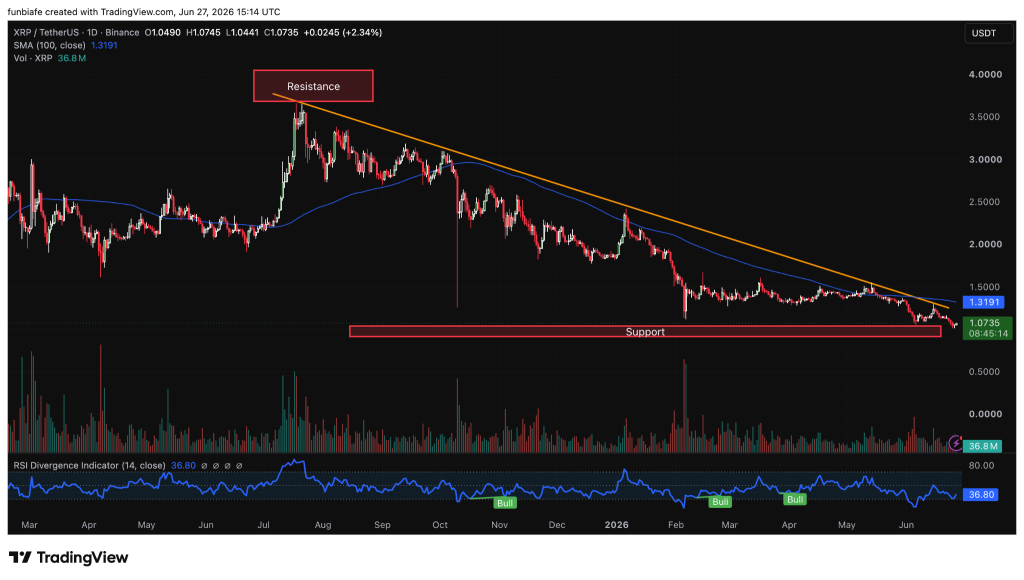
What Happens to the XRP Price if the Crypto Bear Market Gets Worse?

Solana SOL Reclaims $72, But Fading On-Chain Metrics Signal Weakening DEX Momentum

Bitcoin Price Prediction: Analysts Believe BTC Bottom Window Is Open