Why Saving In Your 20s May Matter Less Than Personal Finance Gurus Think
The post Why Saving In Your 20s May Matter Less Than Personal Finance Gurus Think appeared first on 24/7 Wall St..
- Entry-level workers earning $11.24/hour often can't afford investing alongside basic expenses, contradicting advice that young people must start investing immediately.
- Peak earning years in your forties and fifties build more retirement wealth than early-career contributions, challenging the "start young or lose" narrative.
- Late starters reaching $400,000 by sixty can achieve sustainable retirement income through yield portfolios and catch-up 401(k) contributions, eliminating the need for $1 million.
- Are you ahead, or behind on retirement? SmartAsset's free tool can match you with a financial advisor in minutes to help you answer that today. Each advisor has been carefully vetted, and must act in your best interests. Don't waste another minute; learn more here.
Conventional advice tells 22-year-olds to move heaven and earth to save a few hundred dollars a month because those early dollars may eventually compound into a millionaire’s retirement. The implied message is that a 45-year-old who failed to do the same has already fallen irretrievably behind. The math behind compounding is real. The reality of what is possible at both ends of the calendar is far less certain.
The Broke Decade
Personal finance advice often assumes young adults have money available to invest if only they would make better choices. In reality, many workers spend their twenties building careers, paying rent, repaying student loans, relocating for opportunities, raising children, or simply covering rising living costs. Housing and healthcare absorb an enormous share of household budgets, while wages in many entry-level fields leave little room for aggressive saving.
Just as important, these years are often filled with experiences that cannot be repeated later: college friendships, dating, marriage, young children, travel, and the early years of building a life. Many people understand the value of investing but are unwilling to sacrifice meaningful experiences in their twenties for the sake of a larger portfolio forty years in the future. That is not necessarily irresponsibility. It is an acknowledgment that opportunity cost exists outside a spreadsheet. Money compounds, but so do relationships, memories, skills, and experiences. Some of the decisions that produce the richest lives generate little immediate financial return, yet become impossible to recreate later.
The Breakthrough Decades
For many workers, the most powerful wealth-building years are not their twenties but their forties and fifties. Careers mature, incomes rise, debts shrink, and children often become more financially independent. The same person who struggled to save a few hundred dollars a month at age 25 may suddenly find they can invest a thousand or more each month at age 45. Retirement balances tend to accelerate during these years because earning power, not just compounding, becomes the dominant force.
Three Investors, Three Paths
Investor A starts at age 25 and contributes $300 per month for 42 years. Assuming a 7% annual return, the account grows to roughly $900,000 by age 67.
Investor B does nothing until age 40, then invests $2,000 per month during peak earning years. Despite starting 15 years later, the larger contributions grow the account to roughly $1.8 million by age 67.
Investor C waits until age 50, maximizes available 401(k) contributions, uses catch-up provisions, and takes advantage of the enhanced catch-up limits available in the early sixties. Even with a very late start, the account can still finish with well over $1 million.
The lesson is not that time does not matter. It is that contribution size matters too. A modest saver who starts early and saves consistently does not automatically beat a high-income saver who starts later. Peak earning years can be far more powerful than many retirement illustrations suggest.
Reframing Around Income, Not Balance
The numbers change once retirement begins. During the accumulation years, the examples above assume roughly 7% annual total returns. After retirement, the question is no longer how fast the portfolio grows but how much income it produces. That is where yield enters the picture. A retiree with a $900,000 portfolio may choose a dividend-growth strategy yielding around 3.5%, a moderate-income strategy yielding 5% to 7%, or a higher-yield approach that produces more immediate income but carries greater risk.
A late starter who accumulates $400,000 by age 60 can build a yield-focused portfolio rather than chase a million-dollar number. At a 3.5% yield from dividend-growth stocks or broad dividend ETFs, $400,000 produces about $14,000 a year with income that may continue rising over time. At 6%, the same capital generates roughly $24,000 annually from a mix of REITs, preferred shares, and other income-oriented investments, though growth tends to slow. At 10%, the portfolio can produce $40,000 a year, but the risk of dividend cuts and principal erosion rises substantially. Combined with Social Security, even a portfolio far below the traditional seven-figure target can provide meaningful retirement income.
The counterintuitive piece: a 3.5% yield growing 8% annually doubles the income in nine years. A 12% yield with no growth stays flat or declines. Lower yield often produces more income a decade out.
The Counterargument
None of this means the traditional advice is wrong. The ideal path is not Investor A, B, or C in isolation. It is a combination of all three. Someone who begins investing modestly in their twenties, increases contributions as income rises in their forties and fifties, and then takes full advantage of catch-up provisions in their sixties will almost always finish with the largest portfolio. Starting early remains valuable because time is an asset no investor can replace.
The mistake is assuming that anyone who missed those early years is doomed. High earners, disciplined savers, dual-income households, and workers who maximize their peak earning years can still build substantial retirement wealth despite a late start. The gap is real, but it is often much smaller than people fear.
What Actually Wrecks Retirements
Late starts get blamed, but the real culprits often sit elsewhere. Lifestyle inflation absorbs every raise. High-interest credit balances erase compounding before it begins. Hardship 401(k) withdrawals ran far above historical norms in recent years. Panic selling locks in losses. Divorce can split assets in half. A major health crisis can overwhelm even careful planning. Supporting adult children indefinitely can drain decades of savings. Retiring too early can leave a portfolio supporting more years and on lower Social Security checks than it was designed for. Each of those risks can do far more damage to retirement security than simply starting to invest at age 40 instead of age 25.
Three Actions for Early Savers
If you’re in your 20s and looking to scrounge up funds to make compounding work in your favor, take these actions today:
- Start with a contribution you can sustain. A consistently $50 or $100 a month beats an ambitious goal that lasts only a few paychecks.
- Increase savings as your income rises. Don’t let your lifestyle increase without increasing savings proportionately.
- Invest in your future earning power. Education, certifications, apprenticeships, and career-building experiences often generate returns far greater than what a small investment account can produce in your twenties.
Three Actions for Late Starters
- Calculate actual annual spending, not salary. The replacement number is often smaller than the income number, which shrinks every required capital target above.
- Model the four-year window between ages 60 and 63 where the law allows $35,750 a year into a 401(k). For high earners, that single stretch reshapes the retirement balance.
- Compare the 10-year total return of a dividend growth fund yielding around 3.5% against a high-yield fund near 10% before assuming the higher yield produces more lifetime income.
If You’ve Been Thinking About Retirement, Pay Attention (sponsor)
Retirement planning doesn’t have to feel overwhelming. The key is finding expert guidance, and SmartAsset’s simple quiz makes it easier than ever for you to connect with a vetted financial advisor. Here’s how:
-
Answer a Few Simple Questions.
-
Get Matched with Vetted Advisors
-
Choose Your Fit
Why wait? Start building the retirement you’ve always dreamed of. Get started today! (sponsor)
The post Why Saving In Your 20s May Matter Less Than Personal Finance Gurus Think appeared first on 24/7 Wall St..
You May Also Like

Report: Q2 2026 Becomes Worst Quarter Ever for Crypto Hacks

Supreme Court quietly doubling its police force — and 'loathes' acknowledging it: report
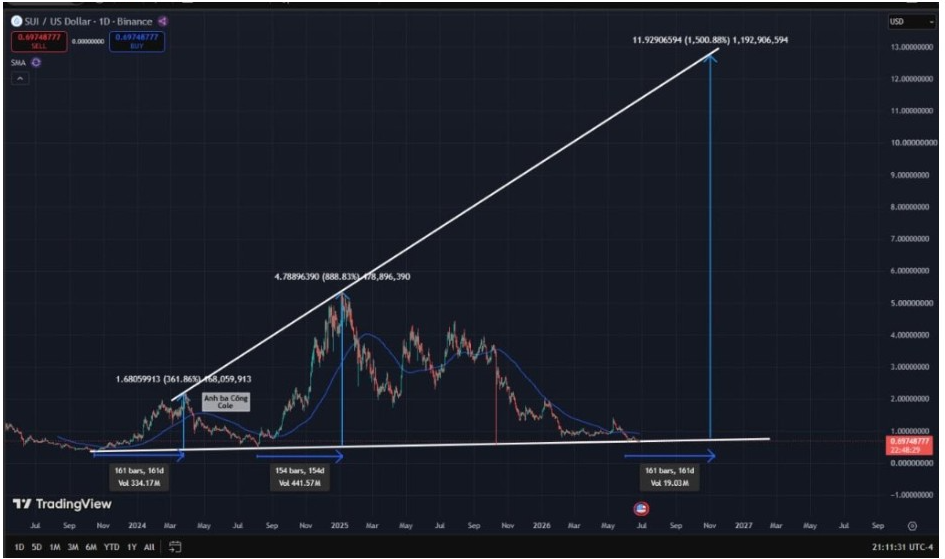
SUI Price Holds Near $0.70 as Analysts Target a Recovery Toward $0.84