An Italian tech company just pulled off one of the most striking stock market debuts of 2026. Bending Spoons, the Milan-headquartered app giant, completed its BendingAn Italian tech company just pulled off one of the most striking stock market debuts of 2026. Bending Spoons, the Milan-headquartered app giant, completed its Bending

Bending Spoons IPO Nasdaq: $18.4B valuation dwarfs $11B private round
For feedback or concerns regarding this content, please contact us at crypto.news@mexc.com
Bending Spoons IPO Nasdaq

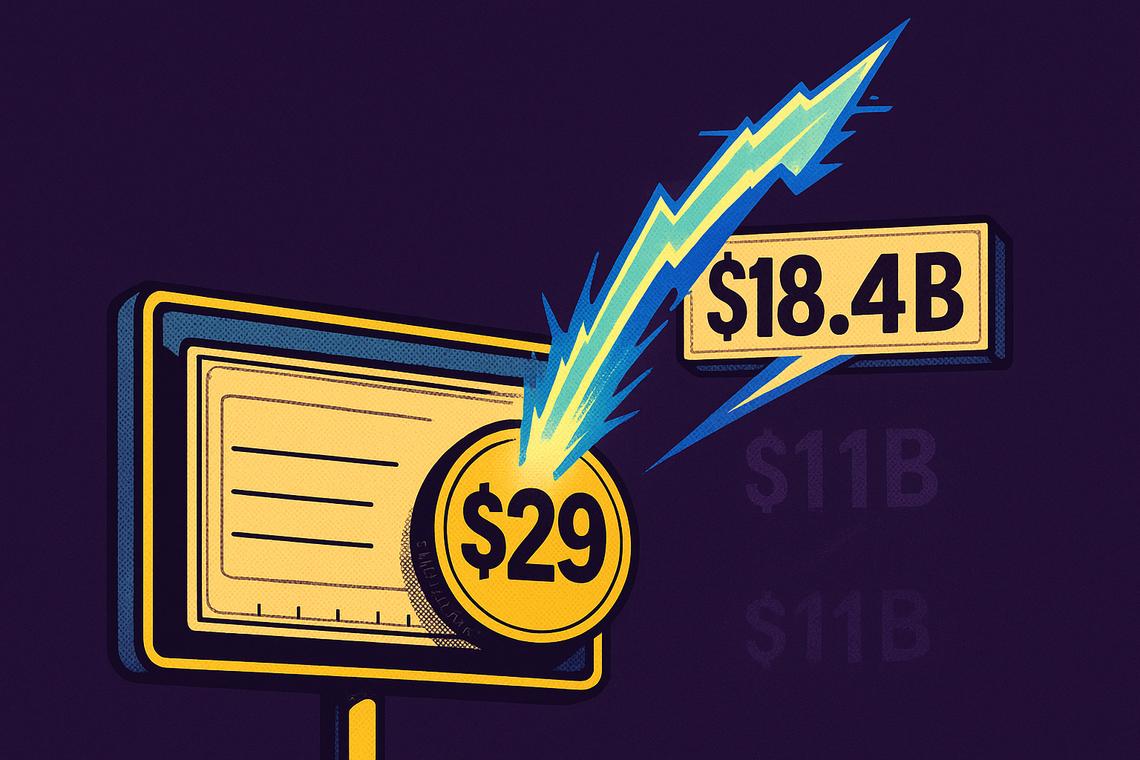
An Italian tech company just pulled off one of the most striking stock market debuts of 2026. Bending Spoons, the Milan-headquartered app giant, completed its Bending Spoons IPO on Nasdaq with shares priced at $29 each — above the previously announced $26–$28 range — and walked away with a valuation of approximately $18.4 billion. That figure alone tells a story: it’s a dramatic jump from the $11 billion valuation attached to the company’s last private financing round in 2025.

Key takeaways

  • Bending Spoons priced its Nasdaq IPO at $29 per share, above the initial $26–$28 range, raising $1.68 billion from the sale of 57,971,015 ordinary shares.
  • The company’s IPO valuation reached approximately $18.4 billion, up sharply from its $11 billion private valuation in 2025.
  • Bending Spoons closed 2025 with $2.6 billion in revenues and a $500 million profit, underscoring the scale of its acquisition-driven model.
  • The group’s app portfolio serves more than 400 million monthly active users and 10 million paying customers across platforms including Vimeo, WeTransfer, and Evernote.
  • The company was founded in 2013 by five entrepreneurs under 30, including Luca Ferrari and Francesco Patarnello, and is now backed by Goldman Sachs, JPMorgan, Baillie Gifford, and former Apple CFO Luca Maestri.

Bending Spoons Debuts on Nasdaq with a Headline-Making Valuation

The numbers behind this listing are hard to ignore. The offering raised $1.68 billion through the sale of 57,971,015 ordinary shares — of which 34,398,640 came directly from Bending Spoons itself and 23,572,375 from existing selling shareholders. The closing was scheduled for July 2, 2026.

Pricing above the initial range is a meaningful signal. It indicates that institutional demand was strong enough to push underwriters past their conservative opening estimate — a vote of confidence that the $18.4 billion valuation wasn’t just acceptable to the market, but actively sought.

A Wall Street Lineup Behind the Deal

Goldman Sachs International, JPMorgan, and Allen & Company LLC served as joint lead book-running managers. The broader syndicate included Wells Fargo Securities, Bank of America Securities, Jefferies, Evercore ISI, BNP Paribas, Mizuho, Societe Generale, Crédit Agricole CIB, Intesa Sanpaolo, UniCredit, and Banca Akros – Banco BPM Group. The Italian banking presence in the syndicate — Intesa Sanpaolo, UniCredit, and Banca Akros — reflects the company’s roots and the domestic pride attached to this listing.

According to Reuters, Bending Spoons was expected to open roughly 14% above its IPO price in Nasdaq debut trading, adding further weight to the already elevated valuation set at pricing.

From Copenhagen to Milan: The Founders Behind the Company

Bending Spoons was founded in 2013 in Copenhagen by five entrepreneurs, all under 30 at the time. Luca Ferrari, originally from Settimo di Pescina in the Veronese countryside, and Francesco Patarnello from Padua are among the most publicly associated names. The founding team also included Matteo Danieli from Vicenza, Luca Querella from Turin, and Tomasz Greber, the sole non-Italian member of the group, who is Polish.

The company eventually relocated its headquarters to Milan, where it operates today. The story of five young founders building an $18.4 billion public company in just over a decade is, by any standard, an exceptional one — and it raises obvious questions about what made the model work so reliably.

The Acquisition Engine: How Bending Spoons Actually Operates

The core of Bending Spoons’ strategy is straightforward to describe but difficult to execute: acquire technology companies, restructure them for higher profitability, and redeploy the resulting cash flows into new acquisitions. It’s a compounding flywheel that the company has now run through more than 50 deals.

The portfolio reads like a directory of once-iconic internet brands. Acquisitions include AOL, Vimeo, Brightcove, WeTransfer, Evernote, Koomoot, and Eventbrite. Many of these were platforms that had lost momentum or struggled with profitability under prior ownership. Bending Spoons’ playbook involves taking them in, applying operational discipline, and extracting margin that previous management teams couldn’t.

What the Numbers Say About the Model

The financial results validate the thesis — at least through the evidence available. The group’s apps collectively serve more than 400 million monthly active users and generate revenue from 10 million paying customers. In 2025, Bending Spoons closed the year with $2.6 billion in revenues and a $500 million profit. A 19% net margin at that scale, built largely on acquired and restructured assets, is not a trivial outcome.

That profitability profile also sets Bending Spoons apart from many tech companies that arrived on public markets in prior years still burning cash. Investors here are buying into an already profitable enterprise — one that generated half a billion dollars in net income before its first day of trading.

Key Investors and Market Position

Over the years, Bending Spoons raised approximately $5 billion from a range of institutional and individual backers. Baillie Gifford, the Scottish investment manager known for its long-term holdings in companies like Tesla, was among the key institutional investors. The roster also includes Tamburi, former Apple CFO Luca Maestri, and former tennis champion Andre Agassi.

The breadth of the investor base — spanning institutional asset managers, strategic Italian investors, and high-profile individuals — suggests the company built credibility across multiple networks before arriving on Nasdaq. That kind of backing doesn’t guarantee future performance, but it does reflect how seriously sophisticated capital treated Bending Spoons’ track record heading into the public listing.

The valuation leap from $11 billion to $18.4 billion between the last private round and the IPO pricing is also worth examining analytically. It implies that public market investors, after reviewing the SEC filings and the roadshow, assigned a significantly higher multiple to the business than private investors had just months earlier. Whether that premium is sustained will depend on the company’s ability to continue sourcing, integrating, and monetizing acquisitions at pace — a model that becomes harder to execute as the available deal universe narrows and the company’s size demands ever-larger transactions to move the needle.

FAQ

What was the IPO share price for Bending Spoons on Nasdaq?

The IPO share price was set at $29 per share, above the initial $26–$28 range, reflecting strong institutional demand during the bookbuilding process.

How much money did Bending Spoons raise from the IPO?

Bending Spoons raised $1.68 billion from the sale of nearly 58 million ordinary shares, split between new shares issued by the company and shares sold by existing shareholders.

What is Bending Spoons’ estimated valuation after the IPO?

Based on the number of shares outstanding disclosed in SEC documents, the company was valued at approximately $18.4 billion at the time of the IPO — well above its $11 billion private valuation from 2025.

Who founded Bending Spoons and when?

Bending Spoons was founded in 2013 in Copenhagen by five entrepreneurs under 30: Luca Ferrari, Francesco Patarnello, Matteo Danieli, Luca Querella, and Tomasz Greber. The company is now headquartered in Milan, Italy.

Article produced with the assistance of artificial intelligence and reviewed by the editorial team.


World Cup Combo: Aim for 200x

World Cup Combo: Aim for 200xWorld Cup Combo: Aim for 200x

Combine up to 20 World Cup matches in one order

Disclaimer: The articles reposted on this site are sourced from public platforms and are provided for informational purposes only. They do not necessarily reflect the views of MEXC. All rights remain with the original authors. If you believe any content infringes on third-party rights, please contact crypto.news@mexc.com for removal. MEXC makes no guarantees regarding the accuracy, completeness, or timeliness of the content and is not responsible for any actions taken based on the information provided. The content does not constitute financial, legal, or other professional advice, nor should it be considered a recommendation or endorsement by MEXC.

You May Also Like

Bitcoin, Ethereum, XRP and Solana show monthly buy signals on TD Sequential

Bitcoin, Ethereum, XRP and Solana show monthly buy signals on TD Sequential

🚨 TD Sequential shows monthly buy signals in $BTC, ETH, XRP, and SOL. 📊 Recent turbulence gives way to cautious optimism as indicators align. 🪙 ETF flows and futures
Share
COINTURK EN2026/07/02 06:51
Amanah says political rivals stoking racial hatred ahead of Johor polls

Amanah says political rivals stoking racial hatred ahead of Johor polls

Amanah deputy president Mujahid Yusof Rawa says such narratives, especially involving DAP, are being used to create divisions between the Malays and Chinese.
Share
Free Malaysia Today2026/07/02 07:18
Revolutionary: CME SOL XRP Futures Options Set to Transform Crypto Trading

Revolutionary: CME SOL XRP Futures Options Set to Transform Crypto Trading

BitcoinWorld Revolutionary: CME SOL XRP Futures Options Set to Transform Crypto Trading Exciting news is rippling through the cryptocurrency world! The U.S. Chicago Mercantile Exchange (CME), a titan in traditional finance, is reportedly planning to launch CME SOL XRP futures options. This significant development, initially reported by Walter Bloomberg, marks a pivotal moment for institutional involvement in the altcoin market. It signals a new era for how Solana (SOL) and Ripple (XRP) might be traded, potentially opening doors to broader adoption and increased market maturity. What Does the Launch of CME SOL XRP Futures Mean for Crypto? When an institution like CME, known for its rigorous standards and vast trading volume, enters a new market, it brings a wave of legitimacy. The introduction of CME SOL XRP futures options indicates a growing acceptance of these digital assets within mainstream finance. This move could fundamentally change how investors perceive and interact with SOL and XRP. Futures options are financial derivatives that give traders the right, but not the obligation, to buy or sell an underlying asset at a specific price on or before a certain date. For SOL and XRP, this means: Enhanced Price Discovery: More participants and trading volume can lead to more efficient and accurate pricing. Institutional Access: It provides regulated avenues for large institutional investors to gain exposure to SOL and XRP without directly owning the underlying assets. Risk Management: Traders can use these options to hedge against potential price fluctuations in their existing SOL and XRP holdings. Why Are SOL and XRP Chosen for CME SOL XRP Futures? The selection of Solana (SOL) and Ripple (XRP) for these new futures options is not arbitrary. Both cryptocurrencies hold significant positions in the market and offer distinct value propositions: Solana (SOL): Known for its high-performance blockchain, offering fast transaction speeds and low costs. Its robust ecosystem supports numerous decentralized applications (dApps), NFTs, and DeFi projects, attracting considerable developer and user interest. Ripple (XRP): Primarily focused on facilitating fast, low-cost international payments for financial institutions. Despite ongoing regulatory discussions, XRP maintains a strong market presence and a dedicated community, highlighting its potential for cross-border transactions. Their substantial market capitalization and existing liquidity make them attractive candidates for institutional-grade derivative products. This choice reflects a strategic assessment by CME of assets that can sustain significant trading interest and volume. Navigating the Landscape: Opportunities and Considerations for CME SOL XRP Futures The introduction of CME SOL XRP futures options presents a wealth of opportunities, yet it also comes with important considerations. On the opportunity front, we can expect increased liquidity, which benefits all market participants by making it easier to buy and sell without significant price impact. Moreover, it could attract new capital from traditional financial players who prefer regulated products. However, traders and investors should also consider the implications: Market Volatility: While derivatives can offer hedging, they can also amplify market movements. Regulatory Clarity: The regulatory landscape for cryptocurrencies, particularly for XRP, continues to evolve. CME’s move might encourage further clarity but also means ongoing scrutiny. Learning Curve: Understanding futures options requires a certain level of financial literacy, which new entrants to the crypto market may need to develop. These products offer sophisticated tools for managing exposure and speculating on price movements, but they demand a careful approach. What’s Next for the Crypto Market with CME SOL XRP Futures? The reported launch of CME SOL XRP futures options is more than just a new product offering; it represents a significant milestone in the ongoing convergence of traditional finance and the digital asset space. It underscores the growing maturity of the cryptocurrency market and its increasing integration into global financial systems. As institutional interest continues to surge, we can anticipate further innovation and a broader range of regulated products for other altcoins. This development is poised to offer sophisticated tools for investors and traders, potentially stabilizing market dynamics while simultaneously introducing new avenues for growth and investment. The crypto market is evolving rapidly, and CME’s latest initiative is a clear indicator of this exciting trajectory. To learn more about the latest crypto market trends, explore our article on key developments shaping the cryptocurrency market institutional adoption. Frequently Asked Questions (FAQs) What is the Chicago Mercantile Exchange (CME)? The CME is one of the world’s largest and most diverse derivatives marketplaces, offering a wide range of futures and options products across various asset classes, including equities, commodities, and now, expanding into specific cryptocurrencies. What are futures options in the context of SOL and XRP? Futures options for SOL and XRP are financial contracts that give the holder the right, but not the obligation, to buy or sell SOL or XRP futures contracts at a predetermined price on or before a specific date. They allow for hedging and speculation on price movements. Why are Solana (SOL) and Ripple (XRP) chosen for these new options? SOL and XRP were likely chosen due to their significant market capitalization, established liquidity, and distinct use cases within the crypto ecosystem, making them attractive for institutional-grade derivative products. How might CME SOL XRP futures options affect the prices of SOL and XRP? The introduction of these options could lead to increased liquidity and institutional participation, potentially influencing price discovery and stability. However, like all derivatives, they can also contribute to market volatility. When are these CME SOL XRP futures options expected to launch? While Walter Bloomberg reported CME’s plans, an official launch date has not yet been publicly announced by CME. Market participants should monitor official CME channels for updates. If you found this article insightful, please consider sharing it with your network! Help us spread the word about the exciting developments in the crypto space by sharing this article on your social media platforms. This post Revolutionary: CME SOL XRP Futures Options Set to Transform Crypto Trading first appeared on BitcoinWorld.
Share
Coinstats2025/09/18 00:45