

Must Read
VANCOUVER VISIT. President Ferdinand Marcos Jr. arrives for an official visit to Canada on July 2, 2026.VANCOUVER VISIT. President Ferdinand Marcos Jr. arrives for an official visit to Canada on July 2, 2026.
Philippines races to lock in cheaper loans after upper-middle-income upgrade
For feedback or concerns regarding this content, please contact us at crypto.news@mexc.com
MANILA, Philippines – The Philippines’ new status as an upper-middle-income country has started a policy clock for the government to lock in cheaper development financing before access to it gradually narrows.
The World Bank (WB) now classifies the Philippines as an upper-middle-income economy after its gross national income (GNI) per capita reached $4,850 in 2025, above the $4,636 threshold for the category.
Department of Economy, Planning, and Development (DEPDev) Secretary Arsenio Balisacan said a growing economy sends an important signal about “the quality of your governance, the quality of your investment climate, the quality of your institutions, and the quality of your investment in public infrastructure.”
“Those improvements will get reflected in the financial market,” he said during a press chat on Monday, July 6. “Private firms will be able to benefit from those developments.”
The new income classification is likely to strengthen the country’s credit profile, signaling that the Philippines has become a more attractive economy for financing and investment.
But it also means the country may eventually lose access to some concessional loans and grants, the cheaper development financing typically extended to poorer economies.
That government’s next move is to use the transition period to approve priority projects before development financing starts to dry up, speed up ongoing infrastructure spending, and put more focus on social sector investments that can make upper-middle-income status felt by ordinary Filipinos.
Three-year window
Asked whether upper-middle-income status would mean losing concessional loans, Balisacan said the effect would not be immediate.
“In the next three years, we still maintain those concessional loans, but gradually, we will lose eventually those ones,” he said.
He added that some development partners may still provide concessional financing on a project basis, especially for projects considered high-impact.
DEPDev Undersecretary Joseph Capuno said he was “not too worried” about development financing drying up immediately, as the government intends to maximize the three-year transition period by approving projects already in the pipeline.
“We have a number of infrastructure projects and social sector investment projects in the pipeline,” Capuno said. “Remember, we have a three-year window. So the strategy is actually to approve all those in the pipeline before the three-year window closes.”
He said the government recently conducted a recalibration exercise to firm up investments through the end of the Marcos administration. With the Philippines’ upper-middle-income status now official, Capuno said there is even greater urgency to approve “quality infrastructure and social sector investments.”
He estimated that there are around 20 to 30 such projects involving development partners such as the World Bank, Asian Development Bank, Japan International Cooperation Agency, and others.
Social projects get priority
The income upgrade comes at a difficult moment for the Philippine economy. Growth fell short of expectations in the first quarter of 2026, inflation remained a persistent concern, and public infrastructure spending weakened amid delays in government disbursements.
Balisacan said the administration’s priorities for the second half of the year are to restore confidence and growth, protect households from inflation and external shocks, raise productivity and competitiveness, and strengthen institutions.
But Capuno also admitted that the government had “very limited” fiscal space for next year. The DEPDev undersecretary said the government would be more selective in approving new projects that require government financing, particularly for next year.
The message to implementing agencies, he said, is to prioritize new projects in the social sector while slowing down approvals of some new infrastructure projects.
“You want to prioritize new projects in the social sector, slow down a bit on the infrastructure sector,” Capuno said.
He clarified, however, that this does not mean the government will slow down infrastructure spending across the board. Ongoing infrastructure projects will still be pushed.
“We’re going to slow down on approvals of new infrastructure projects. But expedite spending on ongoing projects,” Capuno said. “It’s not a slowdown on all infrastructure projects, only on new. But expedite, ongoing.” – Rappler.com


Disclaimer: The articles reposted on this site are sourced from public platforms and are provided for informational purposes only. They do not necessarily reflect the views of MEXC. All rights remain with the original authors. If you believe any content infringes on third-party rights, please contact crypto.news@mexc.com for removal. MEXC makes no guarantees regarding the accuracy, completeness, or timeliness of the content and is not responsible for any actions taken based on the information provided. The content does not constitute financial, legal, or other professional advice, nor should it be considered a recommendation or endorsement by MEXC.
You May Also Like

Was Michael Burry Right About Palantir? PLTR Is Still Down Over the Past Year
Michael Burry started betting against Palantir (NASDAQ:PLTR) in the fall of 2025, when the stock was one of the loudest momentum trades and every retail account
Share
247 Wall St.2026/07/07 03:55
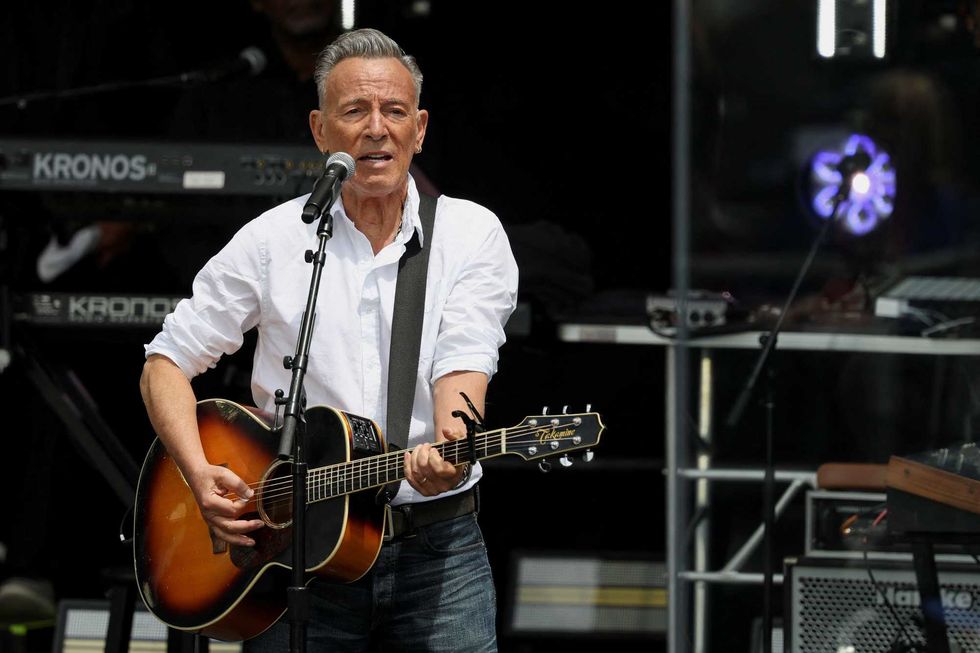
MAGA melts down as Bruce Springsteen torches Trump in new interview: 'He is a coward'
MAGA loyalists were furious Monday after music legend Bruce Springsteen said he was a true "patriot" and called out President Donald Trump.In a PBS special called
Share
Rawstory2026/07/07 03:14

Microsoft (MSFT) Stock Drops as Company Announces 4,800 Layoffs Targeting Xbox
Microsoft (MSFT) stock dropped 1.15% to $386 after announcing 4,800 job cuts. Xbox division faces 3,200 layoffs as company restructures gaming strategy. The post
Share
Blockonomi2026/07/07 02:50



