

Beyond the ‘Big Man’ syndrome: Meet the new UBA chairman replacing Tony Elumelu
On August 21, 2026, Tony Elumelu will do something that historically terrified the architects of African corporate empires: he will walk away.
When the United Bank for Africa (UBA) announced that its charismatic Group Chairman would step down from the board to comply with the Central Bank of Nigeria’s (CBN) strict 12-year tenure cap for non-executive directors, the reaction from casual observers was one of shock. After all, Elumelu is not just a chairman; he is a walking institution. His face is synonymous with the bank’s expansion across 20 African nations and four global financial hubs.
But for those studying the evolution of African business, this exit is the ultimate proof of concept.
For decades, the continent’s private sector has been haunted by “Big Man Syndrome.” Brilliant, larger-than-life founders built massive corporate kingdoms, only for those kingdoms to crumble the moment the founder stepped aside or passed away. Succession was treated as an afterthought or a taboo topic.
Read also: Jim Ovia’s exit: How the CBN’s tenure limit is forcing out Nigerian Bank CEOs
Elumelu’s transition to Emmanuel Nnorom, a seasoned 40-year corporate veteran who has quietly run the engine rooms of Elumelu’s investment firm, Heirs Holdings, offers a radically different blueprint. It suggests that the highest achievement of an African founder is not to be indispensable but to build something that can survive without them. It is what we might call institutional immortality.
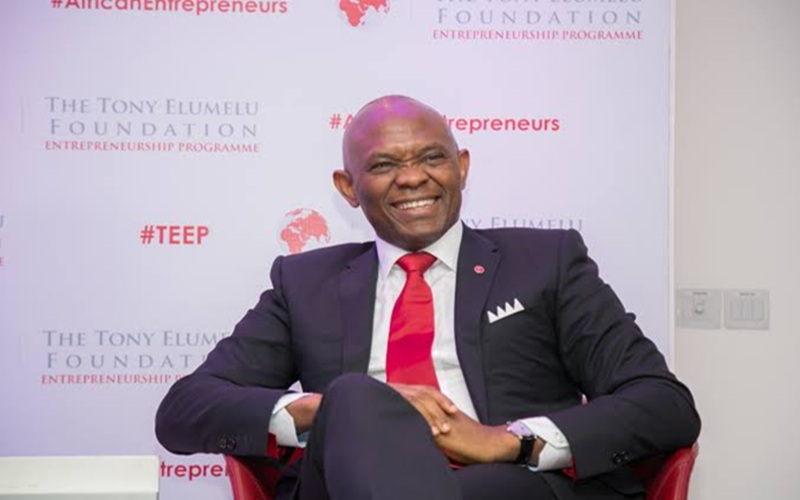 Tony Elumelu
UBA by the numbers
To understand why this transition matters, you have to look at the sheer scale of the engine Elumelu, who is the incoming Chairman of Seplat Energy Plc, effective January 1, 2027, is leaving behind. This is a systemically vital machine.
Under his 12-year watch, UBA moved from a prominent West African bank to a global powerhouse.
UBA's 12-year evolution (2014–2026)
├── Customer Base: 10 Million ──────────────> 50+ Million
├── Footprint: Regional ────────────────> 20 African Countries
└── Global Hubs: Limited ─────────────────> London, Paris, New York, Dubai
This staggering growth means that UBA’s operations are now deeply institutionalised. The bank’s 50 million customers do not deposit money because of Elumelu’s famous social media presence; they do so because the underlying infrastructure works. By stepping down at the peak of this operational resilience, Elumelu is proving his own philosophy of Africapitalism: that the private sector must drive long-term, sustainable development. And true sustainability requires letting go.
The new playbook
A common mistake is assuming Elumelu is completely abandoning the house he built. He isn’t. Instead, he is modelling a sophisticated separation between governance and ownership.
- The Board Room: He steps away from the day-to-day oversight, leaving governance to Nnorom and a highly structured board.
- The shareholder gallery: Through Heirs Holdings, Elumelu remains the principal shareholder.
This decoupling is standard practice in Wall Street or the City of London, but it represents a massive leap forward for African corporate maturity. It shows that a founder can transition from a visible driver to an institutional guardian, allowing fresh leadership innovate while keeping the core vision intact.
Enter Emmanuel Nnorom
If Tony Elumelu is the charismatic architect of UBA’s modern empire, Emmanuel N. Nnorom is the master engineer who helped lay its foundations. Nnorom’s ascension to Group Chairman is less of a cold corporate takeover and more of a calculated deployment from within the inner sanctum of the Elumelu ecosystem.
A seasoned chartered accountant with over 40 years of corporate leadership, Nnorom is uniquely qualified to step into this role. He previously served as UBA’s Group Chief Operating Officer, Executive Director of Finance, and MD/CEO of UBA Africa, before executing a brilliant stint as the Group CEO of Heirs Holdings. He knows the plumbing of the institution because he helped build it.
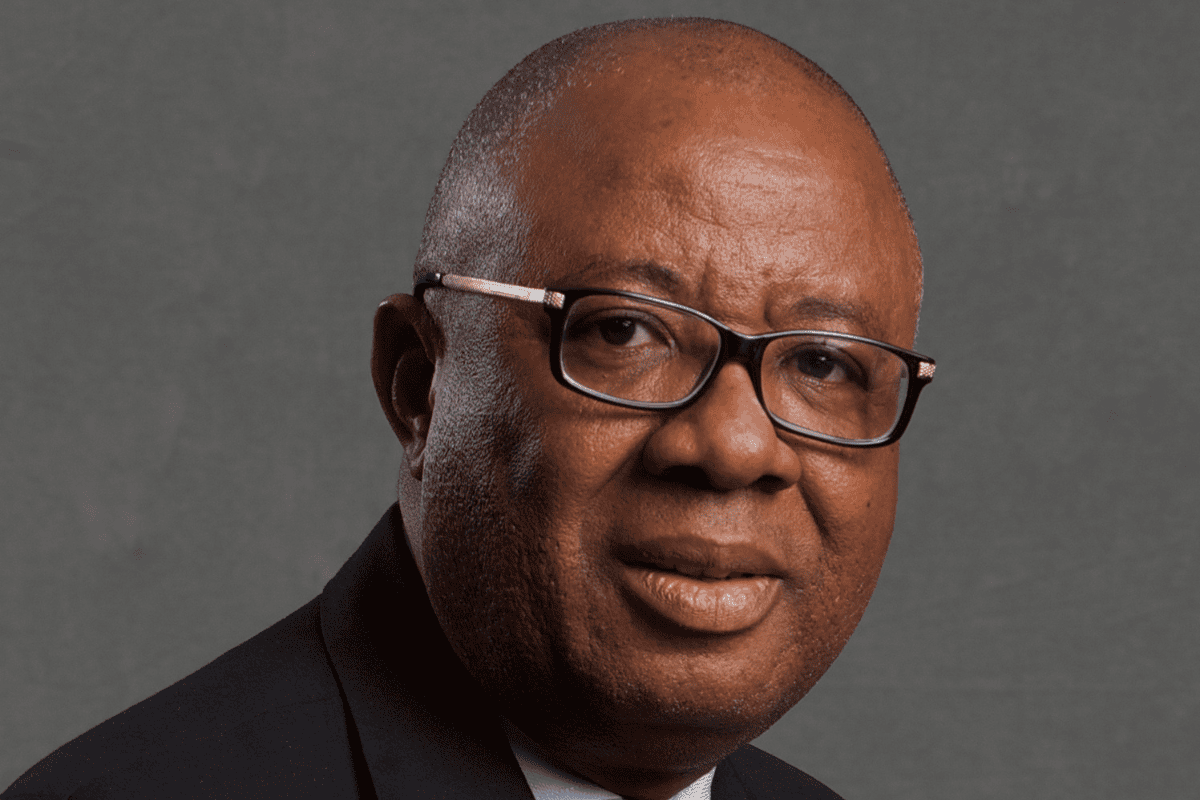 Emmanuel Nnorom
However, taking the gavel from Elumelu comes with a profound shift in institutional responsibility. Nnorom is not being asked to replicate Elumelu’s high-profile, rock-star personal branding. Rather, his mandate is to transition UBA from an era of aggressive, personality-led global expansion to one of systematic consolidation and institutional resilience. The task ahead is about operational discipline.
Ultimately, Nnorom’s true test will be proving that the “ToeWay” can outlast its creator. His chairmanship carries the weight of a historic corporate experiment: proving to global markets that a tier-1 African bank can seamlessly maintain its market dominance, structural integrity, and investor trust under the stewardship of a low-profile, governance-first operator.
If Nnorom succeeds in keeping the engine running smoothly without the founder at the steering wheel, he will solidify UBA’s legacy as an immortal African institution.
The 12-year rule
Nigeria’s central bank initially faced heavy corporate blowback when it introduced tight term limits for bank directors. Critics argued that forcing out successful leaders would create a vacuum of institutional memory.
However, Elumelu’s smooth exit turns that argument on its head. The 12-year rule is acting as an artificial accelerant for corporate maturity. Because boards know the clock is ticking, they are forced to abandon nepotism and build rigorous, multi-year succession pipelines.
If this model can successfully transition a behemoth like UBA without a dent in market confidence, it raises a compelling question for the rest of the continent: Should other critical sectors (like telecommunications, energy, and tech) adopt similar mandatory limits?
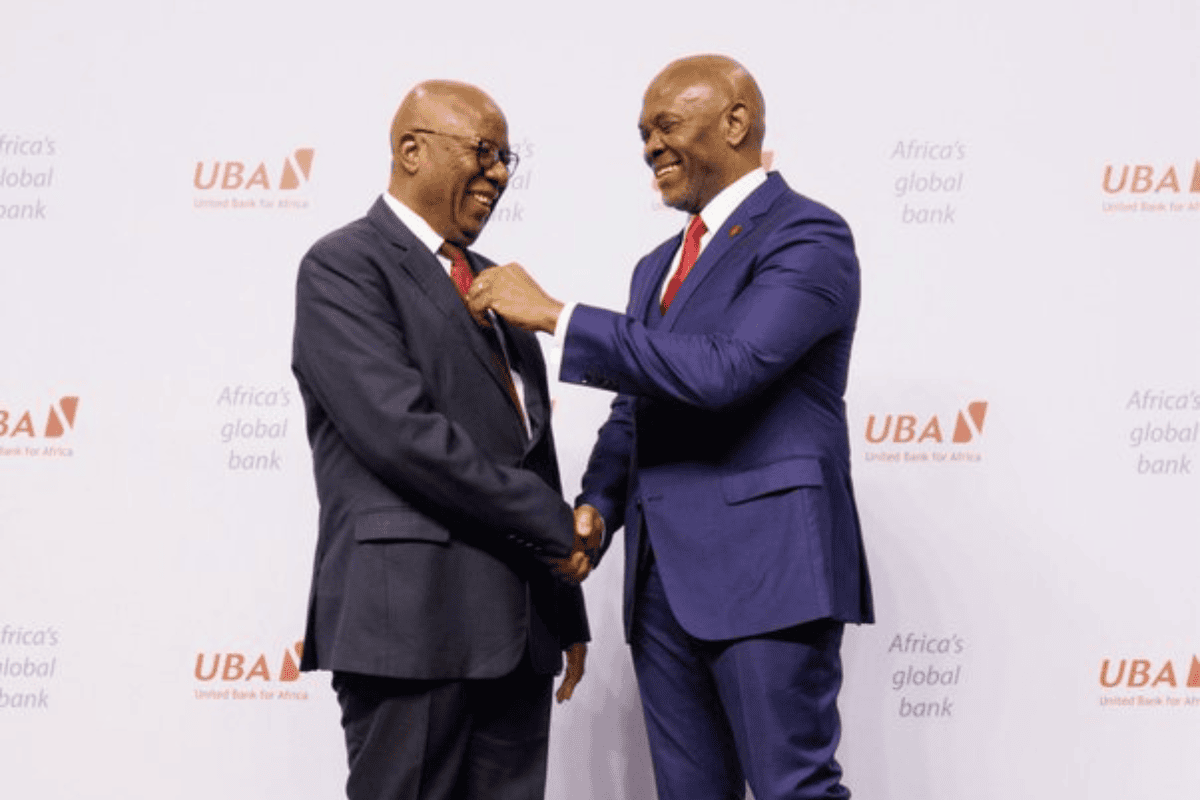 Emmanuel Nnorom and Tony Elumelu
What about the next generation?
For the new generation of African tech founders and young CEOs, the UBA transition is a classroom session in real-time. The goal of an enterprise shouldn’t just be a lucrative exit or a lifetime of personal control. The goal should be institutional longevity.
When the symbolic photos circulate next month of Elumelu handing over the reins, the narrative shouldn’t be about retirement or the end of an era. It should be celebrated as a milestone for African capitalism. The “Big Man” era is fading; the era of enduring institutions has arrived.


You May Also Like

STO Token Skyrockets: StakeStone Surges Over 500% to Shatter $1.6 Barrier in Historic Rally

AI data centers push Rush Belt manufacturers power costs to record levels

Mexico probing if US violated sovereignty in 2024 druglord capture



