

Driving Through Houston’s Flood Season: Myths, Facts, and Who Pays After an Accident
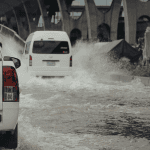
Houston floods. Not once in a while, but as a predictable part of doing business here. Hurricane Harvey in 2017, Tropical Storm Imelda in 2019, and the repeated street flooding that shows up nearly every hurricane season remind local business owners and commuters that water on the road is not a rare event in this city. It is a recurring cost of living near the Gulf. With that recurring risk comes a set of myths about who pays when a flood-related crash happens, and those myths cost people money.
Common myths about Houston’s flooded roads
Flooding makes every crash a no-fault accident
The Fact: Texas does not have a blanket rule that erases liability just because water was involved. A driver who hydroplanes because they were going too fast for the standing water can still be found negligent. Speed has to match conditions under Texas law, and heavy rain or standing water lowers what counts as a safe speed. An officer or insurance adjuster will still look at whether the driver adjusted for the conditions, not just whether it happened to be raining.
If my car stalls in high water and gets hit, I am automatically at fault for stopping in the road
The Truth: Stopping because the road ahead is flooded and impassable is often the responsible choice, not a mistake. Liability in these cases usually falls on whichever driver failed to keep a safe following distance or failed to slow down as visibility and traction dropped. Rear-end collisions during flash flooding are common, and the driver who hits the stopped or stalled car is often the one who carries fault.
Insurance companies pay flood-related claims quickly because the weather obviously caused the crash
Reality: The opposite tends to be true. Storm events generate a spike in claims all at once, and insurers use that volume to slow down processing and push lower initial offers. Adjusters often try to frame the entire event as an act of nature to avoid assigning fault to their own policyholder, even when the other driver’s behavior, not the rain itself, caused the crash.
Local flooding only affects individual drivers, not businesses
Answer: Businesses along low lying corridors near Braes Bayou, White Oak Bayou, and other flood prone areas deal with delivery trucks stuck in high water, employees who cannot safely reach work, and company vehicles damaged in flash floods that arrive with little warning. The Harris County Flood Control District tracks these repeat flood zones closely, and many sit along commercial corridors that see heavy daily traffic.
What determines fault in a flood-related crash?
Texas courts and insurance adjusters look at the same basic questions they would ask in any crash. Was the driver going too fast for conditions? Did they maintain a safe following distance? Did they use headlights and reduce speed as visibility dropped? They also examine the location and pattern of vehicle damage, since impact points often help reconstruct how the collision occurred and which driver likely had the right of way or failed to avoid the crash. Weather is a factor that raises the bar for what counts as careful driving. It does not erase that duty entirely, and drivers who ignore the difference often accept a settlement offer far lower than the claim is worth.
Why does honesty from an attorney matter more in these cases?
People are naturally skeptical when a lawyer says, “trust me.” Anyone can claim to be honest and transparent in an ad. What is harder to fake is an outside credential that someone else had to verify first. Storm-related claims are a good test of this, because the evidence is messy.
Water recedes, skid marks wash away, and witnesses become harder to track down after a major weather event disrupts the whole city. A firm that promises a fast six-figure settlement before reviewing the actual evidence sets a client up for disappointment later. Sutliff & Stout, a Houston personal injury and car accident law firm, built its practice on the opposite approach. Both founding attorneys, Graham Sutliff and Hank Stout, are board-certified in Personal Injury Trial Law by the Texas Board of Legal Specialization, a title that requires passing an outside exam and peer review rather than something a firm can print on its own letterhead.
The firm also operates on a straightforward contingency basis, meaning a client pays no attorney fees unless the firm recovers compensation. Case value gets explained upfront based on medical costs, lost income, and the strength of available evidence, not inflated promises meant to win a signature.
What should a driver do if a crash happens during a Houston storm?
Move to safety first if the vehicle is drivable and it is safe to do so. Call for police response even during a major weather event, since an official report anchors the timeline once the water recedes and memories fade. Photograph standing water levels, road conditions, and any visible skid marks, or the lack of them, before the scene changes. Get contact information from witnesses immediately, since finding them later after a citywide storm can be difficult.
How should local businesses plan around flood season?
Hurricane season in the Houston region runs from June through November, and the city’s aging drainage infrastructure means street flooding remains a near-yearly event even without a named storm. Business owners running delivery fleets or field service teams should build flood contingency routes into their planning rather than treating each flood event as a surprise. Insurance policies for commercial vehicles should be reviewed before storm season starts, not after a claim is already in dispute.
What a fair process actually looks like
A trustworthy legal process in a flood-related claim starts with an honest read of the evidence, not a guaranteed number pitched before any investigation happens. It includes clear answers about how comparative fault might apply if both drivers made questionable choices in bad conditions. It means a client understands, in plain terms, how the contingency fee works and what portion of any recovery goes toward case costs before a single document gets signed.
Understanding how liability actually works during weather-related crashes, rather than relying on the myths above, makes a real difference when a claim is on the line. Houston’s flood risk is not going anywhere, and neither is the need for drivers and business owners to know where they actually stand when the water rises, and a crash follows.
The post Driving Through Houston’s Flood Season: Myths, Facts, and Who Pays After an Accident appeared first on citybuzz.


You May Also Like

Crypto News Today: SOL, ETH and This New Altcoin Under $1

Funding: African startups raised $1.4 billion in H1 2026 off a $515 million windfall in June

Bitcoin treasury sell-off accelerates as Riot, Bhutan, and public companies exit positions



