

Pi Network Upgrade Closes a Key Gap — So Why Is PI at $0.10?
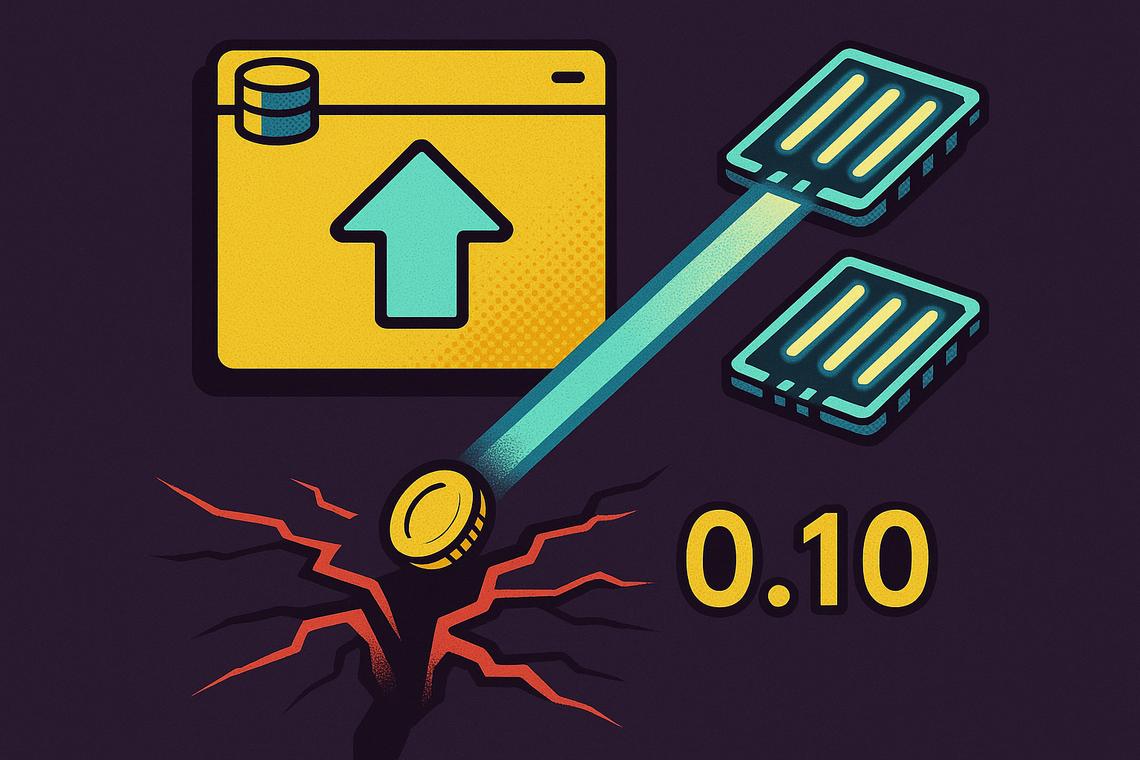
Pi Network’s July upgrade marks a meaningful shift for App Studio developers — but it hasn’t moved the needle on the token’s price. The platform pushed out a backend overhaul that introduces persistent storage for App Studio applications, enabling apps to save and reload user-specific data across sessions for the first time. For a platform that has long leaned on AI-created apps, the update closes one of the more glaring functional gaps in its developer toolkit.
Key takeaways
- Pi Network’s July upgrade adds backend support to App Studio apps, starting with persistent storage.
- Apps can now save and reload user-specific data — such as high scores, notes, and preferences — across sessions.
- Before this upgrade, most App Studio apps were frontend-only, meaning data disappeared when a user left.
- Pi Network described the change as a significant milestone for AI-created apps on the platform.
- Despite the upgrade, the PI token dropped near a record low of $0.1002, according to CoinGecko data.
Pi Network’s July Upgrade Introduces Backend Support for App Studio
Until now, App Studio on Pi Network operated under a fairly significant constraint: most apps were built purely on the frontend. That meant every user session started fresh. Close the app, lose your data. It was a design limitation that made it difficult to build anything requiring continuity — games, productivity tools, note-taking apps — all were essentially reset with each visit.
The July upgrade changes that model directly. Backend capabilities now begin with persistent storage for newly created App Studio apps, allowing those apps to save and retrieve user-specific data between sessions. Pi Network presented this as a foundational shift rather than a minor patch — a structural addition that opens the door to more complex, practical applications within the ecosystem.
Transition from Frontend-Only to Backend-Enhanced Apps
The team described earlier App Studio apps as “largely limited to frontend-only, single-session experiences.” That framing is telling. It wasn’t just a feature gap — it was a ceiling on what developers could realistically build and what users could meaningfully do with those apps.
With persistent storage in place, the architecture is fundamentally different. Developers now have a backend layer to work with, and that changes the product possibilities significantly.
What Persistent Storage Actually Changes for Users and Developers
The practical implications are easier to understand with concrete examples. Games can now retain high scores. Task management apps can preserve to-do lists between visits. Note-taking tools can store written content without requiring manual export or recovery. User preferences and progress — the kind of data that makes an app feel personal — can now persist.
For developers building on App Studio, this matters because app quality is directly tied to how well a product retains and responds to user behavior over time. Single-session apps have a built-in ceiling on engagement. Apps with memory don’t.
A Milestone for AI-Created Apps on Pi Network
Pi Network framed the backend addition as a “significant App Studio platform milestone,” specifically in the context of AI-created apps. The platform has invested in enabling AI tools to generate applications within its ecosystem, but those apps were previously constrained by the same frontend-only limitations. Persistent storage now serves as the first backend capability built into that wider foundation — giving AI-generated apps a more serious infrastructure to operate on.
The strategic implication here is real: a platform that can support stateful, data-persistent apps is a fundamentally more useful developer environment than one that resets after every session. Whether developers and users respond to that improvement at scale remains to be seen.
PI Token Price Performance Amidst Platform Developments
The technical progress hasn’t translated into price momentum — not even close. According to CoinGecko, the PI token dropped to a new low of $0.1002 around the time of the upgrade, continuing a pattern of persistent selling pressure. The token recovered slightly afterward but remained pinned near the $0.10 level.
Prior to that, PI had already slipped below $0.115 toward the end of June before briefly bouncing into the $0.12 to $0.13 range. That recovery proved short-lived, with selling resuming through the current week.
A Growing Gap Between Development Progress and Market Reality
The divergence between what Pi Network is building and what the market is pricing in is becoming harder to ignore. The platform keeps shipping updates — backend infrastructure, expanded app capabilities, AI-creation tooling — and the token keeps declining. That gap doesn’t necessarily mean the development work is without value, but it does suggest that product milestones alone aren’t sufficient to drive token demand right now.
For Pioneers and investors watching both sides of the equation, the July upgrade reinforces the platform’s technical direction. The Pi Network upgrade gives the ecosystem a stronger foundation for app development. But until that foundation attracts meaningful usage and translates into ecosystem activity, the token price tells a different story than the changelog does.
FAQ
What new feature was introduced in Pi Network’s July upgrade?
The upgrade added backend support with persistent storage for App Studio apps, allowing them to save and reload user-specific data across sessions — something that wasn’t possible under the previous frontend-only architecture.
How does persistent storage improve Pi Network apps?
It allows apps to remember user data between visits, including high scores, task lists, notes, preferences, and progress. This significantly improves the practical utility and continuity of apps built on App Studio.
Did the PI token price improve following the July upgrade?
No. Despite the upgrade, the PI token dropped to a record low of $0.1002 according to CoinGecko, and only showed a minor recovery afterward, remaining close to the $0.10 level.
Article produced with the assistance of artificial intelligence and reviewed by the editorial team.


You May Also Like

USDC Reaches $90T as Stablecoin Demand Grows

Q2 Market Insights: Bitcoin regains dominance in risk-averse environment, ETFs remain critical to market structure

Iran’s foreign minister targeted in assassination attempt, wife killed



