

Crude Oil Markets Fluctuate Dramatically Amid U.S.-Iran Conflict Escalation
Key Takeaways
- Crude oil markets retreated Thursday following Wednesday’s dramatic surge in prices.
- Trump administration declared Iran ceasefire terminated, signaling potential for additional military operations.
- American forces targeted approximately 90 Iranian military installations in early Thursday operations.
- Tehran launched counter-strikes against American military facilities in Kuwait and Bahrain.
- Maritime security officials elevated Strait of Hormuz threat assessment to severe status.
Crude oil markets reversed course Thursday, retreating from the previous session’s significant gains.
Brent crude futures declined 0.7% to settle at $77.54 per barrel during early Thursday trading. Meanwhile, U.S. West Texas Intermediate crude futures slipped 0.6% to $73.09 per barrel.
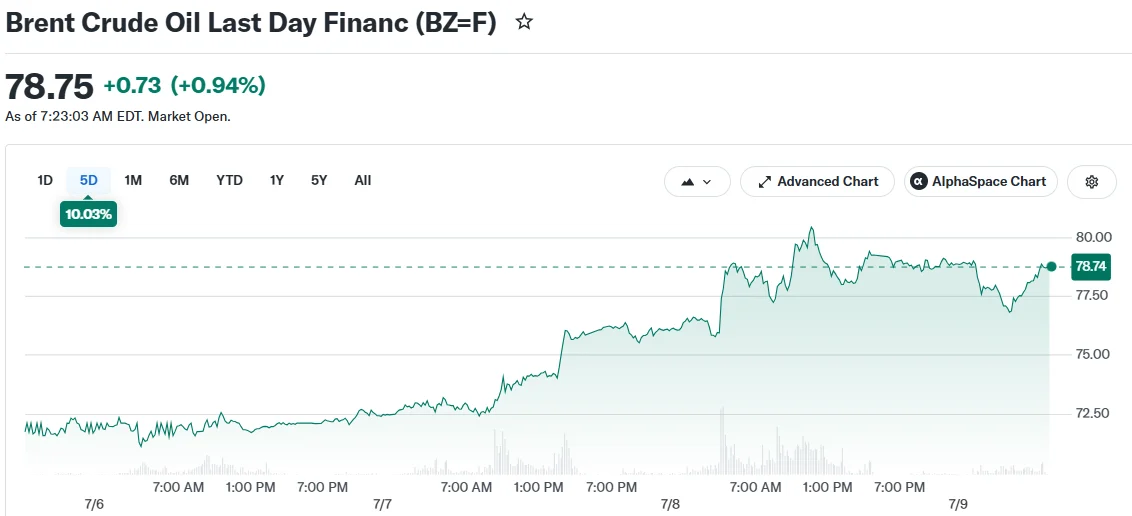 Brent Crude Oil Last Day Financ (BZ=F)
Despite Thursday’s pullback, both benchmark crude contracts remain significantly elevated compared to earlier weekly levels. Brent and WTI each surged over 8% during Wednesday’s trading session.
The Wednesday rally materialized after President Donald Trump announced the termination of the Iranian ceasefire agreement. The president simultaneously issued warnings regarding potential further military operations targeting Iran.
Military Operations Resume in Persian Gulf
American military forces executed fresh strikes against Iranian positions during the early hours Thursday. According to U.S. Central Command statements, nearly 90 military installations were engaged.
The targeted installations encompassed air defense infrastructure and coastal surveillance facilities. Military officials also struck drone storage locations.
Central Command indicated the operation’s objective centered on degrading Tehran’s capability to threaten maritime traffic through the Strait of Hormuz. Military leadership characterized these strikes as retaliation for Iranian attacks on three petroleum tankers transiting the waterway.
Tehran responded with its own military action. Iranian forces struck what military officials identified as U.S. military installations in Kuwait and Bahrain.
Iran’s Revolutionary Guards Corps issued warnings of additional strikes against American positions throughout the Gulf region. These would materialize if Washington conducts further military operations.
Numerous commercial vessels have already experienced attacks in proximity to the Strait of Hormuz during recent days. The Joint Maritime Information Center, operating under American leadership, has classified the shipping threat as severe.
The International Maritime Organization issued advisories directing vessels to exercise extreme caution while transiting through the strait. This waterway represents one of the world’s most critical chokepoints for petroleum shipments.
Market Outlook and Analysis
Oil exports from Gulf nations had been experiencing gradual recovery following last month’s ceasefire agreement. Market analysts now suggest renewed hostilities could derail this recovery trajectory.
ANZ analysts noted the recent military escalation has reintroduced war-risk premiums into crude pricing. They cautioned that complete deterioration of U.S.-Iran diplomatic understanding could again interrupt Gulf petroleum exports.
ANZ additionally highlighted increasingly constrained fuel markets. Moscow extended its diesel export restrictions through the end of July.
U.S. government statistics revealed another substantial decline in diesel and gasoline inventories. Simultaneously, American fuel exports reached unprecedented levels.
Commercial crude stockpiles in the United States increased during the previous week. However, the government simultaneously drew down additional volumes from its strategic petroleum reserve.
From a technical perspective, WTI crude is currently testing its 200-day moving average positioned near $74. Prices briefly penetrated this level before retreating.
Market analysts suggest crude would need to breach $85 territory for the current rally to appear sustainable beyond short-term fluctuations. Should WTI decline below $67, prices could potentially slide toward the mid-$50s range.
Currently, crude markets are responding primarily to geopolitical risk premiums emanating from Gulf tensions, rather than fundamental supply disruptions.
The post Crude Oil Markets Fluctuate Dramatically Amid U.S.-Iran Conflict Escalation appeared first on Blockonomi.


You May Also Like

Not a loophole: Singapore AI export controls let China tap US AI legally

Top U.S. economist says Gold reversal is imminent

Best Mobile User Retention Tools in 2026



