

Bank of America sets alarming SpaceX stock price target
SpaceX (SPCX) stock is trading near $153 on July 9. All the initial gains since its IPO have been wiped out, despite the stock’s inclusion in the Nasdaq-100, and a slew of high price targets coming from big Wall Street banks.
Goldman Sachs initiated the stock with a price target of $205. Morgan Stanley went even higher, setting a price target of $300. These banks were two leading underwriters for the IPO, so their having high price targets is not surprising.
In a research note shared with me, Bank of America analyst Ronald J. Epstein and his team also presented a bullish price target of $235 on SpaceX stock. Bank of America was also one of the underwriters for the IPO, so again, it was not much of a surprise.
However, what is alarming is the palpable difficulty a fairly large analyst team has had in coming up with a way to back that price target. Even more important is that, once risks to the price target are examined, the price target makes no sense and leaves a strong impression that it is nothing but peak AI bubble hype.
Readers unaware that SpaceX is an artificial intelligence company first and foremost should read its S-1. It clearly states that the company estimates its total addressable market (TAM) at $28.5 trillion, of which $26.5 trillion, or 92.98%, is expected to come from AI.
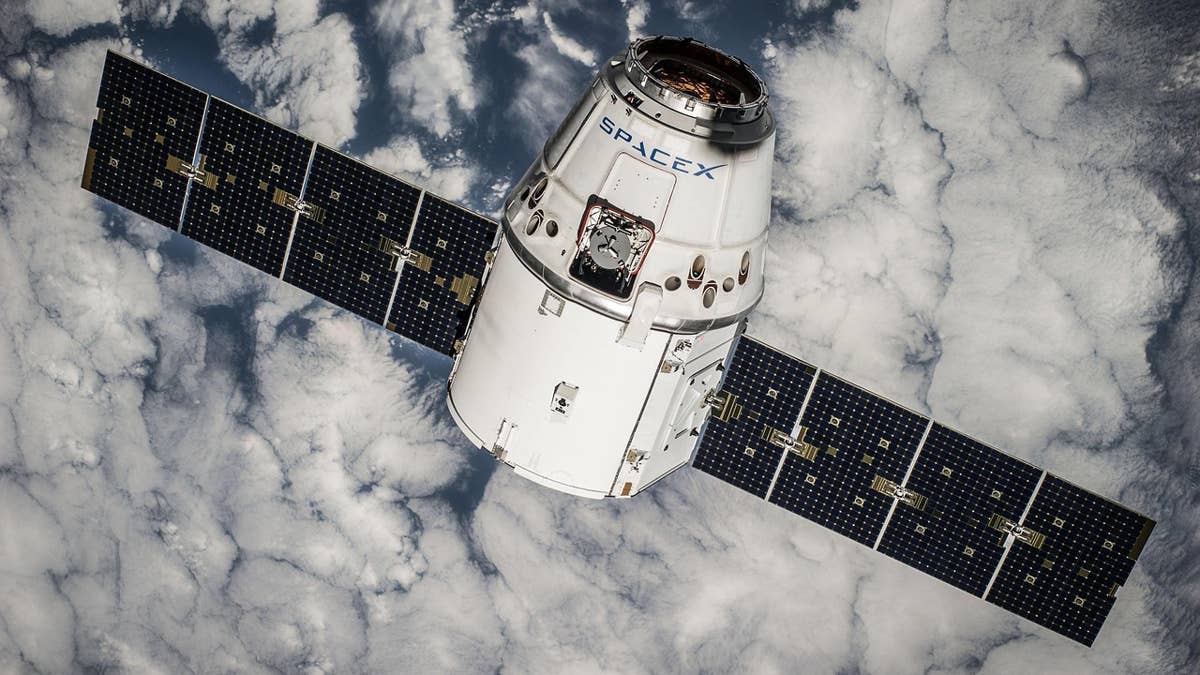 Bank of America believes that “launch leadership enables everything else.”
SpaceX-Imagery&solPixabay
Bank of America believes that “launch leadership enables everything else”
The team based the price target on average long-term discounted cash flows for their base, bull, and bear cases, across different revenue and cash-generation scenarios between now and 2045.
A discounted cash flow model is usually conducted over a period of 5 to 10 years, according to Harvard Business School.
Developing a model with a period of almost 20 years is something you come up with when you have trouble making a valuation.
Price targets are generally given to be valid for the next 12 months, and even then, they are often tweaked when quarterly earnings are released or when something else changes the view of the stock.
Analysts noted SpaceX’s success in converting launch and manufacturing capabilities into a business called Starlink. It seems they believe this can be done again for AI.
Epstein wrote: “The result is a powerful flywheel, where launch enables space applications, applications generate cash flow, and those cash flows support further infrastructure investment.”
Bank of America flags “investment negatives” for SpaceX
Analysts noted investment negatives:
- Starship, orbital compute technologies not yet proven
- Subject to regulatory risk on launch, satellite services
- Significant investment needed to support AI buildout
- TAM hinges on a highly competitive AI applications market
Epstein noted that most of SpaceX’s long-term opportunities depend on Starship successfully commercializing full reusability.
The problem here is that while achieving full reusability of Starship would be a fantastic engineering achievement, it is not inevitable.
If the reusability of Starship were the only investment risk, and if the company were valued as a space company rather than an AI company with space attached, the thesis would be fine.
The team acknowledged that for orbital data centers to work, remaining technical problems, such as heat dissipation, the performance of AI chips in space, and other issues, need to be solved.
This is where the thesis falls apart.
Orbital data centers are an impractical idea
A former NASA engineer/scientist with a PhD in space electronics, writing under the pseudonym Taranis, debunked the whole idea of orbital data centers in great detail.
The blog explains why power itself is one of the issues, the same power supposedly being the reason for putting them up there in the first place. In addition to thermal regulation and radiation being problems, Taranis points out that communications are also a major issue for this data center concept.
The engineer concludes that orbital data centers “would be extremely difficult to achieve, disproportionately costly in comparison with Earth-based datacenters, and offer mediocre performance at best.”
SoftBank’s founder, Masayoshi Son, also pushed back on the idea of orbital data centers, adding a very important observation.
The main reason for building data centers in space would be to get rid of power costs.
Son pointed out during an annual shareholder meeting for SoftBank’s mobile unit that electricity expenses account for a small share of data center operating costs, compared with hardware, as reported by Bloomberg.
He added that power cost reductions would be exchanged for higher fees to transport everything into space, maintenance, and communication delays.
The orbital data centers are meant to be in low Earth orbit. The problem is that the orbit is getting way too crowded.
In a research paper published in Science Direct, titled “An orbital house of cards: Frequent satellite close conjunctions,” a team of scientists tried to quantify the stress on the orbital environment.
They proposed “a new metric, CRASH Clock, that measures such stress in terms of the timescale for a possible catastrophic collision to occur if there are no satellite maneuvers or there is a severe loss in situational awareness.”
According to the paper, the CRASH Clock was at 164 days in 2018. But it reached 5.5 days in 2025, and their latest update puts it at 2.5 days in 2026.
Another thing to have in mind is Kessler Syndrome, named after Donald J. Kessler, who wrote a research paper in 1978 titled: “Collision frequency of artificial satellites: The creation of a debris belt.”
A simplified view of Kessler Syndrome is the idea that after a lot of stuff has been put into orbit, a single collision can trigger a chain reaction of collisions, slowly creating a debris belt. The debris belt would make low Earth orbit unusable for satellites.
It is important to note that the CRASH clock doesn’t estimate when the Kessler Syndrome could occur, and that the Kessler Syndrome chain reaction would not be a quick event, but might take decades.
SpaceX’s AI play is overpriced
SpaceX is renting its excess capacity to Anthropic and has recently signed a deal with Google (GOOGL).
While these deals might sound good for the company, they reveal a major problem it faces on the AI front. It doesn’t have enough users of its AI models. A similar problem is faced by Meta (META).
Meta has decided to also sell its excess capacity and is launching its cloud business, reported Reuters.
With so many companies acting as hyperscalers, the negative impact on profit margins is easy to forecast.
As if the selling capacity side of business likely having low profit margins isn’t enough, the software side of AI is even worse.
SpaceX lagging in the AI model race is a primary reason for the excess capacity, but it is also problematic that Chinese open-weight models are closing the gap, and GLM is gaining popularity.
As it is becoming more difficult to catch up, the question of whether such a business can be profitable remains open.
We can take a look at the frontrunner of AI models, the heart of the AI bubble, OpenAI.
Tech writer and prominent AI skeptic Ed Zitron recently published leaked audited financial statements from OpenAI, which were verified by the Financial Times. This leak revealed an increase in OpenAI’s net loss, from $5.09 billion in 2024 to $38.53 billion in 2025.
To make matters worse for AI model providers, the era of “tokenmaxxing” has ended. Or, to put it simply, many companies are capping their use of AI because it is too expensive.
This has led OpenAI to consider drastically lowering its prices, according to the Wall Street Journal.
We know from the S-1 that SpaceX is burning cash thanks to AI, and the question is, why should anyone think it will become profitable?
The number of incredible achievements needed for this to happen is simply too great.
This is also what Morningstar equity analyst Nicolas Owens thinks. He is very bearish on SpaceX, and he values the stock at $63 per share.
He believes the IPO price makes sense only in the most optimistic Moonshot scenario, implying the price assumes that scenario is very likely. The Moonshot scenario requires a rapidly reusable Starship and commercially competitive orbital data centers. He concludes that this outlook is very uncertain.
Unrealistic valuations are typical bubble signals, and a strong signal has just been sent by major Wall Street banks, all giving high price targets for SpaceX.
We should end this with something that actually does make sense, and that is Reuters’ report, which says an increase in sales and trading will improve U.S. Wall Street bank earnings in the second quarter. The report notes that the increase in trading is partially boosted by the SpaceX IPO.
Related: 5-star analyst sets bold SpaceX stock price target


You May Also Like

Why The Green Bay Packers Must Take The Cleveland Browns Seriously — As Hard As That Might Be

Cathie Wood’s ARK Invest Buys $13.7M in Circle Shares While Selling Robinhood Stock

The changing face of elder care in Malaysia — Sayed Mohammad Reza Yamani Sayed Umar



