Bitwise analysts say Solana is benefiting the most from the GENIUS ACT, as the network’s stablecoin supply has jumped 40% since approval. Public companies have increasingly added Solana to their treasuries, with analysts projecting SOL could reach $300. A research analyst at Bitwise, Danny Nelson, believes Solana may be emerging as the big winner of [...]]]>Bitwise analysts say Solana is benefiting the most from the GENIUS ACT, as the network’s stablecoin supply has jumped 40% since approval. Public companies have increasingly added Solana to their treasuries, with analysts projecting SOL could reach $300. A research analyst at Bitwise, Danny Nelson, believes Solana may be emerging as the big winner of [...]]]>

Solana Could Be “Winning the GENIUS Era,” Says Bitwise Analyst, as Corporate Treasuries Add 17M SOL

For feedback or concerns regarding this content, please contact us at crypto.news@mexc.com
  • Bitwise analysts say Solana is benefiting the most from the GENIUS ACT, as the network’s stablecoin supply has jumped 40% since approval.
  • Public companies have increasingly added Solana to their treasuries, with analysts projecting SOL could reach $300.

A research analyst at Bitwise, Danny Nelson, believes Solana may be emerging as the big winner of what he calls the “GENIUS Era.” In a recent post on X, Nelson suggested that although Solana doesn’t hold the largest total stablecoin supply, it’s growing faster than any other blockchain.

President Donald Trump signed the Guiding and Establishing National Innovation for US Stablecoins Act (GENIUS ACT) into law on July 18, just after the House of Representatives passed the bill. Nelson explains that since then, the amount of stablecoins circulating on Solana has skyrocketed by over 40%, climbing to around $15 billion.

He stated that,

For context, the GENIUS Act is a U.S. federal law that gives payment stablecoins a clear regulatory framework. It defines who can issue them, enforces risk-management standards, and places issuers under federal oversight to improve transparency and consumer protection.

Importantly, the law also prevents large tech companies and major banks from monopolizing the stablecoin market, an effort to encourage broader participation and competition in digital payments. Solana’s success in this new regulatory environment isn’t just luck.

Solana is known for high throughput, low latency, and its blockchain can handle up to 65,000 transactions per second (TPS), far exceeding Ethereum’s current capacity. These are traits that matter a lot when stablecoins become more regulated and widely used.

A key feature that SOL holds is its Proof of History (PoH). It works like a cryptographic clock, allowing nodes to agree on the order of transactions without constant communication. The result? Efficiency and speed.

Nelson went on to say that he’s watching closely for signs that Solana can maintain and even accelerate its current momentum. Over the past month,  Solana’s stablecoin supply increased by nearly $3 billion, representing about 25% growth, while Ethereum’s stablecoin growth was a more modest 8% over the same timeframe.

A steady stream of new partnerships, DeFi integrations, and product launches has fueled this performance.

SOL as a Treasury Asset

Matt Hougan, Bitwise’s Chief Investment Officer, recently described Solana as the “new Wall Street,” citing its unique strengths in stablecoin infrastructure and real-world asset (RWA) tokenization.

For corporations exploring blockchain exposure, Solana offers a clear competitive edge. Solana provides yield opportunities. Unlike Bitcoin (BTC), which typically sits idle in corporate treasuries, SOL can be staked to earn additional returns. That’s why more institutions are betting big on Solana.

According to recent data, public companies now collectively hold 17 million SOL, worth $4.3 billion, with more than nine firms across three countries. At the top of the list is Forward Industries (FORD) with 6.82 million SOL, Sharps Technology with 2.14 million SOL, and Defi Development Corp (DFDV) and Upexi each holding approximately 2 million SOL.

Data from Coinglass reveals that the trading volume for Solana derivatives jumped 26.13% to reach $22.01 billion, while open interest grew 4.13% to $15.50 billion. Over the past week, SOL has gained 11%, although it’s seen a slight 1.16% dip in the past day, trading around $230, not far from its all-time high of $294.

]]>
Market Opportunity
ERA Logo
ERA Price(ERA)
$0.1409
$0.1409$0.1409
-0.91%
USD
ERA (ERA) Live Price Chart
Disclaimer: The articles reposted on this site are sourced from public platforms and are provided for informational purposes only. They do not necessarily reflect the views of MEXC. All rights remain with the original authors. If you believe any content infringes on third-party rights, please contact crypto.news@mexc.com for removal. MEXC makes no guarantees regarding the accuracy, completeness, or timeliness of the content and is not responsible for any actions taken based on the information provided. The content does not constitute financial, legal, or other professional advice, nor should it be considered a recommendation or endorsement by MEXC.

You May Also Like

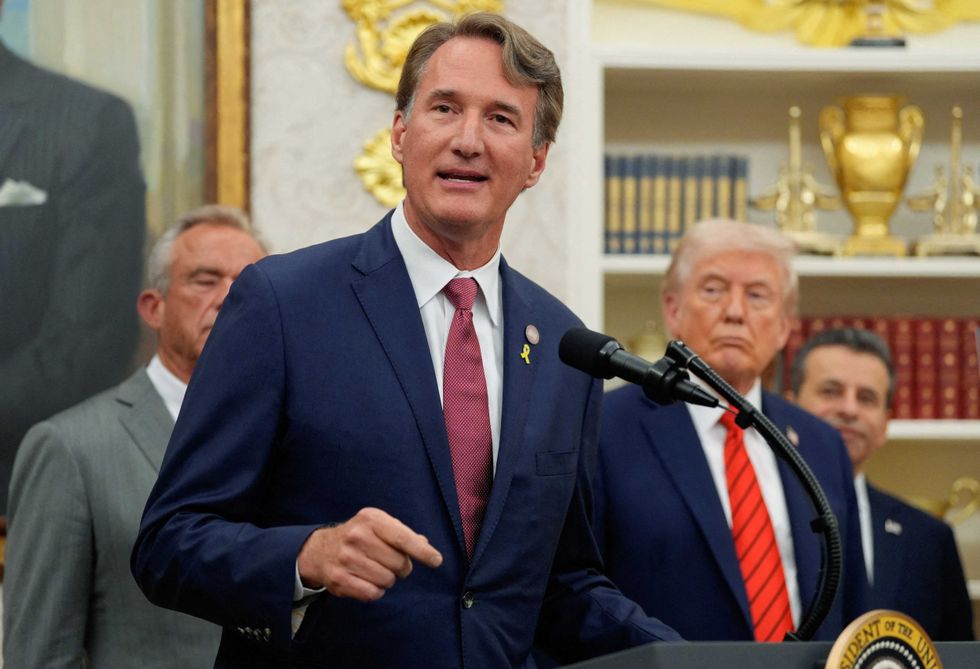
Virginia Republicans rage against ex-GOP governor: 'Missing in action' while eyeing 2028

Virginia Republicans rage against ex-GOP governor: 'Missing in action' while eyeing 2028

Republicans in Virginia are turning on the state's former GOP governor, Glenn Youngkin, according to the Wall Street Journal, accusing him of being "missing in
Share
Alternet2026/03/10 00:31
Franklin Templeton CEO Dismisses 50bps Rate Cut Ahead FOMC

Franklin Templeton CEO Dismisses 50bps Rate Cut Ahead FOMC

The post Franklin Templeton CEO Dismisses 50bps Rate Cut Ahead FOMC appeared on BitcoinEthereumNews.com. Franklin Templeton CEO Jenny Johnson has weighed in on whether the Federal Reserve should make a 25 basis points (bps) Fed rate cut or 50 bps cut. This comes ahead of the Fed decision today at today’s FOMC meeting, with the market pricing in a 25 bps cut. Bitcoin and the broader crypto market are currently trading flat ahead of the rate cut decision. Franklin Templeton CEO Weighs In On Potential FOMC Decision In a CNBC interview, Jenny Johnson said that she expects the Fed to make a 25 bps cut today instead of a 50 bps cut. She acknowledged the jobs data, which suggested that the labor market is weakening. However, she noted that this data is backward-looking, indicating that it doesn’t show the current state of the economy. She alluded to the wage growth, which she remarked is an indication of a robust labor market. She added that retail sales are up and that consumers are still spending, despite inflation being sticky at 3%, which makes a case for why the FOMC should opt against a 50-basis-point Fed rate cut. In line with this, the Franklin Templeton CEO said that she would go with a 25 bps rate cut if she were Jerome Powell. She remarked that the Fed still has the October and December FOMC meetings to make further cuts if the incoming data warrants it. Johnson also asserted that the data show a robust economy. However, she noted that there can’t be an argument for no Fed rate cut since Powell already signaled at Jackson Hole that they were likely to lower interest rates at this meeting due to concerns over a weakening labor market. Notably, her comment comes as experts argue for both sides on why the Fed should make a 25 bps cut or…
Share
BitcoinEthereumNews2025/09/18 00:36
Wall Street Bull Warns! “US Stock Markets Could Collapse, Bitcoin (BTC) Could Fall Further!”

Wall Street Bull Warns! “US Stock Markets Could Collapse, Bitcoin (BTC) Could Fall Further!”

Wall Street bull Ed Yardeni raised the probability of a US stock market crash to 35 percent and warned of further selling pressure on Bitcoin. Continue Reading
Share
Bitcoinsistemi2026/03/10 00:34