If you have used Lens ecosystem applications such as Orb, Tape, Hey, Soclly, etc. in the early stage, you are likely to get the annual SocialFi airdrop opportunity.If you have used Lens ecosystem applications such as Orb, Tape, Hey, Soclly, etc. in the early stage, you are likely to get the annual SocialFi airdrop opportunity.

Lens Chain V3: A highly scalable SocialFi layer 2 network based on Avail DA

2025/04/08 17:36
4 min read

By Stacy Muur

Compiled by: Tim, PANews

When social applications on general blockchains reach a development bottleneck, it will build its own exclusive chain and migrate 125GB of social historical data.

This is exactly what Lens Chain is doing by launching a SocialFi L2.

This L2 is powered by Avail's DA (data availability) technology, which can be expanded to support billions of users at a low cost.

Social media is the most widely used consumer product on the Internet.

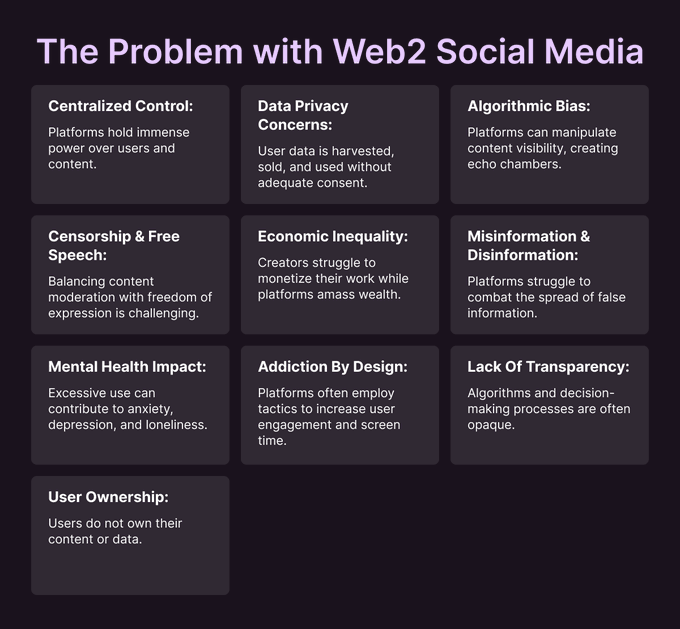
5.4 billion users use it for an average of 2.5 hours a day, but it is based on a closed and broken foundation: difficult-to-circumvent censorship mechanisms, personal data is restricted by the platform, accounts may be cancelled at any time, and so on.

Lens is a social protocol based on Avail with user ownership at its core.
Lens Chain V3: A highly scalable SocialFi layer 2 network based on Avail DA

What is Lens Chain?

Lens is laying the foundation for a decentralized, user-owned social network that is fully portable.

Open garden, free platform.

You completely own your social graph.
Lens Chain V3: A highly scalable SocialFi layer 2 network based on Avail DA

Core technology stack:

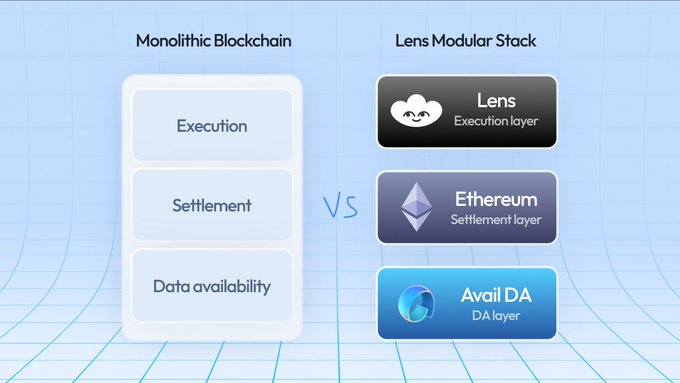
  • High-speed transaction execution using ZKSync elastic chain
  • Avail acts as a DA layer to ensure censorship-resistant data availability
  • GHO as the native gas token
  • Login without wallet through Family

This is a customized technology stack, and Avail is the core extension component.

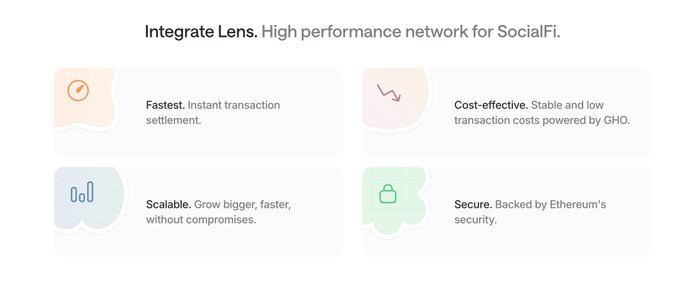
Choosing Avail proved to be a wise decision, as the SocialFi application required a cost-effective large-scale data availability solution to reduce costs. The Ethereum blobspace solution cost 10 times more.
Lens Chain V3: A highly scalable SocialFi layer 2 network based on Avail DA

Why does SocialFi have such strict infrastructure requirements?

First, social networks generate massive amounts of data:

Profiles, Posts, Interactions, Following and Media.

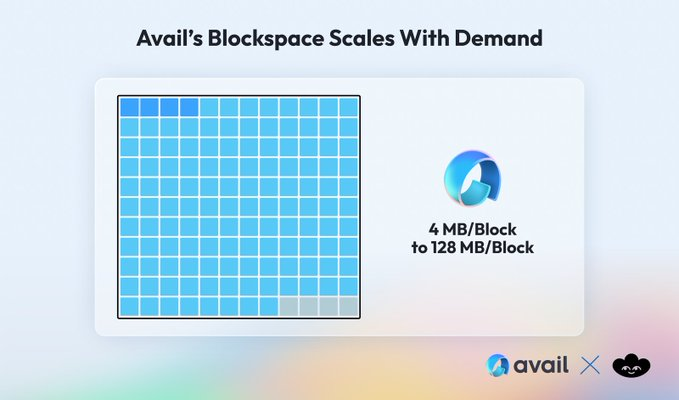
Therefore, Lens requires a horizontally scalable data availability layer that can accommodate the increase in block space corresponding to the explosive growth in demand without sacrificing security or decentralization.

The only eligible one is: Avail DA tier.
Lens Chain V3: A highly scalable SocialFi layer 2 network based on Avail DA

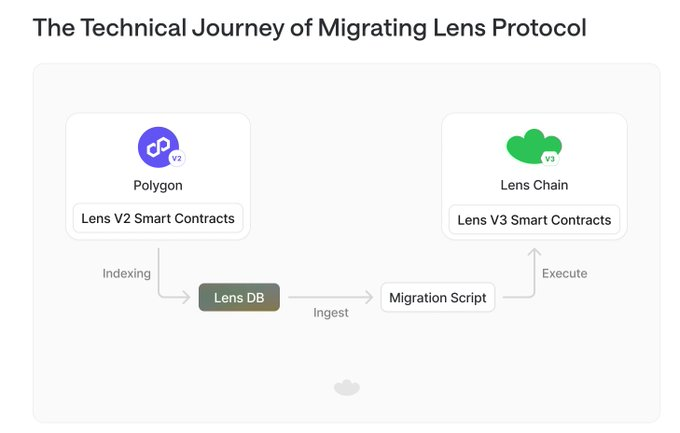
In order to launch Lens Chain V3, the team migrated 125GB of historical data (from Lens V2 on the Polygon chain), including: more than 660,000 user profiles, 28 million follow-up relationships, 16 million pieces of content (posts, comments, quotes), and 50 million interactions.
Lens Chain V3: A highly scalable SocialFi layer 2 network based on Avail DA

Lens V3: The evolution of SocialFi

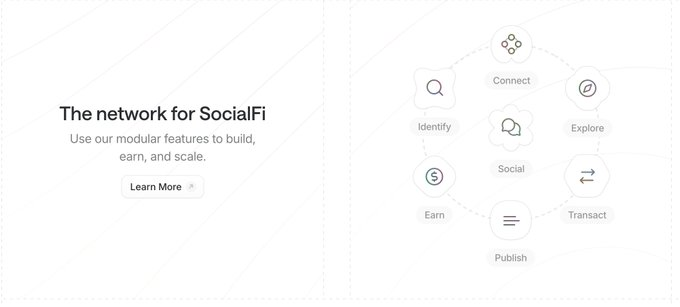
  • Programmable Smart Accounts (no longer supporting static NFTs)
  • Global social graph: supports advanced attention functions and social relationship queries
  • On-chain native features: token-gated content, paywalls, micropayments
  • Seamless developer experience: Build social features faster than ever before
Lens Chain V3: A highly scalable SocialFi layer 2 network based on Avail DA

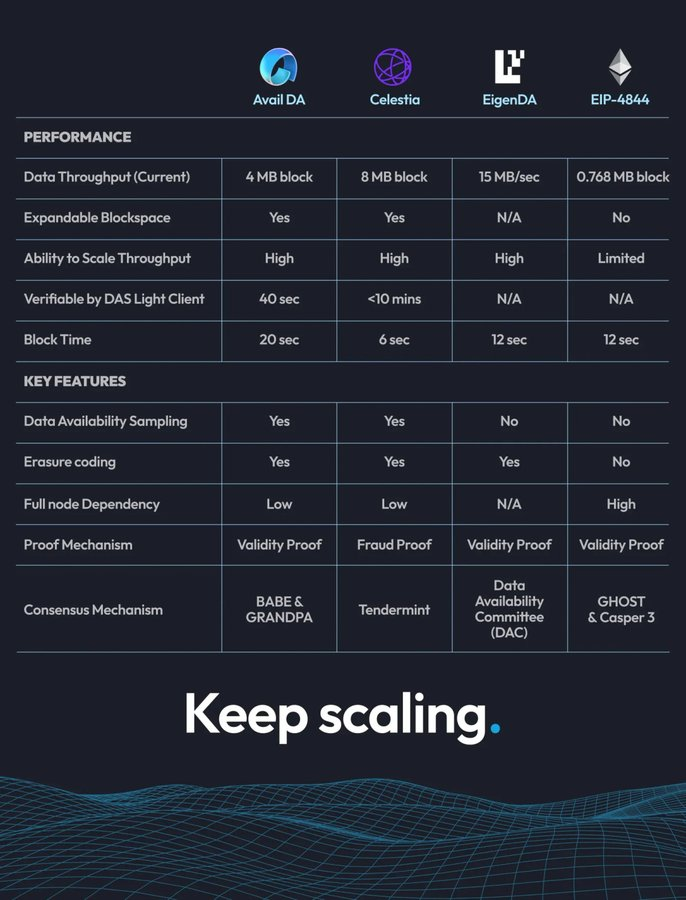
Lens chooses Avail over other options:

  • Horizontal scalability: Block size from 4MB to 128MB → recently announced to achieve a leap from 1GB to 10GB
  • Fast finality: Currently about 40 seconds, target is to reduce to about 250 milliseconds
  • Peer-to-peer DAS technology: providing support for trustless light clients
  • Cost advantage: Data availability cost is more than 90% lower than Ethereum
  • Modular design: compatible with various expansion solutions such as ZKsync, Validiums, and Optimistic rollups
Lens Chain V3: A highly scalable SocialFi layer 2 network based on Avail DA

Avail's huge revenue opportunity

As Lens grows, every post, like, follow, and share will touch the Avail DA layer.

Other L2, Rollup expansion solutions and application chains are being followed up.

More incoming links → more data generated → more charges for Avail to capture.

Avail’s processing cost is only one-tenth of Ethereum Blobspace.

In order to scale like traditional social platforms, SocialFi needs a low-cost data availability layer.

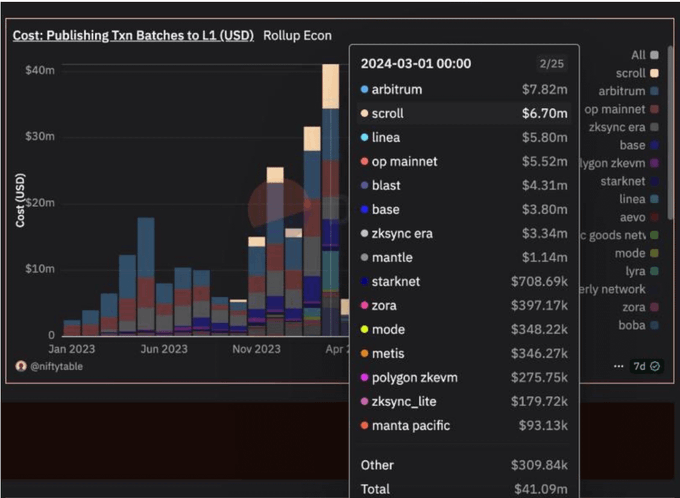
In March 2024, Arbitrum paid $7.82 million for Ethereum Blobspace.

If Avail's DA layer is used, this cost can be reduced by 90%.

This is exactly the marginal benefit that Avail achieves through scale.
Lens Chain V3: A highly scalable SocialFi layer 2 network based on Avail DA

Lens has raised over $46 million in funding and the project was created by Aave founder Stani.

No tokens have been issued yet, but it now has its own chain.

If you have used Lens ecosystem applications such as Orb, Tape, Hey, Soclly, etc. in the early stage, you are likely to get the opportunity to get the annual SocialFi airdrop.

Given the strategic partnership between Avail and Lens, you can consider staking $AVAIL tokens to increase the weight of your airdrop qualification.

Introduction to Lens Ecosystem Applications:

  • Orb.club: Web3 social interaction platform
  • Hey.xyz: Identity and social networking on the blockchain
  • Tape.xyz: Innovative content creation and monetization methods
  • Soclly: Web3 version of professional social platform

All are built on Avail's DA technology.

With the official launch of Lens Chain:

  • Developers can get modular components to build social applications
  • Users enjoy true content ownership + smart wallet
  • Creators gain direct monetization channels (NFTs, tokens, subscriptions)

Disclaimer: The articles reposted on this site are sourced from public platforms and are provided for informational purposes only. They do not necessarily reflect the views of MEXC. All rights remain with the original authors. If you believe any content infringes on third-party rights, please contact service@support.mexc.com for removal. MEXC makes no guarantees regarding the accuracy, completeness, or timeliness of the content and is not responsible for any actions taken based on the information provided. The content does not constitute financial, legal, or other professional advice, nor should it be considered a recommendation or endorsement by MEXC.

You May Also Like

The Channel Factories We’ve Been Waiting For

The Channel Factories We’ve Been Waiting For

The post The Channel Factories We’ve Been Waiting For appeared on BitcoinEthereumNews.com. Visions of future technology are often prescient about the broad strokes while flubbing the details. The tablets in “2001: A Space Odyssey” do indeed look like iPads, but you never see the astronauts paying for subscriptions or wasting hours on Candy Crush.  Channel factories are one vision that arose early in the history of the Lightning Network to address some challenges that Lightning has faced from the beginning. Despite having grown to become Bitcoin’s most successful layer-2 scaling solution, with instant and low-fee payments, Lightning’s scale is limited by its reliance on payment channels. Although Lightning shifts most transactions off-chain, each payment channel still requires an on-chain transaction to open and (usually) another to close. As adoption grows, pressure on the blockchain grows with it. The need for a more scalable approach to managing channels is clear. Channel factories were supposed to meet this need, but where are they? In 2025, subnetworks are emerging that revive the impetus of channel factories with some new details that vastly increase their potential. They are natively interoperable with Lightning and achieve greater scale by allowing a group of participants to open a shared multisig UTXO and create multiple bilateral channels, which reduces the number of on-chain transactions and improves capital efficiency. Achieving greater scale by reducing complexity, Ark and Spark perform the same function as traditional channel factories with new designs and additional capabilities based on shared UTXOs.  Channel Factories 101 Channel factories have been around since the inception of Lightning. A factory is a multiparty contract where multiple users (not just two, as in a Dryja-Poon channel) cooperatively lock funds in a single multisig UTXO. They can open, close and update channels off-chain without updating the blockchain for each operation. Only when participants leave or the factory dissolves is an on-chain transaction…
Share
BitcoinEthereumNews2025/09/18 00:09
Markets await Fed’s first 2025 cut, experts bet “this bull market is not even close to over”

Markets await Fed’s first 2025 cut, experts bet “this bull market is not even close to over”

Will the Fed’s first rate cut of 2025 fuel another leg higher for Bitcoin and equities, or does September’s history point to caution? First rate cut of 2025 set against a fragile backdrop The Federal Reserve is widely expected to…
Share
Crypto.news2025/09/18 00:27
Best Crypto to Buy as Saylor & Crypto Execs Meet in US Treasury Council

Best Crypto to Buy as Saylor & Crypto Execs Meet in US Treasury Council

The post Best Crypto to Buy as Saylor & Crypto Execs Meet in US Treasury Council appeared on BitcoinEthereumNews.com. Michael Saylor and a group of crypto executives met in Washington, D.C. yesterday to push for the Strategic Bitcoin Reserve Bill (the BITCOIN Act), which would see the U.S. acquire up to 1M $BTC over five years. With Bitcoin being positioned yet again as a cornerstone of national monetary policy, many investors are turning their eyes to projects that lean into this narrative – altcoins, meme coins, and presales that could ride on the same wave. Read on for three of the best crypto projects that seem especially well‐suited to benefit from this macro shift:  Bitcoin Hyper, Best Wallet Token, and Remittix. These projects stand out for having a strong use case and high adoption potential, especially given the push for a U.S. Bitcoin reserve.   Why the Bitcoin Reserve Bill Matters for Crypto Markets The strategic Bitcoin Reserve Bill could mark a turning point for the U.S. approach to digital assets. The proposal would see America build a long-term Bitcoin reserve by acquiring up to one million $BTC over five years. To make this happen, lawmakers are exploring creative funding methods such as revaluing old gold certificates. The plan also leans on confiscated Bitcoin already held by the government, worth an estimated $15–20B. This isn’t just a headline for policy wonks. It signals that Bitcoin is moving from the margins into the core of financial strategy. Industry figures like Michael Saylor, Senator Cynthia Lummis, and Marathon Digital’s Fred Thiel are all backing the bill. They see Bitcoin not just as an investment, but as a hedge against systemic risks. For the wider crypto market, this opens the door for projects tied to Bitcoin and the infrastructure that supports it. 1. Bitcoin Hyper ($HYPER) – Turning Bitcoin Into More Than Just Digital Gold The U.S. may soon treat Bitcoin as…
Share
BitcoinEthereumNews2025/09/18 00:27