The post Stablecoins Strengthen The Dollar And Empower The Developing World appeared on BitcoinEthereumNews.com. Opinion by: Christos A. Makridis, associate research professor at Arizona State University and visiting fellow at the Heritage Foundation Stablecoins received a real boost when US President Donald Trump signed the GENIUS Act earlier this year — and now European banks are trying to get into the act by issuing stablecoins of their own. Their envy of the US dollar’s supremacy, a long-standing pillar of American economic strength, is understandable. In the wake of the GENIUS Act, dollar-backed, privately issued stablecoins are surging in popularity, presenting a strategic opportunity for the United States. By creating an environment that enables stablecoins and operating under the umbrella of US banking infrastructure, the US can reinforce the dollar’s global dominance while democratizing access to finance abroad, particularly in developing countries. These “digital dollars” have numerous benefits. They can cut fees, shorten settlement cycles, counter local inflation and widen access to trade and finance for smaller companies that struggle with correspondent banking. The stablecoin surge Stablecoins have surged in market capitalization, with transactions exceeding $265 billion. Nearly all of that value rides on dollars. Safe assets back each dollar stablecoin, so stablecoin issuers must hold large reserves of US dollars and Treasury bills. Stablecoin reserve demand shifts Treasury bill ownership from bank deposits and money market funds to issuers; the larger ripple effects would arise if this infrastructure facilitates more commerce. Federal Reserve Governor Christopher Waller noted that if regulators “allow these things to go out, this will only strengthen the dollar as a reserve currency,” since greater stablecoin use means higher demand for dollars and US debt. Secretary Scott Bessent has been even more blunt: “We are going to keep the US [dollar] the dominant reserve currency in the world, and we will use stablecoins to do that.” Stablecoins and the developing world… The post Stablecoins Strengthen The Dollar And Empower The Developing World appeared on BitcoinEthereumNews.com. Opinion by: Christos A. Makridis, associate research professor at Arizona State University and visiting fellow at the Heritage Foundation Stablecoins received a real boost when US President Donald Trump signed the GENIUS Act earlier this year — and now European banks are trying to get into the act by issuing stablecoins of their own. Their envy of the US dollar’s supremacy, a long-standing pillar of American economic strength, is understandable. In the wake of the GENIUS Act, dollar-backed, privately issued stablecoins are surging in popularity, presenting a strategic opportunity for the United States. By creating an environment that enables stablecoins and operating under the umbrella of US banking infrastructure, the US can reinforce the dollar’s global dominance while democratizing access to finance abroad, particularly in developing countries. These “digital dollars” have numerous benefits. They can cut fees, shorten settlement cycles, counter local inflation and widen access to trade and finance for smaller companies that struggle with correspondent banking. The stablecoin surge Stablecoins have surged in market capitalization, with transactions exceeding $265 billion. Nearly all of that value rides on dollars. Safe assets back each dollar stablecoin, so stablecoin issuers must hold large reserves of US dollars and Treasury bills. Stablecoin reserve demand shifts Treasury bill ownership from bank deposits and money market funds to issuers; the larger ripple effects would arise if this infrastructure facilitates more commerce. Federal Reserve Governor Christopher Waller noted that if regulators “allow these things to go out, this will only strengthen the dollar as a reserve currency,” since greater stablecoin use means higher demand for dollars and US debt. Secretary Scott Bessent has been even more blunt: “We are going to keep the US [dollar] the dominant reserve currency in the world, and we will use stablecoins to do that.” Stablecoins and the developing world…

Stablecoins Strengthen The Dollar And Empower The Developing World

Opinion by: Christos A. Makridis, associate research professor at Arizona State University and visiting fellow at the Heritage Foundation

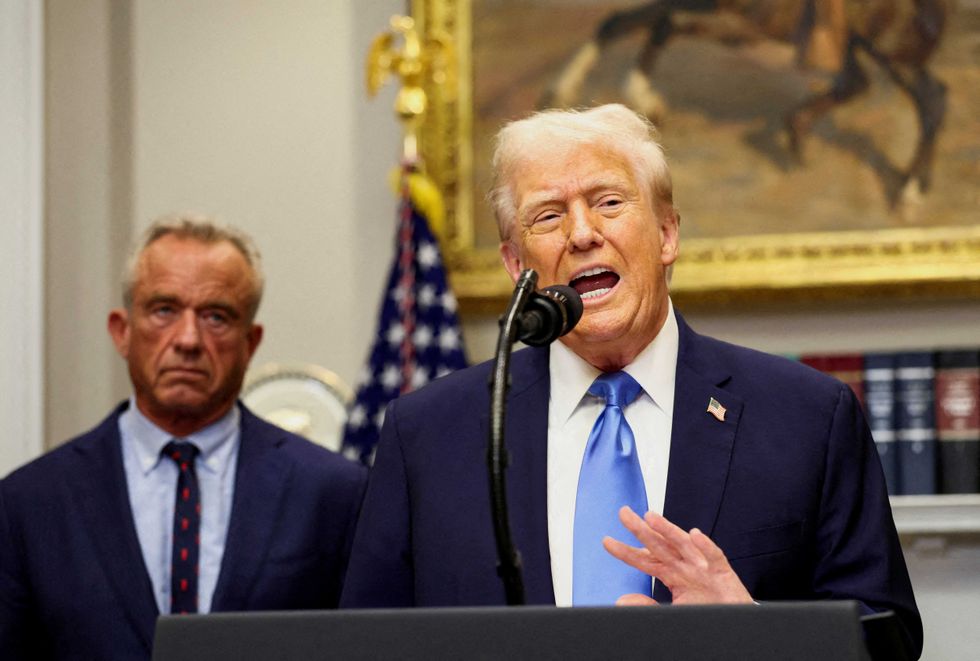
Stablecoins received a real boost when US President Donald Trump signed the GENIUS Act earlier this year — and now European banks are trying to get into the act by issuing stablecoins of their own.

Their envy of the US dollar’s supremacy, a long-standing pillar of American economic strength, is understandable. In the wake of the GENIUS Act, dollar-backed, privately issued stablecoins are surging in popularity, presenting a strategic opportunity for the United States.

By creating an environment that enables stablecoins and operating under the umbrella of US banking infrastructure, the US can reinforce the dollar’s global dominance while democratizing access to finance abroad, particularly in developing countries.

These “digital dollars” have numerous benefits. They can cut fees, shorten settlement cycles, counter local inflation and widen access to trade and finance for smaller companies that struggle with correspondent banking.

The stablecoin surge

Stablecoins have surged in market capitalization, with transactions exceeding $265 billion. Nearly all of that value rides on dollars. Safe assets back each dollar stablecoin, so stablecoin issuers must hold large reserves of US dollars and Treasury bills. Stablecoin reserve demand shifts Treasury bill ownership from bank deposits and money market funds to issuers; the larger ripple effects would arise if this infrastructure facilitates more commerce.

Federal Reserve Governor Christopher Waller noted that if regulators “allow these things to go out, this will only strengthen the dollar as a reserve currency,” since greater stablecoin use means higher demand for dollars and US debt. Secretary Scott Bessent has been even more blunt: “We are going to keep the US [dollar] the dominant reserve currency in the world, and we will use stablecoins to do that.”

Stablecoins and the developing world

For developing countries, integrating with the dollar via stablecoins can unlock sorely needed economic activity. Many of these nations suffer from volatile currencies, high inflation and patchy banking systems. Their citizens often seek refuge in dollars — a phenomenon economists call “dollarization” — but until now, that meant physical cash or costly wire transfers.

Stablecoins change the game by making dollars accessible to anyone with a cell phone. Instead of waiting at a bank and paying high exchange fees, a farmer or shopkeeper can instantly hold digital dollars in a smartphone wallet. Stablecoins are making the world’s most in-demand asset – the US dollar – available on demand, globally.

This has profound implications for financial inclusion. Approximately 1.4 billion adults worldwide remain unbanked, with a substantial proportion residing in Africa and Asia. Stablecoins enable users to save in a stable currency and transact globally without a bank account, thereby bypassing traditional barriers such as ID checks and branch access.

Financial inclusion through stablecoins

In Sub-Saharan Africa, for instance, dollar stablecoins have become a vital tool for payments, savings and commerce amid currency instability. Over 40% of all cryptocurrency transaction volume in Africa is now in stablecoins. Users are even willing to pay a premium for stablecoins; businesses and individuals in emerging markets sometimes pay 5% or more above face value just to obtain digital dollars, which demonstrates their desperate need for a reliable store of value.

Crucially, stablecoins also facilitate commerce. Consider the example of remittances — the lifeblood of many developing economies. Africans abroad sent home $54 billion in remittances in 2023, but traditional channels charge senders an average of nearly 8% in fees. Stablecoins can slash these costs.

In one Kenyan pilot, using stablecoins for cross-border micropayments reduced fees from 28.8% to just 2%, allowing gig workers to keep more of their earnings. Global consultants estimate that over $12 billion a year could be saved in remittance fees if stablecoins replaced wire transfers — money that goes straight into local households and consumption. 

Where local banks perceive too much risk or too little profit to lend, stablecoin-based financing and decentralized finance can help fill the credit gap, playing a vital role in facilitating entrepreneurship and growth for African small and medium-sized enterprises.

Stablecoins and their superpowers

Wider adoption of stablecoins in developing countries could also counter the influence of players like China, which has spent years extending loans to poorer nations under onerous terms. As part of the Belt and Road Initiative, Beijing’s overseas lending has left dozens of countries saddled with debts they struggle to repay. In extreme cases, defaulting nations have had to relinquish strategic assets, such as ports and power plants, to Chinese control.

This “debt-trap diplomacy” thrives when nations lack alternative financing options.

By embracing dollar stablecoins and digital finance more broadly, developing countries can raise capital in new ways and unshackle themselves from such predatory arrangements.

Another promising path is tokenizing sovereign debt. Rather than relying exclusively on large foreign creditors, governments can issue bonds in smaller denominations on blockchain platforms, making it easier for local citizens and diaspora investors to participate.

Related: Visa to start supporting stablecoins on four blockchains

Governments from Kenya to Brazil are already exploring tokenized bonds and Treasury bills that can be purchased and traded via digital wallets. Such decentralized fundraising could help countries refinance or buy back expensive foreign loans — effectively crowd-funding their way out of China’s shadow. Every dollar raised from a diaspora bond or global crypto investor is a dollar that doesn’t have to be borrowed from Beijing on tough terms.

CBDCs in the corner

Central banks have also spotted these opportunities. Dozens of central banks are developing central bank digital currencies (CBDCs) as state-controlled alternatives to private stablecoins. Proponents argue that a government-issued digital currency can increase financial inclusion and modernize payments, but the early evidence is underwhelming.

Nigeria’s eNaira, one of the first retail CBDCs, has flopped – 98% of Nigerians who opened eNaira wallets stopped using them by the end of 2023. Meanwhile, Nigerians continue to flock to dollar-backed stablecoins as a hedge against the plunging naira. This story repeats elsewhere: Enthusiasm for CBDCs often comes from the top down, while stablecoins gain adoption bottom up by meeting real user needs. Even China has had limited success getting other countries to use it, especially when dollar stablecoins already have a considerable head start globally.

Academic research suggests that when central bankers promote CBDC plans, stablecoin activity drops — evidence that rhetoric alone can siphon momentum from the private sector. That might please officials wary of competition, but it can deprive consumers of better services.

Moreover, research compares countries that have adopted CBDCs with those that have not, both before and after adoption, finding that there are no effects on macroeconomic outcomes, such as GDP per capita or inflation, and adverse effects on financial well-being. In short, CBDCs have yet to deliver breakthrough improvements in financial access or efficiency, whereas stablecoins are already doing so.

Encouraging developing countries to use dollar-backed stablecoins is a win-win proposition, functioning similarly to the printed dollar following the supremacy of gold. For the US, it means expanding the influence of the dollar — reinforcing its reserve currency status in the digital era and countering rivals who seek to promote alternative spheres of monetary control.

For developing nations, it means greater access to a stable currency, new pathways for investment, lower transaction costs, and escape hatches from heavy-handed creditors. In an increasingly tense geoeconomic landscape, digital dollars could become a linchpin of a more democratic and resilient global financial system.

The United States is embracing this opportunity: By championing dollar stablecoins and the open financial networks they run on, America can help unlock growth in emerging economies while buttressing its own economic might.

In the contest for hearts, minds and wallets around the world, a little stable currency could go a long way.

Opinion by: Christos A. Makridis, associate research professor at Arizona State University and visiting fellow at the Heritage Foundation.

This article is for general information purposes and is not intended to be and should not be taken as legal or investment advice. The views, thoughts, and opinions expressed here are the author’s alone and do not necessarily reflect or represent the views and opinions of Cointelegraph.

Source: https://cointelegraph.com/news/stablecoins-dollar-and-empower-the-developing-world?utm_source=rss_feed&utm_medium=feed%3Fnc%3D1762548287184%26__%3D1762548287184%26_q%3D1762548287184%26ttt%3D1762548287184&utm_campaign=rss_partner_inbound


Market Opportunity
RealLink Logo
RealLink Price(REAL)
$0.05359
$0.05359$0.05359
-1.03%
USD
RealLink (REAL) Live Price Chart
Disclaimer: The articles reposted on this site are sourced from public platforms and are provided for informational purposes only. They do not necessarily reflect the views of MEXC. All rights remain with the original authors. If you believe any content infringes on third-party rights, please contact service@support.mexc.com for removal. MEXC makes no guarantees regarding the accuracy, completeness, or timeliness of the content and is not responsible for any actions taken based on the information provided. The content does not constitute financial, legal, or other professional advice, nor should it be considered a recommendation or endorsement by MEXC.

You May Also Like

Is Putnam Global Technology A (PGTAX) a strong mutual fund pick right now?

Is Putnam Global Technology A (PGTAX) a strong mutual fund pick right now?

The post Is Putnam Global Technology A (PGTAX) a strong mutual fund pick right now? appeared on BitcoinEthereumNews.com. On the lookout for a Sector – Tech fund? Starting with Putnam Global Technology A (PGTAX – Free Report) should not be a possibility at this time. PGTAX possesses a Zacks Mutual Fund Rank of 4 (Sell), which is based on various forecasting factors like size, cost, and past performance. Objective We note that PGTAX is a Sector – Tech option, and this area is loaded with many options. Found in a wide number of industries such as semiconductors, software, internet, and networking, tech companies are everywhere. Thus, Sector – Tech mutual funds that invest in technology let investors own a stake in a notoriously volatile sector, but with a much more diversified approach. History of fund/manager Putnam Funds is based in Canton, MA, and is the manager of PGTAX. The Putnam Global Technology A made its debut in January of 2009 and PGTAX has managed to accumulate roughly $650.01 million in assets, as of the most recently available information. The fund is currently managed by Di Yao who has been in charge of the fund since December of 2012. Performance Obviously, what investors are looking for in these funds is strong performance relative to their peers. PGTAX has a 5-year annualized total return of 14.46%, and is in the middle third among its category peers. But if you are looking for a shorter time frame, it is also worth looking at its 3-year annualized total return of 27.02%, which places it in the middle third during this time-frame. It is important to note that the product’s returns may not reflect all its expenses. Any fees not reflected would lower the returns. Total returns do not reflect the fund’s [%] sale charge. If sales charges were included, total returns would have been lower. When looking at a fund’s performance, it…
Share
BitcoinEthereumNews2025/09/18 04:05
Says Bessent: Crypto Sentiment Set to Rise After CLARITY Act Passes

Says Bessent: Crypto Sentiment Set to Rise After CLARITY Act Passes

Passing the CLARITY crypto market structure bill could lift sentiment amid a broad downturn, according to United States Treasury Secretary Scott Bessent. In a CNBC
Share
Crypto Breaking News2026/02/16 00:43
BullZilla Presale Leads the Best Crypto Presales Now While Toncoin and Bitcoin Cash See Price Drops

BullZilla Presale Leads the Best Crypto Presales Now While Toncoin and Bitcoin Cash See Price Drops

The post BullZilla Presale Leads the Best Crypto Presales Now While Toncoin and Bitcoin Cash See Price Drops appeared on BitcoinEthereumNews.com. Disclaimer: This content is a sponsored article. Bitcoinsistemi.com is not responsible for any damages or negativities that may arise from the above information or any product or service mentioned in the article. Bitcoinsistemi.com advises readers to do individual research about the company mentioned in the article and reminds them that all responsibility belongs to the individual. Are today’s market pullbacks actually an opportunity? With Toncoin sliding, Bitcoin Cash dipping, and the BullZilla Presale roaring past $430k, investors are asking if these could be the Best Crypto Presales Now. Early presales have historically delivered outsized gains when timed correctly. Crypto traders are increasingly eyeing presale tokens that show strong community growth and unique utility. Among the standouts, Bull Zilla is catching attention as the best meme coin 2025, offering $BZIL staking rewards and a presale ROI already exceeding 8,800%. Below, we break down the latest news and data on Toncoin, BullZilla, and Bitcoin Cash, giving you everything you need to evaluate the Best Crypto Presales Now. Toncoin Shows a Modest Pullback Amid Broader Market Uncertainty Toncoin (TON) trades at $3.15, reflecting a -1.30% 24-hour dip and $148M in trading volume. While the token faces short-term selling pressure, Toncoin continues to build its ecosystem around fast, scalable messaging-based blockchain technology. Analysts note that dips like today’s often precede accumulation phases, especially if network activity remains robust. Toncoin’s developers are rolling out updates to improve cross-chain compatibility, which could set up a rebound later this year. For investors hunting the Best Crypto Presales Now, Toncoin’s current price weakness might be attractive—but it lacks the explosive upside of newer presale plays like BullZilla. BullZilla Presale Breaks $430k: The Best Meme Coin 2025? The BullZilla Presale continues to capture headlines. Current Stage: 3rd (404: Whale Signal Detected), Phase: 1st, with a price of $0.00005908. Over…
Share
BitcoinEthereumNews2025/09/18 11:00