2026 is the year digital assets will “grow up,” says Zodia Custody’s 2026 predictions report. The Standard Chartered-backed digital asset custodian looked into custody, collateral, and connectivity as the rising backbone of “market infrastructure.” At the same time, stablecoins, staking, and tokenisation are opening up capital efficiency for institutions globally, they said. Building Blocks of a New Market Architecture According to Anoosh Arevshatian, Chief Product Officer at Zodia Custody, as 2026 approaches, the company is seeing a clear theme. “Institutional digital assets are moving from possibility to productivity,” she claims. “We are no longer talking about pilots or proofs of concept, we are talking about infrastructure.” Notably, the report argues: custody will become critical market infrastructure for institutional digital asset activities; stablecoins and tokenised funds will become liquidity foundations; staking and DeFi will grow into institutional yield engines; collateral will redefine capital efficiency. Per Arevshatian, Zodia Custody’s clients and partners showcase a shift from experimentation to execution, the executive says. They are looking towards a future of finance that is digital, as well as governed, interoperable, and trusted. “Custody, settlement, staking, tokenisation, stablecoins – these are no longer fringe innovations; they are the building blocks of a new market architecture,” Arevshatian concludes. You may also like: Japan’s FSA Weighs New Registration Rules for Crypto Custodians and Service Providers Japan’s Financial Services Agency (FSA) is moving to tighten oversight of the country’s digital asset infrastructure, proposing new registration rules for crypto custodians and trading service providers. A working group under the Financial System Council, an advisory body to the Japanese Prime Minister, met on Nov. 7 to discuss the proposal, according to a report from Nikkei. Japan Proposes Mandatory Registration for Crypto Custody, Trading Service Providers The plan would require... Five Things to Watch in 2026 Digital Asset Space Zodia Custody’s report lists five key elements to keep an eye on this upcoming year. 1. Custody matures into critical infrastructure This, says the report is a crucial move as it forms “the key orchestration layer needed to unlock digital asset activities.” Custody is “the operational core of institutional adoption; the infrastructure upon which everything else runs.” Custody will no longer be a service, but a system, with compliance, risk, and operational resilience. Regulators will work on global digital custodian standards, rising use cases will lead to digital asset custodians, institutions will adopt multi-custodian models, and custodians will partner up to expand ecosystem connectivity for end users. Deborah Algeo Managing Director, Solutions, commented that, by 2026, “banks will treat digital-asset infrastructure like cloud computing – critical to operations, but not something to reinvent. Sub custody, white-label, and SaaS solutions will become the fastest, safest route to market.” Moreover, Jay Tan, Product Innovation & Advisory Specialist, argued that custody will be “treated as critical financial market infrastructure – as fundamental as payments or clearing.” “We’re seeing regulators and clients align around one clear idea: custody isn’t just safekeeping, it’s market infrastructure. By 2026, I expect board-level policies to mandate multiple custodians and continuous compliance evidence by default. The winners will be those who make regulatory conformity effortless, embedding compliance and security by design,” Tan wrote. Meanwhile, the company is a Canton Foundation member, describing the Canton Network is a ‘network of networks’ for institutional custody. 2. Stablecoins evolve into liquidity engines In 2026, stablecoins will not be just settlement tokens, but also programmable treasury tools. Safe and compliant stablecoin infrastructure and global regulatory clarity will boost the ecosystem and the rise of bank-issued and institutional-grade stablecoins. Moreover, stablecoin treasuries will provide 24/7 liquidity, automated payments, and yield-bearing strategies. “The line between cash, collateral, and yield-bearing assets will continue to blur,” the report argues. According to Kelly Lai, Head of Product Innovation & Advisory, stablecoins are “no longer a crypto convenience, they’re the connective tissue of institutional finance. For banks, asset managers, and corporates, they offer what legacy systems can’t: real-time liquidity, programmable control, and transparent backing.” 3. Collateral moves in real time Next year will see digital-asset collateral unlocking “trillions in idle capital,” Zodia Custody says. The growth of real-time margining and settlement will improve transparency but also compress capital cycles. Notably, the experts expect regulators to recognize tokenised assets as eligible collateral, and tokenised money market funds and RWAs to enter collateral pools. “Custody and collateral will merge into one dynamic ecosystem, where capital is always safe, yet always working,” says the report. “Collateral is the quiet force that powers capital markets, and digital assets are rewriting its playbook. As controls, regulation, and confidence mature, what started as cautious experimentation will become systemic change. Slowly, then suddenly,” argues Steven Taylor, Strategic Product Development. 4. Staking and DeFi become yield infrastructure Per the report, staking will shift from “an optional activity to a default feature of digital asset custody.” At the same time, permissioned DeFi vaults will provide regulated access to decentralised yield, with yield being rebuilt as transparent, programmable, and on-chain. Insitutional yield will enter a novel phase with safe connectivity to vetted DeFi and staking networks. Finally, tokenised funds and on-chain credit pools will integrate with custody workflows. Nezhda Aliyeva Head of Product, argued that staking will no longer be a niche yield strategy. Rather, it will be “an operational necessity for institutions seeking compliant, risk-adjusted returns on digital assets.” Therefore, institutional staking is already moving from “experiment to expectation.” Clients want yield, but one provided as other financial operations: segregated, secure, and compliant. “That’s why we’re building staking not as an add-on, but as an integrated capability within custody itself,” Aliyeva said. Also, Sahil Sood, Product Innovation & Advisory Specialist, highlighted that the company is seeing “a convergence of institutional liquidity with DeFi pools, unlocking fascinating new use-cases, from looping strategies with tokenised RWAs to hybrid borrow/lend models that combine DeFi liquidity with centralised collateral.” Sood continued: “Protocols like Morpho are proving that risk-managed DeFi can deliver compelling yields and transparency. By 2026, private DeFi vaults and permissioned markets will be core products for institutions.” 5. Tokenised assets go mainstream The report admitted that this has been predicted many times before. However, the situation is different in 2026, it argues. Notably, the market has seen its infrastructure and tooling improve, tokenised commodities recorded record inflows, and money market funds and short-term credit instruments, among others, are issued, traded, and collateralised on-chain. Custody and collateral infrastructure will make tokenised assets as seamless and secure, while compliant tooling will provide KYC and on-chain identity solutions that will result in institutions treating tokenised funds as digital cash equivalents. They will earn yield while remaining compliant. Finally, “In 2026, capital efficiency – not speculation – will define the institutional digital asset era. Off-exchange settlement (OES) will be the gateway that makes it safe, compliant, and scalable,” says Wing Cheah, Head of Product, Interchange. “Institutions aren’t chasing speculation; they’re chasing capital efficiency. Off-exchange settlement delivers that by putting custody and control back where they belong. As tokenised collateral and regulated venues converge, OES will become the default workflow for serious institutional participation,” Cheah concludes. You may also like: Australia Risks Being ‘Left Behind’ as Tokenization Transforms Global Markets – ASIC Australia’s financial regulator has warned that the country risks falling behind as blockchain-driven tokenization reshapes global markets, urging swift action to modernize regulations and embrace innovation. Speaking at the National Press Club in Canberra on November 5, Australian Securities and Investments Commission (ASIC) Chair Joe Longo said tokenization, the process of turning real-world assets into digital tokens, is transforming capital markets worldwide. He cautioned that... 2026 is the year digital assets will “grow up,” says Zodia Custody’s 2026 predictions report. The Standard Chartered-backed digital asset custodian looked into custody, collateral, and connectivity as the rising backbone of “market infrastructure.” At the same time, stablecoins, staking, and tokenisation are opening up capital efficiency for institutions globally, they said. Building Blocks of a New Market Architecture According to Anoosh Arevshatian, Chief Product Officer at Zodia Custody, as 2026 approaches, the company is seeing a clear theme. “Institutional digital assets are moving from possibility to productivity,” she claims. “We are no longer talking about pilots or proofs of concept, we are talking about infrastructure.” Notably, the report argues: custody will become critical market infrastructure for institutional digital asset activities; stablecoins and tokenised funds will become liquidity foundations; staking and DeFi will grow into institutional yield engines; collateral will redefine capital efficiency. Per Arevshatian, Zodia Custody’s clients and partners showcase a shift from experimentation to execution, the executive says. They are looking towards a future of finance that is digital, as well as governed, interoperable, and trusted. “Custody, settlement, staking, tokenisation, stablecoins – these are no longer fringe innovations; they are the building blocks of a new market architecture,” Arevshatian concludes. You may also like: Japan’s FSA Weighs New Registration Rules for Crypto Custodians and Service Providers Japan’s Financial Services Agency (FSA) is moving to tighten oversight of the country’s digital asset infrastructure, proposing new registration rules for crypto custodians and trading service providers. A working group under the Financial System Council, an advisory body to the Japanese Prime Minister, met on Nov. 7 to discuss the proposal, according to a report from Nikkei. Japan Proposes Mandatory Registration for Crypto Custody, Trading Service Providers The plan would require... Five Things to Watch in 2026 Digital Asset Space Zodia Custody’s report lists five key elements to keep an eye on this upcoming year. 1. Custody matures into critical infrastructure This, says the report is a crucial move as it forms “the key orchestration layer needed to unlock digital asset activities.” Custody is “the operational core of institutional adoption; the infrastructure upon which everything else runs.” Custody will no longer be a service, but a system, with compliance, risk, and operational resilience. Regulators will work on global digital custodian standards, rising use cases will lead to digital asset custodians, institutions will adopt multi-custodian models, and custodians will partner up to expand ecosystem connectivity for end users. Deborah Algeo Managing Director, Solutions, commented that, by 2026, “banks will treat digital-asset infrastructure like cloud computing – critical to operations, but not something to reinvent. Sub custody, white-label, and SaaS solutions will become the fastest, safest route to market.” Moreover, Jay Tan, Product Innovation & Advisory Specialist, argued that custody will be “treated as critical financial market infrastructure – as fundamental as payments or clearing.” “We’re seeing regulators and clients align around one clear idea: custody isn’t just safekeeping, it’s market infrastructure. By 2026, I expect board-level policies to mandate multiple custodians and continuous compliance evidence by default. The winners will be those who make regulatory conformity effortless, embedding compliance and security by design,” Tan wrote. Meanwhile, the company is a Canton Foundation member, describing the Canton Network is a ‘network of networks’ for institutional custody. 2. Stablecoins evolve into liquidity engines In 2026, stablecoins will not be just settlement tokens, but also programmable treasury tools. Safe and compliant stablecoin infrastructure and global regulatory clarity will boost the ecosystem and the rise of bank-issued and institutional-grade stablecoins. Moreover, stablecoin treasuries will provide 24/7 liquidity, automated payments, and yield-bearing strategies. “The line between cash, collateral, and yield-bearing assets will continue to blur,” the report argues. According to Kelly Lai, Head of Product Innovation & Advisory, stablecoins are “no longer a crypto convenience, they’re the connective tissue of institutional finance. For banks, asset managers, and corporates, they offer what legacy systems can’t: real-time liquidity, programmable control, and transparent backing.” 3. Collateral moves in real time Next year will see digital-asset collateral unlocking “trillions in idle capital,” Zodia Custody says. The growth of real-time margining and settlement will improve transparency but also compress capital cycles. Notably, the experts expect regulators to recognize tokenised assets as eligible collateral, and tokenised money market funds and RWAs to enter collateral pools. “Custody and collateral will merge into one dynamic ecosystem, where capital is always safe, yet always working,” says the report. “Collateral is the quiet force that powers capital markets, and digital assets are rewriting its playbook. As controls, regulation, and confidence mature, what started as cautious experimentation will become systemic change. Slowly, then suddenly,” argues Steven Taylor, Strategic Product Development. 4. Staking and DeFi become yield infrastructure Per the report, staking will shift from “an optional activity to a default feature of digital asset custody.” At the same time, permissioned DeFi vaults will provide regulated access to decentralised yield, with yield being rebuilt as transparent, programmable, and on-chain. Insitutional yield will enter a novel phase with safe connectivity to vetted DeFi and staking networks. Finally, tokenised funds and on-chain credit pools will integrate with custody workflows. Nezhda Aliyeva Head of Product, argued that staking will no longer be a niche yield strategy. Rather, it will be “an operational necessity for institutions seeking compliant, risk-adjusted returns on digital assets.” Therefore, institutional staking is already moving from “experiment to expectation.” Clients want yield, but one provided as other financial operations: segregated, secure, and compliant. “That’s why we’re building staking not as an add-on, but as an integrated capability within custody itself,” Aliyeva said. Also, Sahil Sood, Product Innovation & Advisory Specialist, highlighted that the company is seeing “a convergence of institutional liquidity with DeFi pools, unlocking fascinating new use-cases, from looping strategies with tokenised RWAs to hybrid borrow/lend models that combine DeFi liquidity with centralised collateral.” Sood continued: “Protocols like Morpho are proving that risk-managed DeFi can deliver compelling yields and transparency. By 2026, private DeFi vaults and permissioned markets will be core products for institutions.” 5. Tokenised assets go mainstream The report admitted that this has been predicted many times before. However, the situation is different in 2026, it argues. Notably, the market has seen its infrastructure and tooling improve, tokenised commodities recorded record inflows, and money market funds and short-term credit instruments, among others, are issued, traded, and collateralised on-chain. Custody and collateral infrastructure will make tokenised assets as seamless and secure, while compliant tooling will provide KYC and on-chain identity solutions that will result in institutions treating tokenised funds as digital cash equivalents. They will earn yield while remaining compliant. Finally, “In 2026, capital efficiency – not speculation – will define the institutional digital asset era. Off-exchange settlement (OES) will be the gateway that makes it safe, compliant, and scalable,” says Wing Cheah, Head of Product, Interchange. “Institutions aren’t chasing speculation; they’re chasing capital efficiency. Off-exchange settlement delivers that by putting custody and control back where they belong. As tokenised collateral and regulated venues converge, OES will become the default workflow for serious institutional participation,” Cheah concludes. You may also like: Australia Risks Being ‘Left Behind’ as Tokenization Transforms Global Markets – ASIC Australia’s financial regulator has warned that the country risks falling behind as blockchain-driven tokenization reshapes global markets, urging swift action to modernize regulations and embrace innovation. Speaking at the National Press Club in Canberra on November 5, Australian Securities and Investments Commission (ASIC) Chair Joe Longo said tokenization, the process of turning real-world assets into digital tokens, is transforming capital markets worldwide. He cautioned that...

5 Things That Will Transform Digital Asset Space in 2026 – Zodia Custody Report

2025/11/10 23:31
7 min read
For feedback or concerns regarding this content, please contact us at crypto.news@mexc.com

2026 is the year digital assets will “grow up,” says Zodia Custody’s 2026 predictions report. The Standard Chartered-backed digital asset custodian looked into custody, collateral, and connectivity as the rising backbone of “market infrastructure.” At the same time, stablecoins, staking, and tokenisation are opening up capital efficiency for institutions globally, they said.

Building Blocks of a New Market Architecture

According to Anoosh Arevshatian, Chief Product Officer at Zodia Custody, as 2026 approaches, the company is seeing a clear theme. “Institutional digital assets are moving from possibility to productivity,” she claims. “We are no longer talking about pilots or proofs of concept, we are talking about infrastructure.”

Notably, the report argues:

  • custody will become critical market infrastructure for institutional digital asset activities;
  • stablecoins and tokenised funds will become liquidity foundations;
  • staking and DeFi will grow into institutional yield engines;
  • collateral will redefine capital efficiency.

Per Arevshatian,

Zodia Custody’s clients and partners showcase a shift from experimentation to execution, the executive says. They are looking towards a future of finance that is digital, as well as governed, interoperable, and trusted.

“Custody, settlement, staking, tokenisation, stablecoins – these are no longer fringe innovations; they are the building blocks of a new market architecture,” Arevshatian concludes.

You may also like:
Japan’s FSA Weighs New Registration Rules for Crypto Custodians and Service Providers
Japan’s Financial Services Agency (FSA) is moving to tighten oversight of the country’s digital asset infrastructure, proposing new registration rules for crypto custodians and trading service providers. A working group under the Financial System Council, an advisory body to the Japanese Prime Minister, met on Nov. 7 to discuss the proposal, according to a report from Nikkei. Japan Proposes Mandatory Registration for Crypto Custody, Trading Service Providers The plan would require...

Five Things to Watch in 2026 Digital Asset Space

Zodia Custody’s report lists five key elements to keep an eye on this upcoming year.

1. Custody matures into critical infrastructure

This, says the report is a crucial move as it forms “the key orchestration layer needed to unlock digital asset activities.” Custody is “the operational core of institutional adoption; the infrastructure upon which everything else runs.”

Custody will no longer be a service, but a system, with compliance, risk, and operational resilience.

Regulators will work on global digital custodian standards, rising use cases will lead to digital asset custodians, institutions will adopt multi-custodian models, and custodians will partner up to expand ecosystem connectivity for end users.

Deborah Algeo Managing Director, Solutions, commented that, by 2026, “banks will treat digital-asset infrastructure like cloud computing – critical to operations, but not something to reinvent. Sub custody, white-label, and SaaS solutions will become the fastest, safest route to market.”

Moreover, Jay Tan, Product Innovation & Advisory Specialist, argued that custody will be “treated as critical financial market infrastructure – as fundamental as payments or clearing.”

“We’re seeing regulators and clients align around one clear idea: custody isn’t just safekeeping, it’s market infrastructure. By 2026, I expect board-level policies to mandate multiple custodians and continuous compliance evidence by default. The winners will be those who make regulatory conformity effortless, embedding compliance and security by design,” Tan wrote.

Meanwhile, the company is a Canton Foundation member, describing the Canton Network is a ‘network of networks’ for institutional custody.

2. Stablecoins evolve into liquidity engines

In 2026, stablecoins will not be just settlement tokens, but also programmable treasury tools.

Safe and compliant stablecoin infrastructure and global regulatory clarity will boost the ecosystem and the rise of bank-issued and institutional-grade stablecoins.

Moreover, stablecoin treasuries will provide 24/7 liquidity, automated payments, and yield-bearing strategies.

“The line between cash, collateral, and yield-bearing assets will continue to blur,” the report argues.

According to Kelly Lai, Head of Product Innovation & Advisory, stablecoins are “no longer a crypto convenience, they’re the connective tissue of institutional finance. For banks, asset managers, and corporates, they offer what legacy systems can’t: real-time liquidity, programmable control, and transparent backing.”

3. Collateral moves in real time

Next year will see digital-asset collateral unlocking “trillions in idle capital,” Zodia Custody says. The growth of real-time margining and settlement will improve transparency but also compress capital cycles.

Notably, the experts expect regulators to recognize tokenised assets as eligible collateral, and tokenised money market funds and RWAs to enter collateral pools.

“Custody and collateral will merge into one dynamic ecosystem, where capital is always safe, yet always working,” says the report.

“Collateral is the quiet force that powers capital markets, and digital assets are rewriting its playbook. As controls, regulation, and confidence mature, what started as cautious experimentation will become systemic change. Slowly, then suddenly,” argues Steven Taylor, Strategic Product Development.

4. Staking and DeFi become yield infrastructure

Per the report, staking will shift from “an optional activity to a default feature of digital asset custody.”

At the same time, permissioned DeFi vaults will provide regulated access to decentralised yield, with yield being rebuilt as transparent, programmable, and on-chain. Insitutional yield will enter a novel phase with safe connectivity to vetted DeFi and staking networks.

Finally, tokenised funds and on-chain credit pools will integrate with custody workflows.

Nezhda Aliyeva Head of Product, argued that staking will no longer be a niche yield strategy. Rather, it will be “an operational necessity for institutions seeking compliant, risk-adjusted returns on digital assets.”

Therefore, institutional staking is already moving from “experiment to expectation.” Clients want yield, but one provided as other financial operations: segregated, secure, and compliant. “That’s why we’re building staking not as an add-on, but as an integrated capability within custody itself,” Aliyeva said.

Also, Sahil Sood, Product Innovation & Advisory Specialist, highlighted that the company is seeing “a convergence of institutional liquidity with DeFi pools, unlocking fascinating new use-cases, from looping strategies with tokenised RWAs to hybrid borrow/lend models that combine DeFi liquidity with centralised collateral.”

Sood continued: “Protocols like Morpho are proving that risk-managed DeFi can deliver compelling yields and transparency. By 2026, private DeFi vaults and permissioned markets will be core products for institutions.”

5. Tokenised assets go mainstream

The report admitted that this has been predicted many times before. However, the situation is different in 2026, it argues.

Notably, the market has seen its infrastructure and tooling improve, tokenised commodities recorded record inflows, and money market funds and short-term credit instruments, among others, are issued, traded, and collateralised on-chain.

Custody and collateral infrastructure will make tokenised assets as seamless and secure, while compliant tooling will provide KYC and on-chain identity solutions that will result in institutions treating tokenised funds as digital cash equivalents. They will earn yield while remaining compliant.

Finally, “In 2026, capital efficiency – not speculation – will define the institutional digital asset era. Off-exchange settlement (OES) will be the gateway that makes it safe, compliant, and scalable,” says Wing Cheah, Head of Product, Interchange.

“Institutions aren’t chasing speculation; they’re chasing capital efficiency. Off-exchange settlement delivers that by putting custody and control back where they belong. As tokenised collateral and regulated venues converge, OES will become the default workflow for serious institutional participation,” Cheah concludes.


You may also like:
Australia Risks Being ‘Left Behind’ as Tokenization Transforms Global Markets – ASIC
Australia’s financial regulator has warned that the country risks falling behind as blockchain-driven tokenization reshapes global markets, urging swift action to modernize regulations and embrace innovation. Speaking at the National Press Club in Canberra on November 5, Australian Securities and Investments Commission (ASIC) Chair Joe Longo said tokenization, the process of turning real-world assets into digital tokens, is transforming capital markets worldwide. He cautioned that...
Market Opportunity
MicroVisionChain Logo
MicroVisionChain Price(SPACEMVC)
$0.04749
$0.04749$0.04749
+1.51%
USD
MicroVisionChain (SPACEMVC) Live Price Chart
Disclaimer: The articles reposted on this site are sourced from public platforms and are provided for informational purposes only. They do not necessarily reflect the views of MEXC. All rights remain with the original authors. If you believe any content infringes on third-party rights, please contact crypto.news@mexc.com for removal. MEXC makes no guarantees regarding the accuracy, completeness, or timeliness of the content and is not responsible for any actions taken based on the information provided. The content does not constitute financial, legal, or other professional advice, nor should it be considered a recommendation or endorsement by MEXC.

You May Also Like

AI predicts XRP price for April 30, 2026
AI predicts XRP price for April 30, 2026

The post AI predicts XRP price for April 30, 2026 appeared on BitcoinEthereumNews.com. The month has only just begun, and XRP is already in a bad spot, being down
Share
BitcoinEthereumNews2026/04/02 18:22
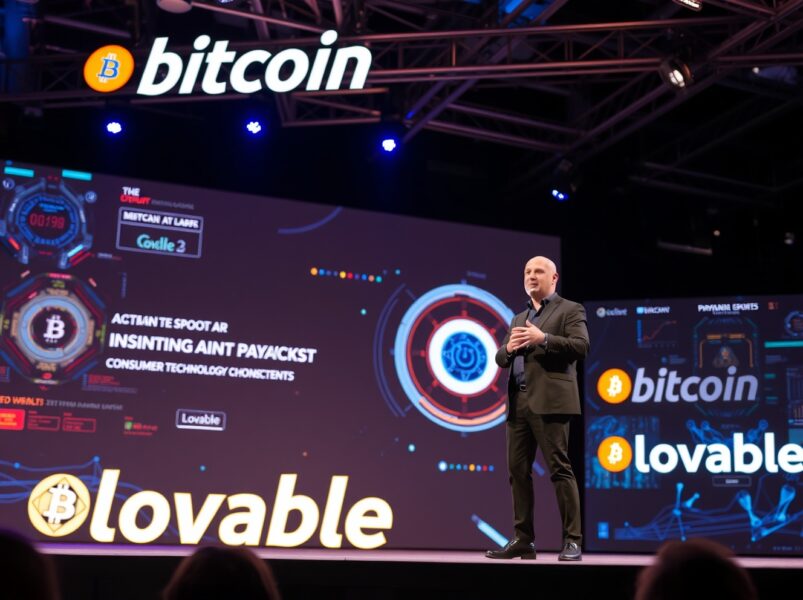
Lovable AI’s Astonishing Rise: Anton Osika Reveals Startup Secrets at Bitcoin World Disrupt 2025

Lovable AI’s Astonishing Rise: Anton Osika Reveals Startup Secrets at Bitcoin World Disrupt 2025


BitcoinWorld Lovable AI’s Astonishing Rise: Anton Osika Reveals Startup Secrets at Bitcoin World Disrupt 2025 Are you ready to witness a phenomenon? The world of technology is abuzz with the incredible rise of Lovable AI, a startup that’s not just breaking records but rewriting the rulebook for rapid growth. Imagine creating powerful apps and websites just by speaking to an AI – that’s the magic Lovable brings to the masses. This groundbreaking approach has propelled the company into the spotlight, making it one of the fastest-growing software firms in history. And now, the visionary behind this sensation, co-founder and CEO Anton Osika, is set to share his invaluable insights on the Disrupt Stage at the highly anticipated Bitcoin World Disrupt 2025. If you’re a founder, investor, or tech enthusiast eager to understand the future of innovation, this is an event you cannot afford to miss. Lovable AI’s Meteoric Ascent: Redefining Software Creation In an era where digital transformation is paramount, Lovable AI has emerged as a true game-changer. Its core premise is deceptively simple yet profoundly impactful: democratize software creation. By enabling anyone to build applications and websites through intuitive AI conversations, Lovable is empowering the vast majority of individuals who lack coding skills to transform their ideas into tangible digital products. This mission has resonated globally, leading to unprecedented momentum. The numbers speak for themselves: Achieved an astonishing $100 million Annual Recurring Revenue (ARR) in less than a year. Successfully raised a $200 million Series A funding round, valuing the company at $1.8 billion, led by industry giant Accel. Is currently fielding unsolicited investor offers, pushing its valuation towards an incredible $4 billion. As industry reports suggest, investors are unequivocally “loving Lovable,” and it’s clear why. This isn’t just about impressive financial metrics; it’s about a company that has tapped into a fundamental need, offering a solution that is both innovative and accessible. The rapid scaling of Lovable AI provides a compelling case study for any entrepreneur aiming for similar exponential growth. The Visionary Behind the Hype: Anton Osika’s Journey to Innovation Every groundbreaking company has a driving force, and for Lovable, that force is co-founder and CEO Anton Osika. His journey is as fascinating as his company’s success. A physicist by training, Osika previously contributed to the cutting-edge research at CERN, the European Organization for Nuclear Research. This deep technical background, combined with his entrepreneurial spirit, has been instrumental in Lovable’s rapid ascent. Before Lovable, he honed his skills as a co-founder of Depict.ai and a Founding Engineer at Sana. Based in Stockholm, Osika has masterfully steered Lovable from a nascent idea to a global phenomenon in record time. His leadership embodies a unique blend of profound technical understanding and a keen, consumer-first vision. At Bitcoin World Disrupt 2025, attendees will have the rare opportunity to hear directly from Osika about what it truly takes to build a brand that not only scales at an incredible pace in a fiercely competitive market but also adeptly manages the intense cultural conversations that inevitably accompany such swift and significant success. His insights will be crucial for anyone looking to understand the dynamics of high-growth tech leadership. Unpacking Consumer Tech Innovation at Bitcoin World Disrupt 2025 The 20th anniversary of Bitcoin World is set to be marked by a truly special event: Bitcoin World Disrupt 2025. From October 27–29, Moscone West in San Francisco will transform into the epicenter of innovation, gathering over 10,000 founders, investors, and tech leaders. It’s the ideal platform to explore the future of consumer tech innovation, and Anton Osika’s presence on the Disrupt Stage is a highlight. His session will delve into how Lovable is not just participating in but actively shaping the next wave of consumer-facing technologies. Why is this session particularly relevant for those interested in the future of consumer experiences? Osika’s discussion will go beyond the superficial, offering a deep dive into the strategies that have allowed Lovable to carve out a unique category in a market long thought to be saturated. Attendees will gain a front-row seat to understanding how to identify unmet consumer needs, leverage advanced AI to meet those needs, and build a product that captivates users globally. The event itself promises a rich tapestry of ideas and networking opportunities: For Founders: Sharpen your pitch and connect with potential investors. For Investors: Discover the next breakout startup poised for massive growth. For Innovators: Claim your spot at the forefront of technological advancements. The insights shared regarding consumer tech innovation at this event will be invaluable for anyone looking to navigate the complexities and capitalize on the opportunities within this dynamic sector. Mastering Startup Growth Strategies: A Blueprint for the Future Lovable’s journey isn’t just another startup success story; it’s a meticulously crafted blueprint for effective startup growth strategies in the modern era. Anton Osika’s experience offers a rare glimpse into the practicalities of scaling a business at breakneck speed while maintaining product integrity and managing external pressures. For entrepreneurs and aspiring tech leaders, his talk will serve as a masterclass in several critical areas: Strategy Focus Key Takeaways from Lovable’s Journey Rapid Scaling How to build infrastructure and teams that support exponential user and revenue growth without compromising quality. Product-Market Fit Identifying a significant, underserved market (the 99% who can’t code) and developing a truly innovative solution (AI-powered app creation). Investor Relations Balancing intense investor interest and pressure with a steadfast focus on product development and long-term vision. Category Creation Carving out an entirely new niche by democratizing complex technologies, rather than competing in existing crowded markets. Understanding these startup growth strategies is essential for anyone aiming to build a resilient and impactful consumer experience. Osika’s session will provide actionable insights into how to replicate elements of Lovable’s success, offering guidance on navigating challenges from product development to market penetration and investor management. Conclusion: Seize the Future of Tech The story of Lovable, under the astute leadership of Anton Osika, is a testament to the power of innovative ideas meeting flawless execution. Their remarkable journey from concept to a multi-billion-dollar valuation in record time is a compelling narrative for anyone interested in the future of technology. By democratizing software creation through Lovable AI, they are not just building a company; they are fostering a new generation of creators. His appearance at Bitcoin World Disrupt 2025 is an unmissable opportunity to gain direct insights from a leader who is truly shaping the landscape of consumer tech innovation. Don’t miss this chance to learn about cutting-edge startup growth strategies and secure your front-row seat to the future. Register now and save up to $668 before Regular Bird rates end on September 26. To learn more about the latest AI market trends, explore our article on key developments shaping AI features. This post Lovable AI’s Astonishing Rise: Anton Osika Reveals Startup Secrets at Bitcoin World Disrupt 2025 first appeared on BitcoinWorld.


Share
Coinstats2025/09/17 23:40
Phemex Publishes April 2026 Proof of Reserves, Reporting 131% Total Reserve Ratio

Phemex Publishes April 2026 Proof of Reserves, Reporting 131% Total Reserve Ratio

Phemex Publishes April 2026 Proof of Reserves, Reporting 131% Total Reserve Ratio
Share
Cryptodaily2026/04/02 19:35

Roll the Dice & Win Up to 1 BTC

Roll the Dice & Win Up to 1 BTCRoll the Dice & Win Up to 1 BTC

Invite friends & share 500,000 USDT!
