A South Korean court has jailed two Vietnamese nationals for using Tether (USDT) to power a cross-border money laundering scheme. The duo used the USD-pegged stablecoin to smuggle funds raised from voice phishing scams overseas. USDT Money Laundering Ring: Defendants Jailed for Two Years The South Korean media outlet Financial News reported that the Criminal Division of the Seoul Eastern District Court’s Presiding Judge Lee Jeong-hyeong sentenced the duo to two years in prison each on June 22. The Seoul Eastern District Court, in Seoul, South Korea. (Source: Pectus Solentis [CC BY-SA 4.0]) The defendants were identified as a college student surnamed Duong (23) and an unemployed individual surnamed Pham (also 23). The court found both individuals guilty of violating the Special Act on Prevention of Telecommunications and Financial Fraud and Refund of Damages. Prosecutors explained that Duong and Pham first made contact with the voice phishing scam ring in October last year. The ring recruited both via a Telegram open chat room. The ring’s organizers told Duong and Pham that they were to receive the proceeds of voice phishing scams in Korean won. The duo was then instructed to use this money to buy USDT, which they then sent to a crypto wallet held by a member of a voice phishing gang who was residing in Vietnam. The ring paid both Duong and Pham commission fees of 50,000 won ($36.44) to 100,000 won ($72.88) per 10 million won ($7,288) worth of USDT they sent. In a bold play to secure Korea’s position among the global AI elite, President Lee Jae Myung kicked off his term with a visit to the launch site of a mega-scale AI data center. #AIdatacenter https://t.co/gGHvfjNBvw — The Korea JoongAng Daily (@JoongAngDaily) June 22, 2025 ‘Hash Sentence Inevitable,’ Judge Explains The court heard that the voice phishing ring succeeded in duping South Korea-based victims out of thousands of dollars’ worth of cash transfers. The ring’s employees called people pretending to be credit card delivery workers, insurance company employees, National Tax Service staffers, and even public prosecutors. They usually told potential victims that they were calling to check the safety of their bank accounts. The ring used a range of money laundering techniques, using other accomplices from Uzbekistan and Vietnam. The judge said that the court had not handed out a harsher sentence because neither of the defendants had criminal records in South Korea. But Lee added: “Even if the defendants did not orchestrate the crime, they must be severely punished. They played an essential role in the crime, acting as intermediaries. They have also not made any special efforts to help compensate the victims for the damages incurred.” USDT-related crime is on the rise in South Korea, as the coin’s popularity in the nation continues to grow. This year has seen a sharp rise in bogus USDT-themed over-the-counter deals and related thefts .A South Korean court has jailed two Vietnamese nationals for using Tether (USDT) to power a cross-border money laundering scheme. The duo used the USD-pegged stablecoin to smuggle funds raised from voice phishing scams overseas. USDT Money Laundering Ring: Defendants Jailed for Two Years The South Korean media outlet Financial News reported that the Criminal Division of the Seoul Eastern District Court’s Presiding Judge Lee Jeong-hyeong sentenced the duo to two years in prison each on June 22. The Seoul Eastern District Court, in Seoul, South Korea. (Source: Pectus Solentis [CC BY-SA 4.0]) The defendants were identified as a college student surnamed Duong (23) and an unemployed individual surnamed Pham (also 23). The court found both individuals guilty of violating the Special Act on Prevention of Telecommunications and Financial Fraud and Refund of Damages. Prosecutors explained that Duong and Pham first made contact with the voice phishing scam ring in October last year. The ring recruited both via a Telegram open chat room. The ring’s organizers told Duong and Pham that they were to receive the proceeds of voice phishing scams in Korean won. The duo was then instructed to use this money to buy USDT, which they then sent to a crypto wallet held by a member of a voice phishing gang who was residing in Vietnam. The ring paid both Duong and Pham commission fees of 50,000 won ($36.44) to 100,000 won ($72.88) per 10 million won ($7,288) worth of USDT they sent. In a bold play to secure Korea’s position among the global AI elite, President Lee Jae Myung kicked off his term with a visit to the launch site of a mega-scale AI data center. #AIdatacenter https://t.co/gGHvfjNBvw — The Korea JoongAng Daily (@JoongAngDaily) June 22, 2025 ‘Hash Sentence Inevitable,’ Judge Explains The court heard that the voice phishing ring succeeded in duping South Korea-based victims out of thousands of dollars’ worth of cash transfers. The ring’s employees called people pretending to be credit card delivery workers, insurance company employees, National Tax Service staffers, and even public prosecutors. They usually told potential victims that they were calling to check the safety of their bank accounts. The ring used a range of money laundering techniques, using other accomplices from Uzbekistan and Vietnam. The judge said that the court had not handed out a harsher sentence because neither of the defendants had criminal records in South Korea. But Lee added: “Even if the defendants did not orchestrate the crime, they must be severely punished. They played an essential role in the crime, acting as intermediaries. They have also not made any special efforts to help compensate the victims for the damages incurred.” USDT-related crime is on the rise in South Korea, as the coin’s popularity in the nation continues to grow. This year has seen a sharp rise in bogus USDT-themed over-the-counter deals and related thefts .

South Korean Court Jails Two Members of Cross-border USDT Money Laundering Ring

A South Korean court has jailed two Vietnamese nationals for using Tether (USDT) to power a cross-border money laundering scheme.

The duo used the USD-pegged stablecoin to smuggle funds raised from voice phishing scams overseas.

USDT Money Laundering Ring: Defendants Jailed for Two Years

The South Korean media outlet Financial News reported that the Criminal Division of the Seoul Eastern District Court’s Presiding Judge Lee Jeong-hyeong sentenced the duo to two years in prison each on June 22.
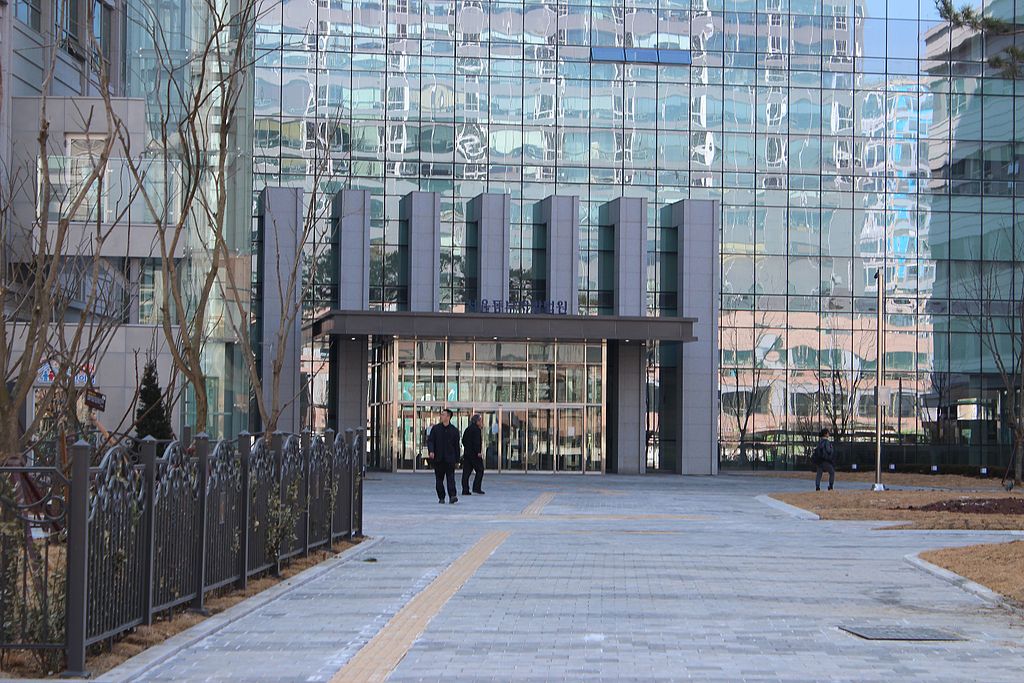
The Seoul Eastern District Court, in Seoul, South Korea.The Seoul Eastern District Court, in Seoul, South Korea. (Source: Pectus Solentis [CC BY-SA 4.0])

The defendants were identified as a college student surnamed Duong (23) and an unemployed individual surnamed Pham (also 23).

The court found both individuals guilty of violating the Special Act on Prevention of Telecommunications and Financial Fraud and Refund of Damages.

Prosecutors explained that Duong and Pham first made contact with the voice phishing scam ring in October last year.

The ring recruited both via a Telegram open chat room. The ring’s organizers told Duong and Pham that they were to receive the proceeds of voice phishing scams in Korean won.

The duo was then instructed to use this money to buy USDT, which they then sent to a crypto wallet held by a member of a voice phishing gang who was residing in Vietnam.

The ring paid both Duong and Pham commission fees of 50,000 won ($36.44) to 100,000 won ($72.88) per 10 million won ($7,288) worth of USDT they sent.

‘Hash Sentence Inevitable,’ Judge Explains

The court heard that the voice phishing ring succeeded in duping South Korea-based victims out of thousands of dollars’ worth of cash transfers.

The ring’s employees called people pretending to be credit card delivery workers, insurance company employees, National Tax Service staffers, and even public prosecutors.

They usually told potential victims that they were calling to check the safety of their bank accounts.

The ring used a range of money laundering techniques, using other accomplices from Uzbekistan and Vietnam.

The judge said that the court had not handed out a harsher sentence because neither of the defendants had criminal records in South Korea. But Lee added:

USDT-related crime is on the rise in South Korea, as the coin’s popularity in the nation continues to grow. This year has seen a sharp rise in bogus USDT-themed over-the-counter deals and related thefts.


Market Opportunity
Threshold Logo
Threshold Price(T)
$0,0094
$0,0094$0,0094
-0,52%
USD
Threshold (T) Live Price Chart
Disclaimer: The articles reposted on this site are sourced from public platforms and are provided for informational purposes only. They do not necessarily reflect the views of MEXC. All rights remain with the original authors. If you believe any content infringes on third-party rights, please contact service@support.mexc.com for removal. MEXC makes no guarantees regarding the accuracy, completeness, or timeliness of the content and is not responsible for any actions taken based on the information provided. The content does not constitute financial, legal, or other professional advice, nor should it be considered a recommendation or endorsement by MEXC.

You May Also Like

Bitcoin ETF Investors React to Fed’s Decision

Bitcoin ETF Investors React to Fed’s Decision

The post Bitcoin ETF Investors React to Fed’s Decision appeared on BitcoinEthereumNews.com. In a surprise move, spot Bitcoin ETFs experienced their first significant daily outflows in over a week, following the Federal Reserve’s adjusted policy outlook. This shift reflects the market’s readiness to respond to any hint of change on the regulatory landscape, as well as its sensitivity to central bank cues. Continue Reading:Bitcoin ETF Investors React to Fed’s Decision Source: https://en.bitcoinhaber.net/bitcoin-etf-investors-react-to-feds-decision
Share
BitcoinEthereumNews2025/09/18 18:51
US Senators Introduce SAFE Crypto Act to Target Rising Crypto Scams

US Senators Introduce SAFE Crypto Act to Target Rising Crypto Scams

The post US Senators Introduce SAFE Crypto Act to Target Rising Crypto Scams appeared first on Coinpedia Fintech News Crypto scams are getting faster, smarter and
Share
CoinPedia2025/12/17 18:33
From Idea to App Store: The Complete Guide to Mobile App Development in Saudi Arabia

From Idea to App Store: The Complete Guide to Mobile App Development in Saudi Arabia

Saudi Arabia is at the forefront of digital transformation. With Vision 2030 driving innovation and a rapidly growing population of tech-savvy users, mobile apps have become a core driver of business growth in the Kingdom. From e-commerce and fintech to healthcare, logistics, and on-demand services, Saudi businesses are embracing mobile apps to connect with customers and scale faster. But how do you take a mobile app idea and turn it into a successful launch on the App Store or Google Play? This guide breaks down the complete mobile app development process in Saudi Arabia — step by step. Step 1: Validate Your App Idea for the Saudi Market Before you start building, ask: What problem does my app solve for Saudi users? Is there a cultural or market gap my app can fill? How do local competitors approach the same challenge? For example, apps related to digital payments, e-learning, delivery services, and healthcare are in high demand across Saudi Arabia. Conducting market research and aligning your app idea with local user behavior is critical. Step 2: Plan Features with Local Needs in Mind Your app should start with an MVP (Minimum Viable Product) — a core version that solves the main problem. Later, you can scale with advanced features. In Saudi Arabia, consider adding: Arabic language support (essential for user adoption) Integration with local payment gateways like STC Pay, Mada, or Apple Pay Regulatory compliance (especially for fintech and health apps) Localization for user preferences (Hijri calendar, cultural UI elements) Step 3: Select the Right Development Approach You can choose: Native Apps (Swift for iOS, Kotlin for Android) — Great for scalability and performance. Cross-Platform Apps (Flutter, React Native) — Cost-effective for startups targeting both iOS and Android simultaneously. Hybrid Apps — Suitable for simpler apps with limited features. For Saudi startups and enterprises, cross-platform development is often preferred to reach a wider audience quickly and efficiently. Step 4: Design With a Local Touch The design must balance global usability standards with local cultural relevance. UI (User Interface): Clean, modern visuals that align with Saudi branding. UX (User Experience): Simple navigation, clear Arabic text support, and intuitive flows. Wireframing & Prototyping: Test early with Saudi users to ensure adoption. A user-friendly design is one of the top reasons apps succeed in the Kingdom’s competitive market. Step 5: Develop Your Mobile App Once the design is ready, the coding begins. Saudi app development companies often follow Agile methodology, ensuring flexibility and faster delivery. Front-End Development: Interface and user interactions. Back-End Development: Databases, servers, and APIs. Integration: Secure connections between front-end and back-end. Strong collaboration between developers, designers, and business analysts ensures your app aligns with Saudi market needs. Step 6: Testing Across Devices and Networks Saudi users rely on different devices and network speeds. That’s why rigorous testing is critical: Functionality Testing: Features work as expected. Performance Testing: The app runs smoothly on both 4G and 5G networks. Localization Testing: Arabic text displays correctly, without alignment issues. Security Testing: Data protection compliance with Saudi cybersecurity standards. Step 7: App Store & Google Play Launch in Saudi Arabia To publish your app: Apple App Store (iOS): Requires an Apple Developer account and strict guideline compliance. Google Play Store (Android): Faster approval but still requires detailed app info. You’ll also need metadata in both English and Arabic — titles, descriptions, and screenshots — to maximize visibility among Saudi users. Step 8: Market Your App in Saudi Arabia Launching an app is only the beginning. You need a marketing strategy tailored to the Kingdom: App Store Optimization (ASO): Use Arabic and English keywords. Social Media Campaigns: Leverage platforms like Snapchat, Twitter (X), and Instagram, which are highly popular in Saudi Arabia. Influencer Marketing: Collaborate with Saudi influencers for early traction. Paid Ads: Google Ads and Saudi-focused Facebook/Instagram ads. Partnerships: Collaborate with local businesses to reach a wider audience. Step 9: Gather Feedback and Optimize Once your app is live, monitor: User reviews on app stores Analytics on engagement, retention, and churn rates Suggestions from Saudi users for culturally relevant features Continuous updates and improvements are vital to stay competitive. Step 10: Scale With Advanced Features Once your MVP gains traction, you can expand with advanced features such as: AI and machine learning for personalization Blockchain-based payments for fintech apps AR/VR features for retail and gaming apps IoT integration for smart home and mobility solutions Saudi Arabia’s digital ecosystem is growing rapidly — apps that adapt quickly will thrive. Conclusion Mobile app development in Saudi Arabia is not just about building an app — it’s about aligning with Vision 2030, cultural needs, and user expectations. By following a clear process — from idea validation to launch and beyond — you can transform your concept into a profitable digital product. Whether you’re a startup or an enterprise in Saudi Arabia, the opportunity is massive. With the right strategy, you can move from idea to App Store and create an app that truly resonates with Saudi users. From Idea to App Store: The Complete Guide to Mobile App Development in Saudi Arabia was originally published in Coinmonks on Medium, where people are continuing the conversation by highlighting and responding to this story
Share
Medium2025/09/18 14:46