The post Why Latin America Might Leapfrog the U.S. in Self-Custody Adoption appeared first on Coinpedia Fintech News Latin America has become one of the most active crypto regions in the world – not because of hype, but because of necessity. Inflation, remittances, and mobile-first financial behavior make crypto more than an asset class; they make it a lifeline. And as major players shift toward fully onchain experiences, the region may soon surpass …The post Why Latin America Might Leapfrog the U.S. in Self-Custody Adoption appeared first on Coinpedia Fintech News Latin America has become one of the most active crypto regions in the world – not because of hype, but because of necessity. Inflation, remittances, and mobile-first financial behavior make crypto more than an asset class; they make it a lifeline. And as major players shift toward fully onchain experiences, the region may soon surpass …

Why Latin America Might Leapfrog the U.S. in Self-Custody Adoption
2025/11/25 19:03
3 min read
latin-america

The post Why Latin America Might Leapfrog the U.S. in Self-Custody Adoption appeared first on Coinpedia Fintech News

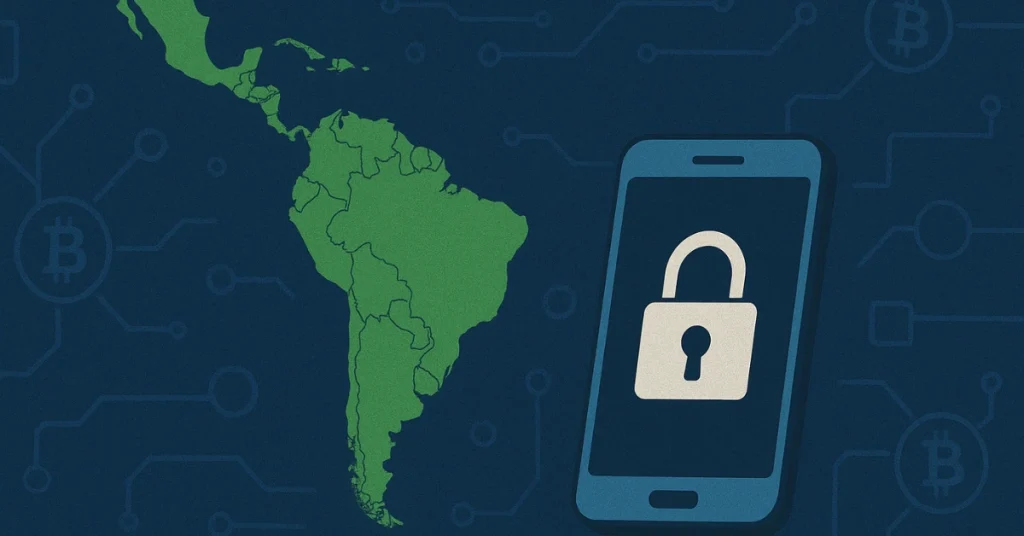
Latin America has become one of the most active crypto regions in the world – not because of hype, but because of necessity. Inflation, remittances, and mobile-first financial behavior make crypto more than an asset class; they make it a lifeline. And as major players shift toward fully onchain experiences, the region may soon surpass the U.S. in mainstream self-custody adoption.

A Region Built for Self-Custody

Across Latin America, savings in local currency can lose value overnight. Self-custody wallets offer a way to hold stablecoins, dollar-linked assets, or crypto without relying on fragile banking systems or custodial platforms.

Latin America is one of the world’s largest remittance corridors. Crypto (especially self-custodial crypto) eliminates friction, cost, and delay, letting families receive money globally in minutes.

The region skipped the traditional desktop banking era and jumped straight into mobile finance. With the UX of self-custody improving rapidly, adoption is far easier here than in markets where legacy systems dominate.

Americans have stable banking, predictable regulations (even if crypto rules are unclear), and mature credit systems. Crypto is mostly seen as an investment, not an economic necessity. Without urgency, the transition to self-custody is slower.

Bitso as a Signal: Onchain Goes Mainstream

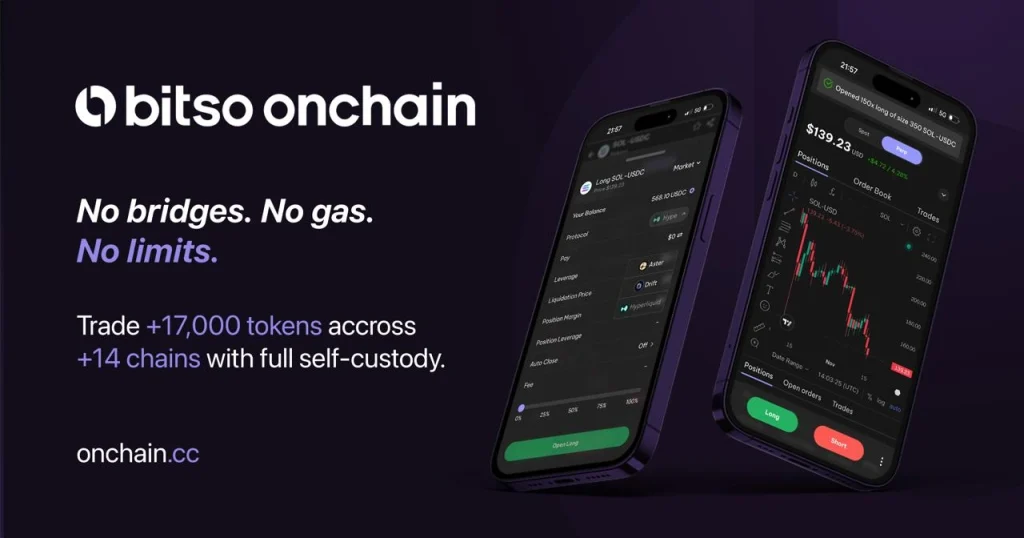
Bitso, Latin America’s largest crypto platform, recently unveiled a major onchain expansion that reflects the region’s shift.
bitson-onchain

Bitso is moving from spot-only onchain activity to a full self-custody trading environment, giving users advanced tools without giving up control of their assets.

Launching early 2026, the Perps Aggregator will let traders deposit once and trade across multiple perp venues, use one unified USDC balance, get best-execution routing, and earn multiple points at once, among other things.

It brings CEX-level smoothness to a non-custodial world, exactly what LATAM users need to transition fully onchain.

Bitso’s upcoming token and its Season 0 points program are designed to reward long-term participation and onboard millions into the onchain ecosystem.

As infrastructure improves – near-zero gas, smart routing, seamless cross-chain swaps – self-custody is no longer a technical challenge. For Latin Americans, it solves real-world problems in ways traditional finance cannot. This might be the first region where the majority of users skip centralized platforms entirely and move directly into permissionless finance.

While the U.S. debates regulations and treats crypto as a speculative asset class, Latin America is adopting onchain tools for everyday survival. Platforms like Bitso are accelerating this shift, transforming crypto from an investment into an economic operating system.

If the momentum continues, Latin America won’t just catch up to the U.S. in self-custody adoption – it will pass it.


Market Opportunity
Union Logo
Union Price(U)
$0.001429
$0.001429$0.001429
-0.13%
USD
Union (U) Live Price Chart
Disclaimer: The articles reposted on this site are sourced from public platforms and are provided for informational purposes only. They do not necessarily reflect the views of MEXC. All rights remain with the original authors. If you believe any content infringes on third-party rights, please contact service@support.mexc.com for removal. MEXC makes no guarantees regarding the accuracy, completeness, or timeliness of the content and is not responsible for any actions taken based on the information provided. The content does not constitute financial, legal, or other professional advice, nor should it be considered a recommendation or endorsement by MEXC.

You May Also Like

Let insiders trade – Blockworks

Let insiders trade – Blockworks

The post Let insiders trade – Blockworks appeared on BitcoinEthereumNews.com. This is a segment from The Breakdown newsletter. To read more editions, subscribe ​​“The most valuable commodity I know of is information.” — Gordon Gekko, Wall Street Ten months ago, FBI agents raided Shayne Coplan’s Manhattan apartment, ostensibly in search of evidence that the prediction market he founded, Polymarket, had illegally allowed US residents to place bets on the US election. Two weeks ago, the CFTC gave Polymarket the green light to allow those very same US residents to place bets on whatever they like. This is quite the turn of events — and it’s not just about elections or politics. With its US government seal of approval in hand, Polymarket is reportedly raising capital at a valuation of $9 billion — a reflection of the growing belief that prediction markets will be used for much more than betting on elections once every four years. Instead, proponents say prediction markets can provide a real service to the world by providing it with better information about nearly everything. I think they might, too — but only if insiders are free to participate. Yesterday, for example, Polymarket announced new betting markets on company earnings reports, with a promise that it would improve the information that investors have to work with.  Instead of waiting three months to find out how a company is faring, investors could simply watch the odds on Polymarket.  If the probability of an earnings beat is rising, for example, investors would know at a glance that things are going well. But that will only happen if enough of the people betting actually know how things are going. Relying on the wisdom of crowds to magically discern how a business is doing won’t add much incremental knowledge to the world; everyone’s guesses are unlikely to average out to the truth. If…
Share
BitcoinEthereumNews2025/09/18 05:16
Morning Crypto Report: 'I Am Capitulating': What's Vitalik Buterin Talking About? Bitcoin Quantum Threat Drama Gets 20,000 BTC Twist, Cardano out of Top 10 as Bitcoin Cash Wins Back 25% of BCH Price

Morning Crypto Report: 'I Am Capitulating': What's Vitalik Buterin Talking About? Bitcoin Quantum Threat Drama Gets 20,000 BTC Twist, Cardano out of Top 10 as Bitcoin Cash Wins Back 25% of BCH Price

February 8, Sunday: Buterin says he is "capitulating" as X naming drama spills into the crypto market, Bitcoin's quantum threat adds a 20,000 BTC angle and Bitcoin
Share
Coinstats2026/02/08 21:51
Pi Network Users Criticize Core Team After Celebratory Post

Pi Network Users Criticize Core Team After Celebratory Post

The post Pi Network Users Criticize Core Team After Celebratory Post appeared on BitcoinEthereumNews.com. Home » Crypto Bits The first Friday of February was supposed
Share
BitcoinEthereumNews2026/02/08 22:11