BitcoinWorld Sui wBTC Onboarding: A Game-Changer for Bitcoin DeFi on LayerZero The Sui blockchain just made a monumental move for decentralized finance. The network has announced that Wrapped Bitcoin (wBTC) is coming to its ecosystem via the cross-chain protocol LayerZero. This Sui wBTC onboarding is more than just a technical integration; it’s a strategic unlock for liquidity, innovation, and user opportunity. For anyone invested in the […] This post Sui wBTC Onboarding: A Game-Changer for Bitcoin DeFi on LayerZero first appeared on BitcoinWorld.BitcoinWorld Sui wBTC Onboarding: A Game-Changer for Bitcoin DeFi on LayerZero The Sui blockchain just made a monumental move for decentralized finance. The network has announced that Wrapped Bitcoin (wBTC) is coming to its ecosystem via the cross-chain protocol LayerZero. This Sui wBTC onboarding is more than just a technical integration; it’s a strategic unlock for liquidity, innovation, and user opportunity. For anyone invested in the […] This post Sui wBTC Onboarding: A Game-Changer for Bitcoin DeFi on LayerZero first appeared on BitcoinWorld.

Sui wBTC Onboarding: A Game-Changer for Bitcoin DeFi on LayerZero

2025/12/06 02:30
5 min read
Sui wBTC onboarding illustrated as Bitcoin crossing a bridge to the Sui blockchain ecosystem.

BitcoinWorld

Sui wBTC Onboarding: A Game-Changer for Bitcoin DeFi on LayerZero

The Sui blockchain just made a monumental move for decentralized finance. The network has announced that Wrapped Bitcoin (wBTC) is coming to its ecosystem via the cross-chain protocol LayerZero. This Sui wBTC onboarding is more than just a technical integration; it’s a strategic unlock for liquidity, innovation, and user opportunity. For anyone invested in the future of multi-chain finance, this is a development you cannot ignore.

What Does Sui wBTC Onboarding Actually Mean?

Let’s break it down simply. Bitcoin, the original cryptocurrency, operates on its own secure but limited blockchain. It wasn’t built for the complex smart contracts that power modern DeFi applications. Wrapped Bitcoin (wBTC) solves this by creating a tokenized version of BTC that can move to other blockchains. The Sui wBTC onboarding means that this valuable, Bitcoin-backed asset can now flow seamlessly onto the high-speed Sui network.

LayerZero acts as the essential bridge. This omnichain interoperability protocol securely messages and verifies transactions between different chains. Therefore, it ensures that when you lock Bitcoin to mint wBTC on Ethereum, that same value can be represented and used trustlessly on Sui. This creates a unified liquidity pool across ecosystems.

Why is This Integration a Big Deal for Users?

The benefits of this move are immediate and tangible. By bringing the deep liquidity of Bitcoin to Sui, the network supercharges its entire financial landscape. Imagine what becomes possible:

  • Enhanced DeFi Yield Opportunities: Users can now leverage their Bitcoin to earn yield on Sui’s native lending, borrowing, and automated market maker (AMM) platforms without selling their BTC.
  • Reduced Transaction Costs and Speeds: Sui’s parallel execution and object-centric model promise faster and cheaper transactions compared to Ethereum. Interacting with wBTC-based DeFi could become significantly more efficient.
  • New Financial Primitives: Developers can now build novel applications—like Bitcoin-collateralized stablecoins or advanced derivatives—directly on Sui, tapping into the world’s largest crypto asset.

How Does LayerZero Make the Sui wBTC Onboarding Secure?

Security is paramount when moving billions in value. LayerZero’s architecture provides a robust framework for this Sui wBTC onboarding. Instead of relying on a single centralized bridge, LayerZero uses an oracle and relayer system for cross-chain message verification. This decentralized approach minimizes central points of failure. For users, it means greater confidence that their wrapped Bitcoin on Sui is fully backed and redeemable.

However, it’s crucial to understand the risks. The security of wBTC ultimately depends on the custodians holding the underlying Bitcoin and the integrity of the smart contracts on both the source and destination chains. Users should always conduct their own research before engaging with cross-chain assets.

What’s the Future After This Sui wBTC Onboarding?

This announcement is a catalyst. The successful Sui wBTC onboarding via LayerZero sets a precedent. It demonstrates Sui’s commitment to becoming a major hub for omnichain assets and could trigger a wave of similar integrations for other major tokens. The inflow of Bitcoin liquidity will attract more developers and users to Sui, creating a virtuous cycle of growth. The competition among Layer 1 blockchains is intensifying, and seamless asset mobility is now a non-negotiable feature.

Conclusion: A Strategic Step Forward

The integration of wBTC onto Sui via LayerZero is a strategic masterstroke. It directly addresses one of the largest demands in crypto: using Bitcoin in fast, cheap, and innovative DeFi environments. This move enhances Sui’s utility, boosts its Total Value Locked (TVL) potential, and provides real, actionable benefits for holders of the world’s premier cryptocurrency. The bridges are built; now we watch the liquidity flow.

Frequently Asked Questions (FAQs)

Q: What is wBTC?
A: wBTC, or Wrapped Bitcoin, is an ERC-20 token on the Ethereum blockchain that represents Bitcoin 1:1. Each wBTC is backed by a real Bitcoin held in reserve by a consortium of merchants.

Q: How do I get wBTC on the Sui network?
A: You will likely use a bridge interface (like the one provided by LayerZero’s application partners) to transfer wBTC from a supported chain (like Ethereum) directly to your Sui wallet address. Always use official channels.

Q: Is using wBTC on Sui safe?
A> The safety depends on the security of the LayerZero protocol, the wBTC custodians, and the Sui smart contracts receiving the asset. While the technology is robust, all cross-chain activities carry inherent smart contract and bridge risks.

Q: Can I earn yield with my wBTC on Sui?
A> Yes, that’s a primary use case. Once wBTC is on Sui, you can supply it to DeFi lending protocols or provide liquidity in trading pools to potentially generate yield.

Q: What are the fees for moving wBTC to Sui?
A> Fees will include gas costs on the source chain (e.g., Ethereum) and potentially a small bridge fee. Transaction fees on Sui itself are expected to be low.

Q: Does this mean Bitcoin is now on the Sui blockchain?
A> Technically, no. The Bitcoin blockchain remains separate. wBTC is a representation of Bitcoin’s value that can be used within Sui’s smart contract environment.

Found this breakdown of the Sui wBTC onboarding helpful? Share this article with your network on Twitter or LinkedIn to spread the word about this major development in cross-chain DeFi! Let’s discuss how Bitcoin liquidity will reshape the Sui ecosystem.

To learn more about the latest DeFi and cross-chain trends, explore our article on key developments shaping Bitcoin’s role in the future of decentralized finance.

This post Sui wBTC Onboarding: A Game-Changer for Bitcoin DeFi on LayerZero first appeared on BitcoinWorld.

Market Opportunity
SUI Logo
SUI Price(SUI)
$1.0084
$1.0084$1.0084
+2.97%
USD
SUI (SUI) Live Price Chart
Disclaimer: The articles reposted on this site are sourced from public platforms and are provided for informational purposes only. They do not necessarily reflect the views of MEXC. All rights remain with the original authors. If you believe any content infringes on third-party rights, please contact service@support.mexc.com for removal. MEXC makes no guarantees regarding the accuracy, completeness, or timeliness of the content and is not responsible for any actions taken based on the information provided. The content does not constitute financial, legal, or other professional advice, nor should it be considered a recommendation or endorsement by MEXC.

You May Also Like

Cashing In On University Patents Means Giving Up On Our Innovation Future

Cashing In On University Patents Means Giving Up On Our Innovation Future

The post Cashing In On University Patents Means Giving Up On Our Innovation Future appeared on BitcoinEthereumNews.com. “It’s a raid on American innovation that would deliver pennies to the Treasury while kneecapping the very engine of our economic and medical progress,” writes Pipes. Getty Images Washington is addicted to taxing success. Now, Commerce Secretary Howard Lutnick is floating a plan to skim half the patent earnings from inventions developed at universities with federal funding. It’s being sold as a way to shore up programs like Social Security. In reality, it’s a raid on American innovation that would deliver pennies to the Treasury while kneecapping the very engine of our economic and medical progress. Yes, taxpayer dollars support early-stage research. But the real payoff comes later—in the jobs created, cures discovered, and industries launched when universities and private industry turn those discoveries into real products. By comparison, the sums at stake in patent licensing are trivial. Universities collectively earn only about $3.6 billion annually in patent income—less than the federal government spends on Social Security in a single day. Even confiscating half would barely register against a $6 trillion federal budget. And yet the damage from such a policy would be anything but trivial. The true return on taxpayer investment isn’t in licensing checks sent to Washington, but in the downstream economic activity that federally supported research unleashes. Thanks to the bipartisan Bayh-Dole Act of 1980, universities and private industry have powerful incentives to translate early-stage discoveries into real-world products. Before Bayh-Dole, the government hoarded patents from federally funded research, and fewer than 5% were ever licensed. Once universities could own and license their own inventions, innovation exploded. The result has been one of the best returns on investment in government history. Since 1996, university research has added nearly $2 trillion to U.S. industrial output, supported 6.5 million jobs, and launched more than 19,000 startups. Those companies pay…
Share
BitcoinEthereumNews2025/09/18 03:26
China Blocks Nvidia’s RTX Pro 6000D as Local Chips Rise
China Blocks Nvidia’s RTX Pro 6000D as Local Chips Rise

The post China Blocks Nvidia’s RTX Pro 6000D as Local Chips Rise appeared on BitcoinEthereumNews.com. China Blocks Nvidia’s RTX Pro 6000D as Local Chips Rise China’s internet regulator has ordered the country’s biggest technology firms, including Alibaba and ByteDance, to stop purchasing Nvidia’s RTX Pro 6000D GPUs. According to the Financial Times, the move shuts down the last major channel for mass supplies of American chips to the Chinese market. Why Beijing Halted Nvidia Purchases Chinese companies had planned to buy tens of thousands of RTX Pro 6000D accelerators and had already begun testing them in servers. But regulators intervened, halting the purchases and signaling stricter controls than earlier measures placed on Nvidia’s H20 chip. Image: Nvidia An audit compared Huawei and Cambricon processors, along with chips developed by Alibaba and Baidu, against Nvidia’s export-approved products. Regulators concluded that Chinese chips had reached performance levels comparable to the restricted U.S. models. This assessment pushed authorities to advise firms to rely more heavily on domestic processors, further tightening Nvidia’s already limited position in China. China’s Drive Toward Tech Independence The decision highlights Beijing’s focus on import substitution — developing self-sufficient chip production to reduce reliance on U.S. supplies. “The signal is now clear: all attention is focused on building a domestic ecosystem,” said a representative of a leading Chinese tech company. Nvidia had unveiled the RTX Pro 6000D in July 2025 during CEO Jensen Huang’s visit to Beijing, in an attempt to keep a foothold in China after Washington restricted exports of its most advanced chips. But momentum is shifting. Industry sources told the Financial Times that Chinese manufacturers plan to triple AI chip production next year to meet growing demand. They believe “domestic supply will now be sufficient without Nvidia.” What It Means for the Future With Huawei, Cambricon, Alibaba, and Baidu stepping up, China is positioning itself for long-term technological independence. Nvidia, meanwhile, faces…
Share
BitcoinEthereumNews2025/09/18 01:37
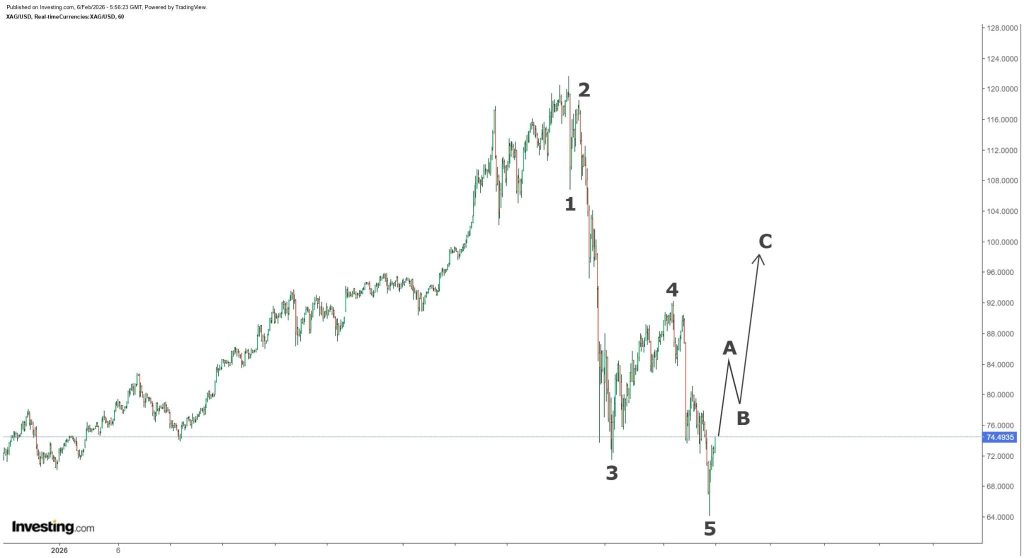
Silver Price Crash Is Over “For Real This Time,” Analyst Predicts a Surge Back Above $90

Silver Price Crash Is Over “For Real This Time,” Analyst Predicts a Surge Back Above $90

Silver has been taking a beating lately, and the Silver price hasn’t exactly been acting like a safe haven. After running up into the highs, the whole move reversed
Share
Captainaltcoin2026/02/07 03:15