The post $100K BTC Price Depends On Fed Policy Pivot, AI Debt Bubble appeared on BitcoinEthereumNews.com. Key takeaways: The Federal Reserve’s move away from quantitative tightening and rate cuts creates liquidity, making fixed-income assets less attractive. Surging tech credit risks, as evidenced by high Oracle debt protection costs, prompt investors to seek alternative, scarcer assets like Bitcoin. Bitcoin (BTC) fell 4% on Friday to a low of $88,140, extending its decline to 19% since November. Meanwhile, the S&P 500 is now less than 1% from its all-time high. This sharp divergence may soon close with a strong upside move for Bitcoin, fueled by a major shift in central bank policy and growing credit stress. This perfect storm has the potential to propel Bitcoin to the psychologically critical $100,000 barrier before the year concludes. Fixed income’s fading appeal and tech credit scare could fuel Bitcoin rally The most critical factor is the Federal Reserve’s pivot from quantitative tightening, a process of draining liquidity from the financial system by allowing the maturity of Treasury securities and mortgage-backed securities without reinvesting the proceeds. The Fed officially halted this program on Dec. 1. Total assets of the Federal Reserve, USD. Source: TradingView Over the last six months, the Fed’s balance sheet contracted by $136 billion, removing a significant amount of cash. The market is aggressively anticipating the next phase based on lower interest rates. According to CME FedWatch Tool data, bond futures assign an 87% probability to a rate cut at the Wednesday Fed meeting, with expectations fully pricing in three cuts by September 2026. US Money Market fund assets, USD trillion. Source: Bloomberg Lower interest rates and increasing systemic liquidity fundamentally erode the demand for fixed-income assets. As the Fed cuts rates, the returns on new bond issuances also decline, making them less attractive to institutional funds. According to Bloomberg, there is now a record-high $8 trillion in US… The post $100K BTC Price Depends On Fed Policy Pivot, AI Debt Bubble appeared on BitcoinEthereumNews.com. Key takeaways: The Federal Reserve’s move away from quantitative tightening and rate cuts creates liquidity, making fixed-income assets less attractive. Surging tech credit risks, as evidenced by high Oracle debt protection costs, prompt investors to seek alternative, scarcer assets like Bitcoin. Bitcoin (BTC) fell 4% on Friday to a low of $88,140, extending its decline to 19% since November. Meanwhile, the S&P 500 is now less than 1% from its all-time high. This sharp divergence may soon close with a strong upside move for Bitcoin, fueled by a major shift in central bank policy and growing credit stress. This perfect storm has the potential to propel Bitcoin to the psychologically critical $100,000 barrier before the year concludes. Fixed income’s fading appeal and tech credit scare could fuel Bitcoin rally The most critical factor is the Federal Reserve’s pivot from quantitative tightening, a process of draining liquidity from the financial system by allowing the maturity of Treasury securities and mortgage-backed securities without reinvesting the proceeds. The Fed officially halted this program on Dec. 1. Total assets of the Federal Reserve, USD. Source: TradingView Over the last six months, the Fed’s balance sheet contracted by $136 billion, removing a significant amount of cash. The market is aggressively anticipating the next phase based on lower interest rates. According to CME FedWatch Tool data, bond futures assign an 87% probability to a rate cut at the Wednesday Fed meeting, with expectations fully pricing in three cuts by September 2026. US Money Market fund assets, USD trillion. Source: Bloomberg Lower interest rates and increasing systemic liquidity fundamentally erode the demand for fixed-income assets. As the Fed cuts rates, the returns on new bond issuances also decline, making them less attractive to institutional funds. According to Bloomberg, there is now a record-high $8 trillion in US…

$100K BTC Price Depends On Fed Policy Pivot, AI Debt Bubble

Key takeaways:

  • The Federal Reserve’s move away from quantitative tightening and rate cuts creates liquidity, making fixed-income assets less attractive.

  • Surging tech credit risks, as evidenced by high Oracle debt protection costs, prompt investors to seek alternative, scarcer assets like Bitcoin.

Bitcoin (BTC) fell 4% on Friday to a low of $88,140, extending its decline to 19% since November. Meanwhile, the S&P 500 is now less than 1% from its all-time high. This sharp divergence may soon close with a strong upside move for Bitcoin, fueled by a major shift in central bank policy and growing credit stress.

This perfect storm has the potential to propel Bitcoin to the psychologically critical $100,000 barrier before the year concludes.

Fixed income’s fading appeal and tech credit scare could fuel Bitcoin rally

The most critical factor is the Federal Reserve’s pivot from quantitative tightening, a process of draining liquidity from the financial system by allowing the maturity of Treasury securities and mortgage-backed securities without reinvesting the proceeds. The Fed officially halted this program on Dec. 1.

Total assets of the Federal Reserve, USD. Source: TradingView

Over the last six months, the Fed’s balance sheet contracted by $136 billion, removing a significant amount of cash. The market is aggressively anticipating the next phase based on lower interest rates. According to CME FedWatch Tool data, bond futures assign an 87% probability to a rate cut at the Wednesday Fed meeting, with expectations fully pricing in three cuts by September 2026.

US Money Market fund assets, USD trillion. Source: Bloomberg

Lower interest rates and increasing systemic liquidity fundamentally erode the demand for fixed-income assets. As the Fed cuts rates, the returns on new bond issuances also decline, making them less attractive to institutional funds. According to Bloomberg, there is now a record-high $8 trillion in US money-market funds.

Credit Default Swaps for Oracle’s debt. Source: Bloomberg

The potential capital rotation is further incentivized by structural risks emerging in the equity markets, especially in the tech sector. The cost of protecting Oracle’s (ORCL) debt against default using Credit Default Swaps has surged to its highest level since 2009. Oracle had $105 billion of debt, including leases, as of the end of August.

Related: US investors consider crypto less as risk-taking drops–FINRA study

Oracle is counting on hundreds of billions of dollars in revenues from OpenAI, according to Bloomberg. The company is the largest debt issuer outside of the banking industry in the Bloomberg US Corporate Bond Index. “Investors are becoming increasingly concerned about how much more supply may be on the horizon,” according to a Citigroup credit strategy report.

Bank of America says steady Fed rates increase economic slowdown odds

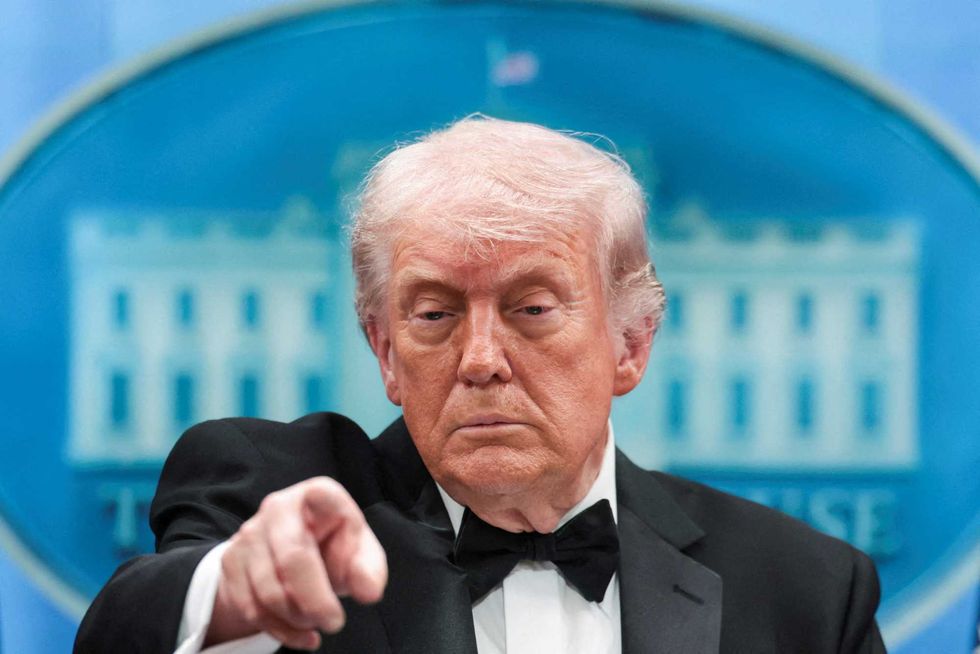
Investors fear this high-stakes push, which includes US President Donald Trump’s Genesis Mission, a national initiative aimed at doubling US scientific productivity through the use of AI and nuclear energy. The surge in demand for debt protection signals extreme market unease regarding the immense debt-fueled spending, which may not yield adequate returns.

Bank of America strategist Michael Hartnett argued that if the Fed sends a message of steady interest rates, the odds of a wider economic slowdown significantly increase. This uncertainty, combined with a desire for growth less dependent on stimulus, reinforces the appeal of Bitcoin’s scarcity as institutional capital looks to de-risk its traditional tech exposures.

The Fed’s official end to its liquidity drain program and the market’s aggressive pricing of interest rate cuts provide a monumental tailwind. With tech credit risks surging due to massive AI-related debt, capital is structurally primed to rotate into scarce assets. This convergence establishes a clear path for BTC to breach the $100,000 milestone over the next couple of months.

This article is for general information purposes and is not intended to be and should not be taken as legal or investment advice. The views, thoughts, and opinions expressed here are the author’s alone and do not necessarily reflect or represent the views and opinions of Cointelegraph.

This article does not contain investment advice or recommendations. Every investment and trading move involves risk, and readers should conduct their own research when making a decision. While we strive to provide accurate and timely information, Cointelegraph does not guarantee the accuracy, completeness, or reliability of any information in this article. This article may contain forward-looking statements that are subject to risks and uncertainties. Cointelegraph will not be liable for any loss or damage arising from your reliance on this information.

Source: https://cointelegraph.com/news/bitcoin-s-end-of-year-run-to-100k-heavily-depends-on-fed-pivot-outcomes?utm_source=rss_feed&utm_medium=feed&utm_campaign=rss_partner_inbound


Market Opportunity
Bitcoin Logo
Bitcoin Price(BTC)
$70,693.27
$70,693.27$70,693.27
+3.01%
USD
Bitcoin (BTC) Live Price Chart
Disclaimer: The articles reposted on this site are sourced from public platforms and are provided for informational purposes only. They do not necessarily reflect the views of MEXC. All rights remain with the original authors. If you believe any content infringes on third-party rights, please contact service@support.mexc.com for removal. MEXC makes no guarantees regarding the accuracy, completeness, or timeliness of the content and is not responsible for any actions taken based on the information provided. The content does not constitute financial, legal, or other professional advice, nor should it be considered a recommendation or endorsement by MEXC.

You May Also Like

⁉️ Epstein, a convicted pedo, invested in Coinbase

⁉️ Epstein, a convicted pedo, invested in Coinbase

The post ⁉️ Epstein, a convicted pedo, invested in Coinbase appeared on BitcoinEthereumNews.com. The latest Epstein Files release has placed a variety of powerful
Share
BitcoinEthereumNews2026/02/07 04:07
How The ByteDance App Survived Trump And A US Ban

How The ByteDance App Survived Trump And A US Ban

The post How The ByteDance App Survived Trump And A US Ban appeared on BitcoinEthereumNews.com. WASHINGTON, DC – MARCH 13: Participants hold signs in support of TikTok outside the U.S. Capitol Building on March 13, 2024 in Washington, DC. (Photo by Anna Moneymaker/Getty Images) Getty Images From President Trump’s first ban attempt to a near-blackout earlier this year, TikTok’s five-year roller coaster ride looks like it’s finally slowing down now that Trump has unveiled a deal framework to keep the ByteDance app alive in the U.S. A look back at the saga around TikTok starting in 2020, however, shows just how close the app came to being shut out of the US – how it narrowly averted a ban and forced sale that found rare bipartisan backing in Washington. Recapping TikTok’s dramatic five-year battle When I interviewed Brendan Carr back in 2022, for example, the future FCC chairman was already certain at that point that TikTok’s days were numbered. For a litany of perceived sins — everything from the too-cozy relationship of the app’s parent company with China’s ruling regime to the app’s repeated floating of user privacy — Carr was already convinced, at least during his conversation with me, that: “The tide is going out on TikTok.” It was, in fact, one of the few issues that Washington lawmakers seemed to agree on. Even then-President Biden was on board, having resurrected Trump’s aborted TikTok ban from his first term and signed it into law. “It feels different now than it did two years ago at the end of the Trump administration, when concerns were first raised,” Carr told me then, in August of 2022. “I think, like a lot of things in the Trump era, people sort of picked sides on the issue based on the fact that it was Trump.” One thing led to another, though, and it looked like Carr was probably…
Share
BitcoinEthereumNews2025/09/18 07:29
Solana Crashes Below $100: Could $73 Be the Next Key Support?

Solana Crashes Below $100: Could $73 Be the Next Key Support?

Solana (SOL) slipped to $85.73 on Friday, February 6, 2026, marking a 26.49% decline over the past week, according to CoinMarketCap data. Trading volume surged
Share
Tronweekly2026/02/07 04:30