BitcoinWorld Revealing: Binance Bitcoin Inflows Hit Alarming 2018 Low – What It Means for Price Have you ever wondered what the movement of large Bitcoin holdersBitcoinWorld Revealing: Binance Bitcoin Inflows Hit Alarming 2018 Low – What It Means for Price Have you ever wondered what the movement of large Bitcoin holders

Revealing: Binance Bitcoin Inflows Hit Alarming 2018 Low – What It Means for Price

2025/12/15 12:15
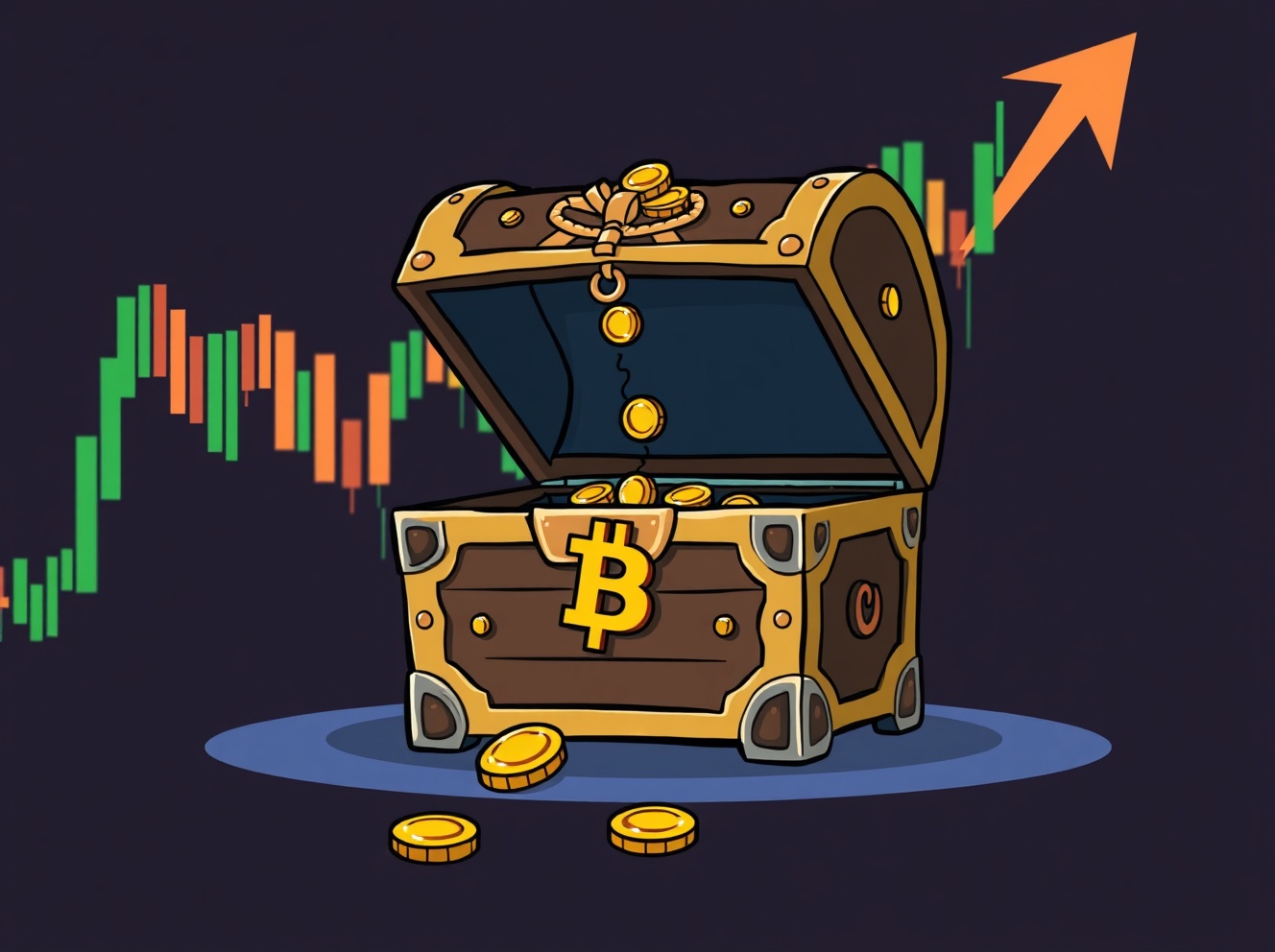
Cartoon illustration of low Binance Bitcoin inflows into a digital vault, symbolizing reduced selling pressure.

BitcoinWorld

Revealing: Binance Bitcoin Inflows Hit Alarming 2018 Low – What It Means for Price

Have you ever wondered what the movement of large Bitcoin holders can tell us about the market’s next move? A startling new analysis reveals that Binance Bitcoin inflows for transactions of 1 BTC or more have plummeted to their lowest annual average since 2018. This dramatic shift is happening even as Bitcoin’s price continues its climb, potentially signaling a major change in market sentiment. Let’s dive into what this means for you and the future of BTC.

What Do the Latest Binance Bitcoin Inflow Numbers Show?

CryptoQuant contributor Darkfost recently highlighted a critical trend. The volume of Bitcoin entering the Binance exchange in large, single transactions has sharply declined. Specifically, the annual average inflow for these 1+ BTC transactions now sits at roughly 6,500 BTC. This is the lowest point we’ve seen in six years. For context, higher Binance Bitcoin inflows from large wallets often indicate that whales are preparing to sell. Therefore, a drop suggests the opposite: reduced intent to sell on the world’s largest crypto exchange.

Why Are Falling Inflows a Bullish Signal?

This trend is particularly significant because it contradicts the price action. Typically, you might expect large holders to move coins to exchanges to take profits during a price rally. The fact that Binance Bitcoin inflows are drying up while prices rise points to a market with stronger hands. Here are the key implications:

  • Easing Selling Pressure: Fewer large BTC moving to Binance means less immediate supply is available to hit the market.
  • Holder Confidence: Large investors appear to be holding their assets, anticipating further price appreciation.
  • Market Maturation: This behavior resembles periods of accumulation, where investors hold through volatility.

How Does This Compare to Previous Market Cycles?

To understand the potential impact, we can look back. The last time Binance Bitcoin inflows for large transactions were this low was in 2018, which was a bear market bottom followed by a multi-year buildup. While history doesn’t repeat exactly, it often rhymes. This current low inflow level, coupled with a rising price, could indicate we are in a phase where long-term conviction is outweighing short-term profit-taking. This creates a foundation for a more sustainable bull run, as the market isn’t being flooded with sell orders from major players.

What Actionable Insights Can Traders Take From This?

Data is only powerful if you know how to use it. The slump in large Binance Bitcoin inflows is one piece of the puzzle, not the entire picture. However, it provides a crucial on-chain signal. For traders and investors, this suggests that the underlying selling pressure from whales may be weaker than expected. It reinforces a strategy of holding through pullbacks, as the core cohort of large holders seems to be doing the same. Always combine this with other indicators like overall exchange balances and macroeconomic factors for a complete view.

Conclusion: A Quiet Shift in Market Dynamics

In summary, the sharp decline in large Binance Bitcoin inflows to a six-year low is a profoundly optimistic signal hidden in plain sight. It tells a story of holder strength and a potential reduction in major sell-side liquidity. While caution is always wise in crypto markets, this on-chain metric provides a compelling reason for optimism about Bitcoin’s price stability and future growth potential. The whales appear to be holding tight, and that’s a narrative every investor should pay attention to.

Frequently Asked Questions (FAQs)

Q1: What are Binance Bitcoin inflows?
A1: Binance Bitcoin inflows refer to the amount of Bitcoin being transferred into wallets controlled by the Binance exchange. Tracking large transactions (1+ BTC) helps analysts gauge the selling intentions of major holders.

Q2: Why is a low inflow level considered bullish?
A2: Low inflows suggest large holders are not depositing Bitcoin to sell on the exchange. This reduces immediate selling pressure, which can be a bullish sign for the price as supply on the market decreases.

Q3: Who is Darkfost and what is CryptoQuant?
A3: Darkfost is a contributor to CryptoQuant, a leading platform for on-chain cryptocurrency data and analytics. They provide metrics that help understand market behavior beyond just price charts.

Q4: Does this mean the price of Bitcoin will definitely go up?
A4: Not definitely. While low Binance Bitcoin inflows are a positive on-chain signal, price is influenced by many factors like regulations, macroeconomics, and adoption. This data should be used alongside other analysis.

Q5: Should I buy Bitcoin based solely on this information?
A5: No. This is one useful indicator, but you should never make investment decisions based on a single data point. Always conduct your own thorough research, consider your risk tolerance, and potentially consult a financial advisor.

Q6: How often is this inflow data updated?
A6: Platforms like CryptoQuant update on-chain data, including exchange inflows, in near real-time. Traders often monitor these metrics daily to spot changing trends.

Found this deep dive into Binance Bitcoin inflows helpful? Share this article with your network on X (Twitter), Telegram, or LinkedIn to spark a discussion about what the whales are really doing! Knowledge is power in crypto, and sharing insights helps everyone navigate the market more wisely.

To learn more about the latest Bitcoin trends, explore our article on key developments shaping Bitcoin price action and institutional adoption.

This post Revealing: Binance Bitcoin Inflows Hit Alarming 2018 Low – What It Means for Price first appeared on BitcoinWorld.


Market Opportunity
Everscale Logo
Everscale Price(EVER)
$0.00878
$0.00878$0.00878
-5.28%
USD
Everscale (EVER) Live Price Chart
Disclaimer: The articles reposted on this site are sourced from public platforms and are provided for informational purposes only. They do not necessarily reflect the views of MEXC. All rights remain with the original authors. If you believe any content infringes on third-party rights, please contact service@support.mexc.com for removal. MEXC makes no guarantees regarding the accuracy, completeness, or timeliness of the content and is not responsible for any actions taken based on the information provided. The content does not constitute financial, legal, or other professional advice, nor should it be considered a recommendation or endorsement by MEXC.

You May Also Like

Volante Technologies Customers Successfully Navigate Critical Regulatory Deadlines for EU SEPA Instant and Global SWIFT Cross-Border Payments

Volante Technologies Customers Successfully Navigate Critical Regulatory Deadlines for EU SEPA Instant and Global SWIFT Cross-Border Payments

PaaS leader ensures seamless migrations and uninterrupted payment operations LONDON–(BUSINESS WIRE)–Volante Technologies, the global leader in Payments as a Service
Share
AI Journal2025/12/16 17:16
Fed Acts on Economic Signals with Rate Cut

Fed Acts on Economic Signals with Rate Cut

In a significant pivot, the Federal Reserve reduced its benchmark interest rate following a prolonged ten-month hiatus. This decision, reflecting a strategic response to the current economic climate, has captured attention across financial sectors, with both market participants and policymakers keenly evaluating its potential impact.Continue Reading:Fed Acts on Economic Signals with Rate Cut
Share
Coinstats2025/09/18 02:28
Google's AP2 protocol has been released. Does encrypted AI still have a chance?

Google's AP2 protocol has been released. Does encrypted AI still have a chance?

Following the MCP and A2A protocols, the AI Agent market has seen another blockbuster arrival: the Agent Payments Protocol (AP2), developed by Google. This will clearly further enhance AI Agents' autonomous multi-tasking capabilities, but the unfortunate reality is that it has little to do with web3AI. Let's take a closer look: What problem does AP2 solve? Simply put, the MCP protocol is like a universal hook, enabling AI agents to connect to various external tools and data sources; A2A is a team collaboration communication protocol that allows multiple AI agents to cooperate with each other to complete complex tasks; AP2 completes the last piece of the puzzle - payment capability. In other words, MCP opens up connectivity, A2A promotes collaboration efficiency, and AP2 achieves value exchange. The arrival of AP2 truly injects "soul" into the autonomous collaboration and task execution of Multi-Agents. Imagine AI Agents connecting Qunar, Meituan, and Didi to complete the booking of flights, hotels, and car rentals, but then getting stuck at the point of "self-payment." What's the point of all that multitasking? So, remember this: AP2 is an extension of MCP+A2A, solving the last mile problem of AI Agent automated execution. What are the technical highlights of AP2? The core innovation of AP2 is the Mandates mechanism, which is divided into real-time authorization mode and delegated authorization mode. Real-time authorization is easy to understand. The AI Agent finds the product and shows it to you. The operation can only be performed after the user signs. Delegated authorization requires the user to set rules in advance, such as only buying the iPhone 17 when the price drops to 5,000. The AI Agent monitors the trigger conditions and executes automatically. The implementation logic is cryptographically signed using Verifiable Credentials (VCs). Users can set complex commission conditions, including price ranges, time limits, and payment method priorities, forming a tamper-proof digital contract. Once signed, the AI Agent executes according to the conditions, with VCs ensuring auditability and security at every step. Of particular note is the "A2A x402" extension, a technical component developed by Google specifically for crypto payments, developed in collaboration with Coinbase and the Ethereum Foundation. This extension enables AI Agents to seamlessly process stablecoins, ETH, and other blockchain assets, supporting native payment scenarios within the Web3 ecosystem. What kind of imagination space can AP2 bring? After analyzing the technical principles, do you think that's it? Yes, in fact, the AP2 is boring when it is disassembled alone. Its real charm lies in connecting and opening up the "MCP+A2A+AP2" technology stack, completely opening up the complete link of AI Agent's autonomous analysis+execution+payment. From now on, AI Agents can open up many application scenarios. For example, AI Agents for stock investment and financial management can help us monitor the market 24/7 and conduct independent transactions. Enterprise procurement AI Agents can automatically replenish and renew without human intervention. AP2's complementary payment capabilities will further expand the penetration of the Agent-to-Agent economy into more scenarios. Google obviously understands that after the technical framework is established, the ecological implementation must be relied upon, so it has brought in more than 60 partners to develop it, almost covering the entire payment and business ecosystem. Interestingly, it also involves major Crypto players such as Ethereum, Coinbase, MetaMask, and Sui. Combined with the current trend of currency and stock integration, the imagination space has been doubled. Is web3 AI really dead? Not entirely. Google's AP2 looks complete, but it only achieves technical compatibility with Crypto payments. It can only be regarded as an extension of the traditional authorization framework and belongs to the category of automated execution. There is a "paradigm" difference between it and the autonomous asset management pursued by pure Crypto native solutions. The Crypto-native solutions under exploration are taking the "decentralized custody + on-chain verification" route, including AI Agent autonomous asset management, AI Agent autonomous transactions (DeFAI), AI Agent digital identity and on-chain reputation system (ERC-8004...), AI Agent on-chain governance DAO framework, AI Agent NPC and digital avatars, and many other interesting and fun directions. Ultimately, once users get used to AI Agent payments in traditional fields, their acceptance of AI Agents autonomously owning digital assets will also increase. And for those scenarios that AP2 cannot reach, such as anonymous transactions, censorship-resistant payments, and decentralized asset management, there will always be a time for crypto-native solutions to show their strength? The two are more likely to be complementary rather than competitive, but to be honest, the key technological advancements behind AI Agents currently all come from web2AI, and web3AI still needs to keep up the good work!
Share
PANews2025/09/18 07:00