Solana Price Analysis: Accumulation Builds as SOL Defends Key Support
TLDR
- Solana price holds key $124–$125 support after a sharp decline from recent highs.
- 4H charts show accumulation signs as repeated sell-offs fail to extend lower.
- Short-term structure remains weak below $129, now acting as resistance.
- A breakout above $145 could signal recovery, while a drop below $125 risks $120.
Solana (SOL) is currently trading near the mid-$120s after a sharp decline from recent highs, with price action showing mixed signals across timeframes. While the broader short-term trend remains cautious to bearish following multiple breakdowns, the market is also displaying signs of stabilization near a historically important demand zone.
The $124–$125 support has emerged as the most critical level in play, while resistance is layered between $129 and the $139–$145 supply zone.
Solana Price Consolidates Amid Accumulation Signals
According to analyst Ninja, the 4-hour chart indicates Solana price has transitioned from an impulsive decline into a structured consolidation range. Price has repeatedly respected resistance near $144–$145 while holding support around $123–$125. This behavior suggests selling pressure has eased, allowing demand to absorb supply within a defined range.
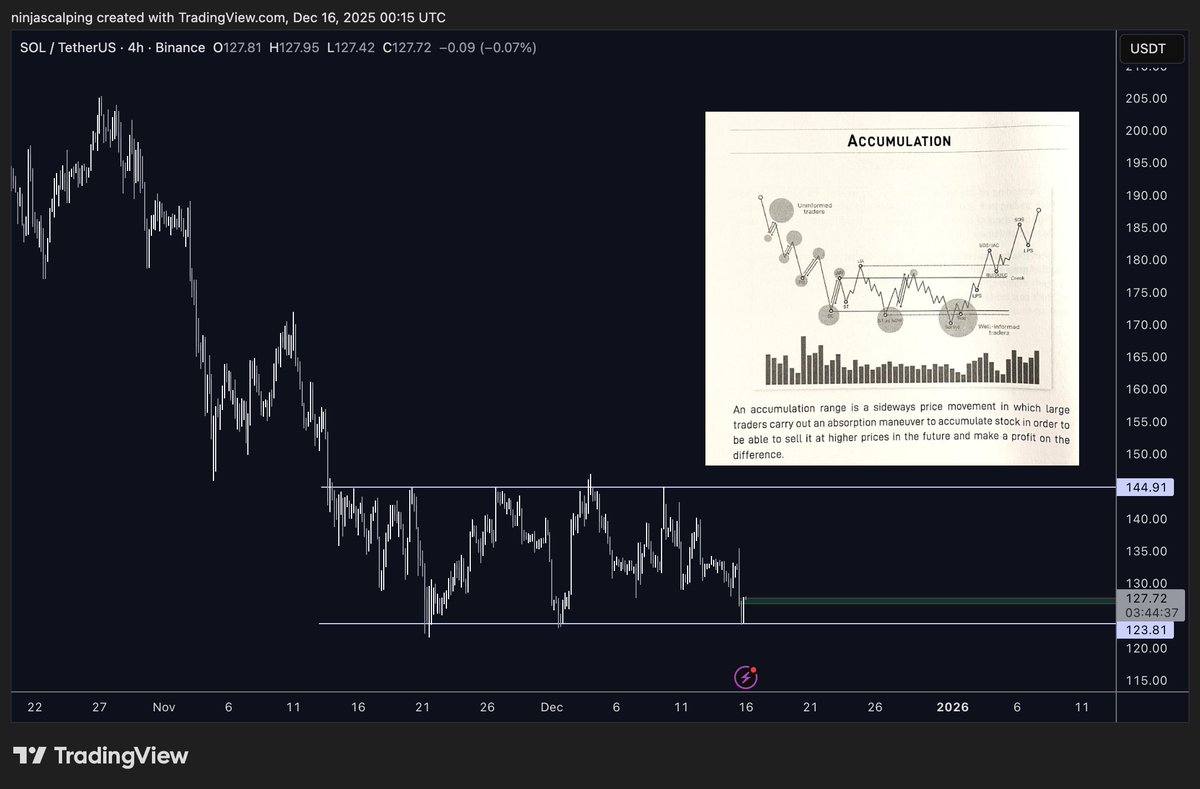
Additionally, repeated downside probes below support have failed to trigger sustained follow-through. Each dip has been met with swift recoveries back into the range, signaling responsive buying interest. From a market structure standpoint, this pattern aligns with early accumulation dynamics, where volatility compresses ahead of a potential expansion. A confirmed breakout above $145 would strengthen the bullish case.
Rejection Reinforces Near-Term Caution
Meanwhile, short-term structure reflects lingering weakness. Analysis from KNIGHT highlights a clear rejection from the $139–$141 supply zone on the 1-hour chart. Multiple failures at this level absorbed buy-side liquidity and preceded a decisive breakdown, reinforcing the view that sellers remain active at higher prices.
Once SOL lost the $133–$134 level, downside momentum accelerated toward $125. The sharp wick near the lows suggests a liquidity sweep rather than orderly selling. While a modest rebound toward $126–$128 is underway, it lacks volume confirmation.
As long as SOL price remains below reclaimed resistance, the bounce remains corrective within a broader consolidation.
Solana Price Faces Key Retest Risk Near $129
According to analyst Crypto Tony, Solana price remains technically vulnerable after losing the $129 level, which previously acted as short-term demand. The 4-hour chart shows that this level now functions as potential resistance. A failed retest of $129 would confirm a bearish flip and increase downside risk.
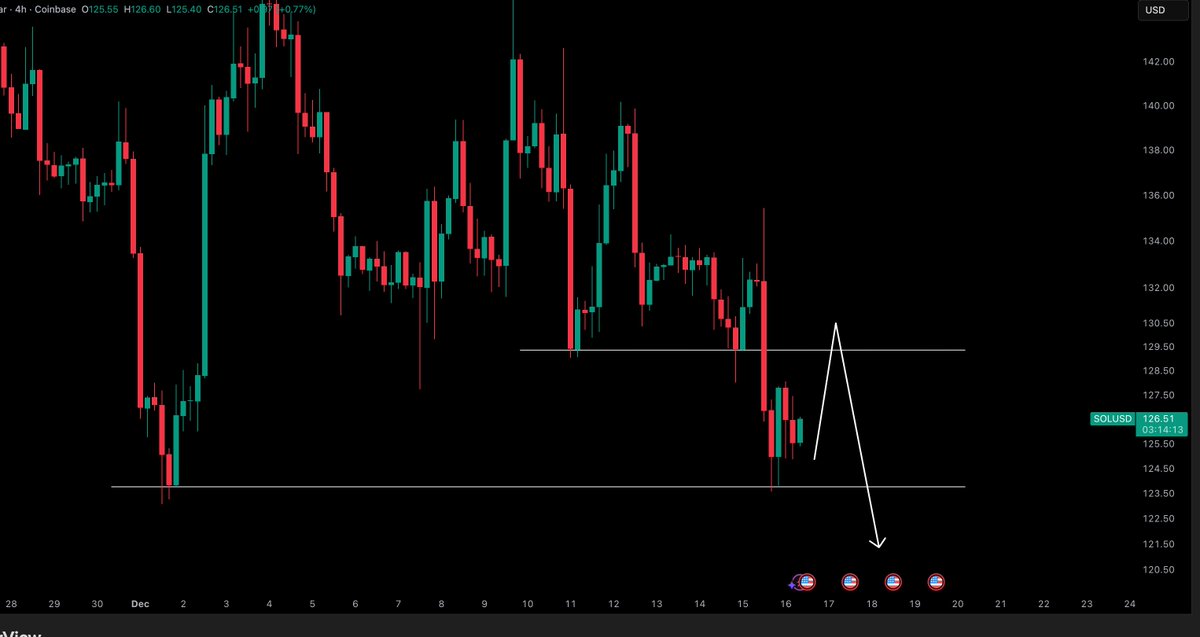
On the lower end, support near $124–$125 remains pivotal. A clean break below this zone could expose SOL to a deeper move toward the $120 psychological level. Until price can reclaim $129 with strong follow-through, rallies are viewed cautiously. Market structure remains mixed, with accumulation signals offset by unresolved overhead supply.
Therefore, Solana price is holding a critical support zone while broader consolidation develops. A sustained move above $145 would favor recovery, while failure below $125 risks renewed downside pressure.
The post Solana Price Analysis: Accumulation Builds as SOL Defends Key Support appeared first on CoinCentral.


You May Also Like

Veterans losing their homes in droves after Trump ignored major warning: report
![Can edgeX [EDGE] rebound after its 17% drop? THESE signals say…](https://i1.wp.com/ambcrypto.com/wp-content/uploads/2026/04/Abdul-2026-04-19T121716.811-e1776597537620.webp)
Can edgeX [EDGE] rebound after its 17% drop? THESE signals say…