Bitcoin Flash Crash: The Stunning $24K Plunge and $87K Recovery Explained
BitcoinWorld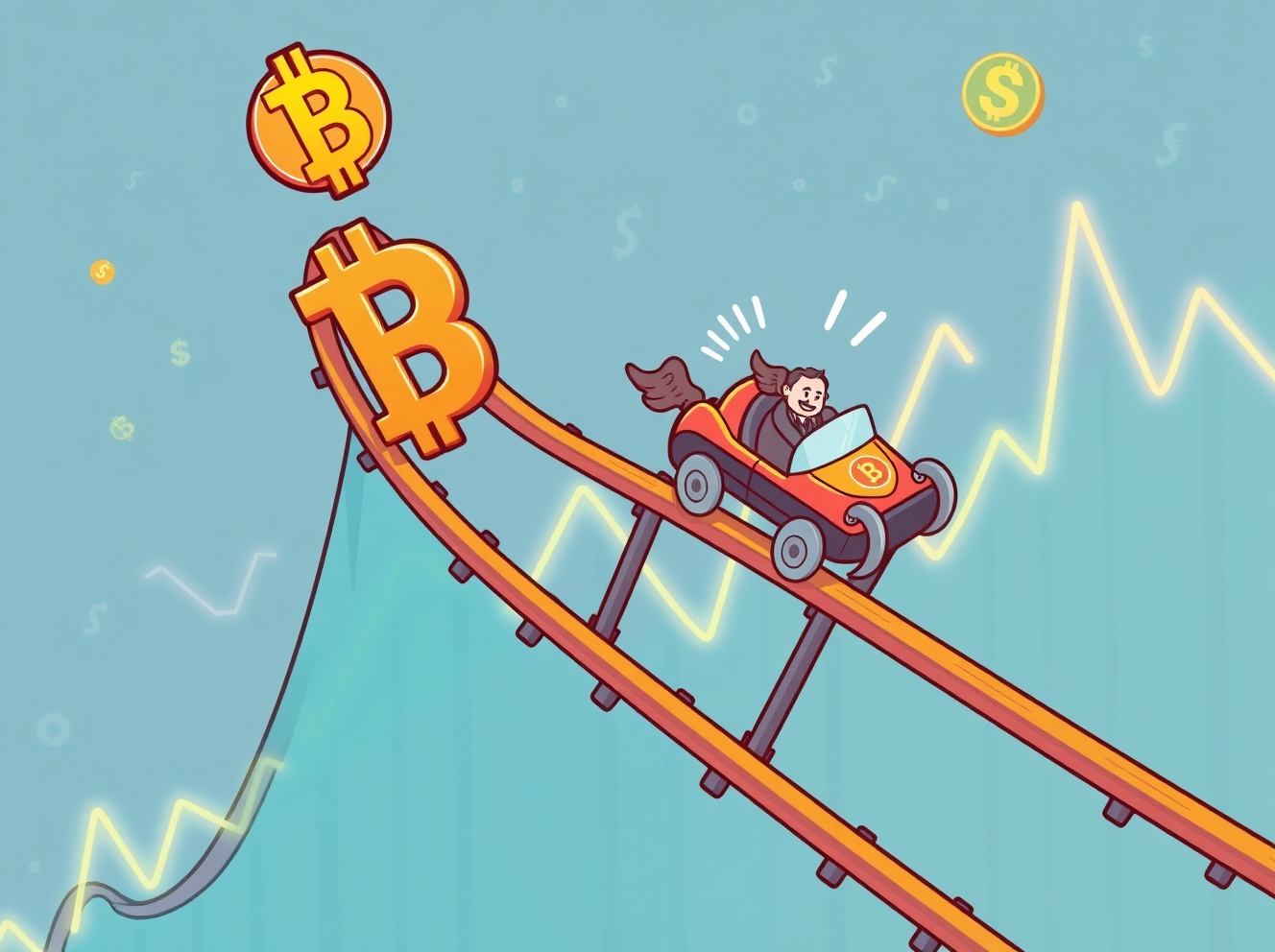
Bitcoin Flash Crash: The Stunning $24K Plunge and $87K Recovery Explained
Imagine watching Bitcoin’s price chart when suddenly, it plunges over 70% in minutes. This wasn’t a market-wide collapse but a shocking Bitcoin flash crash on a specific trading pair that revealed hidden vulnerabilities in cryptocurrency markets. On Wednesday, Bitcoin temporarily crashed to $24,111 on Binance’s BTC/USD1 pair before miraculously recovering to $87,880, according to Wu Blockchain’s report.
What Exactly Caused This Bitcoin Flash Crash?
The dramatic Bitcoin flash crash occurred on Binance’s BTC/USD1 trading pair, not the more common BTC/USDT or BTC/USDC pairs. USD1 is a relatively obscure stablecoin issued by World Liberty Financial (WLFI), a firm reportedly associated with the family of former U.S. President Donald Trump. The limited liquidity of this trading pair created perfect conditions for extreme volatility.
When large sell orders hit a thinly-traded market, they can trigger cascading liquidations and stop-loss orders. This creates a feedback loop where each sale pushes the price lower, forcing more automated selling. The recovery to $87,880 demonstrates this was an isolated incident rather than a fundamental shift in Bitcoin’s value.
Why Should Every Crypto Investor Care?
This event serves as a crucial reminder about market structure vulnerabilities. While mainstream Bitcoin pairs remained stable, this Bitcoin flash crash highlights several important lessons:
- Liquidity matters most: Thinly-traded pairs amplify price movements
- Exchange mechanics differ: Each trading pair operates independently
- Stablecoin variety introduces risk: Not all dollar-pegged tokens are equal
- Automated trading amplifies volatility: Bots can accelerate both crashes and recoveries
How Do Flash Crashes Actually Happen?
Understanding the mechanics behind a Bitcoin flash crash helps investors prepare for future volatility. These events typically follow a specific pattern:
- A large sell order enters a market with limited buy-side liquidity
- The initial price drop triggers stop-loss orders and liquidations
- Automated systems respond by selling more assets
- Arbitrage bots eventually recognize the price discrepancy
- Buying pressure returns as traders capitalize on the discount
In this case, the recovery was remarkably swift because the fundamental value of Bitcoin hadn’t changed. The crash was confined to one trading pair on one exchange, allowing arbitrageurs to quickly correct the imbalance.
What Can You Learn From This Market Event?
Every Bitcoin flash crash teaches valuable lessons about risk management. First, diversify your trading across multiple exchanges and pairs. Second, understand that stop-loss orders can execute at unexpected prices during extreme volatility. Third, recognize that cryptocurrency markets remain fragmented, with prices sometimes varying significantly between platforms.
Most importantly, this event demonstrates the resilience of Bitcoin’s broader market structure. While one pair experienced a dramatic Bitcoin flash crash, the overall ecosystem remained stable, with prices on major exchanges continuing to reflect genuine supply and demand dynamics.
Protecting Yourself From Future Market Shocks
After witnessing this Bitcoin flash crash, savvy investors should consider several protective measures. Avoid trading on pairs with obviously low volume. Use limit orders instead of market orders during periods of expected volatility. Monitor multiple exchanges to identify genuine price movements versus isolated incidents.
Remember that while flash crashes create headlines, they often represent trading opportunities for prepared investors. The key is maintaining perspective—these events are usually technical anomalies rather than fundamental shifts in value.
Frequently Asked Questions
Did the Bitcoin flash crash affect all exchanges?
No, this was isolated to Binance’s BTC/USD1 trading pair. Major Bitcoin pairs on other exchanges and even other pairs on Binance remained relatively stable during this event.
What is USD1 stablecoin?
USD1 is a dollar-pegged cryptocurrency issued by World Liberty Financial (WLFI), a firm associated with the Trump family. It has significantly less adoption and liquidity compared to major stablecoins like USDT or USDC.
Could this happen to other cryptocurrencies?
Yes, any cryptocurrency trading pair with limited liquidity is vulnerable to flash crashes. However, major assets on high-volume pairs are less susceptible to such extreme movements.
Should I avoid trading on Binance after this?
Not necessarily. The issue was specific to one trading pair with particular characteristics. Major exchanges generally have robust systems, but investors should always be aware of liquidity risks on less popular pairs.
How can I protect my portfolio from flash crashes?
Use limit orders, avoid low-liquidity trading pairs, diversify across exchanges, and maintain a long-term perspective rather than reacting to short-term volatility.
Was this manipulation or a technical glitch?
While the exact cause isn’t confirmed, such events typically result from large orders in illiquid markets rather than deliberate manipulation or technical failures.
Share This Insight With Fellow Investors
Understanding market mechanics helps everyone navigate cryptocurrency volatility more effectively. If you found this analysis of the Bitcoin flash crash helpful, share it with your network on social media. Educated investors make better decisions, and spreading knowledge strengthens the entire cryptocurrency community against unexpected market events.
To learn more about the latest Bitcoin trends, explore our article on key developments shaping Bitcoin price action and market stability in evolving regulatory environments.
This post Bitcoin Flash Crash: The Stunning $24K Plunge and $87K Recovery Explained first appeared on BitcoinWorld.


You May Also Like
Dr. Oz put on the spot on MS NOW over explosion of measles cases under Trump admin

The Chart Nobody Wants to See: ADA Tests 88.7% Fib With $0.10 in the Distance