

Must Read
LANDSLIDE. Rescue teams continue to search the debris to recover victims and locate dozens of missing workers at the Binaliw landfill landslide site in Cebu CityLANDSLIDE. Rescue teams continue to search the debris to recover victims and locate dozens of missing workers at the Binaliw landfill landslide site in Cebu City
Even before the landslide, controversies haunted Cebu’s Binaliw landfill
For feedback or concerns regarding this content, please contact us at crypto.news@mexc.com
A tragic landslide in one of Cebu City’s largest landfills, the Prime Waste Solution Landfill in Sitio Kainsikan, Barangay Binaliw, has left scores of waste workers dead or missing as search operations continue. Local officials have attributed the landslide to continuous rainfall that softened the soil where massive amounts of garbage had accumulated, but advocates and politicians are calling for an investigation into the landfill’s management.
This won’t be the first probe into the landfill’s longstanding issues. The facility, which accommodates nearly 100% of Cebu City’s solid waste, has long been a subject of controversy.
Even before the deadly landslide, several complaints had been lodged against the landfill and its operators for alleged illegal quarrying and violating environmental laws, negatively affecting air and water quality in surrounding communities. ARN Central Waste Management Incorporated was the landfill’s original operator when preparations began in 2017, while Razon-led Prime Integrated Waste Solutions Incorporated (PWS) acquired the firm in 2023.
Here’s what you need to know about the history behind this controversial landfill.
Rocky start
When Cebu City’s main landfill since 1998, the Inayawan Sanitary Landfill, was shut down for rehabilitation in 2017, the government had to find alternative ways to dispose of the city’s trash. The closure was long overdue, since the nearly 20-year-old landfill was only built to last seven years.
That’s why, in 2012, the city started diverting its trash to a private landfill run by the Asian Energy System Corporation in Barangay Polog, Consolacion. But just a few years later, a landslide in AESC’s landfill killed a garbage truck driver, exposing the operator’s violations of environmental laws and prompting a shutdown in May 2019.
As an emergency measure, Cebu City, along with neighboring towns Mandaue, Lapu-Lapu, and Compostela, began dumping their trash in another private landfill located in Barangay Binaliw, which was run by ARN Central Waste Management at the time. Cebu-based businessmen Joselito Gullas, Mario King, and engineer Arnold Espinoza owned the company during the landfill’s development.
At that point, ARN’s landfill had been two years in the making. The operator began to apply for permits in 2017, and started developing the property in 2018.
From the very start, however, the landfill was plagued by several issues.
In 2017, the operator’s parent company, ARN Builders Incorporated, found itself in hot water with Binaliw residents for conducting allegedly illegal quarry operations without the property owners’ consent. A Cebu City councilor, Joel Garganera, claimed in a letter published by SunStar that the quarrying was done in preparation for the landfill, which did not even have an Environmental Compliance Certificate (ECC) yet.
“Based on our research, the location of the proposed landfill in Brgy. Binaliw is not far from the Central Cebu Protected Landscape Area,” Garganera wrote. “Moreover, it is located in a mountain barangay — if the necessary measures required by the EMB (Environmental Management Bureau), DENR (Department of Environment and Natural Resources) and other regulating bodies are not observed, flash floods, landslides and other calamities may occur.”
Rey Gealon, who was a legal officer for the city at the time, later corroborated Garganera’s claim that the landfill stands on a protected area, specifically the Butuanon watershed. “The stream running through the ARN landfill is a water source for an unknown number of households not just in Binaliw but also in neighboring (Barangay) Panoypoy, Consolacion (town), and other low-lying areas,” he said in a report by Cebu Daily News.
The city council initially disapproved the landfill in April 2017 over a lack of transparency. But, a year later, in August 2018, they would go on to approve the landfill’s development. That same year, ARN won the bid for a P65-million contract with the Cebu City government for the city’s garbage collection and disposal, signed by then-city mayor Tomas Osmeña.
But Binaliw residents protested against the landfill, especially after it was chosen as an emergency dumping site following the closure of the Compostela landfill in May 2019. More than 600 residents signed a petition demanding that the landfill be shut down, citing health concerns brought on by the “unbearable stench” and the garbage liquid flowing into the neighborhood whenever it rained.
The residents also filed a formal complaint before the EMB-Region VII, which later found that there were violations related to garbage hauling and the submission of monitoring reports, according to a notice dated May 31, 2019. SunStar’s report also stated that ARN violated conditions of its 2017 ECC, but the EMB did not elaborate on these violations.
ARN claimed a week later that it had addressed the violations, emphasizing that they were administrative and unrelated to the environment.
The slew of controversies surrounding the landfill led to its contract with the city being cancelled in July 2019. But it did not mean the landfill was closed or garbage from the city could not be disposed there, because the city’s third-party haulers were still free to choose the Binaliw landfill as their disposal point.
At the time of the cancellation, 40 haulers were using the facility as a dumping area, a report from SunStar said.
New management, same problems
PWS, which is a subsidiary of Filipino billionaire Enrique K. Razon Jr.’s Prime Infrastructure Capital Incorporated, took over ARN Central Waste Management in January 2023, marking Prime Infrastructure Capital Incorporated’s first foray into waste management. The firm would later expand its waste management business to Pampanga, where they inaugurated an MRF with a capacity of 5,000 tons per day in June 2024.
The Razon group’s subsidiary promised upgrades that would make the waste facility “world-class,” including a first-of-its-kind automated MRF.
“PWS uses state-of-the-art equipment for waste segregation and storage…. It aims to significantly reduce landfill volumes, thereby lessening organic waste ending up decomposing and producing harmful methane emissions,” the company claimed on its website. “The overall objective is to optimize value created from waste by capitalizing on opportunities from Prime Infra’s complementary sustainable fuels business (WasteFuel Philippines).”
Despite the bold claims, inspections revealed that PWS’ three-year stint as Binaliw landfill’s operator still failed to fix the issues left behind by ARN. Some locals in Binaliw even claimed that the problems had worsened.
An inspection in August 2024 found that PWS was allowing waste to be disposed of in an open and untreated manner, effectively making it an open dumpsite and reviving complaints about the foul odor — in violation of Republic Act 9003 or the Ecological Solid Waste Management Act.
No sanctions were imposed for the violation, but the city government vowed to help PWS correct its deficiencies. According to a Cebu Daily News report, the city’s solid waste management board admitted that the landfill was overwhelmed by the volume of waste it receives daily, while power issues led to some of PWS’ equipment not being operational. This apparently led to improper disposal practices.
Just one month later, 156 residents in Binaliw submitted a petition asking the city government to address their concerns about the foul odor coming from the piles of trash. Health concerns due to severe fly infestations and the contamination of groundwater sources were also raised.
People in Barangay Panoypoy in neighboring Consolacion town also complained that the landfill caused severe water contamination in their community. The barangay’s chairperson accused PWS of discharging untreated wastewater into the surrounding environment.
In response to the complaints, PWS claimed that at least three years’ worth of garbage had already been accumulating when it took over from the original operator. The firm also denied claims that it was improperly discharging wastewater, saying that it was using a catching pond before the water is sent straight to a waste treatment plant.
PWS, however, said measures were already being taken to address the smell from the piles of waste. Despite the promise, the violations persisted, according to then-mayor-elect Nestor Archival. In June 2025, he threatened to close the landfill if PWS failed to fix its environmental issues.
A 2024 Commission on Audit (COA) report released in July 2025 pointed out that the landfill had inadequate drainage and stormwater management, infestations of flies and rats, foul odor, and a potential leak in its treatment plant.
Inspections conducted in July 2025 by the Cebu City Environment and Natural Resources Office (CENRO) found that PWS was among the operators that continued digging without permits in Binaliw, despite a local ban on quarrying and large-scale earth-moving in mountain barangays that has been in place since 2022.
“Prime Integrated Waste Solutions Inc., operator of the Binaliw landfill, [was] cited for earth-moving without a valid Cebu City Mining Regulatory Board permit. Cenro said its previous permit had already expired,” SunStar said in a report.
Tipping point
Even in 2024, the Binaliw landfill was already expected to reach its maximum capacity soon, based on the projections of the Cebu City government’s 10-year Solid Waste Management Plan. The plan flagged the city’s increasing garbage production and dependence on landfill disposal as a potential problem given the delayed rehabilitation of the old Inayawan landfill.
The rehabilitation has since been stalled, however, because the landfill’s lot is now owned by a private businessman, according to a SunStar report.
Because of this, nearly 100% of the city’s solid waste ends up at the Binaliw landfill, according to the local government’s solid waste management plan. Before the landslide, PWS also said its facility was processing 1,000 tons of waste daily.
COA’s 2024 report also found that the city was spending P407.77 million in tipping fees to dispose of the trash in the Binaliw landfill, attributing it to the lack of fully operational MRFs and the poor implementation of waste segregation policies across barangays.
The growing garbage problem has been blamed on Cebu City’s dependence on landfills. Advocates and local leaders have long been calling for more sustainable solutions.
At the time of the landslide, the Binaliw landfill’s trash had reportedly piled up to a height roughly equivalent to a 10-story building, according to Garganera in a report by ABS-CBN.
“It was already too heavy and too tall,” Cebu Daily News quoted Garganera. “If natural slopes of soil and rock can collapse, more so a mountain of garbage.”
After a series of rains hit the city, the soil beneath the massive amounts of garbage was said to have softened up.
PWS Cebu has since issued a statement on the disaster, announcing the suspension of its operations. “The safety and well-being of our employees, contractors, and neighboring communities remain our top priority,” it said.
The suspension has also sent the Mandaue, Lapu-Lapu, and Cebu city governments scrambling for alternative waste disposal options. – with reports from John Sitchon/Rappler.com
Market Opportunity
Manchester City Fan Price(CITY)
$0,3816
$0,3816$0,3816
USD
Manchester City Fan (CITY) Live Price Chart


Disclaimer: The articles reposted on this site are sourced from public platforms and are provided for informational purposes only. They do not necessarily reflect the views of MEXC. All rights remain with the original authors. If you believe any content infringes on third-party rights, please contact crypto.news@mexc.com for removal. MEXC makes no guarantees regarding the accuracy, completeness, or timeliness of the content and is not responsible for any actions taken based on the information provided. The content does not constitute financial, legal, or other professional advice, nor should it be considered a recommendation or endorsement by MEXC.
You May Also Like

CME Group to launch Solana and XRP futures options in October
The post CME Group to launch Solana and XRP futures options in October appeared on BitcoinEthereumNews.com. CME Group is preparing to launch options on SOL and XRP futures next month, giving traders new ways to manage exposure to the two assets. The contracts are set to go live on October 13, pending regulatory approval, and will come in both standard and micro sizes with expiries offered daily, monthly and quarterly. The new listings mark a major step for CME, which first brought bitcoin futures to market in 2017 and added ether contracts in 2021. Solana and XRP futures have quickly gained traction since their debut earlier this year. CME says more than 540,000 Solana contracts (worth about $22.3 billion), and 370,000 XRP contracts (worth $16.2 billion), have already been traded. Both products hit record trading activity and open interest in August. Market makers including Cumberland and FalconX plan to support the new contracts, arguing that institutional investors want hedging tools beyond bitcoin and ether. CME’s move also highlights the growing demand for regulated ways to access a broader set of digital assets. The launch, which still needs the green light from regulators, follows the end of XRP’s years-long legal fight with the US Securities and Exchange Commission. A federal court ruling in 2023 found that institutional sales of XRP violated securities laws, but programmatic exchange sales did not. The case officially closed in August 2025 after Ripple agreed to pay a $125 million fine, removing one of the biggest uncertainties hanging over the token. This is a developing story. This article was generated with the assistance of AI and reviewed by editor Jeffrey Albus before publication. Get the news in your inbox. Explore Blockworks newsletters: Source: https://blockworks.co/news/cme-group-solana-xrp-futures
Share
BitcoinEthereumNews2025/09/17 23:55
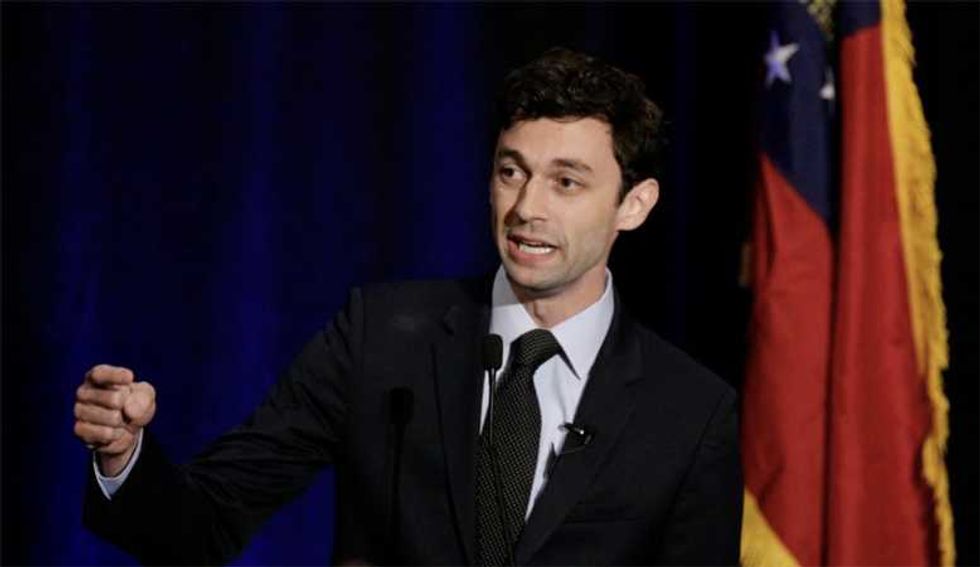
GOP in disarray as Senate seat pick-up slips away: 'It's a mess'
The Republican Party's dysfunction in Georgia is turning what should have been a winnable Senate seat into a likely Democratic victory. The culprit: Donald Trump
Share
Rawstory2026/04/02 19:22

Solana Price Prediction: SOL Slides Below $80 As $270M Hack Triggers Selloff
The post Solana Price Prediction: SOL Slides Below $80 As $270M Hack Triggers Selloff appeared first on Coinpedia Fintech News Solana price is back under pressure
Share
CoinPedia2026/04/02 18:59

