

Thailand Cracks Down on USDT Trading to Stop Illegal Activity
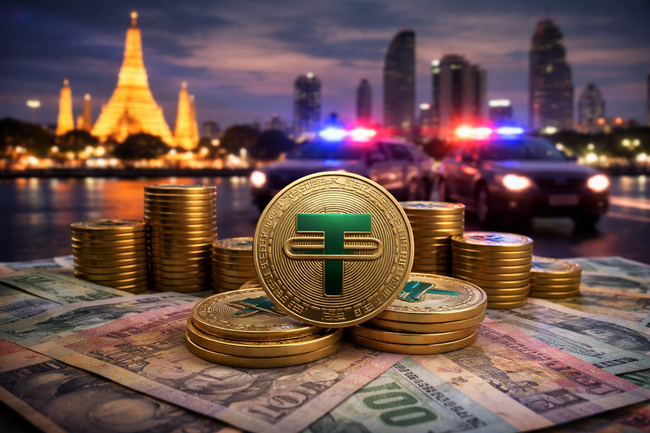
Highlights:
- Bank of Thailand increases monitoring of USDT trading due to high foreign activity.
- Authorities implement stricter wallet checks and reporting rules for stablecoin transactions.
- Government order coordinates agencies to prevent illegal crypto and grey money flows.
The Bank of Thailand has placed USDT trading under closer observation after linking a large share of activity on local platforms to foreign users. A Tuesday report by The Nation said stablecoin flows now fall under a wider effort aimed at checking grey money tied to cash handling, gold trade, and digital wallet transfers.
Thailand Tightens USDT Trading Rules to Curb Foreign Activity and Grey Money
Governor Vitai Ratanakorn stated that nearly 40% of USDT sellers active on Thai platforms are foreigners who “should not be trading” inside the country. Authorities now review stablecoin transactions in the same way as other money channels already under monitoring rules.
Domestic crypto volumes remain small, yet officials did not ignore the sector. Daily crypto trading averages around 2.8 billion baht, while Thailand’s foreign exchange market handles about 10 to 15 billion baht each day. Officials said size alone does not remove risk, as digital assets can still serve as paths for grey money.
Governor Vitai linked the policy to wider economic risks. “We will no longer limit ourselves to just analysis,” Vitai said in the report. “We will extend our hand to lead in solving structural problems. If these issues are not addressed, they will eventually impact macroeconomic stability in the long term.”
The action followed a government order issued on Jan. 9 by Prime Minister Anutin Charnvirakul. The order called for tighter checks across gold trading and digital assets. New steps include stronger reporting rules and stricter wallet identity checks on trading platforms. Several agencies now share responsibility under one coordinated plan. The central bank, the Revenue Department, and other public offices exchange information to track large or unusual fund movements across trading systems and payment tools operating inside Thailand.
Tether Freezes Billions in USDT to Stop Illegal Activity
USDT remains the largest stablecoin by supply, holding more than $187 billion, or about 64% of the total market. USDC follows with close to $75 billion. Both issuers account for most stablecoin circulation across global crypto markets. Growth has also drawn attention due to misuse risks. Chainalysis data shows that stablecoins accounted for 84 % of all illegal crypto transactions last year. Total illegal volume reached a lower-bound estimate of $154 billion during the year.
Tether says it is taking strong steps to stop the illegal use of USDT. Two years ago, the company started a wallet freezing rule to block accounts linked to banned people, following the US government sanction lists. So far, Tether has frozen more than $3 billion in USDT to support police work around the world. It has worked with over 310 law agencies across 62 different regions, as shared on its website. On Jan. 11, Tether also blocked over $182 million in USDT connected to five wallet addresses on the Tron blockchain.
eToro Platform
Best Crypto Exchange
- Over 90 top cryptos to trade
- Regulated by top-tier entities
- User-friendly trading app
- 30+ million users
eToro is a multi-asset investment platform. The value of your investments may go up or down. Your capital is at risk. Don’t invest unless you’re prepared to lose all the money you invest. This is a high-risk investment, and you should not expect to be protected if something goes wrong.


You May Also Like

Why RWA Regulation Is the True Foundation of Tokenized Asset Infrastructure

Top Republican spotted ‘living it up’ on beach as shutdown drags on: report




