

US Strategic Bitcoin Reserve Is Still A ‘Priority,’ White House Adviser Says
The White House is still treating a US Strategic Bitcoin Reserve as an active priority, even as officials work through what executive director of the White House Crypto Council Patrick Witt described as the legal and bureaucratic questions that sit beneath an idea that, on paper, sounds simple.
US Strategic Bitcoin Reserve On ‘Priority List’
In an interview recorded at the White House for the Jan. 13 episode of Crypto In America, Witt told host Eleanor Terrett that interagency talks on implementing President Donald Trump’s executive order are ongoing and that the effort remains on the administration’s “priority list,” as Congress simultaneously moves toward its next steps on crypto market structure legislation later this week.
Asked how the White House is thinking about the reserve “these days,” Witt pointed to a process being driven not only by crypto policy staff, but by the operations machinery tasked with pushing executive orders through the federal government.
“We’ve had good engagement from the Deputy Chief of Staff for Policy team, which is Steven Miller’s team […] [to] make sure that all of the executive orders that have been signed by the president — that the agencies are moving out on them,” Witt said. “The treasury team, commerce team is involved. […] It seems straightforward, but then you get into some […] obscure legal provisions and why this agency can’t do it, but actually this agency could.”
Witt framed the current phase as less about whether the administration wants the reserve, and more about ensuring it can move in a way that will withstand scrutiny. “We’re continuing to push on that. It is certainly still on the priority list right now,” he said, adding that “Department of Justice, Office of Legal Counsel […] has provided some good guidance on where we can […] move out on this executive order […] and do so in a legally sound way.”
The remarks come against the backdrop of Trump’s March 2025 executive order establishing a Strategic Bitcoin Reserve and a broader “digital asset stockpile,” which directed the government to treat existing federally held bitcoin as a long-term reserve asset while agencies were tasked to research ways for budget-neutral acquisition.
Witt also addressed a separate flashpoint that has circulated in Bitcoin circles in recent days: speculation that the Department of Justice had sold bitcoin linked to the Samourai Wallet case, potentially conflicting with the administration’s reserve posture.
“I think it was somewhat misreported,” Witt said, referencing the settlement language and what he characterized as standard legal drafting. “If you look at the settlement agreement, the legal documents, it sounds like […] the agency is going to take a certain action. […] In talking with DOJ, it was basically written in such a way where they preserve all of their options and their rights in those agreements, but those bitcoins have not been liquidated. Those digital assets have not been sold.”
Witt’s bottom line for viewers was that the headline allegation, that DOJ had “outright violated” the executive order, “is not a concern,” though he stressed that he could not say more beyond that.
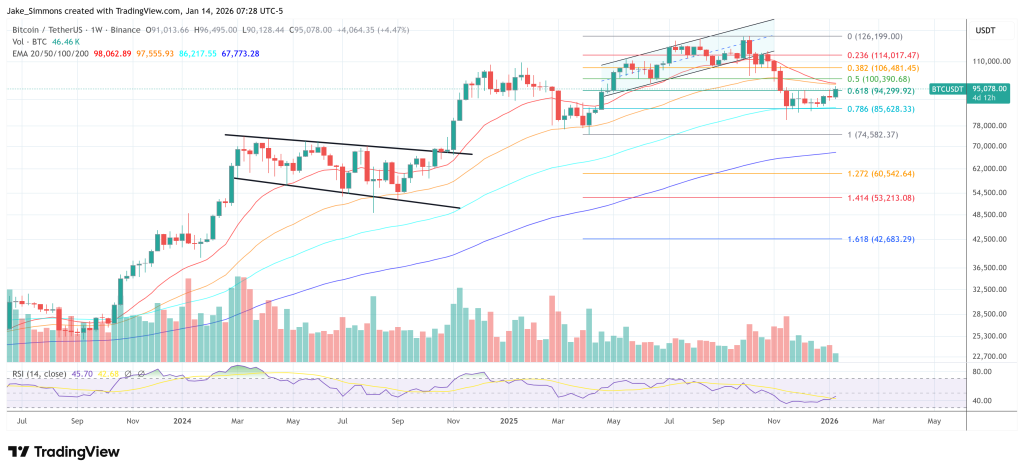
At press time, BTC traded at $95,078.


You May Also Like

Euro’s Downside Bias Against US Dollar Eases After Rebound, UOB Reports

HYPE ETFs See Rare First-Week Surge as Eric Balchunas Calls Launch Timing ‘Perfect’

Why a16z-backed Syndicate Labs is shutting down after 5 years



