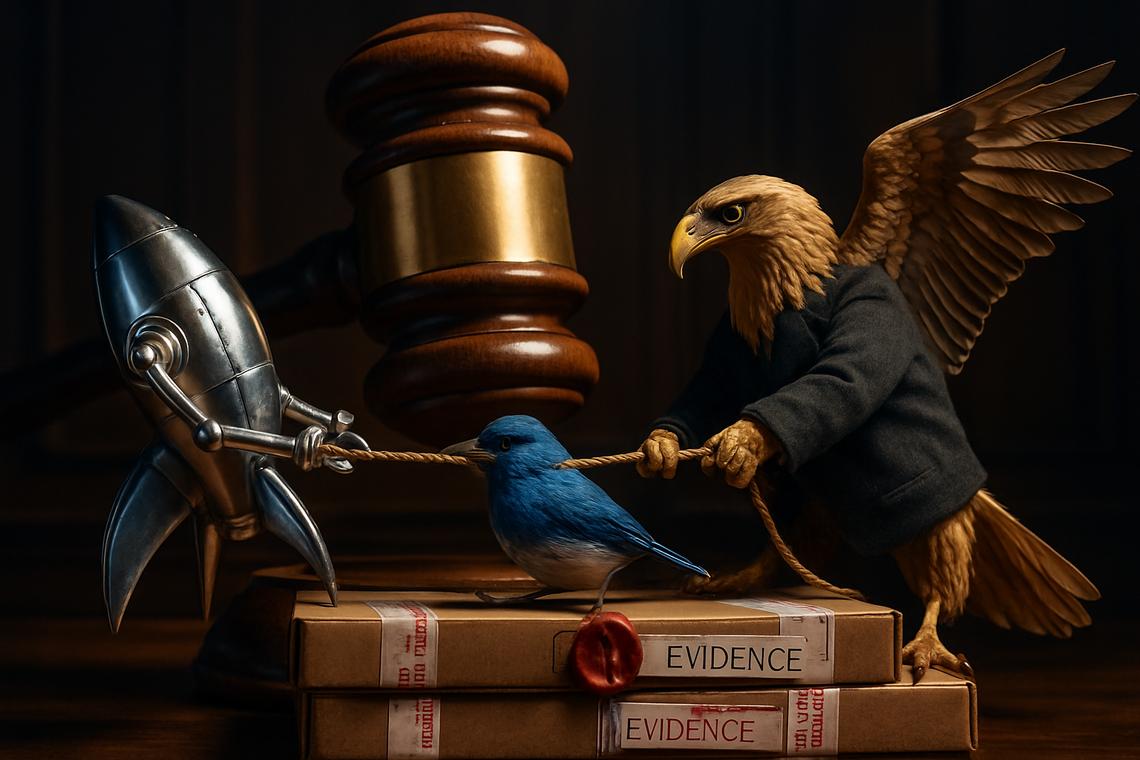
Elon Musk OpenAI ICO: The Stunning $10 Billion Crypto Proposal That Almost Was
BitcoinWorld
Elon Musk OpenAI ICO: The Stunning $10 Billion Crypto Proposal That Almost Was
In a stunning revelation from early 2018, documents show Elon Musk briefly championed a revolutionary $10 billion OpenAI ICO before his dramatic departure from the company. This pivotal moment, reported by CoinDesk in January 2025, illuminates a crucial crossroads where artificial intelligence development nearly intersected with blockchain fundraising at an unprecedented scale. The proposal emerged during cryptocurrency’s peak frenzy, offering a fascinating glimpse into alternative funding paths for transformative technologies.
The Elon Musk OpenAI ICO Proposal Details
Internal documents from January 2018 reveal specific parameters for the proposed OpenAI initial coin offering. Elon Musk and OpenAI founders discussed creating a token that would grant holders access to future AI services or computing resources. The $10 billion target would have dwarfed most traditional venture capital rounds, potentially distributing tokens to thousands of global investors. This approach mirrored contemporary blockchain projects that promised utility rather than equity.
Historical context clarifies why this method gained consideration. The 2017-2018 period witnessed extraordinary ICO activity, with projects like Filecoin raising $257 million and Telegram securing $1.7 billion through private token sales. Regulatory frameworks remained ambiguous globally, creating a window for innovative fundraising. Meanwhile, OpenAI faced substantial computational costs for training advanced models, estimated at millions monthly for cloud infrastructure.
| Project | Amount Raised | Date | Primary Focus |
|---|---|---|---|
| Telegram | $1.7B | Feb-Mar 2018 | Encrypted Messaging |
| EOS | $4.1B | Jun 2018 | Blockchain Platform |
| Filecoin | $257M | Aug 2017 | Decentralized Storage |
| Proposed OpenAI ICO | $10B (Target) | Jan 2018 | Artificial Intelligence |
Musk’s Rapid Reversal and Departure
Elon Musk withdrew his support within weeks of the initial proposal. Multiple factors likely influenced this reversal. First, regulatory scrutiny intensified dramatically in early 2018 as the SEC began classifying certain tokens as securities. Second, Tesla’s own challenges demanded increased attention, particularly regarding Model 3 production and Autopilot development. Third, Musk expressed growing concerns about AI safety and commercialization timelines.
His subsequent resignation from the OpenAI board in February 2018 created significant organizational shifts. Musk cited potential future conflicts with Tesla’s AI work as the primary reason. This departure occurred just as OpenAI transitioned from a non-profit to a “capped-profit” structure, a move that would eventually enable Microsoft’s $1 billion investment in 2019. The abandoned ICO proposal represents a road not taken in the organization’s funding evolution.
Expert Analysis: The ICO Landscape in 2018
Blockchain analysts note the proposal’s timing coincided with peak ICO enthusiasm but increasing regulatory pressure. “The first quarter of 2018 saw both record fundraising and mounting SEC warnings,” explains Dr. Sarah Chen, cryptocurrency historian at Stanford University. “Projects began facing legal challenges for unregistered securities offerings, creating substantial risk for high-profile initiatives.”
Several key developments shaped this period:
- Regulatory Shifts: The SEC’s DAO Report in July 2017 established that some tokens qualified as securities, followed by multiple enforcement actions in early 2018.
- Market Correction: Cryptocurrency valuations declined approximately 80% from January to December 2018, reducing investor appetite.
- Technical Limitations: Blockchain scalability issues became apparent, with networks struggling under transaction loads.
- Scam Proliferation: Numerous fraudulent ICOs damaged the mechanism’s reputation among serious investors.
Alternative Funding Paths for AI Development
The abandoned OpenAI ICO proposal highlights fundamental questions about financing transformative technologies. Traditional venture capital, while substantial, often imposes different constraints and expectations than token-based fundraising. ICOs theoretically enable broader participation and align incentives through utility tokens rather than equity. However, they also introduce regulatory complexity and market volatility.
OpenAI ultimately pursued hybrid funding approaches. The organization secured:
- $1 billion from Microsoft in 2019
- Additional funding through strategic partnerships
- Revenue from API access to models like GPT-3
- Investment from venture firms like Khosla Ventures
This diversified strategy contrasts sharply with the single massive ICO initially contemplated. Each approach carries distinct advantages regarding control, regulatory exposure, and community building. The ICO model might have created a decentralized ecosystem of developers and users invested in the platform’s success through token ownership.
The Tesla AI Priority Shift
Elon Musk’s redirected focus toward Tesla’s artificial intelligence initiatives proved prescient. Tesla began developing custom AI chips in 2018, leading to the Full Self-Driving computer’s 2019 deployment. The company’s Dojo supercomputer project, announced in 2021, represents another massive AI infrastructure investment. These parallel developments suggest Musk channeled his AI ambitions toward vertically integrated applications rather than general research platforms.
Financial analysts note Tesla’s market capitalization grew from approximately $60 billion in early 2018 to over $800 billion by 2025. This valuation increase provided resources far exceeding the proposed ICO’s $10 billion target. However, the funding mechanisms differ fundamentally—public market equity versus token sales—with implications for investor rights, liquidity, and regulatory oversight.
Historical Significance and Modern Parallels
The revealed OpenAI ICO discussions gain new relevance amid 2025’s AI and blockchain convergence. Modern decentralized AI projects like Bittensor and SingularityNET employ token-based models for coordinating distributed computation. These initiatives face similar questions about governance, incentive alignment, and regulatory compliance that the 2018 proposal encountered.
Several key differences distinguish current approaches:
- Enhanced Regulation: Clearer frameworks exist for security versus utility token classification
- Technical Maturity: Layer-2 solutions and specialized blockchains improve scalability
- Market Sophistication: Investors better understand token economics and risks
- AI Progress: Proven commercial applications increase token utility potential
The proposal’s $10 billion scale remains extraordinary by contemporary standards. For comparison, the largest cryptocurrency venture rounds in 2024 reached approximately $500 million. This magnitude reflects both the period’s exuberance and AI infrastructure’s substantial capital requirements. Training advanced models like GPT-4 reportedly cost over $100 million, with future generations requiring exponentially more resources.
Conclusion
The Elon Musk OpenAI ICO proposal represents a fascinating historical footnote with enduring implications. This $10 billion fundraising plan, briefly supported then abandoned, highlights critical moments in both artificial intelligence and cryptocurrency evolution. The decision to pursue traditional investment instead shaped OpenAI’s development path and governance structure significantly. Meanwhile, Musk’s redirected focus toward Tesla’s AI ambitions produced substantial autonomous driving advancements. As AI and blockchain technologies continue converging, this revealed proposal offers valuable perspective on funding mechanisms for transformative technologies. The Elon Musk OpenAI ICO consideration ultimately demonstrates how financing choices can redirect technological trajectories in profound ways.
FAQs
Q1: What was the proposed purpose of the OpenAI ICO tokens?
The documents suggest tokens would provide access to future AI services or computing resources, creating a utility-based ecosystem rather than equity ownership.
Q2: Why did Elon Musk withdraw support for the ICO?
Multiple factors likely contributed, including increasing regulatory scrutiny of token sales, Tesla’s growing AI priorities, and concerns about AI safety and commercialization timelines.
Q3: How does this proposal compare to modern AI crypto projects?
Current decentralized AI initiatives employ more sophisticated token economics and operate under clearer regulatory frameworks, but share similar goals of democratizing access and aligning incentives.
Q4: What fundraising path did OpenAI ultimately pursue?
The organization secured traditional venture funding, including Microsoft’s $1 billion investment, alongside revenue from API access and strategic partnerships.
Q5: How might AI development differ if the ICO had proceeded?
A token-based model might have created more decentralized governance and broader community participation, potentially accelerating certain applications while introducing different regulatory challenges.
This post Elon Musk OpenAI ICO: The Stunning $10 Billion Crypto Proposal That Almost Was first appeared on BitcoinWorld.


You May Also Like
Trump astounds with 'derranged' midterms admission: 'Can't let them get away with it'
Dems appeal to Supreme Court to halt 'irreparable harm' of Virginia redistricting battle