

Rising solana price meets slowing momentum as network activity and RWA growth hit major milestones

After an impressive multiweek rally, the solana price is now testing key technical levels even as network fundamentals and tokenized asset adoption accelerate.
Solana extends three-week rally but momentum cools
The Solana (SOL) price traded around $143 after completing its third straight week of gains. The cryptocurrency briefly peaked at $148 during the week before pulling back into the current range.
Moreover, the token now sits 20% above its December low, marking a notable recovery from the downtrend that began in September 2025. Weekly charts show Solana has closed in positive territory for three consecutive weeks, highlighting renewed speculative interest.
However, the cryptocurrency repeatedly tested resistance near the $146 level during this period without securing a decisive breakout. This pattern suggests sellers remain active near recent highs despite improving sentiment.
Network activity and transaction volume hit four-month peak
On-chain Solana network activity has surged to levels not seen since August 2025. Weekly transaction volume reached $457 million, the highest total in four months and a clear sign of growing user engagement across the ecosystem.
According to data reported by Blockworks, active addresses on the network increased substantially from late December onward. On the busiest day of the week, new addresses approached 1.6 million, while existing addresses climbed to 1.36 million, underlining broad-based participation.
That said, while higher usage often supports valuations, it does not guarantee a sustained uptrend. Traders are closely watching whether this spike in activity can persist if market volatility increases.
Real-world assets and stablecoins push Solana past $1 billion RWA mark
Real-world assets on the Solana blockchain surpassed $1 billion this week, a landmark that underscores the network’s growing role in asset tokenization. This development comes as meme coin trading appears to be losing relative prominence across the ecosystem.
Data from RWA platforms indicates that tokenized assets on Solana have been expanding at an exponential pace throughout 2025. The network has positioned itself as a major venue for real-world asset tokenization, appealing to both crypto-native projects and more traditional issuers.
Moreover, Solana’s stablecoin market cap advanced from $13.1 billion on January 11 to $15 billion. Over the same period, total value locked, or TVL, rose from $8.36 billion in late December to $9.16 billion, reinforcing the narrative of deepening liquidity and protocol usage.
TVL and RWA strength contrast with price volatility
This expansion in stablecoins and locked capital supports the view that institutional and DeFi participants are increasingly comfortable with Solana’s infrastructure. However, the rise in solana real world assets has not shielded the token from short-term price swings driven by derivatives and macro sentiment.
US spot ETFs show strong weekly inflows but first outflow
In the regulated market, US spot Solana ETFs recorded net inflows of $46.88 million over the week, signaling sustained interest from traditional investors. These products have quickly become a key gauge for sentiment around Solana in the United States.
However, Friday marked a turning point as the ETFs saw their first outflow since launch. Approximately $2.2 million exited the funds that day, despite the overall positive weekly performance, hinting at profit-taking or growing caution among some market participants.
The US market was closed on Monday for Martin Luther King Jr. Day, pausing ETF trading activity. That said, flows will resume on Tuesday and could provide fresh clues on whether investors view the recent dip as a buying opportunity.
Price pulls back below key moving averages
On Monday, Solana dropped around 3% to trade near $130, extending its retreat from last week’s peak. The price slipped below the 20-day and 50-day exponential moving averages, which currently sit between $137 and $138.
This breakdown below short-term moving averages indicates fading upside momentum after three weeks of gains. Moreover, many short-term traders use these levels as dynamic support, so a failure to reclaim them quickly could invite additional selling pressure.
Derivatives data highlight heavy long liquidations
Derivatives markets reflected the sudden shift in sentiment. Long liquidations in Solana futures and perpetual swaps reached $59.08 million over a 24-hour period, according to solana liquidation data from derivatives trackers.
In contrast, short liquidations totaled only $1.38 million over the same timeframe, underscoring that bullish positions bore the brunt of the move lower. This imbalance typically appears when traders are heavily positioned to the upside and the market reverses abruptly.
Moreover, futures open interest declined by roughly 7% to $8.19 billion, signaling that leverage is coming out of the system. The funding rate fell to -0.0004%, indicating a mild sell-side bias as traders pay to remain short on perpetual contracts.
Technical indicators turn cautiously bearish
Technical indicators have started to flash warning signals following the correction. On the daily chart, the Moving Average Convergence Divergence (MACD) crossed below its signal line, a classic sign that bullish momentum is fading.
At the same time, the Relative Strength Index (RSI) dropped to 45, moving below the neutral midpoint of 50. However, with the RSI sitting far from oversold territory, there is still room for further downside if selling accelerates.
Currently, resistance remains at the supply zone near $148, where sellers have consistently capped rallies. A decisive break above this level could open a path toward the 200-day exponential moving average around $159, which would be an important confirmation for the broader uptrend in the solana price.
Outlook: fundamentals strong, market tone cautious
Overall, Solana’s fundamentals appear robust, with record transaction volume, a surging RWA ecosystem and rising TVL and stablecoin capitalization. However, derivatives positioning and mixed ETF flows suggest traders are turning more cautious in the short term.
If network activity and real-world asset adoption continue to expand through 2025, they could provide a supportive backdrop for future rallies. That said, the market’s immediate trajectory will likely depend on whether bulls can defend current support zones and eventually reclaim resistance near $148.


You May Also Like
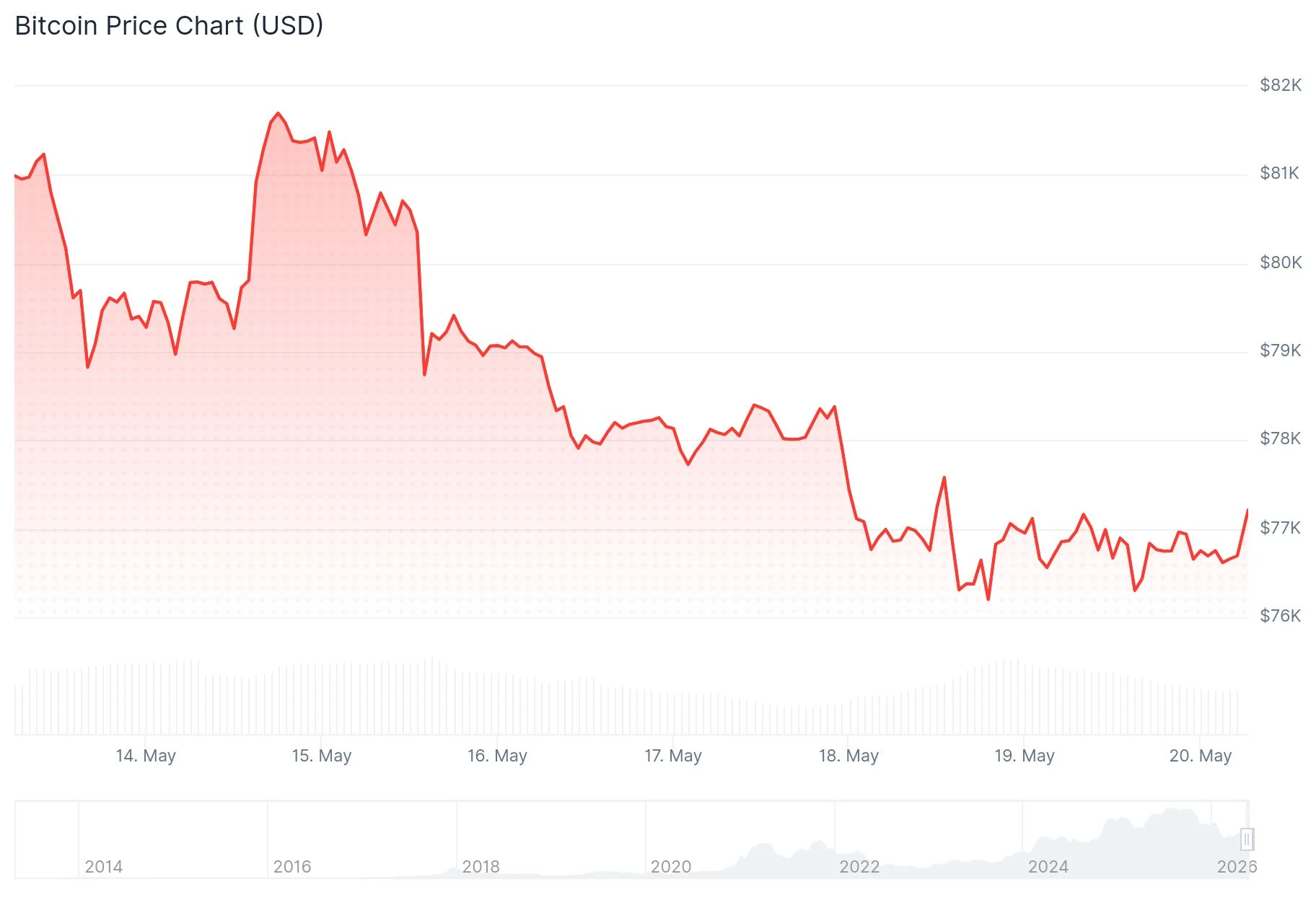
Bitcoin (BTC) Hovers Above $77K Amid Iran Diplomacy and Rising Treasury Yields

Beyond Cleaning: What Else You Must Check Before Moving Out




