

How Privacy-Focused Payments Are Reshaping Online Freelancing Platforms
Why Privacy-Focused Payments Matter for Freelancers Now
The Rise of Global Freelancing and its Payment Pain Points
Picture a graphic designer in Lagos: on Monday, a logo for a startup in Berlin; mid‑week, social posts for a client in Toronto; all while handling a long‑term contract with a SaaS company in Singapore. All of that happens from a laptop, in one week, from one place. This kind of global freelancing used to sound unusual. Now it is simply how a huge part of the internet works. Tens of millions of people earn at least some of their income through online platforms, and that crowd keeps growing as remote work becomes a standard part of how companies hire.
The money side, however, has not kept up. Payment rails still feel stuck in another era. Freelancers bounce between PayPal balances, international bank transfers, and withdrawals from different marketplaces, each with its own fees, limits, and waiting times. Cross‑border payments can take days to arrive, especially when several intermediary banks sit in the middle. By the time platform fees, payment processor charges, and foreign exchange spreads are added up, 4-7 percent of the invoice can quietly disappear. On top of that, invoices, dashboards, and bank statements regularly expose full names, home addresses, and detailed transaction histories. For global earners who want faster, leaner payments without turning their financial life into a public dossier, exploring privacy‑focused options like monero crypto is an especially appealing click-a direct way to see how a leading privacy coin aims to combine borderless transfers with strong on‑chain confidentiality.
Why Payment Privacy Is Suddenly a Strategic Topic
As global freelancing has matured, an interesting shift has taken place: payment privacy has moved from a niche concern to a serious design requirement. Freelancers and clients are more aware that every transfer leaves a trail of financial data exposure, linking income flows, locations, and client relationships in ways that are not always necessary or safe. For some, this is simply uncomfortable. For others, especially those in sensitive industries or jurisdictions, it can be genuinely risky.
The Privacy Problem in Traditional Freelance Payments
Overexposed Identities and Transaction Histories
Traditional payment methods were never designed with freelance anonymity or even basic payment data privacy in mind. Every invoice typically includes a legal name, sometimes a home address, and often direct contact details. Marketplace dashboards can reveal which clients have paid what amounts, over what periods, and sometimes even the rough timing of income. Bank statements then add another layer, with counterparties and transaction memos that tell a surprisingly detailed story about a freelancer’s work life.
High Fees, Slow Settlement, and FX Friction
Privacy is only one strand of the problem. Cross-border payment fees and friction often hit freelancers hardest. International transfers through mainstream platforms can easily cost 4-7 percent once fees and exchange rates are accounted for. Traditional bank wires may carry fixed charges in the range of tens of dollars per transfer, plus less visible FX spreads. For a freelancer working on thin margins, these numbers are not minor-they are the difference between a sustainable rate and a race to the bottom.
On top of cost, slow payouts and bank delays create ongoing cash‑flow tension. It is not uncommon for freelancers to wait three to five business days, sometimes more, for funds to arrive and clear. When that lag is combined with extensive transaction history in the hands of several institutions, the incentive to look for alternatives becomes obvious. Privacy-focused payments emerge not just as a way to hide data, but as a multi‑problem response: lower fees, quicker settlement, and less unnecessary exposure along the way.
What “Privacy-Focused Payments” Actually Mean
A Spectrum from Full Privacy Coins to Self-Custodied Stablecoins
The phrase privacy-focused payments often evokes a single image, yet in practice it covers a spectrum of tools and approaches. At one end sit dedicated privacy coins such as Monero or Zcash. These systems are built so that details about the sender, receiver, and sometimes even the amount are obscured by the protocol itself. To an outside observer, transactions are difficult or impossible to link to specific identities, which offers strong confidentiality but also raises regulatory concern on many mainstream platforms.
At the other end are more familiar assets, especially stablecoins like USDT and USDC, held in self-custodial wallets. Transactions on the underlying blockchains are public, and addresses can be traced. However, when online platforms design their systems carefully, they no longer need to store the same depth of personal information or maintain custodial balances in the same way. Pseudonymous payments to personal wallets give freelancers more control over where their financial data lives. Most privacy‑conscious freelancers today lean toward this second approach. It combines liquidity and regulatory acceptance with a meaningful upgrade in how exposed their earnings are to intermediaries.
UX-Level Privacy vs Protocol-Level Anonymity
It is tempting to equate privacy with protocol-level anonymity, but platforms can deliver real UX privacy even while using transparent blockchains. UX privacy focuses on who collects, stores, and displays sensitive information, rather than whether a ledger is publicly visible. By minimizing the personal data required to receive a payment, separating legal records from public profiles, and routing payouts to off‑platform wallets, online freelancing platforms can reduce the number of entities that see a freelancer’s transaction history.
How Privacy-Focused Payments Are Changing Freelance Platforms
New Payout Flows: From Custodial Balances to External Wallets
Historically, most online platforms followed a simple model: hold user funds in a custodial balance, display it inside the dashboard, and offer periodic withdrawals to bank accounts or payment processors. That design made sense when the only viable rails were traditional ones. It also meant that platforms carried large pooled balances and detailed records of every internal transfer linked directly to verified user profiles.
Escrow, Milestones, and Dispute Resolution with Private Rails
Escrow and dispute resolution have always been central to online freelancing. Privacy-focused payments force platforms to reconsider how these mechanisms work. One emerging pattern separates identity verification from public payment flows. A platform may still require full KYC for both freelancer and client at the account level, but milestone payments are locked and released to pseudonymous wallets rather than to publicly labelled internal balances.
Regulatory Reality Check: Balancing Privacy with Compliance
The End of Anonymous Accounts on Mainstream Platforms
Regulation has become a defining force in how privacy tools can be used on mainstream platforms. In the European Union, new anti‑money laundering rules and broader crypto frameworks are making it extremely difficult for regulated service providers to support fully anonymous accounts or privacy coins. Compliance obligations now explicitly restrict services for tokens that are designed to obscure transaction details and require platforms to know their customers with more granularity. Full enforcement is expected to tighten further by the middle of the decade.
Compliance-First Privacy: What Platforms Can Still Do
Even under tighter rules, there remains significant room for compliant privacy. Platforms can start by minimizing what they collect: only the data needed for KYC and tax obligations, nothing more. That information can be stored separately from the interfaces freelancers and clients use daily. Payment infrastructure can be designed in a modular way, so verified users can withdraw to self-custodial wallets without requiring the platform to hold long‑term balances or expose transaction histories to additional intermediaries.
Practical Benefits for Freelancers and Clients
Lower Costs, Faster Settlement, Fewer Intermediaries
When privacy-focused payments are implemented thoughtfully, they often bring very tangible financial benefits. Replacing long chains of card processors, correspondent banks, and marketplace middlemen with direct wallet payouts in stablecoins can cut effective fees dramatically. Instead of losing multiple percentage points on every cross‑border transfer, freelancers keep a higher share of their invoice value. For clients, this can translate into more competitive rates or the ability to work with top talent in regions that were previously too expensive to pay.
Safer Market Access and Greater Negotiating Power
Payment privacy also affects where and with whom freelancers feel comfortable working. In some jurisdictions, public records of foreign income can attract unwanted political or social attention. In others, employers still view outside freelance work with suspicion. When payouts land in self‑custodied wallets without long trails through local banks, freelancers can accept legitimate international work with less fear of local blowback. This does not remove legal obligations, but it can reduce incidental exposure.
Implementation Models: How Platforms Can Add Privacy-Focused Payments
Layered Approach: Fiat On-Ramps, Crypto Rails, and Private Payouts
For most online platforms, a hard switch from traditional payments to pure crypto rails is neither realistic nor desirable. A layered architecture offers a middle path. In a typical three‑layer model, users fund activity through familiar fiat on‑ramps such as cards or bank transfers. Inside the platform, balances and accounting may be denominated in stablecoins, even if this is abstracted from the user. Earnings are then settled to external, self‑custodied wallets when freelancers choose to withdraw.
This hybrid payment stack keeps the front door familiar while quietly introducing crypto payout rails at the back. Clients still see invoices in their local currency, while freelancers enjoy the benefits of fast, global, privacy‑aware payouts. The business logic focuses on currency conversion, fee transparency, and user education rather than on-chain technical details. In many cases, the most complex aspects are handled by specialized payment partners, leaving platforms to concentrate on user experience and risk management.
Privacy by Default Settings and Opt-Out Controls
Payment architecture is only part of the story. Platform settings play a surprisingly large role in how much sensitive data is exposed. Privacy by default means that, unless a user explicitly changes settings, their real name is masked in client communication, their location is shown only at a regional level, and their detailed payment history is not publicly visible. Legal and KYC records sit behind the scenes, accessible only to trust and safety teams when required.
Risks, Trade-offs, and Misconceptions
Privacy Does Not Equal Illegality
One persistent myth is that only bad actors care about private payments. In reality, many of the people most interested in privacy-focused payments are those who take their professional obligations seriously. Journalists working on sensitive beats, activists supporting civil society organizations, contractors in politically fragile regions, or simply high‑earning specialists who do not want their income easily traceable to casual observers-all have legitimate reasons to reduce their financial footprint.
Financial confidentiality has long existed in the traditional world through tools like numbered accounts, corporate structures, and strict banking secrecy in some jurisdictions. In the online freelancing context, privacy-focused payments are a more accessible, digital version of the same instinct. Maintaining a calm, factual view of these motivations helps platforms and regulators separate genuine risk from broad stereotypes.
Real Risks: Volatility, Scams, and Regulatory Shocks
None of this means privacy-focused payments are risk‑free. Token volatility remains a concern, especially for freelancers whose local expenses are in fiat. Many therefore prefer stablecoins, which hold their value better but still carry smart‑contract and counterparty risk. Poorly designed wallets or integrations can expose users to scams and phishing attempts, particularly when self‑custody is involved and irreversible transactions are one click away.
Regulatory shocks are another factor. Sudden decisions to restrict or delist certain tokens, especially privacy coins, can force platforms to change payout methods quickly. Teams that design their systems to be adaptable-supporting multiple assets, clear communication channels, and fallback options-are better positioned to handle such events. Ignoring these risks would be irresponsible; acknowledging them while still moving forward is what separates serious implementations from marketing experiments.
Conclusion: The Future of Freelance Work in a Privacy-Aware Payments World
From Optional Extra to Core Feature
Privacy-focused payments once looked like an experimental add‑on, something only a small subset of freelancers and platforms would care about. That perception is changing quickly. As global freelancing grows and regulatory frameworks tighten, the combination of better privacy, lower friction, and faster settlement is starting to feel less like a luxury and more like an operational necessity. Serious professionals want control over how their income is routed and who can see it, while platforms need efficient, globally consistent rails that still satisfy compliance standards.
The likely trajectory is clear. Over the next few years, privacy-focused platforms-those that treat data minimization, self‑custody payouts, and privacy‑by‑default design as first‑class features-are well positioned to attract higher‑quality freelancers and more discerning clients. Others may continue to function, of course, but will gradually look dated in comparison, both on cost and on trust. Payment evolution in freelancing is no longer only about cheaper transactions; it is about aligning incentives between platforms and the people who depend on them for their livelihood.
The post How Privacy-Focused Payments Are Reshaping Online Freelancing Platforms appeared first on CoinCentral.


You May Also Like
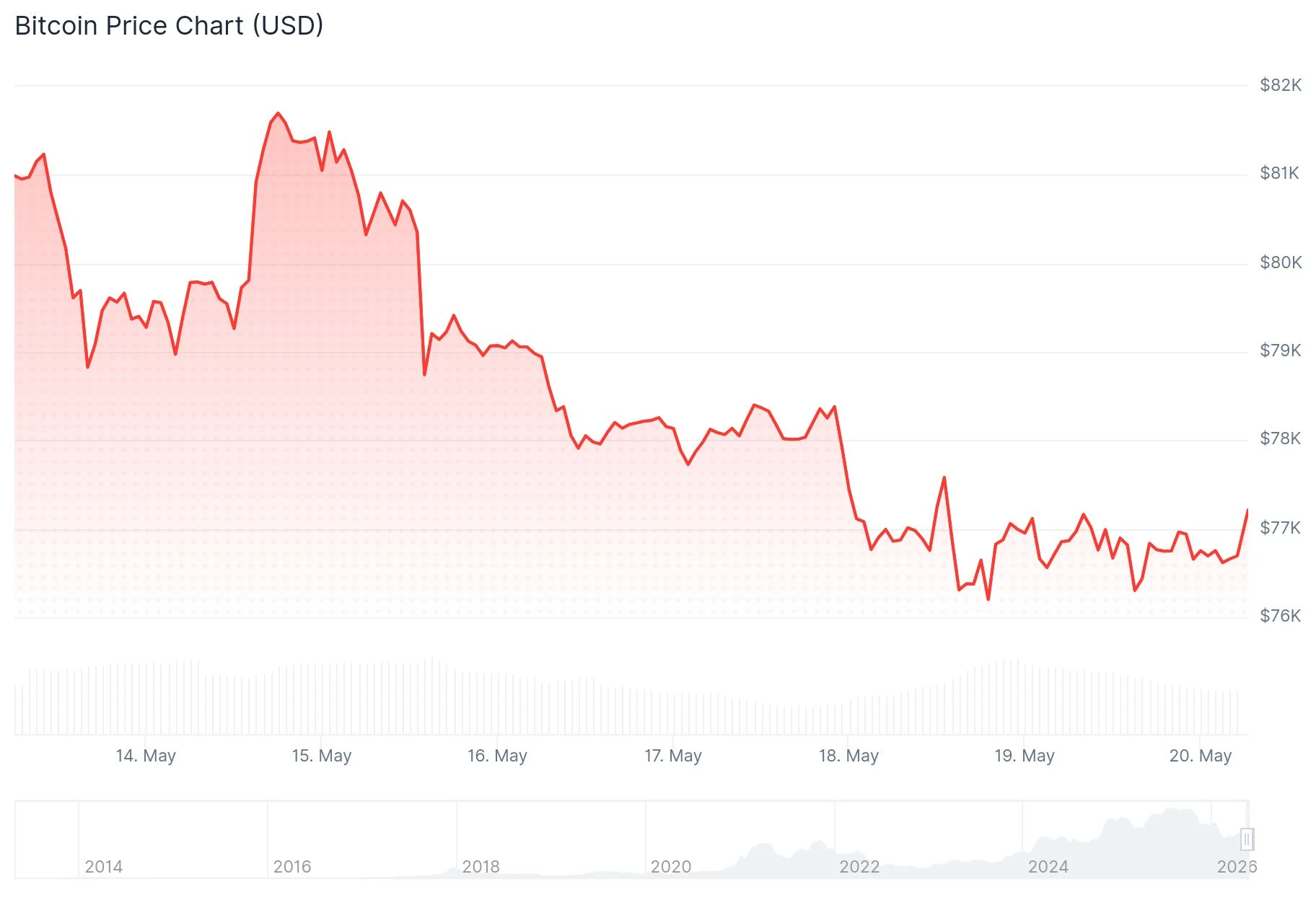
Bitcoin (BTC) Hovers Above $77K Amid Iran Diplomacy and Rising Treasury Yields

Beyond Cleaning: What Else You Must Check Before Moving Out




