

The Impact of Artificial Intelligence on Cost and Time Efficiency in Estimation
In the construction enterprise, staying competitive regularly comes down to two essential factors: handling charges and saving time. Projects are getting increasingly complicated, closing dates are shrinking, and accuracy is not non-compulsory—it’s expected. This is where Artificial Intelligence (AI) is starting to make its mark, particularly in the field of estimation. By weaving clever technology into the workflow, production estimating offerings are evolving at a rapid pace, reshaping how contractors, developers, and builders approach the early levels of a mission.
Understanding the Traditional Challenges
For a long time, estimating has been an in-depth, time-eating task that demanded endless hours of manual effort. Professionals in Construction Estimating Company and production estimating had to sift through blueprints, take off dimensions by hand, and calculate labor and hard work costs with spreadsheets or previous software. Even the most skilled estimators are confronted with the danger of human error. Inaccurate estimates often brought about price overruns, strained budgets, and disputes that might derail whole initiatives.
Now, the industry is moving far away from those slow processes. Artificial Intelligence is proving it can not only speed up calculations but also improve accuracy in methods that have been previously difficult to achieve.
How AI Improves Time Efficiency
One of the standout advantages of AI is the sheer speed with which it can manage complex data. Instead of manually reviewing masses of pages of plans, AI-powered gear can scan and interpret assignment files in minutes. The time saved lets groups focus on decision-making as opposed to repetitive tasks.
Consider some of the time-saving enhancements AI introduces:
- Automated takeoffs: Advanced equipment quickly measures portions from digital drawings, eliminating the need for guide calculations.
- Faster comparisons: Estimators can immediately compare multiple mission scenarios and see cost differences.
- Real-time updates: Changes in designs or specifications can be contemplated inside the estimate without delay, without reworking the whole calculation.
This performance translates to extra bids finished in less time, giving creation estimating companies an edge in competitive markets.
Cost Accuracy Through Smart Data
In construction, even small fee miscalculations can snowball into major losses. AI allows us to lessen these dangers by studying large sets of historical facts and making use of predictive modeling. Instead of relying on guesswork, estimators could make selections based on styles in previous tasks.
Key methods AI complements fee manipulation encompass:
- Predictive evaluation: AI uses past project facts to forecast fabric prices, exertion hours, and risks.
- Market sensitivity: It tracks fluctuations in material fees and incorporates them into real-time estimates.
- Error reduction: By minimizing human oversight, AI decreases the likelihood of neglected objects or miscalculations.
This precision strengthens acceptance among contractors and clients. When a creation estimating employer can continuously deliver reliable numbers, disputes over budgets are less likely to arise.
The Role of Construction Estimation Services
AI isn’t replacing the human detail—it’s far augmenting it. Estimators still play a vital role in interpreting consequences, negotiating with suppliers, and applying discipline information that no algorithm can absolutely capture. Instead, AI offers the equipment that makes their information extra impactful.
Construction Estimating Services’ offerings that integrate AI are locating that they could offer:
- Quicker turnaround for customers in search of bids
- More certain reporting with breakdowns by means of trade, cloth, and exertions
- Greater adaptability to modifications in the challenge scope
These services help reduce the gambling subject, permitting smaller companies to compete with larger organizations that traditionally had more assets.
Why Construction Estimation Companies Are Adopting AI
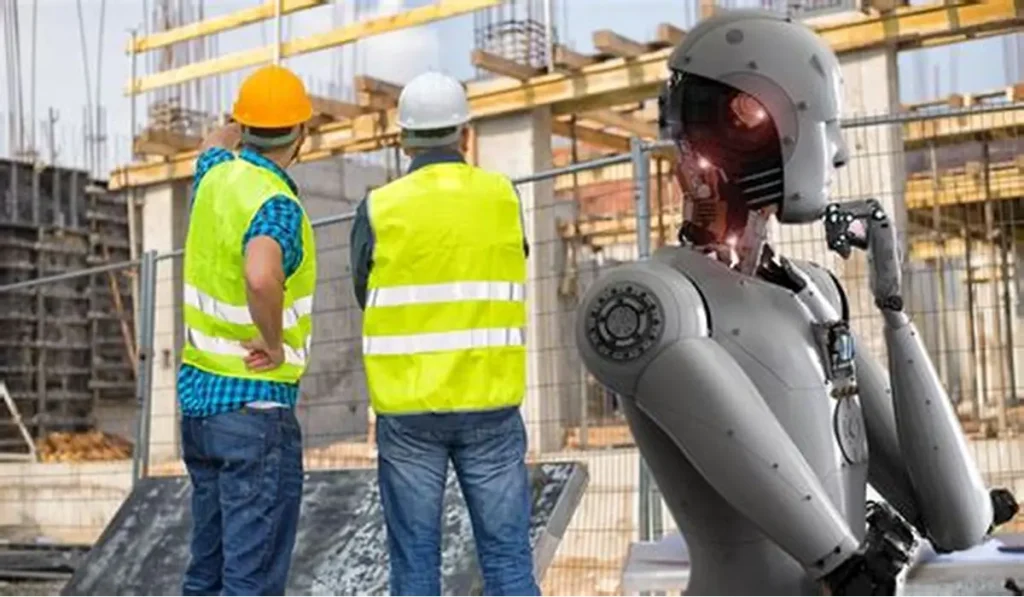 Adoption of AI is accelerating because the benefits are difficult to ignore. A production estimating business enterprise that leverages AI tools gains a significant advantage in several areas:
- Bid accuracy: Better estimates lead to extra hit undertaking awards.
- Operational efficiency: Reduced guide paintings and lower overhead charges.
- Client self-assurance. Transparent, fact-sponsored estimates construct more potent relationships.
By combining skilled professionals with advanced technology, these groups are setting new benchmarks for how tasks are deliberate and performed.
Looking Ahead: The Future of AI in Estimation
AI is still in its early stages of creation, but the trajectory is clear. As structures continue to enhance, Construction Estimating Companies will possibly see even greater stages of automation. Integration with Building Information Modeling (BIM), real-time provider databases, and device studying gear will make estimates increasingly more dynamic and attentive to changing conditions.
The future might also consist of features such as:
- Instant integration of mission designs with dealer pricing
- AI-pushed chance tests that account for climate, exertion, shortages, or delays
- Predictive budgeting tools that are used throughout the life of the venture
These advancements promise not only performance but also a higher level of reality for both clients and contractors.
Final Thoughts
Artificial Intelligence is now not just a buzzword; it’s a sensible device for remodeling estimation. By improving cost accuracy and time efficiency, AI is assisting production estimating services in redefining enterprise requirements. A creation estimating organization that embraces these improvements can position itself ahead of competitors while delivering more reliable results for clients.
As projects grow increasingly complex, the potential to mix human expertise with AI-driven precision may also become the hallmark of successful construction estimation companies in the years ahead.


You May Also Like

Data focus shifts to payrolls – Societe Generale

Elon Musk Says SpaceX May Build Advanced Spaceports Worldwide




