Four days ago, Bitcoin’s hashrate hit an all-time high of 976 exahash per second (EH/s), but it has since cooled, settling in the 900 EH/s range. Mining Metrics Flash Mixed Signals as Block Times Stretch to 11:04 On Aug. 8, 2025, the network’s computing power reached a whopping 976 EH/s based on the seven-day simple […]Four days ago, Bitcoin’s hashrate hit an all-time high of 976 exahash per second (EH/s), but it has since cooled, settling in the 900 EH/s range. Mining Metrics Flash Mixed Signals as Block Times Stretch to 11:04 On Aug. 8, 2025, the network’s computing power reached a whopping 976 EH/s based on the seven-day simple […]

Bitcoin Hashrate Cools After Record as Difficulty Bites

2025/08/13 02:27

Four days ago, Bitcoin’s hashrate hit an all-time high of 976 exahash per second (EH/s), but it has since cooled, settling in the 900 EH/s range.

Mining Metrics Flash Mixed Signals as Block Times Stretch to 11:04

On Aug. 8, 2025, the network’s computing power reached a whopping 976 EH/s based on the seven-day simple moving average (SMA). As of today, the hashrate sits near 900 EH/s—down 76 EH/s over four days—coinciding with a 1.42% difficulty increase at block height 909216. Notably, the estimated revenue for 1 petahash per second (PH/s) of SHA256 output is higher.
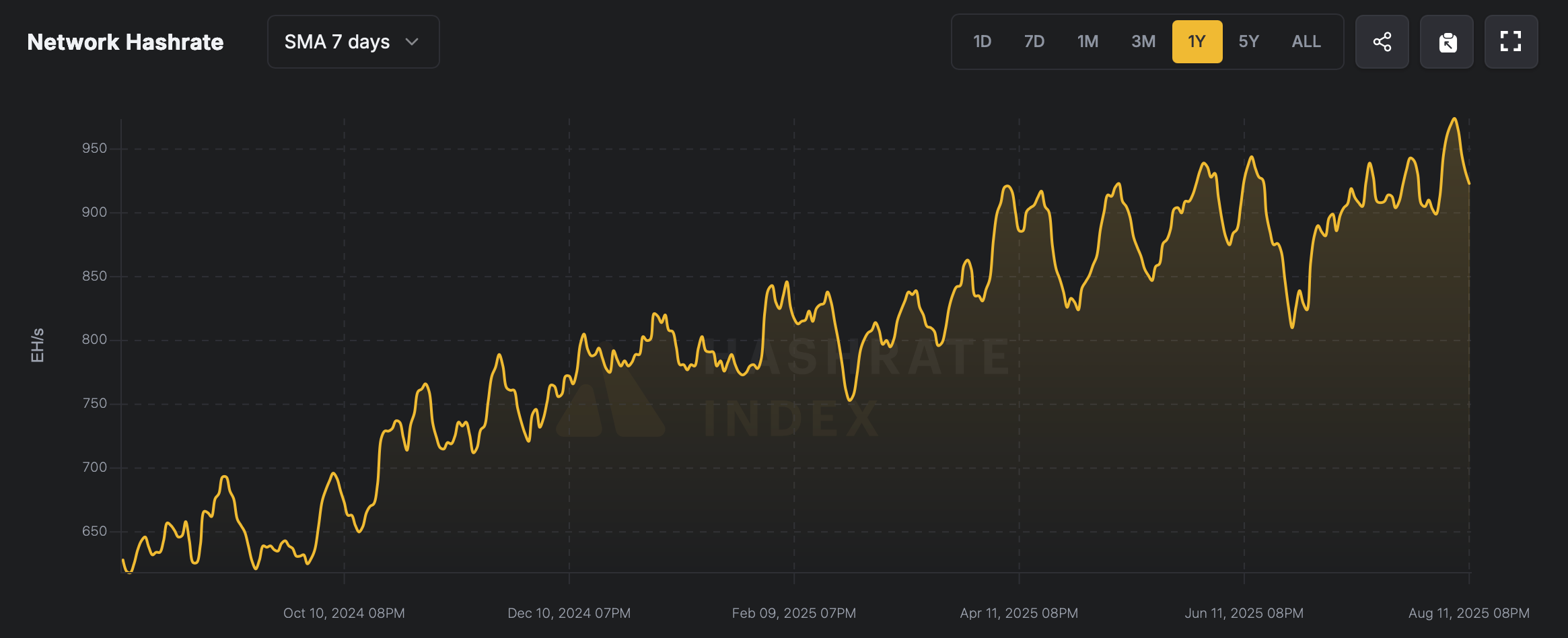
Bitcoin Hashrate Cools After Record as Difficulty BitesBitcoin total hashrate using the seven-day SMA and one-year timeframe via hashrateindex.com stats.

At that time, the estimated hashprice was $57.30 per PH/s, and today it’s 2.55% higher at $58.76, according to hashrateindex.com stats. Yesterday, as BTC pushed past the $120,000 range, the hashprice climbed to $59.78 per petahash. The current revenue remains 4.72% below its July 14 mark, when the hashprice reached $61.67. The increase in network difficulty appears to be the culprit pushing the hashrate lower.
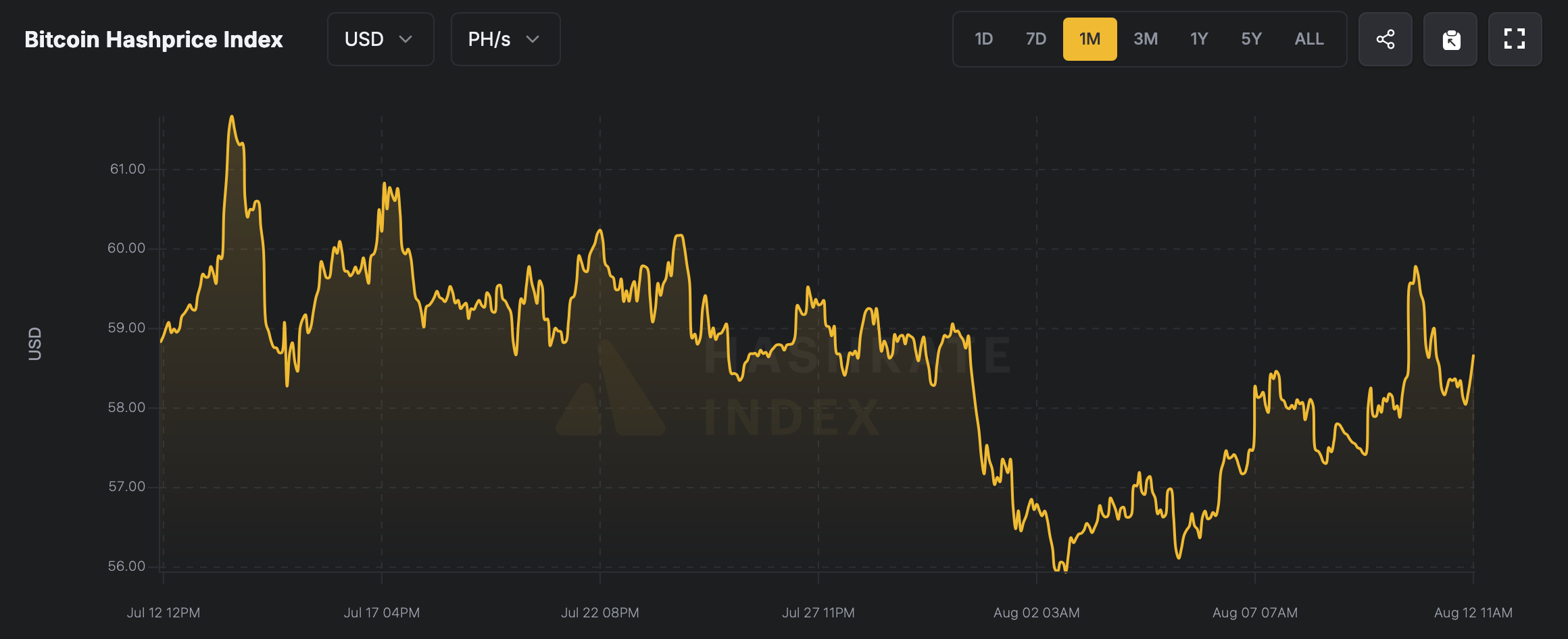
Bitcoin Hashrate Cools After Record as Difficulty BitesBitcoin hashprice over the last 30 days via hashrateindex.com.

With a lower hashrate, block intervals are running slower than the 10-minute target. As of 1:20 p.m. Eastern on Tuesday afternoon, the average block time is 11 minutes, 4 seconds. Slower intervals could set up a downward adjustment at the next difficulty retarget on Aug. 24, 2025. With more than 1,500 blocks left and projections subject to change, an estimated 9.64% cut to mining difficulty is on the table, at least for now.

A softer difficulty setting would ease pressure and could entice sidelined rigs back online, stabilizing block cadence. If price momentum holds, rising unit revenue could offset weaker output and steady participation; if it fades, consolidation among operators may quicken. Currently, the five leading mining pools by blocks mined are Foundry, Antpool, Viabtc, F2pool, and Spider Pool. Combined, the collection of entities control 78.39% of the total hashrate.


Disclaimer: The articles reposted on this site are sourced from public platforms and are provided for informational purposes only. They do not necessarily reflect the views of MEXC. All rights remain with the original authors. If you believe any content infringes on third-party rights, please contact service@support.mexc.com for removal. MEXC makes no guarantees regarding the accuracy, completeness, or timeliness of the content and is not responsible for any actions taken based on the information provided. The content does not constitute financial, legal, or other professional advice, nor should it be considered a recommendation or endorsement by MEXC.

You May Also Like

BFX Presale Raises $7.5M as Solana Holds $243 and Avalanche Eyes $1B Treasury — Best Cryptos to Buy in 2025

BFX Presale Raises $7.5M as Solana Holds $243 and Avalanche Eyes $1B Treasury — Best Cryptos to Buy in 2025

BFX presale hits $7.5M with tokens at $0.024 and 30% bonus code BLOCK30, while Solana holds $243 and Avalanche builds a $1B treasury to attract institutions.
Share
Blockchainreporter2025/09/18 01:07
OCC Findings Suggest Major U.S. Banks Restricted Access for Digital Asset Firms Amid Debanking Probe

OCC Findings Suggest Major U.S. Banks Restricted Access for Digital Asset Firms Amid Debanking Probe

The post OCC Findings Suggest Major U.S. Banks Restricted Access for Digital Asset Firms Amid Debanking Probe appeared on BitcoinEthereumNews.com. The Office of the Comptroller of the Currency (OCC) has confirmed that nine major U.S. banks engaged in debanking practices from 2020 to 2023, restricting access for digital asset firms and other sectors. This marks the first official acknowledgment of these policies, which limited services based on customer types, affecting crypto businesses significantly. OCC report highlights inappropriate distinctions by banks like JPMorgan Chase and Bank of America, targeting crypto and high-risk sectors. Nine banks reviewed showed similar policies restricting customer access without objective risk assessments. Impacted industries include digital asset firms, with potential referrals to the Attorney General for unlawful practices. Discover how major U.S. banks’ debanking policies hit crypto firms hard, per OCC’s 2025 report. Learn the implications for digital assets and what regulators are doing next—stay informed on banking risks today! What Are the OCC’s Findings on Banks Debanking Crypto Firms? Banks debanking crypto firms involves major financial institutions limiting or denying services to digital asset businesses based on perceived risks, as detailed in a recent Office of the Comptroller of the Currency (OCC) report. From 2020 to 2023, nine of the largest U.S. banks implemented policies that required escalated reviews or outright restrictions for certain customers, including those in the crypto sector. This practice, now publicly confirmed, underscores ongoing tensions between traditional banking and emerging digital asset industries. How Did These Debanking Practices Affect Digital Asset Companies? The OCC’s six-page report, released on Wednesday, revealed that institutions such as JPMorgan Chase, Bank of America, Citigroup, Wells Fargo, U.S. Bancorp, Capital One, PNC Financial Services Group, Toronto-Dominion Bank, and Bank of Montreal made distinctions among customers that were deemed inappropriate. For digital asset firms, this meant heightened scrutiny or complete denial of banking services, hindering operations in an already volatile market. The regulator noted that these policies spanned…
Share
BitcoinEthereumNews2025/12/11 11:01