South Korea’s government is set to fast-track pro-business crypto reforms, including stablecoin regulations. The South Korean newspaper Metro Seoul reported that the Presidential Committee on State Affairs announced its plans at a public briefing on August 13. South Korea Crypto Reform Taking Shape The committee spoke of a five-year plan for state administration, naming 123 state affairs-related tasks. Among these tasks named were “the construction of a digital asset ecosystem” and “developing the domestic cryptoasset market.” Both were identified as “key national tasks” for the administration, which took office in early June this year following the election of President Lee Jae-myung. President Lee Jae Myung on Wednesday laid out a sweeping five-year policy agenda, detailing 123 national tasks ranging from constitutional reform to industrial growth and market fairness. https://t.co/52cb7gzOvi — The Korea JoongAng Daily (@JoongAngDaily) August 13, 2025 Lee has spoken repeatedly about his intention to build up the domestic crypto sector, with deregulation and stablecoin regulation high on his agenda. The President appears keen to let domestic firms issue won-pegged stablecoins . Leading banks and IT companies have reacted by registering scores of stablecoin-related trademarks . Others are hurriedly rolling out crypto-related business plans, aware that this may allow non-financial firms to develop advanced payment platforms. However, one of President Lee’s key campaign pledges was left off the five-year plan, namely the dissolution of the Financial Services Commission (FSC). The FSC is the nation’s top financial regulator. Its Financial Intelligence Unit (FIU) polices the country’s crypto exchanges , issuing operating permits and conducting periodic on-site inspections. It also enforces anti-money laundering and terrorist financing protocols at the trading platforms. The Government Complex Building in Seoul, South Korea. (Source: Seoul Institute [CC BY 4.0]) FSC: Vociferous Critic No More? In previous years, the FSC has been a vociferous critic of the crypto sector. But in recent years, as governments have relaxed their hardline stance to the industry, it has spoken in favor of reform. Under the proposal, FSC’s supervisory duties were to transfer to the Financial Supervisory Service. The FSC’s policy-related tasks were due to transfer to the Ministry of Strategy and Finance. But Lee’s plan to scrap the FSC proved controversial, even among senior ministers. While his offices have yet to confirm that the President has shelved the policy, the five-year plan appeared to suggest the proposal may have moved to the back burner. There was no mention of the regulatory reorganization move on the plan. And seven of the 123 tasks were assigned to the FSC. The newspaper added that crypto reforms are a “key focus” for both the government and the National Assembly this year. As such, reforms are “expected to gain momentum” in the weeks ahead, Metro Seoul wrote. ‘Time to Play Catch-up’ Political leaders are concerned that South Korea is being left behind. They note that over the past two years, the global crypto market has expanded by about 262%. While crypto investment has spiked in the US, the European Union, and Japan, driven by institutionalization drives, the same cannot be said for Seoul. The outlet wrote: “Delayed institutional reforms and a lack of legislation in South Korea have left the domestic cryptoasset market significantly lagging in terms of competitiveness.” South Korea says President Lee Jae Myung to visit Japan this month https://t.co/PmtmRcPibF — Nikkei Asia (@NikkeiAsia) August 13, 2025 The FSC has prioritized its plan to allow corporations to buy and sell crypto. It also wants to tak a “more relaxed approach” to regulations. The regulator has previously spoken of its intention to roll out crypto-related regulations before the end of this year. However, skeptics say that a final decision on the fate of the FSC is yet to be taken. Talks to abolish the regulator “may resume in the future,” the newspaper explained. Unnamed financial sector officials opined that the debate over the reorganization of the financial regulators would “continue until the end of the year.” Earlier this month, the Seoul district of Gangnam announced it had recouped $144,057 in unpaid taxes in the first half of this year by seizing coins from tax evaders .South Korea’s government is set to fast-track pro-business crypto reforms, including stablecoin regulations. The South Korean newspaper Metro Seoul reported that the Presidential Committee on State Affairs announced its plans at a public briefing on August 13. South Korea Crypto Reform Taking Shape The committee spoke of a five-year plan for state administration, naming 123 state affairs-related tasks. Among these tasks named were “the construction of a digital asset ecosystem” and “developing the domestic cryptoasset market.” Both were identified as “key national tasks” for the administration, which took office in early June this year following the election of President Lee Jae-myung. President Lee Jae Myung on Wednesday laid out a sweeping five-year policy agenda, detailing 123 national tasks ranging from constitutional reform to industrial growth and market fairness. https://t.co/52cb7gzOvi — The Korea JoongAng Daily (@JoongAngDaily) August 13, 2025 Lee has spoken repeatedly about his intention to build up the domestic crypto sector, with deregulation and stablecoin regulation high on his agenda. The President appears keen to let domestic firms issue won-pegged stablecoins . Leading banks and IT companies have reacted by registering scores of stablecoin-related trademarks . Others are hurriedly rolling out crypto-related business plans, aware that this may allow non-financial firms to develop advanced payment platforms. However, one of President Lee’s key campaign pledges was left off the five-year plan, namely the dissolution of the Financial Services Commission (FSC). The FSC is the nation’s top financial regulator. Its Financial Intelligence Unit (FIU) polices the country’s crypto exchanges , issuing operating permits and conducting periodic on-site inspections. It also enforces anti-money laundering and terrorist financing protocols at the trading platforms. The Government Complex Building in Seoul, South Korea. (Source: Seoul Institute [CC BY 4.0]) FSC: Vociferous Critic No More? In previous years, the FSC has been a vociferous critic of the crypto sector. But in recent years, as governments have relaxed their hardline stance to the industry, it has spoken in favor of reform. Under the proposal, FSC’s supervisory duties were to transfer to the Financial Supervisory Service. The FSC’s policy-related tasks were due to transfer to the Ministry of Strategy and Finance. But Lee’s plan to scrap the FSC proved controversial, even among senior ministers. While his offices have yet to confirm that the President has shelved the policy, the five-year plan appeared to suggest the proposal may have moved to the back burner. There was no mention of the regulatory reorganization move on the plan. And seven of the 123 tasks were assigned to the FSC. The newspaper added that crypto reforms are a “key focus” for both the government and the National Assembly this year. As such, reforms are “expected to gain momentum” in the weeks ahead, Metro Seoul wrote. ‘Time to Play Catch-up’ Political leaders are concerned that South Korea is being left behind. They note that over the past two years, the global crypto market has expanded by about 262%. While crypto investment has spiked in the US, the European Union, and Japan, driven by institutionalization drives, the same cannot be said for Seoul. The outlet wrote: “Delayed institutional reforms and a lack of legislation in South Korea have left the domestic cryptoasset market significantly lagging in terms of competitiveness.” South Korea says President Lee Jae Myung to visit Japan this month https://t.co/PmtmRcPibF — Nikkei Asia (@NikkeiAsia) August 13, 2025 The FSC has prioritized its plan to allow corporations to buy and sell crypto. It also wants to tak a “more relaxed approach” to regulations. The regulator has previously spoken of its intention to roll out crypto-related regulations before the end of this year. However, skeptics say that a final decision on the fate of the FSC is yet to be taken. Talks to abolish the regulator “may resume in the future,” the newspaper explained. Unnamed financial sector officials opined that the debate over the reorganization of the financial regulators would “continue until the end of the year.” Earlier this month, the Seoul district of Gangnam announced it had recouped $144,057 in unpaid taxes in the first half of this year by seizing coins from tax evaders .

South Korea Takes Another Step Toward Crypto Reform Amid Talk of Regulatory Shake-up

South Korea’s government is set to fast-track pro-business crypto reforms, including stablecoin regulations.

The South Korean newspaper Metro Seoul reported that the Presidential Committee on State Affairs announced its plans at a public briefing on August 13.

South Korea Crypto Reform Taking Shape

The committee spoke of a five-year plan for state administration, naming 123 state affairs-related tasks.

Among these tasks named were “the construction of a digital asset ecosystem” and “developing the domestic cryptoasset market.”

Both were identified as “key national tasks” for the administration, which took office in early June this year following the election of President Lee Jae-myung.

Lee has spoken repeatedly about his intention to build up the domestic crypto sector, with deregulation and stablecoin regulation high on his agenda.

The President appears keen to let domestic firms issue won-pegged stablecoins. Leading banks and IT companies have reacted by registering scores of stablecoin-related trademarks.

Others are hurriedly rolling out crypto-related business plans, aware that this may allow non-financial firms to develop advanced payment platforms.

However, one of President Lee’s key campaign pledges was left off the five-year plan, namely the dissolution of the Financial Services Commission (FSC).

The FSC is the nation’s top financial regulator. Its Financial Intelligence Unit (FIU) polices the country’s crypto exchanges, issuing operating permits and conducting periodic on-site inspections.

It also enforces anti-money laundering and terrorist financing protocols at the trading platforms.
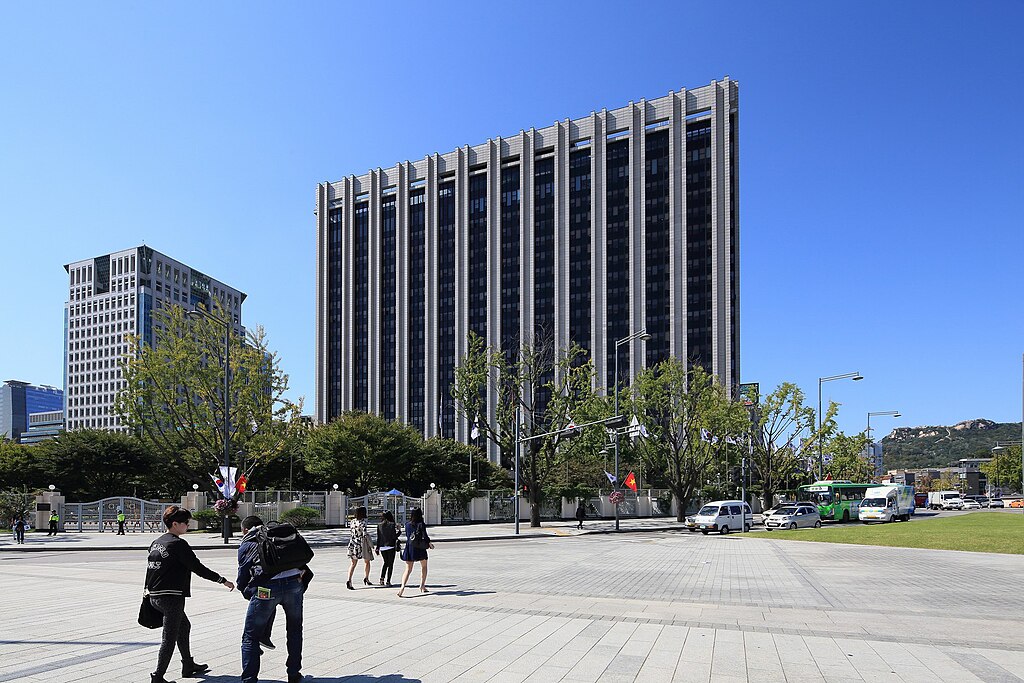
The Government Complex Building in Seoul, South Korea, where South Korea crypto reform is taking a step forward.The Government Complex Building in Seoul, South Korea. (Source: Seoul Institute [CC BY 4.0])

FSC: Vociferous Critic No More?

In previous years, the FSC has been a vociferous critic of the crypto sector. But in recent years, as governments have relaxed their hardline stance to the industry, it has spoken in favor of reform.

Under the proposal, FSC’s supervisory duties were to transfer to the Financial Supervisory Service.

The FSC’s policy-related tasks were due to transfer to the Ministry of Strategy and Finance.

But Lee’s plan to scrap the FSC proved controversial, even among senior ministers. While his offices have yet to confirm that the President has shelved the policy, the five-year plan appeared to suggest the proposal may have moved to the back burner.

There was no mention of the regulatory reorganization move on the plan. And seven of the 123 tasks were assigned to the FSC.

The newspaper added that crypto reforms are a “key focus” for both the government and the National Assembly this year.

As such, reforms are “expected to gain momentum” in the weeks ahead, Metro Seoul wrote.

‘Time to Play Catch-up’

Political leaders are concerned that South Korea is being left behind. They note that over the past two years, the global crypto market has expanded by about 262%.

While crypto investment has spiked in the US, the European Union, and Japan, driven by institutionalization drives, the same cannot be said for Seoul. The outlet wrote:

The FSC has prioritized its plan to allow corporations to buy and sell crypto. It also wants to tak a “more relaxed approach” to regulations.

The regulator has previously spoken of its intention to roll out crypto-related regulations before the end of this year.

However, skeptics say that a final decision on the fate of the FSC is yet to be taken. Talks to abolish the regulator “may resume in the future,” the newspaper explained.

Unnamed financial sector officials opined that the debate over the reorganization of the financial regulators would “continue until the end of the year.”

Earlier this month, the Seoul district of Gangnam announced it had recouped $144,057 in unpaid taxes in the first half of this year by seizing coins from tax evaders.


Disclaimer: The articles reposted on this site are sourced from public platforms and are provided for informational purposes only. They do not necessarily reflect the views of MEXC. All rights remain with the original authors. If you believe any content infringes on third-party rights, please contact service@support.mexc.com for removal. MEXC makes no guarantees regarding the accuracy, completeness, or timeliness of the content and is not responsible for any actions taken based on the information provided. The content does not constitute financial, legal, or other professional advice, nor should it be considered a recommendation or endorsement by MEXC.

You May Also Like

Polygon Tops RWA Rankings With $1.1B in Tokenized Assets

Polygon Tops RWA Rankings With $1.1B in Tokenized Assets

The post Polygon Tops RWA Rankings With $1.1B in Tokenized Assets appeared on BitcoinEthereumNews.com. Key Notes A new report from Dune and RWA.xyz highlights Polygon’s role in the growing RWA sector. Polygon PoS currently holds $1.13 billion in RWA Total Value Locked (TVL) across 269 assets. The network holds a 62% market share of tokenized global bonds, driven by European money market funds. The Polygon POL $0.25 24h volatility: 1.4% Market cap: $2.64 B Vol. 24h: $106.17 M network is securing a significant position in the rapidly growing tokenization space, now holding over $1.13 billion in total value locked (TVL) from Real World Assets (RWAs). This development comes as the network continues to evolve, recently deploying its major “Rio” upgrade on the Amoy testnet to enhance future scaling capabilities. This information comes from a new joint report on the state of the RWA market published on Sept. 17 by blockchain analytics firm Dune and data platform RWA.xyz. The focus on RWAs is intensifying across the industry, coinciding with events like the ongoing Real-World Asset Summit in New York. Sandeep Nailwal, CEO of the Polygon Foundation, highlighted the findings via a post on X, noting that the TVL is spread across 269 assets and 2,900 holders on the Polygon PoS chain. The Dune and https://t.co/W6WSFlHoQF report on RWA is out and it shows that RWA is happening on Polygon. Here are a few highlights: – Leading in Global Bonds: Polygon holds 62% share of tokenized global bonds (driven by Spiko’s euro MMF and Cashlink euro issues) – Spiko U.S.… — Sandeep | CEO, Polygon Foundation (※,※) (@sandeepnailwal) September 17, 2025 Key Trends From the 2025 RWA Report The joint publication, titled “RWA REPORT 2025,” offers a comprehensive look into the tokenized asset landscape, which it states has grown 224% since the start of 2024. The report identifies several key trends driving this expansion. According to…
Share
BitcoinEthereumNews2025/09/18 00:40
Modernizing Legacy E-Commerce Platforms: From Oracle ATG To Cloud-Native Architectures

Modernizing Legacy E-Commerce Platforms: From Oracle ATG To Cloud-Native Architectures

Oracle ATG Commerce was the platform of record for large enterprises for many years. But the e-commerce game has changed, and now, speed, agility, and scalability are the name of the game.
Share
Hackernoon2025/09/18 04:42
EUR/CHF slides as Euro struggles post-inflation data

EUR/CHF slides as Euro struggles post-inflation data

The post EUR/CHF slides as Euro struggles post-inflation data appeared on BitcoinEthereumNews.com. EUR/CHF weakens for a second straight session as the euro struggles to recover post-Eurozone inflation data. Eurozone core inflation steady at 2.3%, headline CPI eases to 2.0% in August. SNB maintains a flexible policy outlook ahead of its September 25 decision, with no immediate need for easing. The Euro (EUR) trades under pressure against the Swiss Franc (CHF) on Wednesday, with EUR/CHF extending losses for the second straight session as the common currency struggles to gain traction following Eurozone inflation data. At the time of writing, the cross is trading around 0.9320 during the American session. The latest inflation data from Eurostat showed that Eurozone price growth remained broadly stable in August, reinforcing the European Central Bank’s (ECB) cautious stance on monetary policy. The Core Harmonized Index of Consumer Prices (HICP), which excludes volatile items such as food and energy, rose 2.3% YoY, in line with both forecasts and the previous month’s reading. On a monthly basis, core inflation increased by 0.3%, unchanged from July, highlighting persistent underlying price pressures in the bloc. Meanwhile, headline inflation eased to 2.0% YoY in August, down from 2.1% in July and slightly below expectations. On a monthly basis, prices rose just 0.1%, missing forecasts for a 0.2% increase and decelerating from July’s 0.2% rise. The inflation release follows last week’s ECB policy decision, where the central bank kept all three key interest rates unchanged and signaled that policy is likely at its terminal level. While officials acknowledged progress in bringing inflation down, they reiterated a cautious, data-dependent approach going forward, emphasizing the need to maintain restrictive conditions for an extended period to ensure price stability. On the Swiss side, disinflation appears to be deepening. The Producer and Import Price Index dropped 0.6% in August, marking a sharp 1.8% annual decline. Broader inflation remains…
Share
BitcoinEthereumNews2025/09/18 03:08





