ETH Unstaking Queue Surges to a Record $3.91 Billion
BitcoinWorld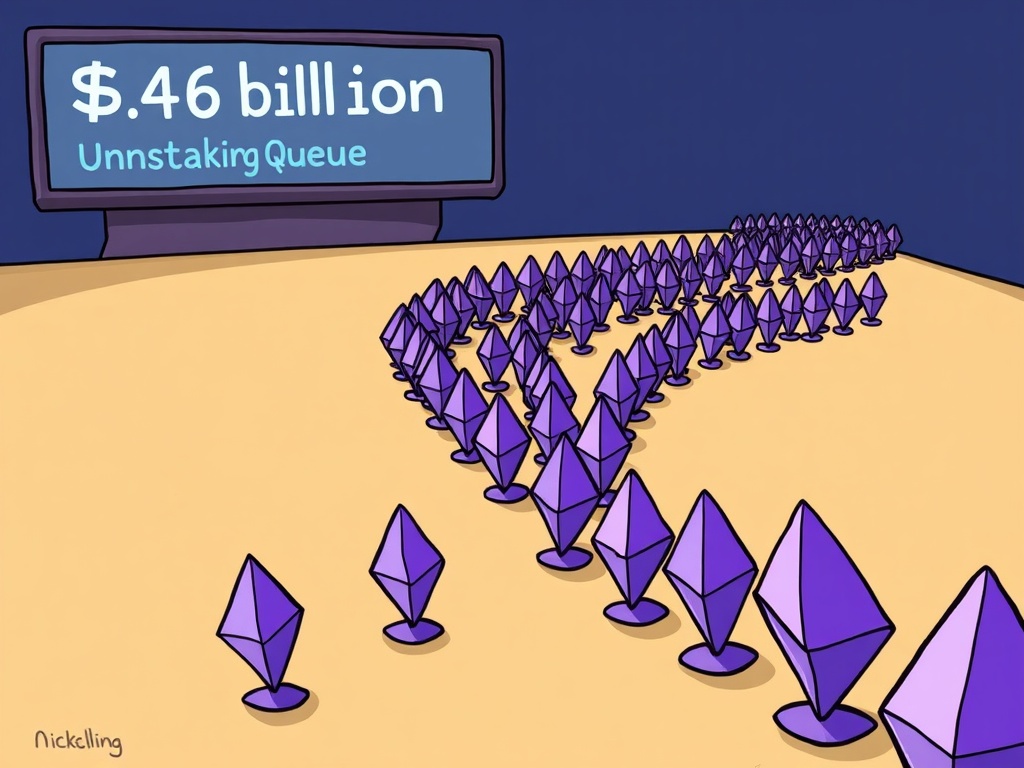
ETH Unstaking Queue Surges to a Record $3.91 Billion
The Ethereum network, a cornerstone of decentralized finance, is currently experiencing a significant development: its ETH unstaking queue has swelled to an unprecedented size. This growing backlog of validators seeking to exit their staked positions has captured the attention of the crypto community, raising questions about its implications for the network and the broader market. This situation highlights the dynamic nature of a proof-of-stake blockchain.
Understanding the ETH Unstaking Queue Phenomenon
Recent data highlights a remarkable surge in the ETH unstaking queue, reaching a record 910,461 ETH, valued at approximately $3.91 billion. This figure, reported by Wu Blockchain citing validator tracking site validatorqueue, represents the largest accumulation of exit requests since Ethereum transitioned to Proof-of-Stake (PoS) with the Merge and the subsequent Shapella upgrade enabled withdrawals. When validators decide to withdraw their staked Ether, they enter this queue, awaiting processing based on network capacity.
The length of this queue is not static; it fluctuates based on the number of validators wishing to exit and the network’s processing capabilities. Ethereum is designed to handle these withdrawals in a controlled manner. This controlled release mechanism ensures that the network remains stable and secure, even during periods of high demand for unstaking, preventing sudden shocks to the system.
Why Are Validators Joining the ETH Unstaking Queue? Exploring the Reasons
Several factors can contribute to validators joining the ETH unstaking queue.
- Market Volatility: Periods of significant price swings or bearish market sentiment can prompt some validators to re-evaluate their investment strategies. They might seek to reduce their exposure or reallocate capital.
- Profitability Adjustments: Changes in staking rewards, operational costs, or the availability of more attractive yields in other DeFi protocols can influence a validator’s decision to unstake.
- Portfolio Rebalancing: Many large stakers or institutional participants regularly adjust their crypto portfolios. Unstaking ETH might be part of a broader rebalancing strategy.
- Operational Needs: Validators might need access to their funds for various reasons, including covering operational expenses, personal liquidity, or exiting the validator business entirely.
It’s important to note that joining the queue does not automatically imply a bearish outlook. It often reflects strategic financial decisions or a natural cycle within the staking ecosystem.
How Does the Unstaking Process Work on Ethereum?
Ethereum’s design includes a structured process for unstaking to maintain network stability and security. Validators must explicitly signal their intent to exit, after which they enter the exit queue. The network processes these requests in a controlled manner, preventing sudden, large-scale withdrawals that could impact liquidity or the integrity of the consensus mechanism.
The number of validators that can exit per epoch (a 6.4-minute period) is capped, ensuring an orderly release of staked ETH. This mechanism balances validator flexibility with network integrity. The current size of the ETH unstaking queue directly impacts the waiting time for validators, which can range from days to weeks, depending on the volume of pending requests. This design prevents a “bank run” scenario on the staking pool.
Potential Impacts of a Growing ETH Unstaking Queue
A substantial ETH unstaking queue can have various implications for the Ethereum ecosystem and its participants.
- Market Dynamics: While a large volume of unlocked ETH could potentially increase selling pressure, historical data suggests that a significant portion is often restaked, redeployed into other DeFi protocols, or simply held. The market typically absorbs these releases without major disruption.
- Validator Behavior: The queue length can influence new validators considering staking. A longer wait time for exit might deter some potential participants. However, the overall appeal of Ethereum staking remains strong due to its fundamental role in securing the network.
- Network Perception: While a long queue might appear concerning, it also demonstrates the network’s ability to manage withdrawals effectively and maintain its security mechanisms. It shows that the system is working exactly as designed, providing a controlled exit path for participants. This transparency builds trust in the protocol.
Actionable Insights for Ethereum Stakers and Investors
For those involved in or considering Ethereum staking, understanding the ETH unstaking queue is crucial.
- Monitor Queue Lengths: Keep an eye on validator queue metrics from reliable sources like validatorqueue.info to gauge current wait times for unstaking.
- Understand Your Strategy: If you are a validator, factor potential exit times into your liquidity planning. For investors, understand that ETH unstaking is a normal part of the PoS cycle and not necessarily a bearish signal.
- Stay Informed: Follow official Ethereum development updates and reputable crypto news sources to stay abreast of network changes and market trends.
Conclusion: A Sign of Maturity, Not Alarm
The record-breaking ETH unstaking queue, while significant in raw numbers, should be viewed within the broader context of Ethereum’s evolving Proof-of-Stake model. It highlights the flexibility offered to validators and the network’s capacity to manage large-scale movements of capital. Rather than a sign of distress, it represents a mature, functional system where participants can freely manage their staked assets. This ongoing process is vital for the health, decentralization, and long-term stability of the Ethereum blockchain. The network continues to prove its resilience and adaptability.
Frequently Asked Questions (FAQs)
Q1: What is the ETH unstaking queue?
A1: The ETH unstaking queue is a waiting list for validators who wish to withdraw their staked Ethereum (ETH) from the network. After the Shapella upgrade, validators can signal their intent to exit, and their requests are processed in a controlled manner.
Q2: Why has the ETH unstaking queue reached a record high?
A2: The queue can grow due to various factors, including market volatility prompting rebalancing, changes in staking profitability, portfolio adjustments by large stakers, or individual operational needs requiring access to funds.
Q3: How long does it take to unstake ETH?
A3: The time it takes to unstake ETH depends on the length of the queue and the network’s processing capacity. It can range from a few days to several weeks, as Ethereum caps the number of validators that can exit per epoch to maintain stability.
Q4: Does a large unstaking queue impact ETH’s price?
A4: While a large volume of unlocked ETH could theoretically increase selling pressure, historical data shows that much of the unstaked ETH is often restaked, redeployed into other DeFi protocols, or simply held. The market typically absorbs these releases without significant disruption.
Q5: Is a long ETH unstaking queue a bad sign for Ethereum?
A5: Not necessarily. A long queue indicates a high demand for unstaking, but it also demonstrates that Ethereum’s withdrawal mechanism is functioning as designed, managing large capital movements in a controlled and secure manner. It’s a sign of a mature and resilient network.
Did you find this analysis helpful? Share this article on your social media platforms to help others understand the dynamics of the ETH unstaking queue and its implications for the Ethereum network. Your insights contribute to a more informed crypto community!
To learn more about the latest Ethereum trends, explore our article on key developments shaping Ethereum staking dynamics.
This post ETH Unstaking Queue Surges to a Record $3.91 Billion first appeared on BitcoinWorld and is written by Editorial Team
You May Also Like

Unlike Binance’s CZ, Trump Not Giving FTX’s Sam Bankman-Fried a Pardon Despite Latest Online Campaign ⋆ ZyCrypto

Stripe Eyes PayPal Acquisition as Stock Hits Multi-Year Low