Michael Saylor’s Strategy Inc has quietly abandoned its self-imposed restrictions on stock sales just weeks after implementing them. The company announced it will now allow equity issuance below its previously established 2.5x mNAV threshold “when otherwise deemed advantageous to the company,” according to Bloomberg . Strategy today announced an update to its MSTR Equity ATM Guidance to provide greater flexibility in executing our capital markets strategy. pic.twitter.com/xSwwcWubIq — Michael Saylor (@saylor) August 18, 2025 Strategy’s trading premium to its massive Bitcoin holdings continues to compress amid growing market pressures and slowing institutional demand. The reversal is a retreat from July’s more stringent financing guidelines that pledged to avoid selling new shares below the 2.5x premium except for covering debt interest or preferred equity dividends. Strategy Faces Funding Pressure as Bitcoin Premium Erodes The policy shift comes as Strategy’s Bitcoin purchases have notably slowed, with the company acquiring just 430 Bitcoin worth $51.4 million in the seven days ended August 17, and 115 BTC in the week before. This pause marks a deceleration from the aggressive accumulation patterns seen earlier this year, during which Strategy regularly purchased thousands of Bitcoin weekly through various financing mechanisms. Short sellers led by Jim Chanos have intensified their scrutiny of the company’s financing model, questioning whether demand for Strategy’s four series of preferred stock offerings can adequately replace revenue from traditional share sales. So not only did $MSTR buy just $51M of Bitcoin, due to lack of demand for the preferred ATM’s, but it also looks like Saylor is lowering the 2.5x mNAV floor “when otherwise deemed advantageous” to the Company. pic.twitter.com/Scfd4VMYiA — James Chanos (@RealJimChanos) August 18, 2025 Strategy’s common shares have since declined 22% since reaching an all-time high on November 20, while Bitcoin has surged approximately 23% during the same timeframe. Currently, Strategy is holding 629,376 BTC worth approximately $72 billion . The company’s reduced purchasing pace indicates a potential constraint in the capital-raising machinery that has powered years of aggressive accumulation. Brian Dobson from Clear Street believes “the additional language in the guidance gives them more leeway with issuing common stock” and “should allow the company to be more opportunistic in its Bitcoin purchases.” Adding to the company’s challenges, multiple class-action lawsuits targeting Strategy’s business practices and risk disclosures have emerged, with Pomerantz LLP representing shareholders who purchased stock between April 30, 2024, and April 4, 2025. Corporate Treasury Strategies Navigate Mounting Pressures Strategy’s financing adjustment is part of a growing competitive pressure as corporate treasury strategies expand beyond Bitcoin into a multi-asset race for diversification. Major Ethereum treasury companies recently gathered in Manhattan to pitch Wall Street on over $22 billion worth of corporate Ether holdings , with BitMine targeting 5% of Ethereum’s total supply and SharpLink Gaming raising $2.6 billion for more ETH accumulation. Corporate treasuries now control over $28 billion worth of Ether across multiple public companies, creating a parallel accumulation race that mirrors Bitcoin’s corporate adoption but with yield-generating staking capabilities. Source: Strategic ETH Reserve Unlike Bitcoin’s yield-free model, Ethereum treasury companies can stake their holdings for returns, with SharpLink taking nearly 100% of its ETH and generating approximately 1,326 ETH in cumulative rewards. Meanwhile, the broader $215 billion corporate Bitcoin movement spanning 213 entities faces warnings from Sentora research that most participants “won’t survive credit cycle” due to structural vulnerabilities in rising-rate environments. The study identifies what it calls a critical flaw in corporate Bitcoin strategies. The research noted that “idle Bitcoin on a corporate balance sheet is not a scalable strategy in a rising-rate world” because most companies are either unprofitable or heavily reliant on mark-to-market gains. Vincent Maliepaard from Sentora acknowledges that “balance sheet diversification with a hard asset like Bitcoin is the right framing,” but warns the strategy remains “fundamentally limited” without Bitcoin evolving to generate yield. This critique has found support from established investment firms, with Kerrisdale Capital arguing that Strategy’s $100 billion market capitalization trading above its $60 billion Bitcoin holdings creates an “unjustifiable” premium that sophisticated investors are beginning to arbitrage. Despite these headwinds, Strategy’s shares have gained over 3,000% since initiating Bitcoin purchases in mid-2020, vastly outperforming both Bitcoin’s 1,000% gain and the S&P 500’s 115% rise during the same period.Michael Saylor’s Strategy Inc has quietly abandoned its self-imposed restrictions on stock sales just weeks after implementing them. The company announced it will now allow equity issuance below its previously established 2.5x mNAV threshold “when otherwise deemed advantageous to the company,” according to Bloomberg . Strategy today announced an update to its MSTR Equity ATM Guidance to provide greater flexibility in executing our capital markets strategy. pic.twitter.com/xSwwcWubIq — Michael Saylor (@saylor) August 18, 2025 Strategy’s trading premium to its massive Bitcoin holdings continues to compress amid growing market pressures and slowing institutional demand. The reversal is a retreat from July’s more stringent financing guidelines that pledged to avoid selling new shares below the 2.5x premium except for covering debt interest or preferred equity dividends. Strategy Faces Funding Pressure as Bitcoin Premium Erodes The policy shift comes as Strategy’s Bitcoin purchases have notably slowed, with the company acquiring just 430 Bitcoin worth $51.4 million in the seven days ended August 17, and 115 BTC in the week before. This pause marks a deceleration from the aggressive accumulation patterns seen earlier this year, during which Strategy regularly purchased thousands of Bitcoin weekly through various financing mechanisms. Short sellers led by Jim Chanos have intensified their scrutiny of the company’s financing model, questioning whether demand for Strategy’s four series of preferred stock offerings can adequately replace revenue from traditional share sales. So not only did $MSTR buy just $51M of Bitcoin, due to lack of demand for the preferred ATM’s, but it also looks like Saylor is lowering the 2.5x mNAV floor “when otherwise deemed advantageous” to the Company. pic.twitter.com/Scfd4VMYiA — James Chanos (@RealJimChanos) August 18, 2025 Strategy’s common shares have since declined 22% since reaching an all-time high on November 20, while Bitcoin has surged approximately 23% during the same timeframe. Currently, Strategy is holding 629,376 BTC worth approximately $72 billion . The company’s reduced purchasing pace indicates a potential constraint in the capital-raising machinery that has powered years of aggressive accumulation. Brian Dobson from Clear Street believes “the additional language in the guidance gives them more leeway with issuing common stock” and “should allow the company to be more opportunistic in its Bitcoin purchases.” Adding to the company’s challenges, multiple class-action lawsuits targeting Strategy’s business practices and risk disclosures have emerged, with Pomerantz LLP representing shareholders who purchased stock between April 30, 2024, and April 4, 2025. Corporate Treasury Strategies Navigate Mounting Pressures Strategy’s financing adjustment is part of a growing competitive pressure as corporate treasury strategies expand beyond Bitcoin into a multi-asset race for diversification. Major Ethereum treasury companies recently gathered in Manhattan to pitch Wall Street on over $22 billion worth of corporate Ether holdings , with BitMine targeting 5% of Ethereum’s total supply and SharpLink Gaming raising $2.6 billion for more ETH accumulation. Corporate treasuries now control over $28 billion worth of Ether across multiple public companies, creating a parallel accumulation race that mirrors Bitcoin’s corporate adoption but with yield-generating staking capabilities. Source: Strategic ETH Reserve Unlike Bitcoin’s yield-free model, Ethereum treasury companies can stake their holdings for returns, with SharpLink taking nearly 100% of its ETH and generating approximately 1,326 ETH in cumulative rewards. Meanwhile, the broader $215 billion corporate Bitcoin movement spanning 213 entities faces warnings from Sentora research that most participants “won’t survive credit cycle” due to structural vulnerabilities in rising-rate environments. The study identifies what it calls a critical flaw in corporate Bitcoin strategies. The research noted that “idle Bitcoin on a corporate balance sheet is not a scalable strategy in a rising-rate world” because most companies are either unprofitable or heavily reliant on mark-to-market gains. Vincent Maliepaard from Sentora acknowledges that “balance sheet diversification with a hard asset like Bitcoin is the right framing,” but warns the strategy remains “fundamentally limited” without Bitcoin evolving to generate yield. This critique has found support from established investment firms, with Kerrisdale Capital arguing that Strategy’s $100 billion market capitalization trading above its $60 billion Bitcoin holdings creates an “unjustifiable” premium that sophisticated investors are beginning to arbitrage. Despite these headwinds, Strategy’s shares have gained over 3,000% since initiating Bitcoin purchases in mid-2020, vastly outperforming both Bitcoin’s 1,000% gain and the S&P 500’s 115% rise during the same period.

Saylor Reverses Course on Stock Sales as Strategy’s Premium to Bitcoin Holdings Falls

Michael Saylor’s Strategy Inc has quietly abandoned its self-imposed restrictions on stock sales just weeks after implementing them.

The company announced it will now allow equity issuance below its previously established 2.5x mNAV threshold “when otherwise deemed advantageous to the company,” according to Bloomberg.

Strategy’s trading premium to its massive Bitcoin holdings continues to compress amid growing market pressures and slowing institutional demand.

The reversal is a retreat from July’s more stringent financing guidelines that pledged to avoid selling new shares below the 2.5x premium except for covering debt interest or preferred equity dividends.

Strategy Faces Funding Pressure as Bitcoin Premium Erodes

The policy shift comes as Strategy’s Bitcoin purchases have notably slowed, with the company acquiring just 430 Bitcoin worth $51.4 million in the seven days ended August 17, and 115 BTC in the week before.

This pause marks a deceleration from the aggressive accumulation patterns seen earlier this year, during which Strategy regularly purchased thousands of Bitcoin weekly through various financing mechanisms.

Short sellers led by Jim Chanos have intensified their scrutiny of the company’s financing model, questioning whether demand for Strategy’s four series of preferred stock offerings can adequately replace revenue from traditional share sales.

Strategy’s common shares have since declined 22% since reaching an all-time high on November 20, while Bitcoin has surged approximately 23% during the same timeframe.

Currently, Strategy is holding 629,376 BTC worth approximately $72 billion. The company’s reduced purchasing pace indicates a potential constraint in the capital-raising machinery that has powered years of aggressive accumulation.

Brian Dobson from Clear Street believes “the additional language in the guidance gives them more leeway with issuing common stock” and “should allow the company to be more opportunistic in its Bitcoin purchases.”

Adding to the company’s challenges, multiple class-action lawsuits targeting Strategy’s business practices and risk disclosures have emerged, with Pomerantz LLP representing shareholders who purchased stock between April 30, 2024, and April 4, 2025.

Corporate Treasury Strategies Navigate Mounting Pressures

Strategy’s financing adjustment is part of a growing competitive pressure as corporate treasury strategies expand beyond Bitcoin into a multi-asset race for diversification.

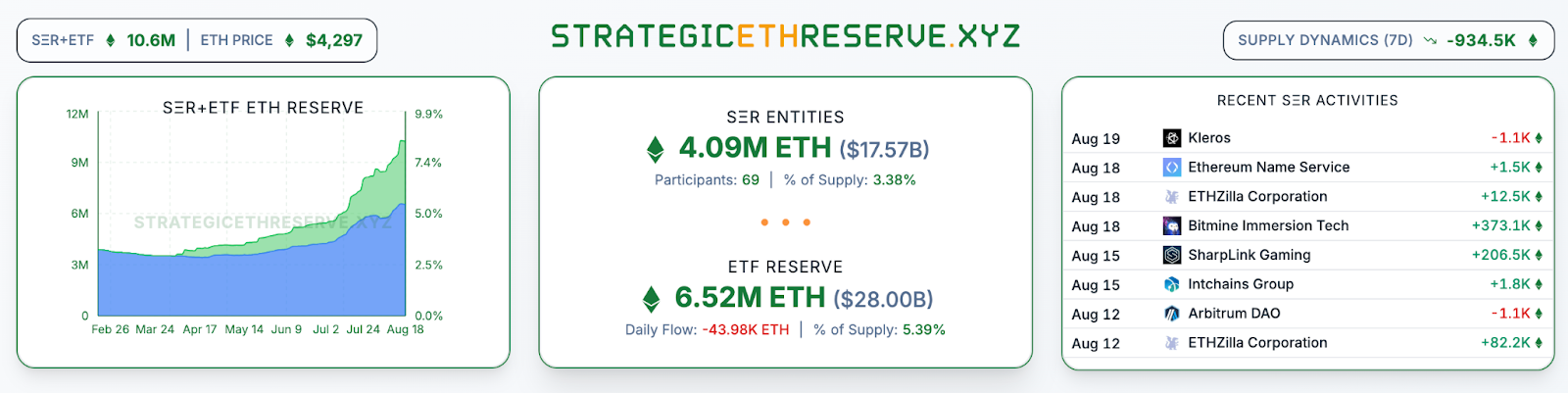
Major Ethereum treasury companies recently gathered in Manhattan to pitch Wall Street on over $22 billion worth of corporate Ether holdings, with BitMine targeting 5% of Ethereum’s total supply and SharpLink Gaming raising $2.6 billion for more ETH accumulation.

Corporate treasuries now control over $28 billion worth of Ether across multiple public companies, creating a parallel accumulation race that mirrors Bitcoin’s corporate adoption but with yield-generating staking capabilities.
Saylor Reverses Course on Stock Sales as Strategy's Premium to Bitcoin Holdings FallsSource: Strategic ETH Reserve

Unlike Bitcoin’s yield-free model, Ethereum treasury companies can stake their holdings for returns, with SharpLink taking nearly 100% of its ETH and generating approximately 1,326 ETH in cumulative rewards.

Meanwhile, the broader $215 billion corporate Bitcoin movement spanning 213 entities faces warnings from Sentora research that most participants “won’t survive credit cycle” due to structural vulnerabilities in rising-rate environments.

The study identifies what it calls a critical flaw in corporate Bitcoin strategies. The research noted that “idle Bitcoin on a corporate balance sheet is not a scalable strategy in a rising-rate world” because most companies are either unprofitable or heavily reliant on mark-to-market gains.

Vincent Maliepaard from Sentora acknowledges that “balance sheet diversification with a hard asset like Bitcoin is the right framing,” but warns the strategy remains “fundamentally limited” without Bitcoin evolving to generate yield.

This critique has found support from established investment firms, with Kerrisdale Capital arguing that Strategy’s $100 billion market capitalization trading above its $60 billion Bitcoin holdings creates an “unjustifiable” premium that sophisticated investors are beginning to arbitrage.

Despite these headwinds, Strategy’s shares have gained over 3,000% since initiating Bitcoin purchases in mid-2020, vastly outperforming both Bitcoin’s 1,000% gain and the S&P 500’s 115% rise during the same period.


Market Opportunity
Threshold Logo
Threshold Price(T)
$0.010164
$0.010164$0.010164
+1.84%
USD
Threshold (T) Live Price Chart
Disclaimer: The articles reposted on this site are sourced from public platforms and are provided for informational purposes only. They do not necessarily reflect the views of MEXC. All rights remain with the original authors. If you believe any content infringes on third-party rights, please contact service@support.mexc.com for removal. MEXC makes no guarantees regarding the accuracy, completeness, or timeliness of the content and is not responsible for any actions taken based on the information provided. The content does not constitute financial, legal, or other professional advice, nor should it be considered a recommendation or endorsement by MEXC.

You May Also Like

Aave CEO Breaks Silence on Game-changing Upgrade in Q4: Details

Aave CEO Breaks Silence on Game-changing Upgrade in Q4: Details

The post Aave CEO Breaks Silence on Game-changing Upgrade in Q4: Details appeared on BitcoinEthereumNews.com. Aave CEO and founder Stani Kulechov has broken his silence on a major upgrade coming to Aave in Q4, 2025. The Aave v4 upgrade is anticipated to be one of the major events in DeFi in 2025, including features such as a Hub-and-Spoke architecture, reinvestment module and others, boosting Aave liquidity and saving gas. The upgrade will also include UX improvements and a new liquidation engine. The Reinvestment Module would help Aave earn more from unused capital, utilizing idle liquidity. On Sept. 15, the Aave founder informed the crypto community of the Aave v4 upgrade roadmap, which highlights where the project is currently at in its development. Aave CEO reacts The Aave founder commented in reaction to a tweet highlighting the features of Aave V4, “very nice overview of the Aave V4 feature,” adding that the Reinvestment Module was not part of the initial design. Very nice overview of the Aave V4 features. Interestingly, the Reinvestment Module wasn’t part of our original design a couple of years ago when we laid down the protocol architecture. It actually emerged later as an unexpected, but exciting, “last-minute” addition. The… https://t.co/Zkp3bmrCAZ — Stani.eth (@StaniKulechov) September 17, 2025 “Interestingly, the Reinvestment Module wasn’t part of our original design a couple of years ago when we laid down the protocol architecture. It actually emerged later as an unexpected, but exciting, last-minute addition,” Kulechov added. The Aave CEO explained the reinvestment feature further as one that allows the protocol to deploy pool float into low-risk, highly liquid yield strategies, creating additional efficiency for LPs. The feature is somewhat inspired by Ethena’s rebalance to USDtb but applied natively within Aave. The Aave team shared the launch roadmap for the Aave upgrade on Sept. 15, revealing a recent V4 Development Update. Source: https://u.today/aave-ceo-breaks-silence-on-game-changing-upgrade-in-q4-details
Share
BitcoinEthereumNews2025/09/18 16:57
NZD/USD holds losses below 0.5750 ahead of China trade data

NZD/USD holds losses below 0.5750 ahead of China trade data

The post NZD/USD holds losses below 0.5750 ahead of China trade data appeared on BitcoinEthereumNews.com. NZD/USD extends its losses for the second successive day
Share
BitcoinEthereumNews2026/01/14 09:54
Will dogwifhat [WIF] break $1.29 or stay stuck in consolidation?

Will dogwifhat [WIF] break $1.29 or stay stuck in consolidation?

WIF traders leaned hard on the buy side, setting up a breakout battle at $1.29.
Share
Coinstats2025/09/18 07:00




