3 Clear Reasons Bitcoin and Gold Prices Are Rising Now
Cryptsy - Latest Cryptocurrency News and Predictions
Cryptsy - Latest Cryptocurrency News and Predictions - Experts in Crypto Casinos
You’re watching two asset classes that rarely move in perfect sync: Bitcoin and gold. Lately both have been climbing, and that can’t be shrugged off as coincidence. Whether you trade crypto on platforms like Cryptsy or manage a diversified portfolio, understanding the drivers behind these moves helps you act with clarity rather than react out of fear. In my experience, three forces explain most of what you’re seeing: macro and monetary shifts, changing flows and supply dynamics, and rising geopolitical risk. Below I walk through each reason, the specific signals to watch now, and how you might think about positioning your portfolio.
Key Takeaways
- Bitcoin and gold prices are rising mainly because falling real yields and looser monetary expectations lower the opportunity cost of holding non‑yielding assets.
- Increased institutional demand—spot ETFs, futures inflows, and steady ETF holdings—creates a durable bid that supports higher prices over weeks and months.
- Tighter effective supply from mine production limits and Bitcoin halvings/miner behavior amplifies price moves when demand increases.
- Escalating geopolitical risk and market volatility push investors toward safe‑haven assets, making Bitcoin and gold common refuge plays in stress episodes.
- Monitor CPI/PCE prints, real yields, Fed communications, ETF flows, on‑chain metrics, and bullion premiums to distinguish headline spikes from sustainable rallies.
Reason 1: Macroeconomic And Monetary Policy Dynamics
Inflation Expectations And Real Yields
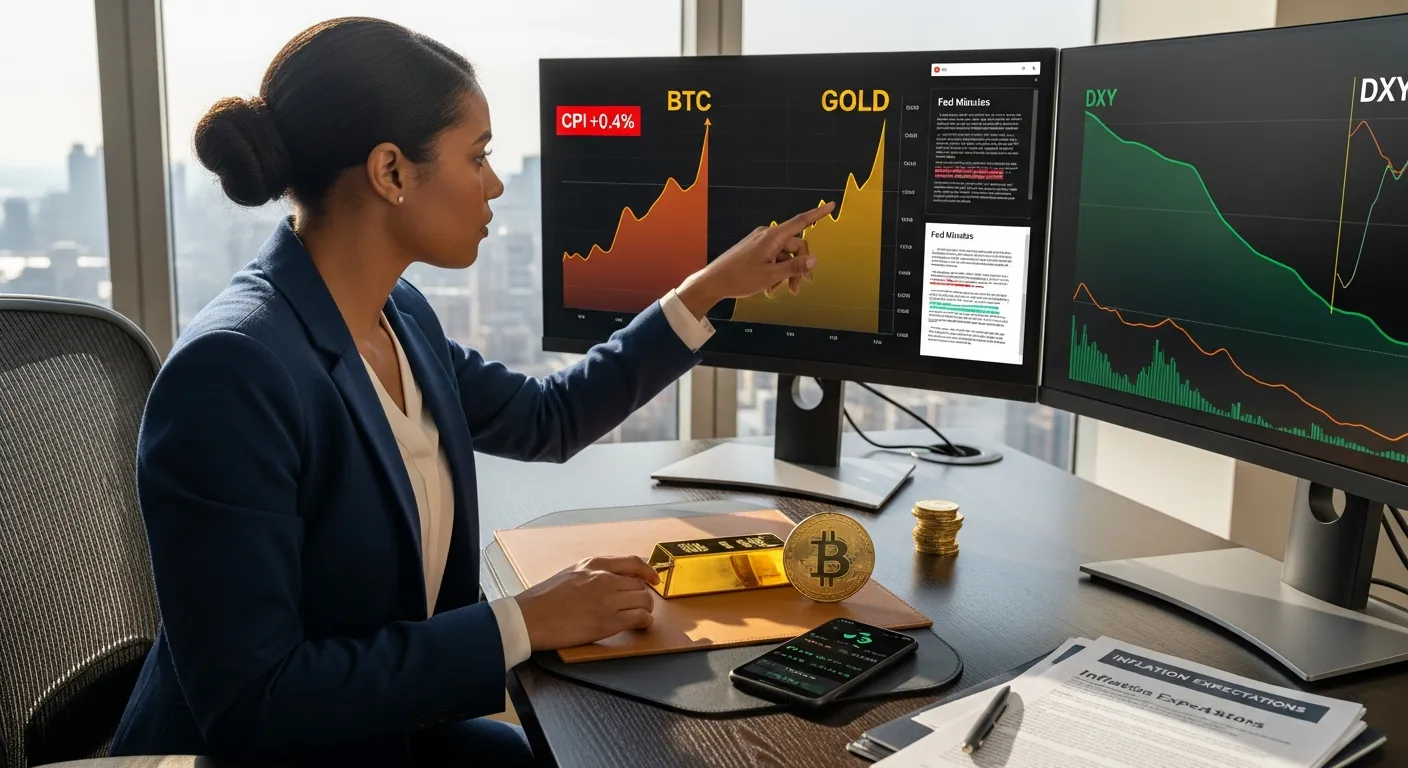
You care about real yields because they set the opportunity cost of holding non‑yielding assets. When inflation expectations rise faster than nominal yields, real yields drop, and assets without coupons, like gold and Bitcoin, look more attractive. I’ve seen this play out repeatedly: a surprising CPI print pushes nominal yields up temporarily, but if the market thinks inflation will stick, breakevens widen and real yields fall. That’s the environment where these stores of value gain attention from both retail and institutional buyers.
Central Bank Policy Shifts And Market Liquidity
Central banks drive liquidity. If the Fed signals a pause in rate hikes or hints at rate cuts down the road, liquidity tends to increase and risk assets rally. But there’s a nuance: easing expectations also compress real yields, which helps gold and Bitcoin specifically. When policymakers talk about flexibility or “data dependence,” markets interpret that as less restrictive policy ahead. You should track Fed communications closely, those speeches and minutes often move both gold and Bitcoin more than a headline CPI number in the days that follow.
Currency Weakness And Global Liquidity Flows
A weaker dollar amplifies the rise in dollar‑priced commodities and globally traded assets. When the dollar loses purchasing power, investors abroad see cheaper entry points into gold and Bitcoin, fueling demand. In practice, you’ll notice the pair moving higher alongside a falling dollar index and growing cross‑border flows into dollar‑denominated crypto exchanges and bullion markets. If you use Cryptsy for real‑time market updates, watch currency pairs and volume coming from offshore jurisdictions, those are early clues about where demand is actually originating.
Reason 2: Investment Flows And Financial Product Supply Changes
ETF Activity, Futures Flows, And Institutional Demand
Exchange‑traded products matter. When spot or futures ETFs attract inflows, they create a steady bid. Institutions prefer regulated, liquid structures, and their purchases can be large and persistent. For Bitcoin, every approved spot ETF has changed the market structure by making it easier for pensions, endowments, and family offices to buy. For gold, ETF holdings remain a core demand source. You should be checking daily ETF flows and holdings because consistent inflows tend to support higher prices over weeks and months rather than just spur short spikes.
Retail Rotation And On‑Chain Indicators For Bitcoin
Retail can drive momentum, and on‑chain data gives you a near‑real‑time read. Look at metrics like active addresses, exchange netflows, and the concentration of supply among long‑term holders. When exchange outflows increase and long‑term wallets stop selling, supply becomes effectively tighter. I’ve noticed that during rallies, whales often accumulate during low‑volume dips and that behavior can sustain a move even after larger headlines fade. Retail buying completes the picture, adding depth to moves that start with institutional demand.
Supply Constraints: Gold Mining Trends And Bitcoin Halvings/Mining Dynamics
Supply factors are literal for gold and coded for Bitcoin. Gold mine production grows slowly and can be hampered by higher input costs or regulatory issues, creating a slow‑moving supply constraint. Bitcoin’s supply curve is explicit: halvings cut new issuance roughly every four years. Mining dynamics, hashrate, miner selling pressure, and electricity costs, matter because miners are forced sellers at times. Less selling from miners, coupled with steady external demand, tightens net supply and nudges prices higher. For an investor, understanding both the physical and protocol‑driven supply mechanics helps you judge whether a rally is likely sustainable.
Reason 3: Geopolitical Risk And Safe‑Haven Demand
Escalating Geopolitical Tensions And Market Risk Aversion
When geopolitical tensions flare, you don’t always see immediate, identical moves across assets. But you do see a common impulse: investors seek safe harbors. Gold has long been that refuge. Bitcoin, increasingly, is being treated as a digital alternative, especially where capital controls or inflation fears are part of the story. If you monitor headlines and derivatives markets, spikes in volatility or sudden moves in FX often precede inflows into both assets as traders reposition into perceived safety.
Correlation Patterns Between Bitcoin, Gold, And Risk Assets
Correlations shift over time. During risk‑on runs, Bitcoin tends to correlate with equities: during turbulence, gold often decouples and moves opposite risk assets. Recently, Bitcoin has shown bouts of correlation with gold during high‑stress episodes, suggesting some investors are treating it as a hedge. You should be cautious: these correlations can break and mean different things on different timeframes. Still, watching cross‑asset correlations gives you context for whether a move is driven by risk appetite or fear.
Short‑Term Volatility Versus Long‑Term Store‑Of‑Value Stories
Short‑term swings are frequent, especially for Bitcoin. That volatility is part of why institutional allocations are deliberate and often size‑constrained. But if your view is long‑term, years, not weeks, the narrative of a limited supply and rising demand under macro stress is persuasive for both assets. You need to decide whether you’re trading the volatility or investing in the story. Your time horizon should shape your reaction to these rallies.
Market Signals To Watch Now
Key On‑Chain Metrics, Trading Volume, And Premiums
On‑chain metrics give you an edge for Bitcoin. Monitor exchange balances, long‑term holder accumulation, and active address counts. Trading volume and price premiums on peer‑to‑peer or regional exchanges can signal where real demand is concentrated. For gold, watch bullion premiums, ETF holdings, and physical delivery notices. These signals tell you whether buying is durable or just headline‑driven.
Macro Indicators: CPI, Real Yields, And Fed Communications
Keep CPI and PCE prints on your calendar, but pair them with real yield moves. Real yields often tell a clearer story for stores of value than headline inflation alone. Fed minutes, chairman speeches, and voting patterns among policymakers are all market movers, don’t assume the impact will be immediate, but do expect sustained shifts in sentiment when the Fed shifts its tone.
ETF Flows, Futures Open Interest, And Liquidity Metrics
ETF inflows and futures open interest reveal who’s committed and how leveraged the market is. Rising open interest in futures alongside inflows into physical or spot ETFs often precedes more sustained price action. Liquidity metrics, bid‑ask spreads, depth at the top of the book, and funding rates in perpetual futures, help you judge how much fuel there is behind a move. Tight spreads and higher depth usually mean the market can handle larger orders without exploding volatility.
How Investors Should Think About These Moves
Risk Management: Position Sizing, Diversification, And Time Horizon
You should start with position sizing. Both Bitcoin and gold can move sharply, so size positions to where a drawdown won’t force you into a poor decision. Diversification matters: these assets may act similarly in some regimes and differently in others. Decide your time horizon and stick to it, if you’re investing for a multi‑year objective, short‑term noise is less relevant.
Tactical Approaches: Entry, Hedging, And Use Of Derivatives
For tactical entries, staggered buys reduce the risk of mistimed entries. Consider hedges if you’re sensitive to drawdowns: options can cap downside at a known cost. If you trade derivatives, be mindful of funding rates, margin calls, and liquidity during stress. Use derivatives to manage risk, not to amplify it beyond what you can tolerate.
Long‑Term Allocation Considerations For Portfolios
Think of allocation as a function of conviction and risk tolerance. A small allocation to Bitcoin or gold can provide diversification and inflation protection, but the right size depends on your overall goals. Rebalance periodically rather than trying to time tops and bottoms. Finally, use trusted tools for execution and data, sources like Cryptsy offer real‑time updates and analysis that help you make informed moves without relying on guesswork.
Conclusion
You’re seeing Bitcoin and gold move higher because macro forces, shifting flows and supply dynamics, and geopolitical uncertainty are aligning to boost demand. That doesn’t mean every uptick will lead to a new long‑term high, but it does suggest a durable context for higher valuations than you might have seen a year ago. Watch the signals laid out above, size positions to your risk tolerance, and use reliable market data to separate headline noise from meaningful trends. If you do that, you’ll be much better positioned to ride the next phase of this market shift rather than being surprised by it.
Frequently Asked Questions
Why are Bitcoin and gold prices rising right now?
Bitcoin and gold are rising due to three main forces: falling real yields from higher inflation expectations, increased institutional and ETF-driven demand, and heightened geopolitical risk driving safe-haven flows. Combined supply constraints—slow gold production and Bitcoin halvings—amplify price pressure when demand increases.
How do real yields and Fed signals affect Bitcoin and gold prices?
Real yields set the opportunity cost of holding non-yielding assets. When inflation expectations rise faster than nominal yields, real yields fall, boosting gold and Bitcoin. Fed communications that imply easier policy or rate pauses also compress real yields and increase liquidity, supporting both assets.
What market signals should I watch to confirm this rally in Bitcoin and gold?
Track CPI/PCE prints, real-yield moves, Fed minutes, ETF inflows, futures open interest, and on-chain metrics like exchange balances and long-term holder accumulation. Also monitor dollar weakness, bullion premiums, and regional exchange volume to assess whether buying is durable or headline-driven.
Can Bitcoin truly act as a safe-haven like gold during geopolitical crises?
Bitcoin can behave as a safe-haven for some investors, especially where capital controls or inflation concerns exist, but its short-term volatility and occasional correlation with equities mean it’s not a perfect hedge. Use time horizon and position sizing to manage that risk if allocating for safety reasons.
How should I position my portfolio if I expect higher Bitcoin and gold prices to continue?
Position with clear risk management: size positions to tolerate sharp drawdowns, stagger entries, and rebalance periodically. Consider small strategic allocations based on conviction, use options or hedges if needed, and rely on ETF flow, on-chain data, and liquidity metrics to time tactical adjustments.
The post 3 Clear Reasons Bitcoin and Gold Prices Are Rising Now first appeared on Cryptsy - Latest Cryptocurrency News and Predictions and is written by Ethan Blackburn


You May Also Like

How Stablecoins Are Changing Business Payments

Lowe’s (LOW) Stock Falls After Earnings Beat Gets Overshadowed by Weak Guidance