

Must Read
BAM AQUINO. Senator Bam Aquino at a Senate hearing on February 18, 2026.BAM AQUINO. Senator Bam Aquino at a Senate hearing on February 18, 2026.
[OPINION] A choice the ‘genuine’ opposition needs to make
For feedback or concerns regarding this content, please contact us at crypto.news@mexc.com
Two Duterte-aligned senators have been named indirect co-perpetrators of the former president at the International Criminal Court (ICC). Unsurprisingly, their allies defended them. But people weren’t ready, however, for the remarks of some senators from the “genuine” opposition.
In particular, Senator Bam Aquino faced pushback for saying that “ideally” extrajudicial (EJK) cases should be tried in the Philippines. His supporters pointed to nuance, chiding critics for being “partisan.” Others took a broader view, claiming that Aquino is playing the long game, that is, “balancing his statement to satisfy all those who voted for him” — including the DDS (Diehard Duterte Supporters).
This reminds me of a similar crisis of faith last year. Aquino and Senator Francis Pangilinan were reported to be joining the Senate majority led by then-Senate president Chiz Escudero. “It’s not what I voted for,” quipped a student who attended all the 2022 campaign rallies. Like her classmates, she understood that alliances are “pragmatic” and “tactical.” But when the majority is led by the Duterte bloc, things get complicated.
Both incidents provide a useful backdrop for conversations that must begin long before the 2028 presidential elections. It brings up fundamental choices that need to be made if the “good” side is to have any chance of winning the next electoral round.
We’ve always fixated on “who” should run, on “winnability,” and on “pedigree.” In the eyes of a severely disillusioned public, however, these are the markers of personality politics and dynasties. If we are to distinguish ourselves from trapos and their sins, then our conversations should be less about “who” and more about “what.”
What kind of leader should we build our efforts around for 2028?
As a starting point, it’s good to remember that reasonable people can disagree. And people with the same goals may take different paths. In the context of 2028, the first path seems to put primacy on forging alliances — even unsavory ones. “We have learned our lesson.” Being a principled island sounds great on paper, but it’s ultimately futile. The proposed solution is to be open, to set aside “emotion” and to form linkages with other power centers. This is necessary not just to win elections but to deliver on electoral promises.
This is the wisdom of conventional politics.
Politicians play for the middle ground because they need to “bring home the bacon.” Through it, one uses the system and deploys “nuanced positioning” to deliver results. This approach can lead to change, some of which can be powerful. But those changes tend to be incremental.
Moreover, those who master the game risk becoming reliant on it. Pandering to all sides tends to reinforce existing political dynamics. Thus, the cycle perpetuates.
Break chains or play the game?
On the other hand, those who object to alliances with Escudero and the Duterte bloc prefer challenging the very system itself. They want to break chains, not hobnob with dynasties. They understand that nuanced positioning is how things get done but, they ask the question: Does it have to stay that way?
It’s not about ideological purity. It’s about ending a cycle of horse trading and patronage that gutted the middle class and impoverished millions.
Challenging a broken system. To political veterans, this is quixotic. They have a point. History shows it often leads to electoral disappointments. As its critics point out, what good are your principles, if your constituency continues to suffer for it. “Puro tayo prinsipyo. Manalo muna tayo.”
Two paths. One is about learning to “play the game,” while the other seeks to upend it.
One recognizes realities, the other refuses to accept that this is just the way things are. Which path will get you beyond Leni’s 15 million in 2022? Which path did Digong take to generate a landslide in 2016? When 35% of Filipinos don’t want anything to do with either the BBM admin or the Duterte bloc, will catering to both sides work? On the other hand, wouldn’t a leader that’s too “radical” ostracize the 35%?
Choices influence preparations. “Pragmatism” can secure votes and funding through fostered alliances — including those that made supporters uneasy. It will expand the base by appealing to the center and shave votes from all camps. Historically, centrists have a good track record.
In the US, Barack Obama is a prime example. So was Joe Biden in 2020. Stable and reasonably acceptable not just to his democratic base but also to those Republicans tired of the far-right. In winning the 2020 election, Biden benefitted from strategic alliances, and, yes, a lot of political pragmatism.
The second path’s approach tends to be more radical. What they see is that ever since EDSA we’ve done nothing but compromise and strike deals. On a broader level, they see how widespread social dissatisfaction created Duterte, a Le Pen in France, a Bolsonaro in Brazil. When the pendulum has swung too far, can a moderate deliver the re-balancing needed? When the Duterte-type leader’s formula for victory is “Change!” or “Drain the Swamp!”, what can we give that’s equally compelling? Or is our offer to the electorate just more of the same?
Two paths, one common goal. Perhaps that’s what 2028 will boil down to.
Will it be about incremental wins that rely on existing systems and power structures? Or will it be about challenging the very dynamics that have strangled the country and mired its citizens in poverty? Should a movement’s strategic alliances extend to dynasts and oligarchs? Or should it risk disappointment (yet again) by challenging unstoppable forces?
Hard lessons
Two consecutive losses (2016 and 2022). What lessons should we take from them? Is it that we need to be more “pragmatic” or is it that (in 2022) we played it too safe to begin with? What kind of leader do these “flood control” times call for? Is it an Obama/Biden or is it someone like AOC/Mamdani? What kind of vision can galvanize the electorate’s enthusiasm? What type of leader can reverse democratic decline?
There are no easy answers. What’s becoming clear from these incidents of pushback is that the process matters as much as the objective.
The “genuine” opposition’s base is not monolithic. More importantly, its engine — the empowered youth — follows causes, not personalities. For 2028, their support cannot be presumed — it must be earned. Which is but fair. We cannot use their idealism to fuel our campaigns, only to chide them for it once elections are over. And we certainly can’t fault them for calling us out when we stumble. Precisely because they are not blind idealists or “purists.”
After all, weren’t we the ones who taught them to think, to question, and to demand? – Rappler.com
John Molo teaches in UP Law and UA&P Law. He practices litigation and alternative dispute resolution and has argued several landmark cases before the Philippine Supreme Court.


Disclaimer: The articles reposted on this site are sourced from public platforms and are provided for informational purposes only. They do not necessarily reflect the views of MEXC. All rights remain with the original authors. If you believe any content infringes on third-party rights, please contact crypto.news@mexc.com for removal. MEXC makes no guarantees regarding the accuracy, completeness, or timeliness of the content and is not responsible for any actions taken based on the information provided. The content does not constitute financial, legal, or other professional advice, nor should it be considered a recommendation or endorsement by MEXC.
You May Also Like
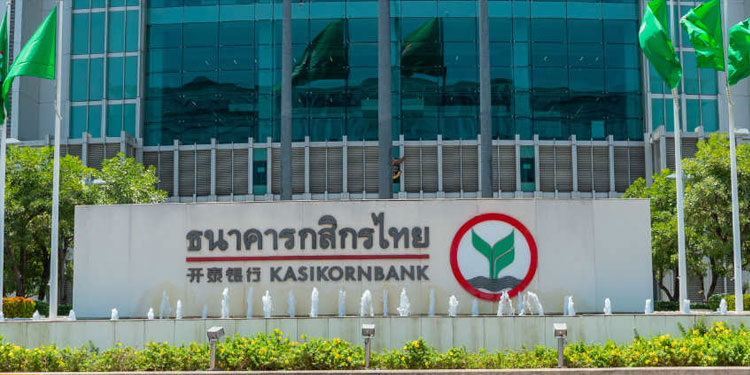
K Bank Tests Ripple Tech for Faster Global Transfers
K Bank has entered into a strategic collaboration with Ripple to evaluate blockchain-powered solutions for cross-border remittances. The bank confirmed on April
Share
CoinTrust2026/04/27 12:35

Yen under pressure as Middle East tensions rise, BOJ rate cut odds unchanged
The post Yen under pressure as Middle East tensions rise, BOJ rate cut odds unchanged appeared on BitcoinEthereumNews.com. The yen remains under pressure as Middle
Share
BitcoinEthereumNews2026/04/27 12:13

John Thune warns GOP rank and file as mission creep threatens to blow up MAGA plan
Republicans now plan to do another round of reconciliation to pass parts of their agenda Democrats oppose — but already, cracks are starting to show in the strategy
Share
Rawstory2026/04/02 20:48



