BitcoinWorld Crypto Fear & Greed Index Dips: Unpacking This Crucial Market Shift The cryptocurrency market is a dynamic space, constantly influenced by investor emotions. Recently, the Crypto Fear & Greed Index experienced a notable shift, falling three points to 48. This movement, while keeping the index in a ‘neutral’ stage, signals a subtle change in collective market sentiment. Understanding this index is crucial for anyone navigating the volatile world of digital assets. What Does the Crypto Fear & Greed Index Tell Us? The Crypto Fear & Greed Index, provided by data provider Alternative, serves as a powerful barometer for market sentiment. It helps us gauge whether investors are feeling overly optimistic (greedy) or excessively pessimistic (fearful) about the crypto market. This index operates on a simple scale: 0: Extreme Fear – This often indicates that investors are very worried, potentially leading to selling pressure. 100: Extreme Greed – This suggests investors are overly confident, which can sometimes precede a market correction. A score of 48, as we see now, firmly places the market in a neutral zone. However, even small dips can reflect underlying shifts that smart investors monitor closely. This index provides a snapshot of the prevailing mood, offering insights beyond just price charts. How is the Crypto Fear & Greed Index Calculated? The strength of the Crypto Fear & Greed Index lies in its comprehensive methodology. It doesn’t rely on a single factor but aggregates data from various sources to form a holistic view. Here are the key components and their respective weightings: Volatility (25%): Measures the current volatility and maximum drawdowns of Bitcoin compared to its average over 30 and 90 days. Higher volatility often suggests fear. Market Volume (25%): Analyzes current trading volume and market momentum. High buying volume in a positive market can signal greed, while high selling volume suggests fear. Social Media (15%): Scans social media for specific keywords and sentiment analysis. Increased mentions and positive sentiment can indicate greed. Surveys (15%): While currently paused, these polls ask thousands of people for their market sentiment, providing direct feedback. Bitcoin Dominance (10%): An increasing Bitcoin dominance often points to fear, as investors tend to flock to the perceived safety of Bitcoin during uncertain times. Google Trends (10%): Examines search queries related to cryptocurrencies. A surge in ‘Bitcoin price manipulation’ searches, for example, might indicate fear. Each factor contributes to the overall score, providing a nuanced perspective on investor psychology. Understanding the Recent Dip in the Crypto Fear & Greed Index The recent three-point fall in the Crypto Fear & Greed Index to 48, while still neutral, hints at a slight cooling of market enthusiasm. This subtle shift could be influenced by a variety of factors: General Market Jitters: Broader economic concerns or regulatory uncertainties can make investors more cautious. Price Consolidation: After periods of significant price movements, markets often consolidate, leading to a more subdued sentiment. Reduced Momentum: A decrease in trading volume or social media chatter might naturally pull the index down from higher neutral levels. It’s important to remember that the index is a tool, not a crystal ball. A small dip doesn’t necessarily forecast a major crash, but it encourages investors to reassess their positions and market outlook. Navigating the Crypto Market: Actionable Insights from the Index How can you use the Crypto Fear & Greed Index to inform your investment strategy? Here are some actionable insights: Counter-Cyclical Investing: Legendary investor Warren Buffett advises to be ‘fearful when others are greedy, and greedy when others are fearful.’ The index can highlight these extremes, suggesting potential buying opportunities during extreme fear or caution during extreme greed. Risk Management: A high greed score might be a signal to take some profits or reduce exposure, while extreme fear could indicate a good time for dollar-cost averaging into positions. Complementary Tool: Always use the index in conjunction with fundamental analysis (project viability, technology, team) and technical analysis (price charts, indicators). No single metric tells the whole story. The index helps you understand the emotional landscape, but rational decision-making remains paramount. Conclusion: Deciphering Market Emotions The recent movement of the Crypto Fear & Greed Index to 48 underscores the continuous ebb and flow of sentiment in the crypto market. While remaining in the neutral zone, this dip serves as a gentle reminder that market emotions are constantly at play. By understanding how this crucial index is calculated and what its shifts signify, investors can gain a clearer perspective, making more informed decisions in their cryptocurrency journey. Always remember to combine emotional intelligence with thorough research for sustainable success. Frequently Asked Questions (FAQs) What does a ‘neutral’ score on the Crypto Fear & Greed Index mean? A neutral score, like the current 48, indicates that investors are neither extremely fearful nor extremely greedy. It suggests a balanced market sentiment, where there isn’t a strong consensus on the market’s immediate direction. Is the Crypto Fear & Greed Index only for Bitcoin? While Bitcoin’s market cap dominance is a factor in its calculation, and Bitcoin often drives overall market sentiment, the Crypto Fear & Greed Index aims to reflect the broader cryptocurrency market sentiment. Its components consider general market activity. How often does the Crypto Fear & Greed Index update? The index is updated daily by Alternative, providing a fresh snapshot of market sentiment for investors to consider. Can I rely solely on the Crypto Fear & Greed Index for investment decisions? No, it’s not advisable to rely solely on any single indicator. The Crypto Fear & Greed Index is a valuable tool for understanding market psychology, but it should be used in conjunction with fundamental analysis, technical analysis, and your personal financial goals. What causes the Crypto Fear & Greed Index to change? Changes in the index are driven by shifts in its underlying factors: volatility, trading volume, social media activity, Bitcoin dominance, and Google search trends. Any significant movement in these areas can impact the overall score. Did you find this article insightful? Share it with your friends and fellow crypto enthusiasts on social media to help them better understand market sentiment! To learn more about the latest crypto market trends, explore our article on key developments shaping Bitcoin price action. This post Crypto Fear & Greed Index Dips: Unpacking This Crucial Market Shift first appeared on BitcoinWorld and is written by Editorial TeamBitcoinWorld Crypto Fear & Greed Index Dips: Unpacking This Crucial Market Shift The cryptocurrency market is a dynamic space, constantly influenced by investor emotions. Recently, the Crypto Fear & Greed Index experienced a notable shift, falling three points to 48. This movement, while keeping the index in a ‘neutral’ stage, signals a subtle change in collective market sentiment. Understanding this index is crucial for anyone navigating the volatile world of digital assets. What Does the Crypto Fear & Greed Index Tell Us? The Crypto Fear & Greed Index, provided by data provider Alternative, serves as a powerful barometer for market sentiment. It helps us gauge whether investors are feeling overly optimistic (greedy) or excessively pessimistic (fearful) about the crypto market. This index operates on a simple scale: 0: Extreme Fear – This often indicates that investors are very worried, potentially leading to selling pressure. 100: Extreme Greed – This suggests investors are overly confident, which can sometimes precede a market correction. A score of 48, as we see now, firmly places the market in a neutral zone. However, even small dips can reflect underlying shifts that smart investors monitor closely. This index provides a snapshot of the prevailing mood, offering insights beyond just price charts. How is the Crypto Fear & Greed Index Calculated? The strength of the Crypto Fear & Greed Index lies in its comprehensive methodology. It doesn’t rely on a single factor but aggregates data from various sources to form a holistic view. Here are the key components and their respective weightings: Volatility (25%): Measures the current volatility and maximum drawdowns of Bitcoin compared to its average over 30 and 90 days. Higher volatility often suggests fear. Market Volume (25%): Analyzes current trading volume and market momentum. High buying volume in a positive market can signal greed, while high selling volume suggests fear. Social Media (15%): Scans social media for specific keywords and sentiment analysis. Increased mentions and positive sentiment can indicate greed. Surveys (15%): While currently paused, these polls ask thousands of people for their market sentiment, providing direct feedback. Bitcoin Dominance (10%): An increasing Bitcoin dominance often points to fear, as investors tend to flock to the perceived safety of Bitcoin during uncertain times. Google Trends (10%): Examines search queries related to cryptocurrencies. A surge in ‘Bitcoin price manipulation’ searches, for example, might indicate fear. Each factor contributes to the overall score, providing a nuanced perspective on investor psychology. Understanding the Recent Dip in the Crypto Fear & Greed Index The recent three-point fall in the Crypto Fear & Greed Index to 48, while still neutral, hints at a slight cooling of market enthusiasm. This subtle shift could be influenced by a variety of factors: General Market Jitters: Broader economic concerns or regulatory uncertainties can make investors more cautious. Price Consolidation: After periods of significant price movements, markets often consolidate, leading to a more subdued sentiment. Reduced Momentum: A decrease in trading volume or social media chatter might naturally pull the index down from higher neutral levels. It’s important to remember that the index is a tool, not a crystal ball. A small dip doesn’t necessarily forecast a major crash, but it encourages investors to reassess their positions and market outlook. Navigating the Crypto Market: Actionable Insights from the Index How can you use the Crypto Fear & Greed Index to inform your investment strategy? Here are some actionable insights: Counter-Cyclical Investing: Legendary investor Warren Buffett advises to be ‘fearful when others are greedy, and greedy when others are fearful.’ The index can highlight these extremes, suggesting potential buying opportunities during extreme fear or caution during extreme greed. Risk Management: A high greed score might be a signal to take some profits or reduce exposure, while extreme fear could indicate a good time for dollar-cost averaging into positions. Complementary Tool: Always use the index in conjunction with fundamental analysis (project viability, technology, team) and technical analysis (price charts, indicators). No single metric tells the whole story. The index helps you understand the emotional landscape, but rational decision-making remains paramount. Conclusion: Deciphering Market Emotions The recent movement of the Crypto Fear & Greed Index to 48 underscores the continuous ebb and flow of sentiment in the crypto market. While remaining in the neutral zone, this dip serves as a gentle reminder that market emotions are constantly at play. By understanding how this crucial index is calculated and what its shifts signify, investors can gain a clearer perspective, making more informed decisions in their cryptocurrency journey. Always remember to combine emotional intelligence with thorough research for sustainable success. Frequently Asked Questions (FAQs) What does a ‘neutral’ score on the Crypto Fear & Greed Index mean? A neutral score, like the current 48, indicates that investors are neither extremely fearful nor extremely greedy. It suggests a balanced market sentiment, where there isn’t a strong consensus on the market’s immediate direction. Is the Crypto Fear & Greed Index only for Bitcoin? While Bitcoin’s market cap dominance is a factor in its calculation, and Bitcoin often drives overall market sentiment, the Crypto Fear & Greed Index aims to reflect the broader cryptocurrency market sentiment. Its components consider general market activity. How often does the Crypto Fear & Greed Index update? The index is updated daily by Alternative, providing a fresh snapshot of market sentiment for investors to consider. Can I rely solely on the Crypto Fear & Greed Index for investment decisions? No, it’s not advisable to rely solely on any single indicator. The Crypto Fear & Greed Index is a valuable tool for understanding market psychology, but it should be used in conjunction with fundamental analysis, technical analysis, and your personal financial goals. What causes the Crypto Fear & Greed Index to change? Changes in the index are driven by shifts in its underlying factors: volatility, trading volume, social media activity, Bitcoin dominance, and Google search trends. Any significant movement in these areas can impact the overall score. Did you find this article insightful? Share it with your friends and fellow crypto enthusiasts on social media to help them better understand market sentiment! To learn more about the latest crypto market trends, explore our article on key developments shaping Bitcoin price action. This post Crypto Fear & Greed Index Dips: Unpacking This Crucial Market Shift first appeared on BitcoinWorld and is written by Editorial Team

Crypto Fear & Greed Index Dips: Unpacking This Crucial Market Shift

BitcoinWorld
Crypto Fear & Greed Index Dips: Unpacking This Crucial Market Shift

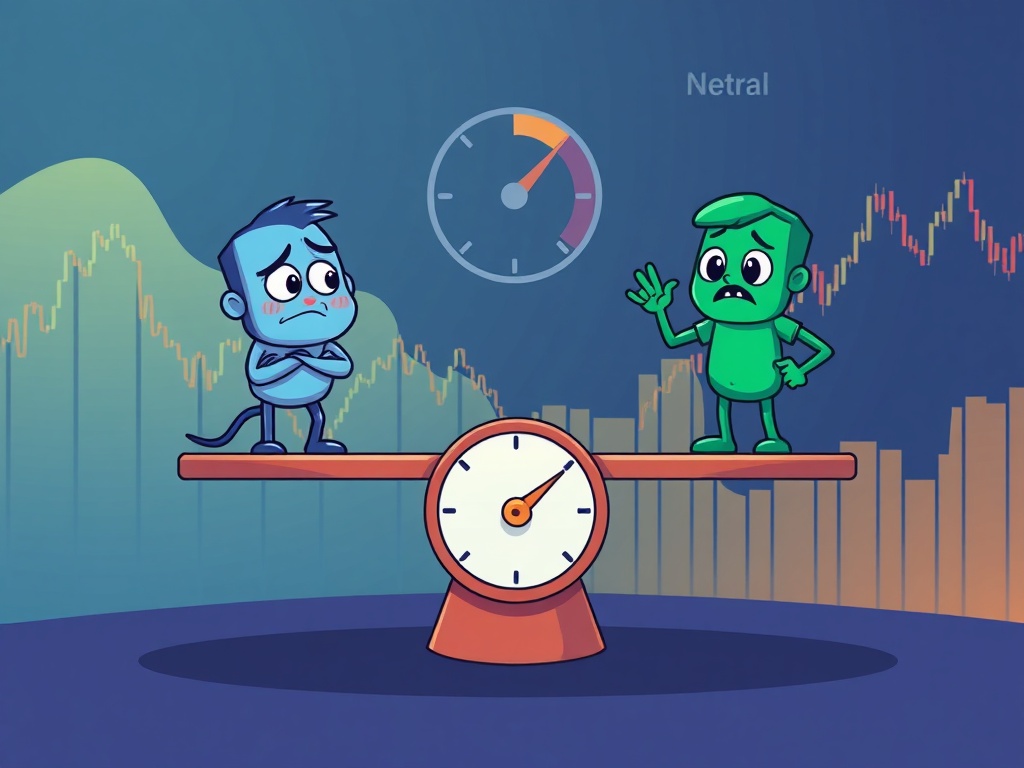
The cryptocurrency market is a dynamic space, constantly influenced by investor emotions. Recently, the Crypto Fear & Greed Index experienced a notable shift, falling three points to 48. This movement, while keeping the index in a ‘neutral’ stage, signals a subtle change in collective market sentiment. Understanding this index is crucial for anyone navigating the volatile world of digital assets.

What Does the Crypto Fear & Greed Index Tell Us?

The Crypto Fear & Greed Index, provided by data provider Alternative, serves as a powerful barometer for market sentiment. It helps us gauge whether investors are feeling overly optimistic (greedy) or excessively pessimistic (fearful) about the crypto market. This index operates on a simple scale:

  • 0: Extreme Fear – This often indicates that investors are very worried, potentially leading to selling pressure.
  • 100: Extreme Greed – This suggests investors are overly confident, which can sometimes precede a market correction.

A score of 48, as we see now, firmly places the market in a neutral zone. However, even small dips can reflect underlying shifts that smart investors monitor closely. This index provides a snapshot of the prevailing mood, offering insights beyond just price charts.

How is the Crypto Fear & Greed Index Calculated?

The strength of the Crypto Fear & Greed Index lies in its comprehensive methodology. It doesn’t rely on a single factor but aggregates data from various sources to form a holistic view. Here are the key components and their respective weightings:

  • Volatility (25%): Measures the current volatility and maximum drawdowns of Bitcoin compared to its average over 30 and 90 days. Higher volatility often suggests fear.
  • Market Volume (25%): Analyzes current trading volume and market momentum. High buying volume in a positive market can signal greed, while high selling volume suggests fear.
  • Social Media (15%): Scans social media for specific keywords and sentiment analysis. Increased mentions and positive sentiment can indicate greed.
  • Surveys (15%): While currently paused, these polls ask thousands of people for their market sentiment, providing direct feedback.
  • Bitcoin Dominance (10%): An increasing Bitcoin dominance often points to fear, as investors tend to flock to the perceived safety of Bitcoin during uncertain times.
  • Google Trends (10%): Examines search queries related to cryptocurrencies. A surge in ‘Bitcoin price manipulation’ searches, for example, might indicate fear.

Each factor contributes to the overall score, providing a nuanced perspective on investor psychology.

Understanding the Recent Dip in the Crypto Fear & Greed Index

The recent three-point fall in the Crypto Fear & Greed Index to 48, while still neutral, hints at a slight cooling of market enthusiasm. This subtle shift could be influenced by a variety of factors:

  • General Market Jitters: Broader economic concerns or regulatory uncertainties can make investors more cautious.
  • Price Consolidation: After periods of significant price movements, markets often consolidate, leading to a more subdued sentiment.
  • Reduced Momentum: A decrease in trading volume or social media chatter might naturally pull the index down from higher neutral levels.

It’s important to remember that the index is a tool, not a crystal ball. A small dip doesn’t necessarily forecast a major crash, but it encourages investors to reassess their positions and market outlook.

How can you use the Crypto Fear & Greed Index to inform your investment strategy? Here are some actionable insights:

  • Counter-Cyclical Investing: Legendary investor Warren Buffett advises to be ‘fearful when others are greedy, and greedy when others are fearful.’ The index can highlight these extremes, suggesting potential buying opportunities during extreme fear or caution during extreme greed.
  • Risk Management: A high greed score might be a signal to take some profits or reduce exposure, while extreme fear could indicate a good time for dollar-cost averaging into positions.
  • Complementary Tool: Always use the index in conjunction with fundamental analysis (project viability, technology, team) and technical analysis (price charts, indicators). No single metric tells the whole story.

The index helps you understand the emotional landscape, but rational decision-making remains paramount.

Conclusion: Deciphering Market Emotions

The recent movement of the Crypto Fear & Greed Index to 48 underscores the continuous ebb and flow of sentiment in the crypto market. While remaining in the neutral zone, this dip serves as a gentle reminder that market emotions are constantly at play. By understanding how this crucial index is calculated and what its shifts signify, investors can gain a clearer perspective, making more informed decisions in their cryptocurrency journey. Always remember to combine emotional intelligence with thorough research for sustainable success.

Frequently Asked Questions (FAQs)

What does a ‘neutral’ score on the Crypto Fear & Greed Index mean?

A neutral score, like the current 48, indicates that investors are neither extremely fearful nor extremely greedy. It suggests a balanced market sentiment, where there isn’t a strong consensus on the market’s immediate direction.

Is the Crypto Fear & Greed Index only for Bitcoin?

While Bitcoin’s market cap dominance is a factor in its calculation, and Bitcoin often drives overall market sentiment, the Crypto Fear & Greed Index aims to reflect the broader cryptocurrency market sentiment. Its components consider general market activity.

How often does the Crypto Fear & Greed Index update?

The index is updated daily by Alternative, providing a fresh snapshot of market sentiment for investors to consider.

Can I rely solely on the Crypto Fear & Greed Index for investment decisions?

No, it’s not advisable to rely solely on any single indicator. The Crypto Fear & Greed Index is a valuable tool for understanding market psychology, but it should be used in conjunction with fundamental analysis, technical analysis, and your personal financial goals.

What causes the Crypto Fear & Greed Index to change?

Changes in the index are driven by shifts in its underlying factors: volatility, trading volume, social media activity, Bitcoin dominance, and Google search trends. Any significant movement in these areas can impact the overall score.

Did you find this article insightful? Share it with your friends and fellow crypto enthusiasts on social media to help them better understand market sentiment!

To learn more about the latest crypto market trends, explore our article on key developments shaping Bitcoin price action.

This post Crypto Fear & Greed Index Dips: Unpacking This Crucial Market Shift first appeared on BitcoinWorld and is written by Editorial Team


Market Opportunity
Threshold Logo
Threshold Price(T)
$0.009895
$0.009895$0.009895
-0.25%
USD
Threshold (T) Live Price Chart
Disclaimer: The articles reposted on this site are sourced from public platforms and are provided for informational purposes only. They do not necessarily reflect the views of MEXC. All rights remain with the original authors. If you believe any content infringes on third-party rights, please contact service@support.mexc.com for removal. MEXC makes no guarantees regarding the accuracy, completeness, or timeliness of the content and is not responsible for any actions taken based on the information provided. The content does not constitute financial, legal, or other professional advice, nor should it be considered a recommendation or endorsement by MEXC.

You May Also Like

XRP Crowned South Korea’s Most-Traded Crypto of 2025

XRP Crowned South Korea’s Most-Traded Crypto of 2025

XRP Surpasses Bitcoin and Ethereum as South Korea’s Most Traded Crypto in 2025According to renowned market analyst X Finance Bull, XRP dominated South Korea’s crypto
Share
Coinstats2026/01/16 16:54
DeFi Development Corp. expands Solana treasury accelerator

DeFi Development Corp. expands Solana treasury accelerator

Solana-focused DeFi Development Corp. has announced the expansion of its Treasury Accelerator program. Institutional interest in altcoins, including Solana, is rising. On Thursday, September 18, DeFi Development Corp. announced an expansion of its Solana treasury strategy. Notably, the firm will…
Share
Crypto.news2025/09/18 23:30
Whales Dump 200 Million XRP in Just 2 Weeks – Is XRP’s Price on the Verge of Collapse?

Whales Dump 200 Million XRP in Just 2 Weeks – Is XRP’s Price on the Verge of Collapse?

Whales offload 200 million XRP leaving market uncertainty behind. XRP faces potential collapse as whales drive major price shifts. Is XRP’s future in danger after massive sell-off by whales? XRP’s price has been under intense pressure recently as whales reportedly offloaded a staggering 200 million XRP over the past two weeks. This massive sell-off has raised alarms across the cryptocurrency community, as many wonder if the market is on the brink of collapse or just undergoing a temporary correction. According to crypto analyst Ali (@ali_charts), this surge in whale activity correlates directly with the price fluctuations seen in the past few weeks. XRP experienced a sharp spike in late July and early August, but the price quickly reversed as whales began to sell their holdings in large quantities. The increased volume during this period highlights the intensity of the sell-off, leaving many traders to question the future of XRP’s value. Whales have offloaded around 200 million $XRP in the last two weeks! pic.twitter.com/MiSQPpDwZM — Ali (@ali_charts) September 17, 2025 Also Read: Shiba Inu’s Price Is at a Tipping Point: Will It Break or Crash Soon? Can XRP Recover or Is a Bigger Decline Ahead? As the market absorbs the effects of the whale offload, technical indicators suggest that XRP may be facing a period of consolidation. The Relative Strength Index (RSI), currently sitting at 53.05, signals a neutral market stance, indicating that XRP could move in either direction. This leaves traders uncertain whether the XRP will break above its current resistance levels or continue to fall as more whales sell off their holdings. Source: Tradingview Additionally, the Bollinger Bands, suggest that XRP is nearing the upper limits of its range. This often points to a potential slowdown or pullback in price, further raising concerns about the future direction of the XRP. With the price currently around $3.02, many are questioning whether XRP can regain its footing or if it will continue to decline. The Aftermath of Whale Activity: Is XRP’s Future in Danger? Despite the large sell-off, XRP is not yet showing signs of total collapse. However, the market remains fragile, and the price is likely to remain volatile in the coming days. With whales continuing to influence price movements, many investors are watching closely to see if this trend will reverse or intensify. The coming weeks will be critical for determining whether XRP can stabilize or face further declines. The combination of whale offloading and technical indicators suggest that XRP’s price is at a crossroads. Traders and investors alike are waiting for clear signals to determine if the XRP will bounce back or continue its downward trajectory. Also Read: Metaplanet’s Bold Move: $15M U.S. Subsidiary to Supercharge Bitcoin Strategy The post Whales Dump 200 Million XRP in Just 2 Weeks – Is XRP’s Price on the Verge of Collapse? appeared first on 36Crypto.
Share
Coinstats2025/09/17 23:42