

Why Bittensor (TAO) Could Stage a Rally, Even in This Bear Market
Bear markets usually punish the biggest names first. Liquidity tightens, sentiment fades, and established tokens often bleed slowly while smaller, obscure assets occasionally spike on thin volume.
That is the typical pattern, and Bittensor has not escaped volatility either. TAO price has seen pressure like much of the AI sector. Yet Crypto Millie believes this cycle may not unfold in the usual way.
In his recent YouTube analysis, Crypto Millie laid out a structured case for why Bittensor could still perform well even if broader crypto conditions remain fragile.
His thesis does not ignore downside risk. Instead, it focuses on where AI infrastructure is headed and why decentralized intelligence networks could become more relevant during periods of stress.
Crypto Millie framed his argument around three major constraints facing artificial intelligence today. Compute limitations continue to slow expansion as GPU supply struggles to keep pace with demand.
Verification remains unresolved as regulators and enterprises question how AI-generated outputs can be authenticated. Coordination between systems presents another challenge as agent-based automation grows more complex.
He argues that decentralized networks like Bittensor sit directly at the intersection of these bottlenecks. If centralized companies cannot scale efficiently or transparently, excess demand may migrate toward decentralized alternatives. In that context, TAO is not positioned as a speculative AI token but as infrastructure for distributed intelligence markets.
That distinction changes how Bittensor price should be viewed. Instead of trading purely on hype cycles, TAO becomes tied to whether decentralized compute and coordination gain relevance over time.
TAO Price Structure Suggests Potential Base Formation
Many traders look at the current TAO chart and see a downtrend. Crypto Millie sees something more nuanced. He believes the broader four-year crypto cycle remains intact, even if this phase feels heavy. From his perspective, the current structure resembles a possible bull flag rather than a completed breakdown.
He did not dismiss risk. A deeper retest between $100 and $135 remains possible, especially if Bitcoin revisits $30,000 or $40,000. That scenario would extend consolidation but would not necessarily invalidate the longer-term structure.
His focus rests on patience. Bear phases often reward those who build positions during fear instead of chasing momentum during euphoric rallies.
$156 Support Level Becomes Critical For Bittensor Stability
One level received particular attention in his breakdown. Crypto Millie highlighted the zone around $150, with $156 acting as an important reference point for TAO price. Holding that range could allow Bittensor to establish a stable floor before any sustained recovery attempt.
Failure to defend that area could open the door to lower structural support. He was transparent about that possibility. However, he emphasized preparation rather than prediction. Markets rarely provide certainty, especially in macro environments influenced by tariffs, liquidity shifts, and capital rotation into themes like AI equities.
Read Also: Sell Cardano (ADA) for Bitcoin? Here’s Why the Switch Could Make Sense Now
Another pillar of his thesis involves tokenomics. Crypto Millie compared Bittensor’s emission design loosely to Bitcoin’s scarcity framework. He clarified that it is not identical, yet he views the capped supply structure as a strength within the AI sector.
He also pointed to subnet expansion and cross-chain bridges that allow TAO to interact with Ethereum and Solana ecosystems. Greater composability can deepen liquidity and integrate Bittensor more firmly into decentralized finance infrastructure.
For Crypto Millie, the broader picture extends beyond short-term TAO price action. He views Bittensor as decentralized sound intelligence, similar to how Bitcoin introduced sound money.
Subscribe to our YouTube channel for daily crypto updates, market insights, and expert analysis.
The post Why Bittensor (TAO) Could Stage a Rally, Even in This Bear Market appeared first on CaptainAltcoin.


You May Also Like

Why SpaceX’s $2T IPO Could Signal the Market Top
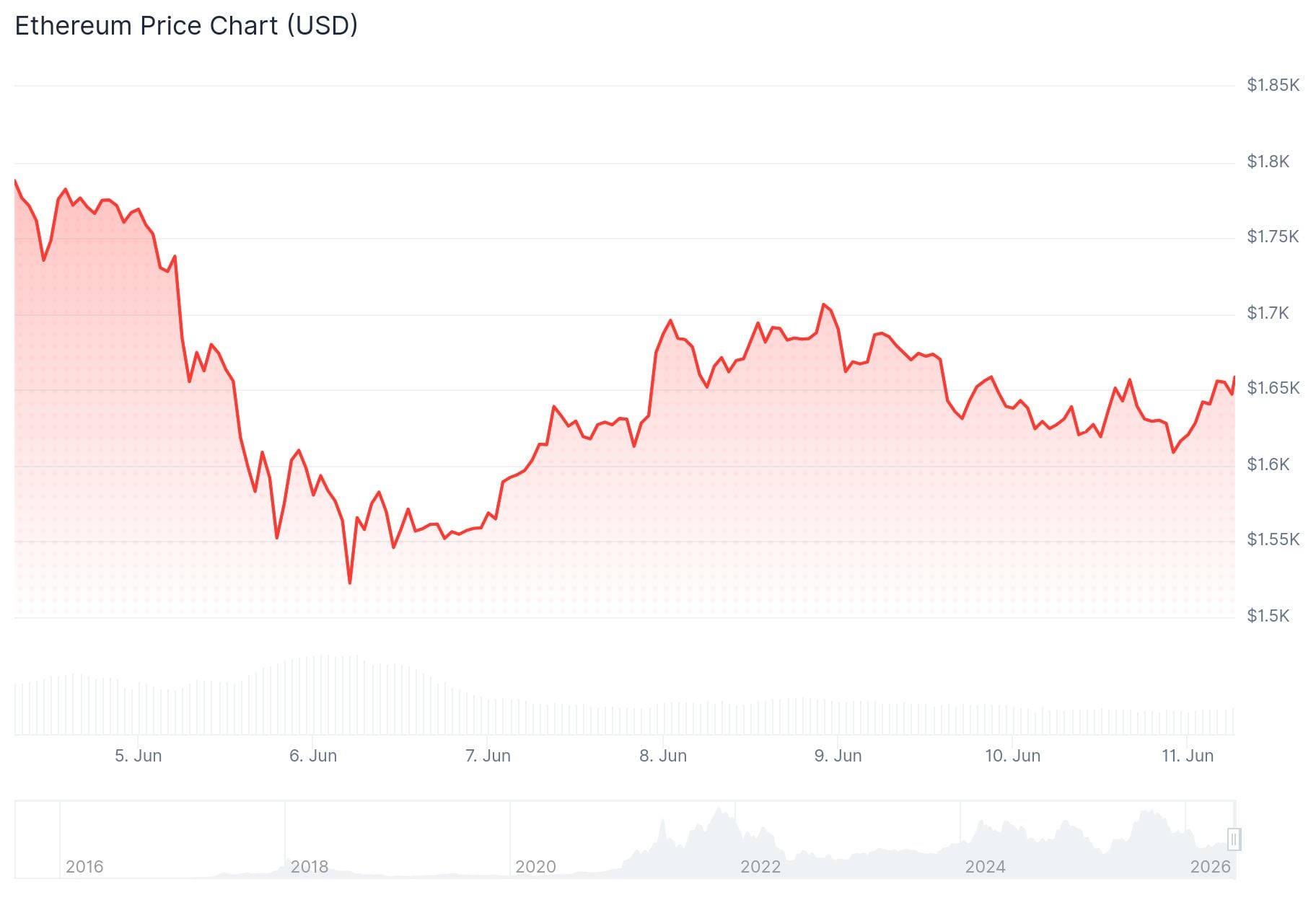
Ethereum (ETH) Price: Exchange Supply Hits All-Time Low as $1,600 Support Holds

SpaceX IPO Could Pull Billions Away from Bitcoin and Crypto Markets



