

Managed BNB Dedicated Nodes: Production-Grade Infrastructure for BNB Chain Applications
Table of Content
- BNB Chain: Built for Throughput, Demanding on Infrastructure
- Why Shared BNB RPC is Not Enough for Production
- What Is a Managed BNB Dedicated Node?
- BNB Full Node vs Archive Node
- BNB Node Requirements and Operational Complexity
- Deployment Workflow via Onfinality
- Why Teams Choose Managed BNB Nodes
- Production Infrastructure for Long-Term BNB Growth
- Frequently Asked Questions
- About OnFinality
BNB Chain: Built for Throughput, Demanding on Infrastructure
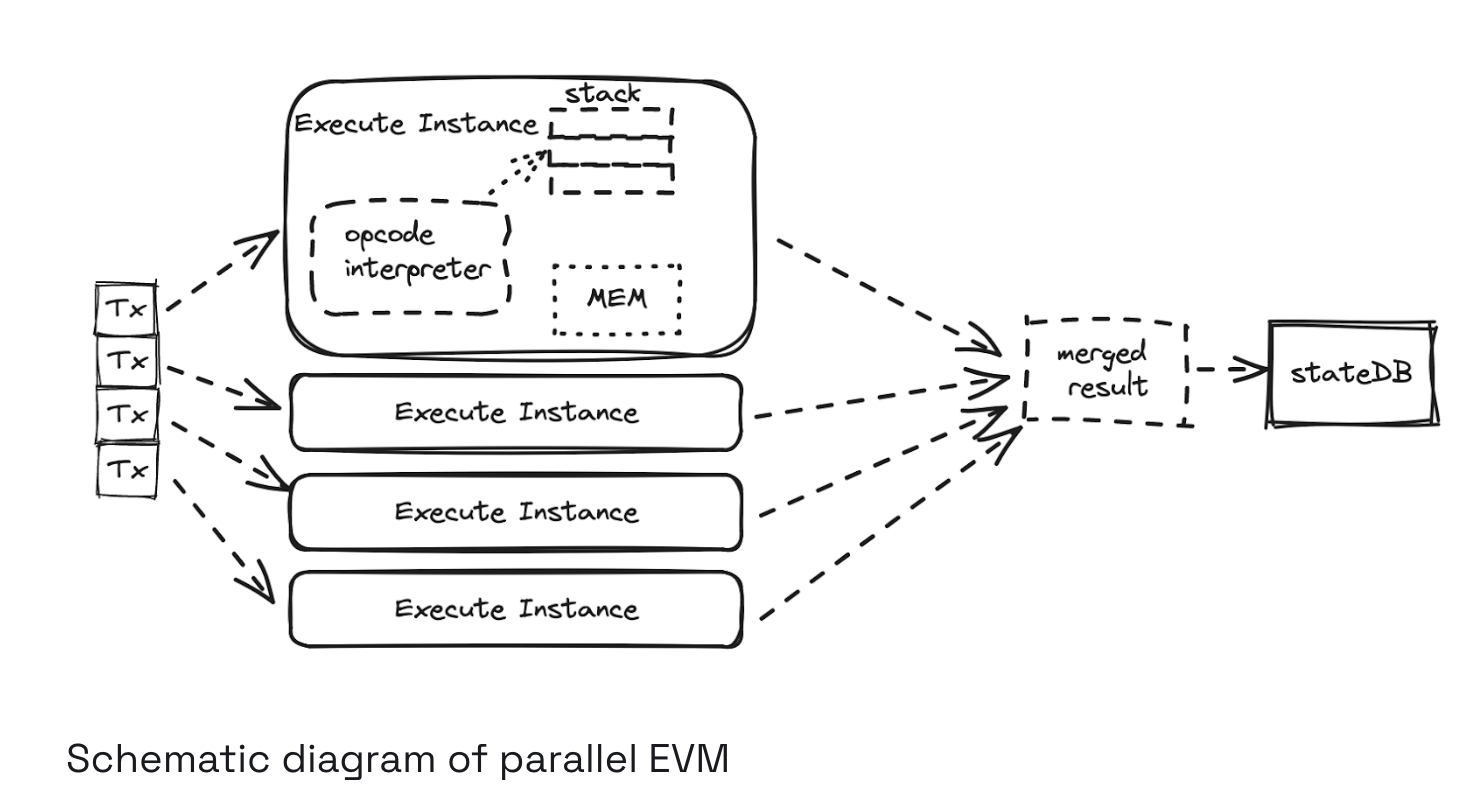 Source: https://www.bnbchain.org/en/blog/what-are-evm-compatible-blockchains
BNB Chain is one of the most widely used EVM-compatible networks in production today. It supports high transaction throughput, short block times, and a large ecosystem of DeFi protocols, exchanges, wallets, gaming platforms, and enterprise integrations.
The network’s performance characteristics make it attractive for high-volume applications. They also increase the operational complexity of running infrastructure on it.
A production BNB full node must handle:
- Continuous blockchain state growth
- High RPC request volume during peak activity
- Resource-intensive synchronization
- Network upgrade coordination
- Strict uptime expectations
Running a BNB node is technically straightforward. Running it reliably with Onfinality under sustained production traffic is not.
Why Shared BNB RPC is Not Enough for Production
Shared BNB RPC providers are optimized for accessibility and early-stage development. They distribute infrastructure across multiple tenants and smooth traffic under normal network conditions.
Production workloads introduce different constraints:
- Predictable latency under sustained load
- Isolation from external demand spikes
- Controlled upgrade scheduling
- Stable throughput for transaction submission
- Long-term configuration consistency
During periods of high onchain activity, shared infrastructure absorbs ecosystem-wide traffic. Dedicated infrastructure isolates your application from that variability.
For teams operating exchanges, DeFi protocols, wallets, or high-frequency transaction systems, this distinction becomes operationally significant.
What Is a Managed BNB Dedicated Node?
A Managed BNB Dedicated Node is a fully provisioned BNB full node allocated exclusively to a single project and maintained end to end by infrastructure specialists at Onfinality.
It includes:
- Dedicated compute and storage resources
- Private BNB RPC endpoint
- Regional deployment control
- Continuous health monitoring
- Client version management
- Security patching
- Coordinated network upgrade handling
Unlike shared RPC pools, capacity is not distributed across unrelated workloads. Performance remains consistent regardless of external demand.
This model separates application engineering from node operations while preserving infrastructure isolation.
BNB Full Node vs Archive Node
When deploying BNB infrastructure, teams typically choose between full nodes and archive nodes.
A BNB full node maintains the latest blockchain state and is sufficient for transaction submission, wallet interactions, and most DeFi use cases.
A BNB archive node stores the entire historical state of the blockchain. Archive nodes are required for:
- Historical state queries
- Advanced analytics
- Deep indexing pipelines
- Compliance and auditing systems
Managed BNB node hosting can be configured based on workload requirements.
BNB Node Requirements and Operational Complexity
Operating a BNB full node internally requires:
- High-performance compute
- Significant SSD storage
- Continuous synchronization monitoring
- Upgrade scheduling aligned with protocol changes
- Alerting and failover configuration
Without structured monitoring, nodes can silently fall out of sync or degrade in performance. In production environments, this directly affects application reliability.
Managed BNB nodes centralize these responsibilities under a dedicated infrastructure lifecycle process.
Deployment Workflow via Onfinality
Provisioning a Managed BNB Dedicated Node is handled through a standardized dashboard workflow:
- Access Dedicated Nodes in the platform.
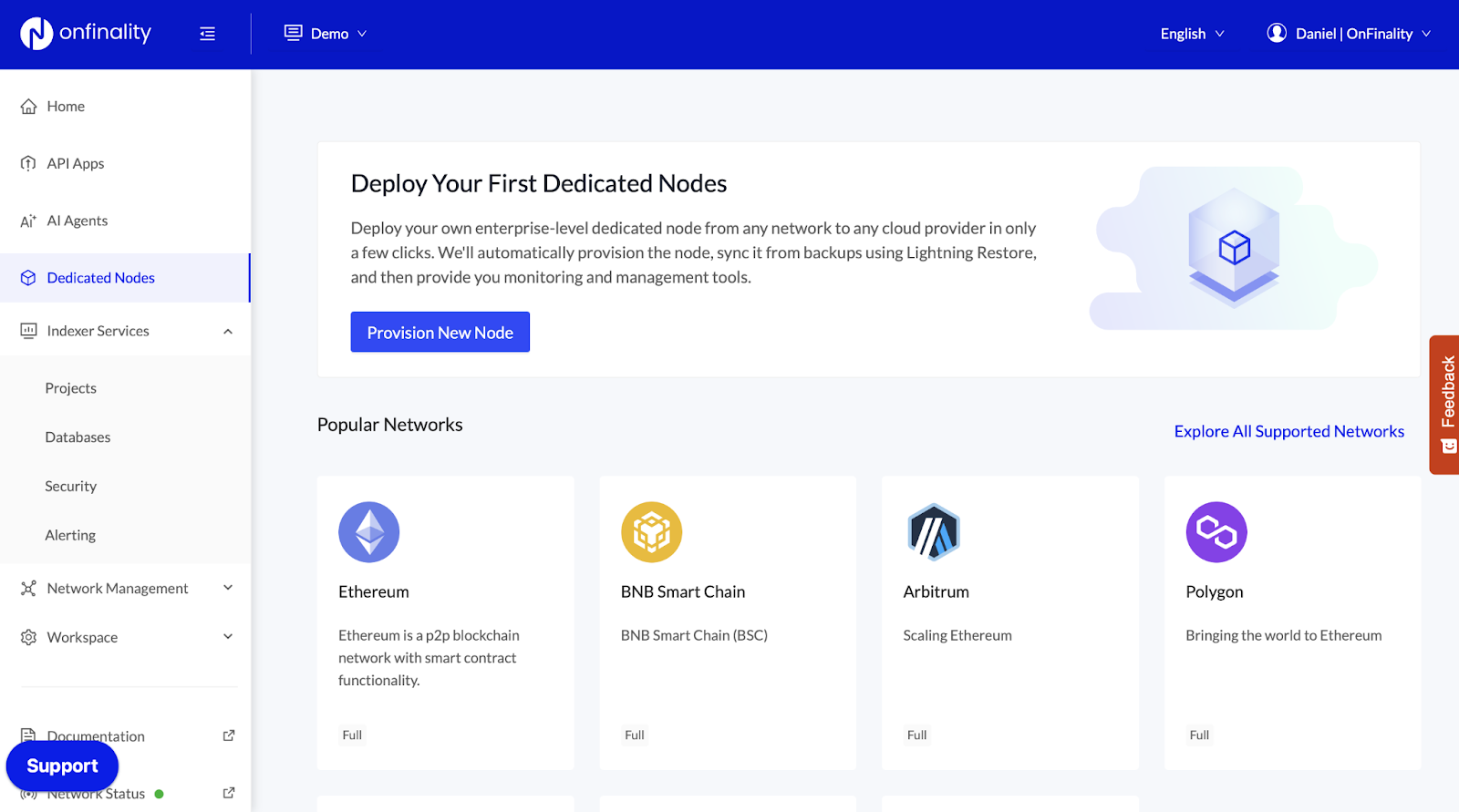
- Select BNB Chain as the target network.
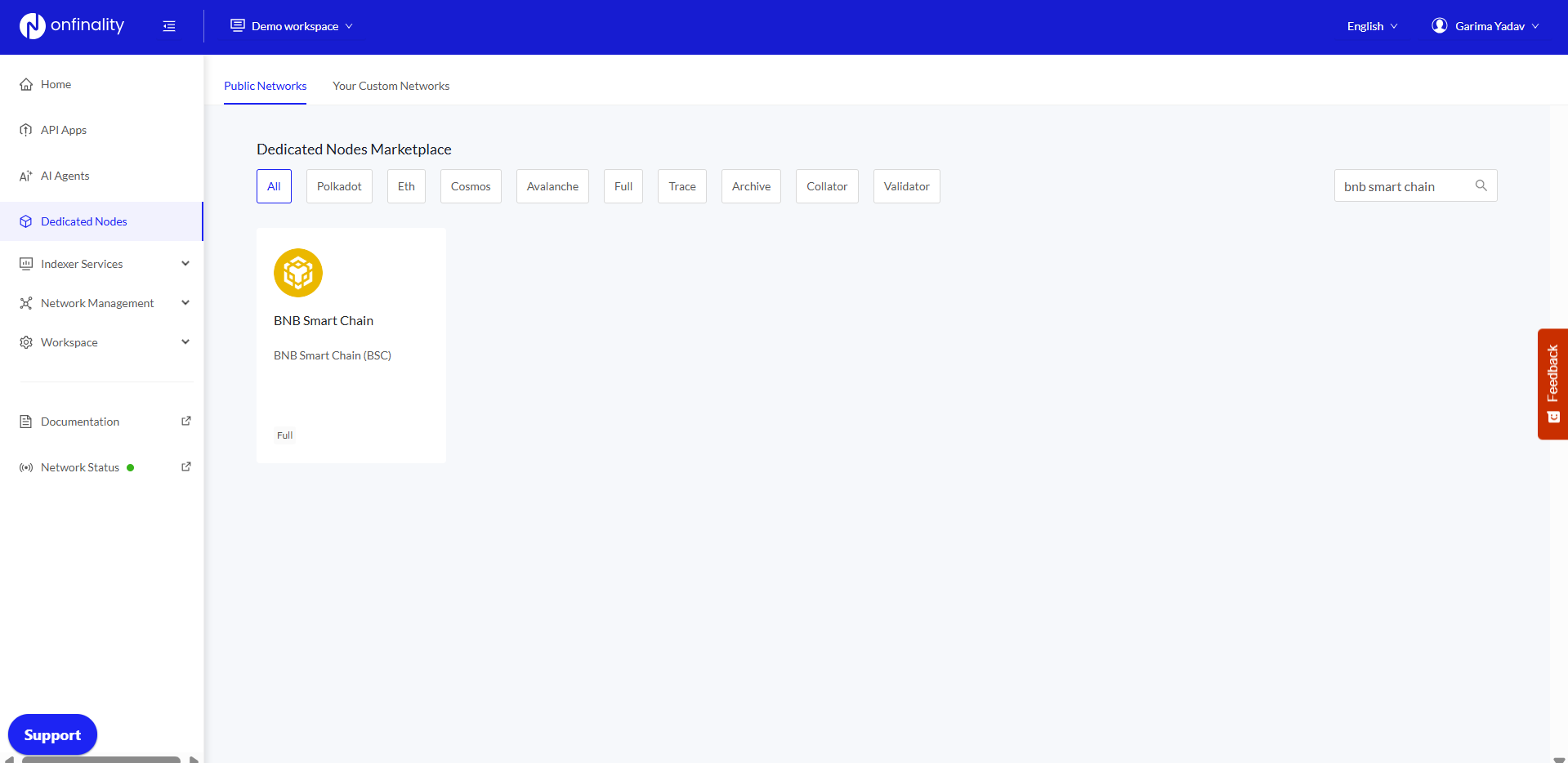
- Choose Full Node or Archive Node configuration.
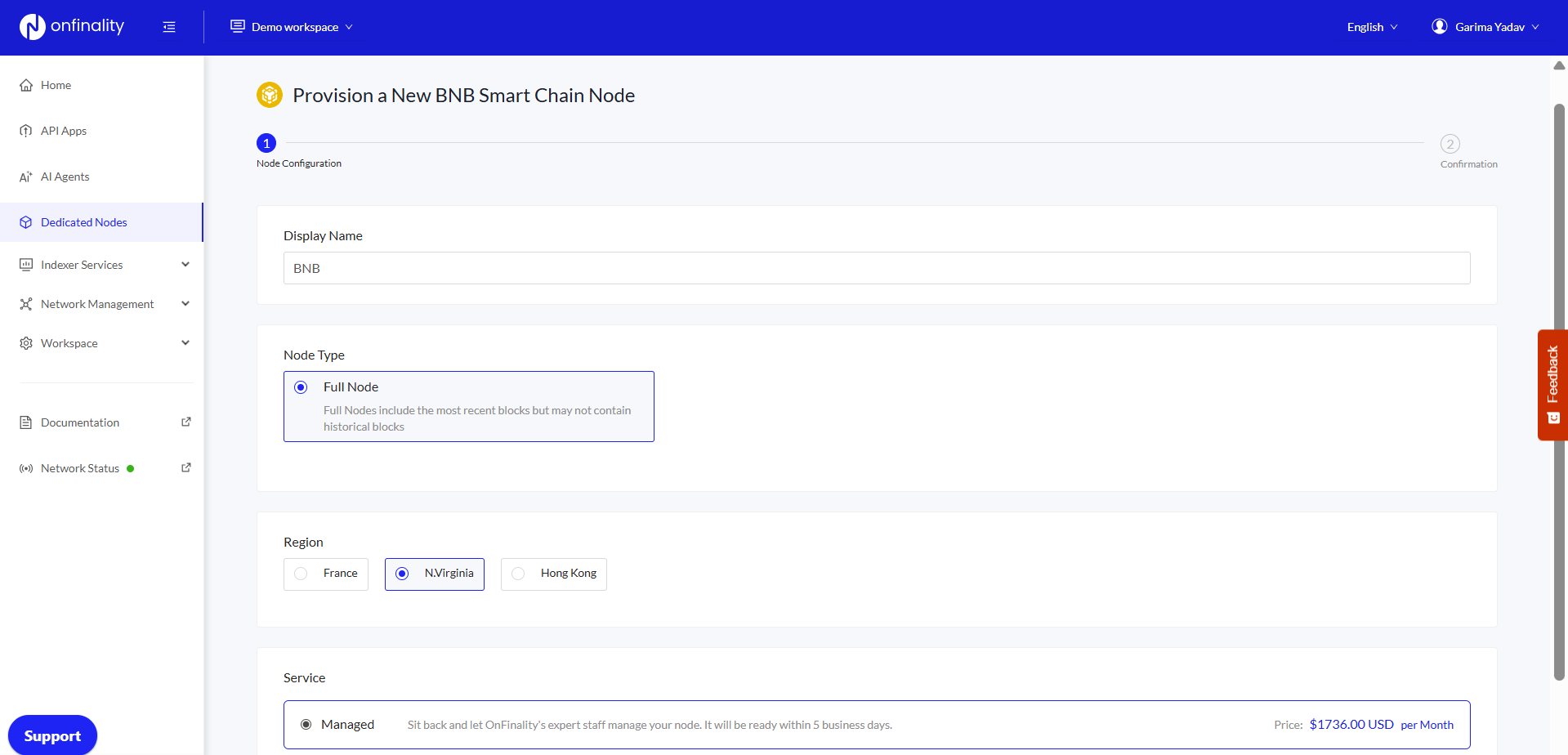
- Select Managed Service.
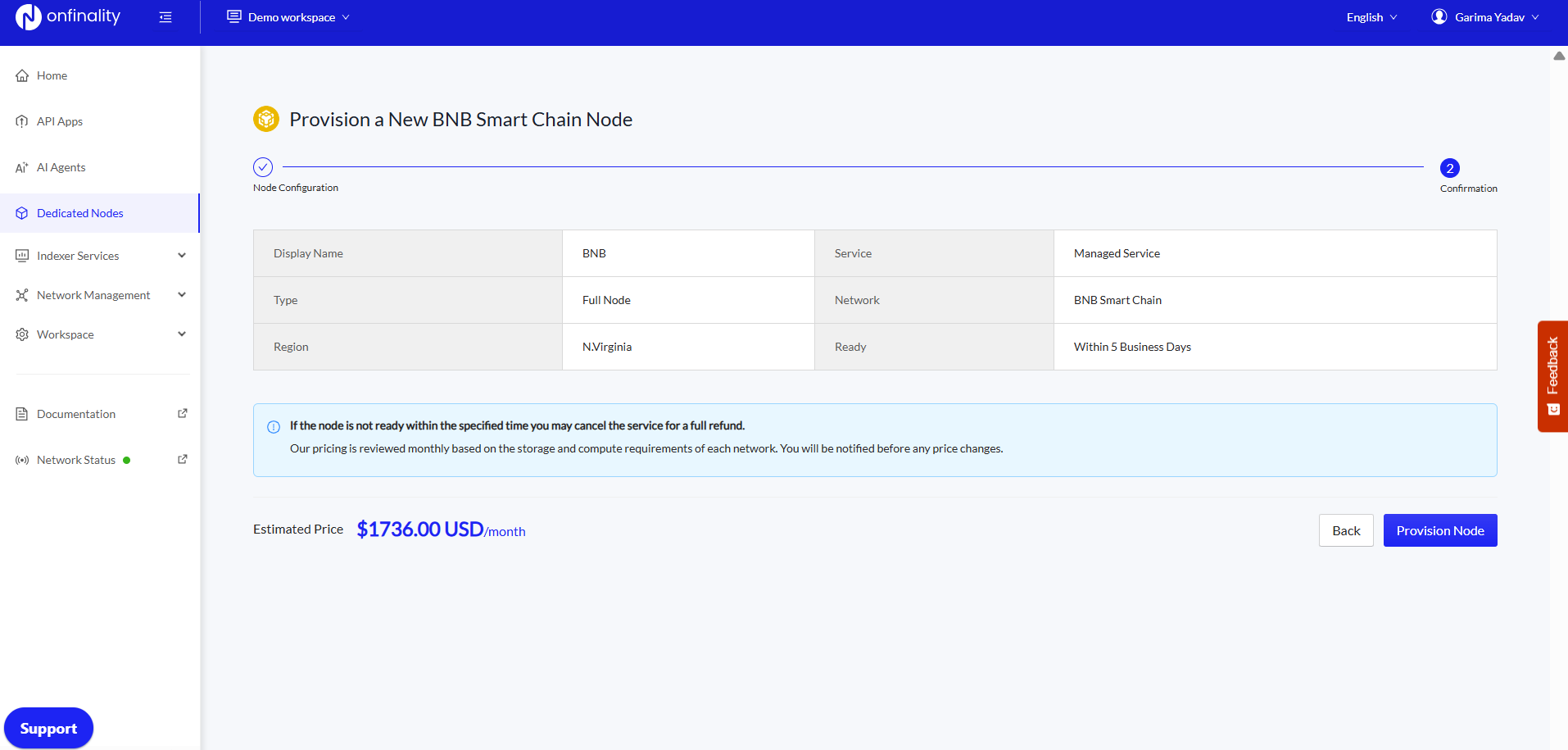
After synchronization completes, a private BNB RPC endpoint becomes available for integration.
No manual setup or post-deployment configuration is required.
Why Teams Choose Managed BNB Nodes
Infrastructure decisions are long-term commitments. Teams operating at scale prioritize:
- Stable uptime
- Predictable latency
- Isolated resource allocation
- Upgrade reliability
- Operational clarity
- Predictable monthly billing
Managed BNB Dedicated Nodes align infrastructure stability with application growth without expanding internal DevOps complexity.
Production Infrastructure for Long-Term BNB Growth
BNB Chain enables high-throughput applications. Maintaining performance under real-world traffic conditions requires infrastructure designed for production workloads.
Shared RPC endpoints are suitable for experimentation. Dedicated managed nodes are designed for sustained, high-volume application environments.
For teams building long-term on BNB Chain, isolated infrastructure provides the reliability, upgrade discipline, and operational predictability required at scale.
Frequently Asked Questions
How much does it cost to run a BNB full node?
Running a BNB full node independently requires high-performance hardware, storage provisioning, cloud costs, and operational staffing. Managed nodes provide predictable monthly pricing without infrastructure assembly overhead.
What hardware is required for a BNB node?
BNB nodes require significant CPU, memory, and SSD storage capacity to remain synchronized and performant under load. Requirements increase over time as blockchain state grows.
Is BNB Chain EVM compatible?
Yes. BNB Chain supports Ethereum Virtual Machine compatibility, allowing developers to deploy Solidity-based smart contracts.
What is the difference between shared RPC and a dedicated BNB node?
Shared RPC distributes infrastructure across multiple users. Dedicated nodes allocate isolated resources exclusively to a single application.
Do managed nodes handle network upgrades?
Yes. Managed BNB nodes include coordinated client updates and protocol upgrade handling.
About OnFinality
OnFinality is a blockchain infrastructure platform that serves hundreds of billions of API requests monthly across more than 130 networks, including Avalanche, BNB Chain, Cosmos, Polkadot, Ethereum, and Polygon. It provides scalable APIs, RPC endpoints, node hosting, and indexing tools to help developers launch and grow blockchain networks efficiently. OnFinality’s mission is to make Web3 infrastructure effortless so developers can focus on building the future of decentralised applications.
App | Website | Twitter | Telegram | LinkedIn | YouTube


You May Also Like

The changing face of elder care in Malaysia — Sayed Mohammad Reza Yamani Sayed Umar

GOP lawmakers want nothing to do with Trump's ballroom chaos: report

Not a loophole: Singapore AI export controls let China tap US AI legally



