The post Google’s Sundar Pichai credits Trump for winning antitrust case appeared on BitcoinEthereumNews.com. Sundar Pichai said it to Donald Trump’s face: the win in Google’s antitrust case had a lot to do with the president’s time in office. At a Thursday dinner hosted at the White House with other tech executives, Trump looked straight at the Google CEO and said, “Well you had a very good day yesterday … Do you want to talk about that big day you had yesterday?” That “big day” was the moment Alphabet, Google’s parent company, added $230 billion to its market cap after dodging a forced breakup in a federal court ruling, as was reported by Cryptopolitan. The antitrust case, first launched by the Department of Justice in 2020, accused Google of running an illegal monopoly in the search market. Judge Amit Mehta ruled this week that while Google did break the law, the DOJ’s most extreme demands weren’t justified. That ruling triggered a surge in Google’s stock price. Sundar didn’t argue. “I’m glad it’s over,” he told Trump at the table, getting laughs from the other guests. “It’s a long process … Appreciate that your administration had a constructive dialogue, and we were able to get it to some resolution.” Trump simply replied, “Right.” Google walks away with billions and no major restrictions The ruling wasn’t a light slap. It acknowledged wrongdoing. But it also shut down the DOJ’s harsher ideas, like forcing Google to break up or stop paying Apple billions per year to stay the default search engine on iPhones. That deal alone is worth billions, helping Apple and keeping Google at the top of the food chain. On Tuesday, Apple’s stock jumped 4% after hours, clearly pleased with the court’s decision. Mehta’s decision was a dunk. “Google will not be barred from making payments or offering other consideration to distribution partners for preloading… The post Google’s Sundar Pichai credits Trump for winning antitrust case appeared on BitcoinEthereumNews.com. Sundar Pichai said it to Donald Trump’s face: the win in Google’s antitrust case had a lot to do with the president’s time in office. At a Thursday dinner hosted at the White House with other tech executives, Trump looked straight at the Google CEO and said, “Well you had a very good day yesterday … Do you want to talk about that big day you had yesterday?” That “big day” was the moment Alphabet, Google’s parent company, added $230 billion to its market cap after dodging a forced breakup in a federal court ruling, as was reported by Cryptopolitan. The antitrust case, first launched by the Department of Justice in 2020, accused Google of running an illegal monopoly in the search market. Judge Amit Mehta ruled this week that while Google did break the law, the DOJ’s most extreme demands weren’t justified. That ruling triggered a surge in Google’s stock price. Sundar didn’t argue. “I’m glad it’s over,” he told Trump at the table, getting laughs from the other guests. “It’s a long process … Appreciate that your administration had a constructive dialogue, and we were able to get it to some resolution.” Trump simply replied, “Right.” Google walks away with billions and no major restrictions The ruling wasn’t a light slap. It acknowledged wrongdoing. But it also shut down the DOJ’s harsher ideas, like forcing Google to break up or stop paying Apple billions per year to stay the default search engine on iPhones. That deal alone is worth billions, helping Apple and keeping Google at the top of the food chain. On Tuesday, Apple’s stock jumped 4% after hours, clearly pleased with the court’s decision. Mehta’s decision was a dunk. “Google will not be barred from making payments or offering other consideration to distribution partners for preloading…

Google’s Sundar Pichai credits Trump for winning antitrust case

Sundar Pichai said it to Donald Trump’s face: the win in Google’s antitrust case had a lot to do with the president’s time in office.

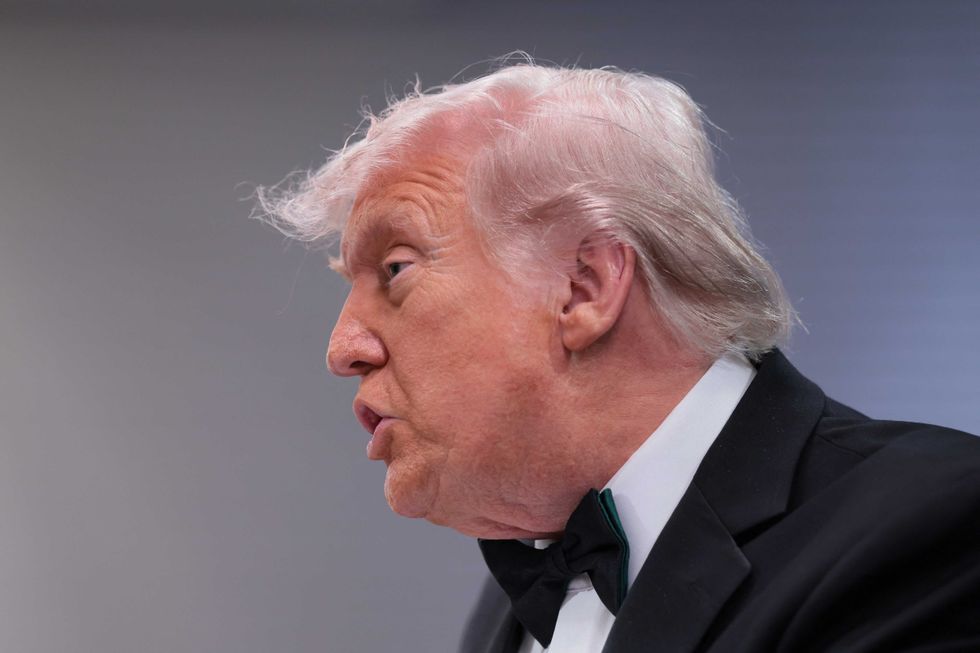
At a Thursday dinner hosted at the White House with other tech executives, Trump looked straight at the Google CEO and said, “Well you had a very good day yesterday … Do you want to talk about that big day you had yesterday?”

That “big day” was the moment Alphabet, Google’s parent company, added $230 billion to its market cap after dodging a forced breakup in a federal court ruling, as was reported by Cryptopolitan.

The antitrust case, first launched by the Department of Justice in 2020, accused Google of running an illegal monopoly in the search market. Judge Amit Mehta ruled this week that while Google did break the law, the DOJ’s most extreme demands weren’t justified.

That ruling triggered a surge in Google’s stock price. Sundar didn’t argue. “I’m glad it’s over,” he told Trump at the table, getting laughs from the other guests. “It’s a long process … Appreciate that your administration had a constructive dialogue, and we were able to get it to some resolution.” Trump simply replied, “Right.”

Google walks away with billions and no major restrictions

The ruling wasn’t a light slap. It acknowledged wrongdoing. But it also shut down the DOJ’s harsher ideas, like forcing Google to break up or stop paying Apple billions per year to stay the default search engine on iPhones. That deal alone is worth billions, helping Apple and keeping Google at the top of the food chain.

On Tuesday, Apple’s stock jumped 4% after hours, clearly pleased with the court’s decision. Mehta’s decision was a dunk. “Google will not be barred from making payments or offering other consideration to distribution partners for preloading or placement of Google Search, Chrome, or its GenAI products,” the judge wrote.

He added that cutting off those payments would likely hurt other companies and even users. In short, the court wasn’t willing to break what’s already profitable for multiple parties.

But it wasn’t a total escape. Google was told to open up some of its data. During the May remedies trial, the DOJ asked the court to make Google share the data it uses to generate search results, especially data based on what users click.

The judge agreed partially. Google now has to share some search index data and user interaction data, but not ads data. Advertisers won’t be getting access to the deep, granular datasets they hoped for.

Still, Google won’t have to give that data away for free. Mehta said any sharing has to happen on “ordinary commercial terms,” meaning Google can still charge or control how it’s done, as long as it’s in line with their usual syndication deals.

The Thursday night dinner wasn’t just about search engines. Sundar pivoted the conversation to artificial intelligence. “The AI moment is one of the most transformative moments any of us have ever seen or will see in our lifetimes,” he told Trump. “Already the AI action plan under your leadership I think is a great start, and we look forward to working together. And thanks for your leadership.”

He was talking about the “Winning the AI Race: America’s AI Action Plan,” which was launched in July. It’s a 90-policy plan across three areas: speeding up innovation, building AI infrastructure, and pushing American AI dominance on the global stage. One part of that plan is it bans AI tools that use “Woke AI” or “ideological dogmas such as DEI,” which refers to diversity, equity, and inclusion.

Trump also made it political. He cut in while Sundar was speaking and said, “Biden was the one who prosecuted that lawsuit, you know that right?” But the facts show otherwise, the DOJ filed the case while Trump was still in office during his first term. Sundar didn’t respond.

Earlier that same day, Sundar showed up at another White House event, the AI Education Taskforce, hosted by First Lady Melania Trump. The goal? More government presence in AI policy. And apparently, Google wants to stay in that loop.

There’s more on the legal side too. Google is still dealing with a separate lawsuit from Trump. That one was filed more than four years ago and is still active. It focuses on YouTube, which is owned by Google, and accuses the platform of unlawful censorship after Trump’s accounts were suspended post-January 6 Capitol riot. Both legal teams are now in talks.

Don’t just read crypto news. Understand it. Subscribe to our newsletter. It’s free.

Source: https://www.cryptopolitan.com/google-credits-trump-winning-antitrust-case/

Market Opportunity
LETSTOP Logo
LETSTOP Price(STOP)
$0.01518
$0.01518$0.01518
+4.47%
USD
LETSTOP (STOP) Live Price Chart
Disclaimer: The articles reposted on this site are sourced from public platforms and are provided for informational purposes only. They do not necessarily reflect the views of MEXC. All rights remain with the original authors. If you believe any content infringes on third-party rights, please contact service@support.mexc.com for removal. MEXC makes no guarantees regarding the accuracy, completeness, or timeliness of the content and is not responsible for any actions taken based on the information provided. The content does not constitute financial, legal, or other professional advice, nor should it be considered a recommendation or endorsement by MEXC.

You May Also Like

Digitap Raises Over $4M: A Comparison with DeepSnitch AI

Digitap Raises Over $4M: A Comparison with DeepSnitch AI

Both DeepSnitch AI and Digitap ($TAP) have been highlighted within some crypto communities for their distinct approaches. Although the two coins take a very different
Share
Crypto Ninjas2026/01/18 23:42
China Blocks Nvidia’s RTX Pro 6000D as Local Chips Rise

China Blocks Nvidia’s RTX Pro 6000D as Local Chips Rise

The post China Blocks Nvidia’s RTX Pro 6000D as Local Chips Rise appeared on BitcoinEthereumNews.com. China Blocks Nvidia’s RTX Pro 6000D as Local Chips Rise China’s internet regulator has ordered the country’s biggest technology firms, including Alibaba and ByteDance, to stop purchasing Nvidia’s RTX Pro 6000D GPUs. According to the Financial Times, the move shuts down the last major channel for mass supplies of American chips to the Chinese market. Why Beijing Halted Nvidia Purchases Chinese companies had planned to buy tens of thousands of RTX Pro 6000D accelerators and had already begun testing them in servers. But regulators intervened, halting the purchases and signaling stricter controls than earlier measures placed on Nvidia’s H20 chip. Image: Nvidia An audit compared Huawei and Cambricon processors, along with chips developed by Alibaba and Baidu, against Nvidia’s export-approved products. Regulators concluded that Chinese chips had reached performance levels comparable to the restricted U.S. models. This assessment pushed authorities to advise firms to rely more heavily on domestic processors, further tightening Nvidia’s already limited position in China. China’s Drive Toward Tech Independence The decision highlights Beijing’s focus on import substitution — developing self-sufficient chip production to reduce reliance on U.S. supplies. “The signal is now clear: all attention is focused on building a domestic ecosystem,” said a representative of a leading Chinese tech company. Nvidia had unveiled the RTX Pro 6000D in July 2025 during CEO Jensen Huang’s visit to Beijing, in an attempt to keep a foothold in China after Washington restricted exports of its most advanced chips. But momentum is shifting. Industry sources told the Financial Times that Chinese manufacturers plan to triple AI chip production next year to meet growing demand. They believe “domestic supply will now be sufficient without Nvidia.” What It Means for the Future With Huawei, Cambricon, Alibaba, and Baidu stepping up, China is positioning itself for long-term technological independence. Nvidia, meanwhile, faces…
Share
BitcoinEthereumNews2025/09/18 01:37
The Economics of Self-Isolation: A Game-Theoretic Analysis of Contagion in a Free Economy

The Economics of Self-Isolation: A Game-Theoretic Analysis of Contagion in a Free Economy

Exploring how the costs of a pandemic can lead to a self-enforcing lockdown in a networked economy, analyzing the resulting changes in network structure and the existence of stable equilibria.
Share
Hackernoon2025/09/17 23:00