President Vladimir Putin has dismissed sentiments from Russia’s most prominent banker that the country’s economy is slipping into stagnation. He defended the central bank’s high interest rate policy, claiming it would control inflation amid rising costs. Herman Gref, chief executive of state-owned Sberbank PJSC, warned on Thursday that Russia’s economy had entered a “technical recession” […]President Vladimir Putin has dismissed sentiments from Russia’s most prominent banker that the country’s economy is slipping into stagnation. He defended the central bank’s high interest rate policy, claiming it would control inflation amid rising costs. Herman Gref, chief executive of state-owned Sberbank PJSC, warned on Thursday that Russia’s economy had entered a “technical recession” […]

Russia's Putin rejects cautions about stagnating economy from top bankers

President Vladimir Putin has dismissed sentiments from Russia’s most prominent banker that the country’s economy is slipping into stagnation. He defended the central bank’s high interest rate policy, claiming it would control inflation amid rising costs.

Herman Gref, chief executive of state-owned Sberbank PJSC, warned on Thursday that Russia’s economy had entered a “technical recession” in the second quarter. He told the Eastern Economic Forum in Vladivostok that data from July and August showed “quite clear symptoms that we are approaching zero growth.”

When asked at the forum on Friday if he shared the banker’s assessment, Putin’s response was “No.” The Russian head of state admitted that some officials within the government raised similar points to Gref, but insisted that the central bank’s restrictive stance was necessary to avoid a surge in inflation. 

“We need to ensure a soft calm landing of the economy,” Putin told the local press earlier today.

Interest rates clock highs, but inflation is steady

Gref, who leads Russia’s largest lender, asked policymakers to slash borrowing costs, arguing that high interest rates were suffocating businesses and households. 

“Given the current level of inflation, recovery can only be expected when the rate is at 12% or lower,” he asserted. Sberbank’s internal forecasts predicted the benchmark rate would average around 14% by the end of the year, which, according to the banker, is still too high for businesses to grow.

Last September, the Russian central bank raised its key rate to 21%, the highest in two decades, as inflation accelerated on the back of war spending and supply shortages. Per Trading Economics data, Russia’s annual inflation eased to 8.8% from 9.4% in June, the lowest level since October 2024.

While policymakers have since reduced borrowing rates to 18%, they are more reluctant to make steeper cuts. Officials say military expenditures and state spending are threatening to bump inflation up.

Putin supports Bank of Russia decisions, but ministers are doubtful

Putin has stood behind Central Bank Governor Elvira Nabiullina despite the discontent of several industrialists and politicians. The Kremlin sees inflation as riskier than stagnation, with the president warning economists that unchecked price growth would harm ordinary Russians more severely than slower output.

“Some believe that hypothermia has already come, but lending has not stopped,” Putin said on Friday. “The pace has slowed down, I know, in some industries, the situation is not easy,” he added

Members of his cabinet, like Economic Development Minister Maxim Reshetnikov are saying the economy was “cooling down faster than expected,” which could mean revised forecasts would be submitted soon.

Finance Minister Anton Siluanov told Putin last week that next year’s growth projections had been cut to 1.5% from 2.5%, with some internal estimates closer to 1.2%. And according to independent analysts looking at the data, the Kremlin is running out of room to maneuver. 

Fighting for oil revenues inside the war

Politico reported this week that Ukrainian drone strikes have been targeting Russian oil storage and pumping facilities, causing domestic shortages and undermining output. The barrage of attacks has compounded the impact of falling global crude prices, leaving Moscow’s most important industry under siege.

“For the Kremlin, a brief period of low growth is tolerable, though combined with lower oil prices, it would reduce fiscal revenues,” Kolyandr continued, “On the other hand, if the government doesn’t reduce fiscal support, there’s a risk high inflation will return.”

Want your project in front of crypto’s top minds? Feature it in our next industry report, where data meets impact.

Market Opportunity
TOP Network Logo
TOP Network Price(TOP)
$0.000096
$0.000096$0.000096
0.00%
USD
TOP Network (TOP) Live Price Chart
Disclaimer: The articles reposted on this site are sourced from public platforms and are provided for informational purposes only. They do not necessarily reflect the views of MEXC. All rights remain with the original authors. If you believe any content infringes on third-party rights, please contact service@support.mexc.com for removal. MEXC makes no guarantees regarding the accuracy, completeness, or timeliness of the content and is not responsible for any actions taken based on the information provided. The content does not constitute financial, legal, or other professional advice, nor should it be considered a recommendation or endorsement by MEXC.

You May Also Like

Digitap Raises Over $4M: A Comparison with DeepSnitch AI

Digitap Raises Over $4M: A Comparison with DeepSnitch AI

Both DeepSnitch AI and Digitap ($TAP) have been highlighted within some crypto communities for their distinct approaches. Although the two coins take a very different
Share
Crypto Ninjas2026/01/18 23:42
China Blocks Nvidia’s RTX Pro 6000D as Local Chips Rise
China Blocks Nvidia’s RTX Pro 6000D as Local Chips Rise

The post China Blocks Nvidia’s RTX Pro 6000D as Local Chips Rise appeared on BitcoinEthereumNews.com. China Blocks Nvidia’s RTX Pro 6000D as Local Chips Rise China’s internet regulator has ordered the country’s biggest technology firms, including Alibaba and ByteDance, to stop purchasing Nvidia’s RTX Pro 6000D GPUs. According to the Financial Times, the move shuts down the last major channel for mass supplies of American chips to the Chinese market. Why Beijing Halted Nvidia Purchases Chinese companies had planned to buy tens of thousands of RTX Pro 6000D accelerators and had already begun testing them in servers. But regulators intervened, halting the purchases and signaling stricter controls than earlier measures placed on Nvidia’s H20 chip. Image: Nvidia An audit compared Huawei and Cambricon processors, along with chips developed by Alibaba and Baidu, against Nvidia’s export-approved products. Regulators concluded that Chinese chips had reached performance levels comparable to the restricted U.S. models. This assessment pushed authorities to advise firms to rely more heavily on domestic processors, further tightening Nvidia’s already limited position in China. China’s Drive Toward Tech Independence The decision highlights Beijing’s focus on import substitution — developing self-sufficient chip production to reduce reliance on U.S. supplies. “The signal is now clear: all attention is focused on building a domestic ecosystem,” said a representative of a leading Chinese tech company. Nvidia had unveiled the RTX Pro 6000D in July 2025 during CEO Jensen Huang’s visit to Beijing, in an attempt to keep a foothold in China after Washington restricted exports of its most advanced chips. But momentum is shifting. Industry sources told the Financial Times that Chinese manufacturers plan to triple AI chip production next year to meet growing demand. They believe “domestic supply will now be sufficient without Nvidia.” What It Means for the Future With Huawei, Cambricon, Alibaba, and Baidu stepping up, China is positioning itself for long-term technological independence. Nvidia, meanwhile, faces…
Share
BitcoinEthereumNews2025/09/18 01:37
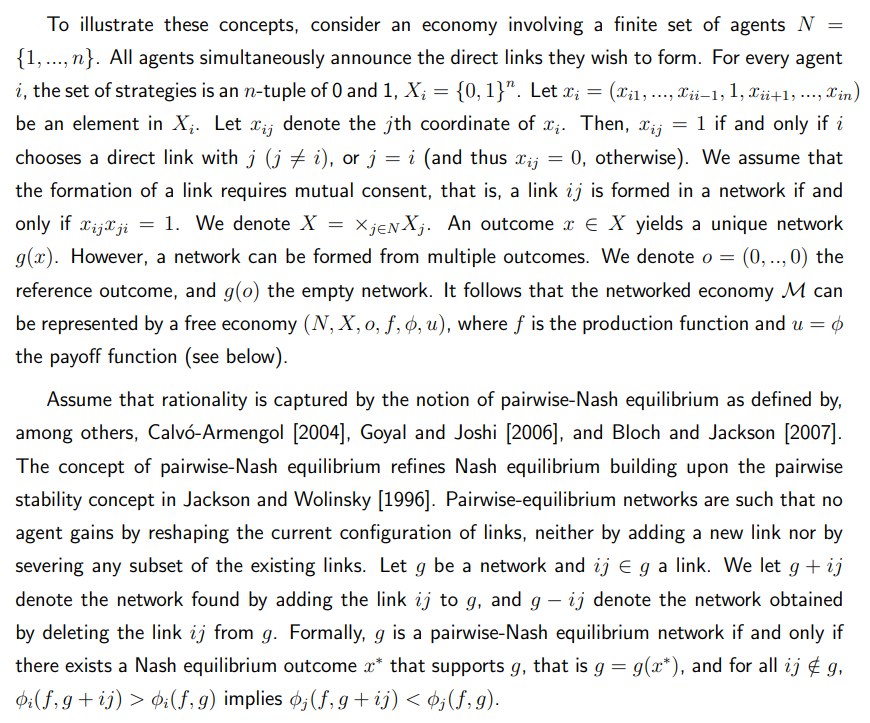
The Economics of Self-Isolation: A Game-Theoretic Analysis of Contagion in a Free Economy

The Economics of Self-Isolation: A Game-Theoretic Analysis of Contagion in a Free Economy

Exploring how the costs of a pandemic can lead to a self-enforcing lockdown in a networked economy, analyzing the resulting changes in network structure and the existence of stable equilibria.
Share
Hackernoon2025/09/17 23:00