

Stablecoin giant Tether is ramping up investments in gold, seeking opportunities from mining to tokenized bullion, as the metal outperforms Bitcoin in 2025. According to the latest report from Financial Times, the firm has already held multiple discussions with gold sector players. Some negotiations have advanced to deal-making, while others have fallen through. Early Stakes and Failed Talks The company’s most visible move so far has been a $105 million minority investment in Toronto-listed royalty firm Elemental Altus. This gave Tether a direct foothold in the gold royalty business, where companies earn a share of revenue from mining projects without operating the mines themselves. However, not every conversation has ended in a deal. Tether was also in talks with Terranova Resources, an investment vehicle based in the British Virgin Islands. While both sides explored potential cooperation, the discussions did not produce an agreement. Still, market insiders believe more acquisitions may be on the horizon. Billions in Profits and Reserves to Back Growth Behind this expansion lies Tether’s strong financial position. The firm generated $5.7 billion in profits during the first half of 2025 alone. With USDT’s market cap now standing at $168 billion, Tether has both the liquidity and the momentum to enter new markets. The company already has significant exposure to hard assets. It owns $8.7 billion worth of physical gold bars, stored securely in Zurich. Alongside gold, U.S. Treasuries remain a core part of its reserves, reinforcing stability for its stablecoin. Gold Outshines Bitcoin in 2025 Tether’s renewed focus on gold comes at a time when the metal has been outperforming digital assets. Since the start of 2025, gold has surged 37%, while Bitcoin has advanced 22%. The contrast is striking for investors who long believed Bitcoin would displace gold as the ultimate store of value. Instead, recent market conditions have highlighted gold’s resilience. Gold prices reached a record high above $3,600 per ounce in August. Analysts see further gains, with Goldman Sachs projecting $5,000 and Matrixport expecting at least $4,000 in the months ahead. For Tether, this rally provides a financial and symbolic justification for its gold strategy. XAUt Token Gains as Investors Seek Safety Tether is not only buying gold but also offering it as a digital asset. The company operates XAUt, a token backed by physical bullion. As gold prices surged, XAUt saw its market cap jump to $877 million, with the token recently trading around $3,559. That marks a 5% rise within a week, even as the wider crypto market has faced selling pressure. For investors, XAUt allows exposure to gold’s stability while maintaining the flexibility of a digital asset. Paolo Ardoino’s Gold Philosophy Tether’s pivot is closely tied to the views of its CEO, Paolo Ardoino. A long-time supporter of gold, Ardoino has repeatedly argued that it offers deeper reliability than national currencies. At the Bitcoin 2025 Conference, he referred to gold as “natural Bitcoin”. While many crypto enthusiasts view Bitcoin as “digital gold,” Ardoino argued that physical gold possesses the same qualities of scarcity and trust but avoids the speculative risks that weigh on cryptocurrencies. His stance has helped shape Tether’s strategy, providing the company with a philosophical anchor for its financial decisions. https://twitter.com/paoloardoino/status/1959980424597221408 Industry Skepticism and Strategic Questions Despite Tether’s enthusiasm, reaction from the traditional gold sector has been cautious. Mining executives, used to decades of conservative investment practices, doubt whether Tether has a clear long-term plan. One executive summarized the sentiment bluntly: “They like gold. I don’t think they have a strategy.” Skepticism also comes from the fact that mining companies have struggled to match gold’s rally in their stock performance. Political and Strategic Shifts The gold push also coincides with a new political dimension at Tether. Earlier this year, the company hired Bo Hines, a former Trump crypto official, as a strategic advisor. His arrival suggests Tether is seeking stronger ties with regulators and policymakers while preparing to expand its global footprint. Meanwhile, economist Peter Schiff noted that despite the recent sharp rise in gold and silver prices, there are no signs of excessive speculation. Schiff advised against selling miners too early, implying that gold mining companies remain undervalued relative to the metal’s price. If his view holds, firms like Tether could be positioning themselves ahead of a broader sector revaluation.Stablecoin giant Tether is ramping up investments in gold, seeking opportunities from mining to tokenized bullion, as the metal outperforms Bitcoin in 2025. According to the latest report from Financial Times, the firm has already held multiple discussions with gold sector players. Some negotiations have advanced to deal-making, while others have fallen through. Early Stakes and Failed Talks The company’s most visible move so far has been a $105 million minority investment in Toronto-listed royalty firm Elemental Altus. This gave Tether a direct foothold in the gold royalty business, where companies earn a share of revenue from mining projects without operating the mines themselves. However, not every conversation has ended in a deal. Tether was also in talks with Terranova Resources, an investment vehicle based in the British Virgin Islands. While both sides explored potential cooperation, the discussions did not produce an agreement. Still, market insiders believe more acquisitions may be on the horizon. Billions in Profits and Reserves to Back Growth Behind this expansion lies Tether’s strong financial position. The firm generated $5.7 billion in profits during the first half of 2025 alone. With USDT’s market cap now standing at $168 billion, Tether has both the liquidity and the momentum to enter new markets. The company already has significant exposure to hard assets. It owns $8.7 billion worth of physical gold bars, stored securely in Zurich. Alongside gold, U.S. Treasuries remain a core part of its reserves, reinforcing stability for its stablecoin. Gold Outshines Bitcoin in 2025 Tether’s renewed focus on gold comes at a time when the metal has been outperforming digital assets. Since the start of 2025, gold has surged 37%, while Bitcoin has advanced 22%. The contrast is striking for investors who long believed Bitcoin would displace gold as the ultimate store of value. Instead, recent market conditions have highlighted gold’s resilience. Gold prices reached a record high above $3,600 per ounce in August. Analysts see further gains, with Goldman Sachs projecting $5,000 and Matrixport expecting at least $4,000 in the months ahead. For Tether, this rally provides a financial and symbolic justification for its gold strategy. XAUt Token Gains as Investors Seek Safety Tether is not only buying gold but also offering it as a digital asset. The company operates XAUt, a token backed by physical bullion. As gold prices surged, XAUt saw its market cap jump to $877 million, with the token recently trading around $3,559. That marks a 5% rise within a week, even as the wider crypto market has faced selling pressure. For investors, XAUt allows exposure to gold’s stability while maintaining the flexibility of a digital asset. Paolo Ardoino’s Gold Philosophy Tether’s pivot is closely tied to the views of its CEO, Paolo Ardoino. A long-time supporter of gold, Ardoino has repeatedly argued that it offers deeper reliability than national currencies. At the Bitcoin 2025 Conference, he referred to gold as “natural Bitcoin”. While many crypto enthusiasts view Bitcoin as “digital gold,” Ardoino argued that physical gold possesses the same qualities of scarcity and trust but avoids the speculative risks that weigh on cryptocurrencies. His stance has helped shape Tether’s strategy, providing the company with a philosophical anchor for its financial decisions. https://twitter.com/paoloardoino/status/1959980424597221408 Industry Skepticism and Strategic Questions Despite Tether’s enthusiasm, reaction from the traditional gold sector has been cautious. Mining executives, used to decades of conservative investment practices, doubt whether Tether has a clear long-term plan. One executive summarized the sentiment bluntly: “They like gold. I don’t think they have a strategy.” Skepticism also comes from the fact that mining companies have struggled to match gold’s rally in their stock performance. Political and Strategic Shifts The gold push also coincides with a new political dimension at Tether. Earlier this year, the company hired Bo Hines, a former Trump crypto official, as a strategic advisor. His arrival suggests Tether is seeking stronger ties with regulators and policymakers while preparing to expand its global footprint. Meanwhile, economist Peter Schiff noted that despite the recent sharp rise in gold and silver prices, there are no signs of excessive speculation. Schiff advised against selling miners too early, implying that gold mining companies remain undervalued relative to the metal’s price. If his view holds, firms like Tether could be positioning themselves ahead of a broader sector revaluation.
Tether Eyes Gold Sector as Stablecoin Profits Fuel Expansion
For feedback or concerns regarding this content, please contact us at crypto.news@mexc.com
Stablecoin giant Tether is ramping up investments in gold, seeking opportunities from mining to tokenized bullion, as the metal outperforms Bitcoin in 2025. According to the latest report from Financial Times, the firm has already held multiple discussions with gold sector players. Some negotiations have advanced to deal-making, while others have fallen through. Early Stakes and Failed Talks The company’s most visible move so far has been a $105 million minority investment in Toronto-listed royalty firm Elemental Altus. This gave Tether a direct foothold in the gold royalty business, where companies earn a share of revenue from mining projects without operating the mines themselves. However, not every conversation has ended in a deal. Tether was also in talks with Terranova Resources, an investment vehicle based in the British Virgin Islands. While both sides explored potential cooperation, the discussions did not produce an agreement. Still, market insiders believe more acquisitions may be on the horizon. Billions in Profits and Reserves to Back Growth Behind this expansion lies Tether’s strong financial position. The firm generated $5.7 billion in profits during the first half of 2025 alone. With USDT’s market cap now standing at $168 billion, Tether has both the liquidity and the momentum to enter new markets. The company already has significant exposure to hard assets. It owns $8.7 billion worth of physical gold bars, stored securely in Zurich. Alongside gold, U.S. Treasuries remain a core part of its reserves, reinforcing stability for its stablecoin. Gold Outshines Bitcoin in 2025 Tether’s renewed focus on gold comes at a time when the metal has been outperforming digital assets. Since the start of 2025, gold has surged 37%, while Bitcoin has advanced 22%. The contrast is striking for investors who long believed Bitcoin would displace gold as the ultimate store of value. Instead, recent market conditions have highlighted gold’s resilience. Gold prices reached a record high above $3,600 per ounce in August. Analysts see further gains, with Goldman Sachs projecting $5,000 and Matrixport expecting at least $4,000 in the months ahead. For Tether, this rally provides a financial and symbolic justification for its gold strategy. XAUt Token Gains as Investors Seek Safety Tether is not only buying gold but also offering it as a digital asset. The company operates XAUt, a token backed by physical bullion. As gold prices surged, XAUt saw its market cap jump to $877 million, with the token recently trading around $3,559. That marks a 5% rise within a week, even as the wider crypto market has faced selling pressure. For investors, XAUt allows exposure to gold’s stability while maintaining the flexibility of a digital asset. Paolo Ardoino’s Gold Philosophy Tether’s pivot is closely tied to the views of its CEO, Paolo Ardoino. A long-time supporter of gold, Ardoino has repeatedly argued that it offers deeper reliability than national currencies. At the Bitcoin 2025 Conference, he referred to gold as “natural Bitcoin”. While many crypto enthusiasts view Bitcoin as “digital gold,” Ardoino argued that physical gold possesses the same qualities of scarcity and trust but avoids the speculative risks that weigh on cryptocurrencies. His stance has helped shape Tether’s strategy, providing the company with a philosophical anchor for its financial decisions. https://twitter.com/paoloardoino/status/1959980424597221408 Industry Skepticism and Strategic Questions Despite Tether’s enthusiasm, reaction from the traditional gold sector has been cautious. Mining executives, used to decades of conservative investment practices, doubt whether Tether has a clear long-term plan. One executive summarized the sentiment bluntly: “They like gold. I don’t think they have a strategy.” Skepticism also comes from the fact that mining companies have struggled to match gold’s rally in their stock performance. Political and Strategic Shifts The gold push also coincides with a new political dimension at Tether. Earlier this year, the company hired Bo Hines, a former Trump crypto official, as a strategic advisor. His arrival suggests Tether is seeking stronger ties with regulators and policymakers while preparing to expand its global footprint.
Meanwhile, economist Peter Schiff noted that despite the recent sharp rise in gold and silver prices, there are no signs of excessive speculation.
Schiff advised against selling miners too early, implying that gold mining companies remain undervalued relative to the metal’s price. If his view holds, firms like Tether could be positioning themselves ahead of a broader sector revaluation.Market Opportunity
Threshold Price(T)
$0.004955
$0.004955$0.004955
USD
Threshold (T) Live Price Chart


Disclaimer: The articles reposted on this site are sourced from public platforms and are provided for informational purposes only. They do not necessarily reflect the views of MEXC. All rights remain with the original authors. If you believe any content infringes on third-party rights, please contact crypto.news@mexc.com for removal. MEXC makes no guarantees regarding the accuracy, completeness, or timeliness of the content and is not responsible for any actions taken based on the information provided. The content does not constitute financial, legal, or other professional advice, nor should it be considered a recommendation or endorsement by MEXC.
You May Also Like

Glassnode Warns Nearly 30% Of Bitcoin Supply Could Face Future Quantum Risks
Bitcoin’s long-term security model is once again under the spotlight following new data from Glassnode suggesting that the network could face theoretical risks
Share
NewsBTC2026/05/28 06:30
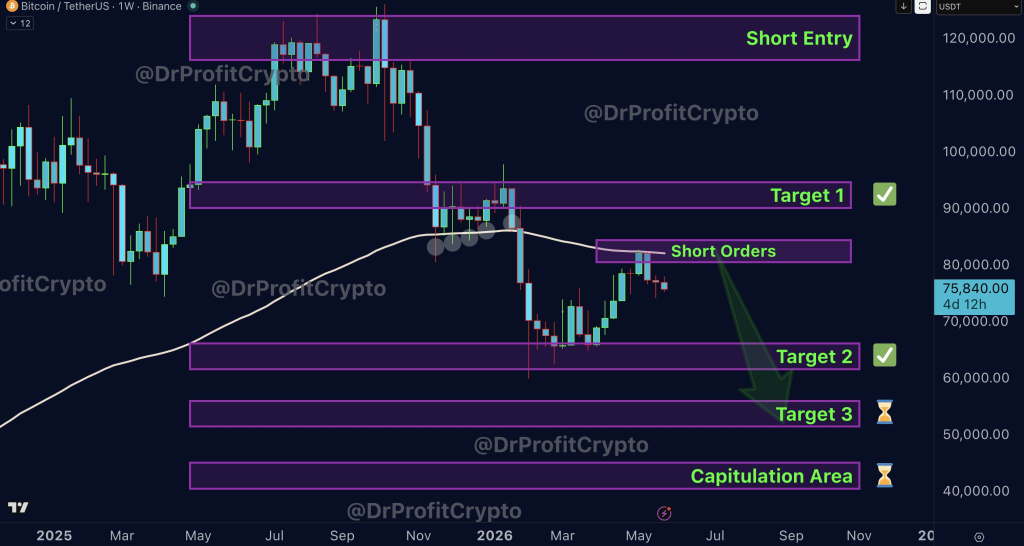
Bitcoin Price News: BTC at Risk of Falling to $70K as Crypto Veteran Calls for 50‑60K in Coming Months
Bitcoin price dipped below 75,000 today for the first time since May 23, when the 74,000-74,200 zone acted as strong support. Price briefly touched 74,000 and bounced
Share
Captainaltcoin2026/05/28 06:00
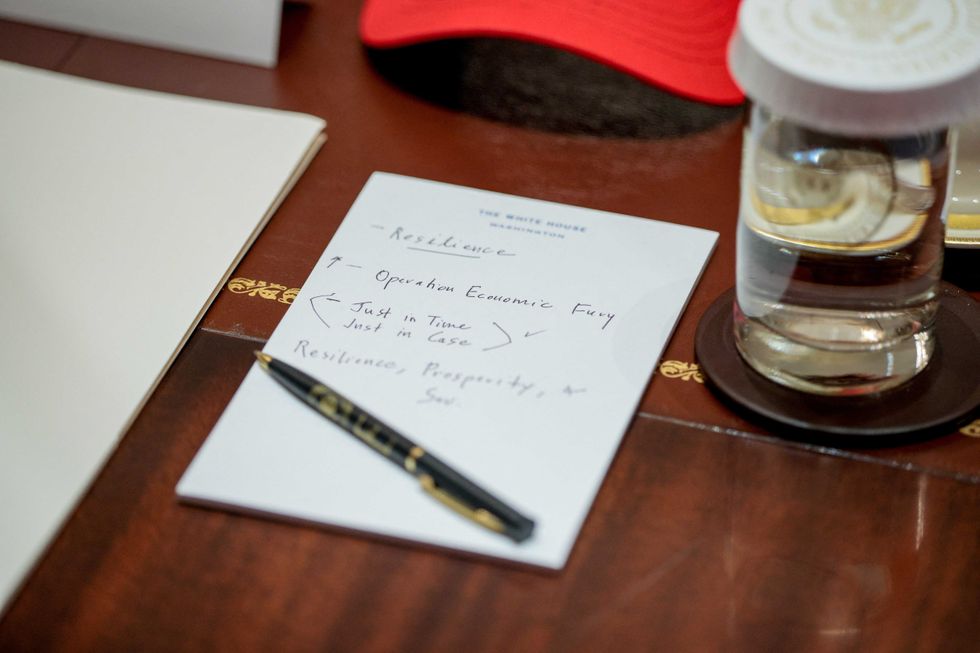
Photographer catches Marco Rubio writing mantra to himself during cabinet meeting
A Reuters photographer Evan Vucci zeroed in on a Trump Cabinet secretary's notes scribbled with a message to himself. "Resilience," read the top of Treasury Secretary
Share
Rawstory2026/05/28 06:46



