

Qualcomm’s Strategic Partnership with Neura Robotics Ignites the Physical AI Revolution
BitcoinWorld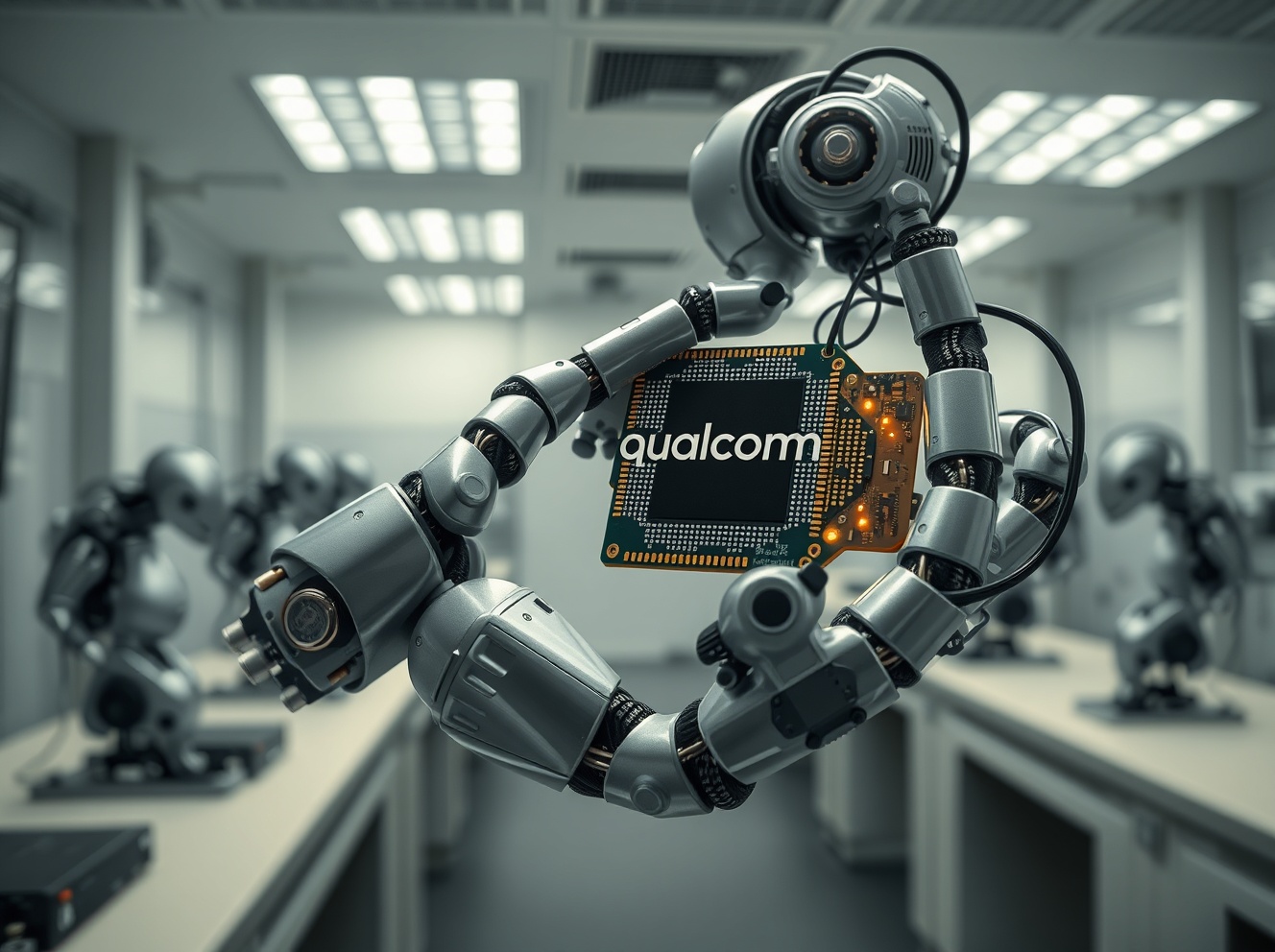
Qualcomm’s Strategic Partnership with Neura Robotics Ignites the Physical AI Revolution
In a strategic move that signals a major acceleration in the physical AI sector, semiconductor leader Qualcomm has forged a pivotal partnership with German robotics innovator Neura Robotics. Announced on Monday, June 9, 2025, this collaboration aims to develop the foundational “brain and nervous system” for the next generation of robots, specifically targeting scalable deployment of humanoid and general-purpose robots in both industrial and domestic environments.
Qualcomm and Neura Robotics Forge a Foundational Partnership
This partnership represents a significant convergence of hardware prowess and cognitive robotics software. Consequently, Neura Robotics will integrate Qualcomm’s recently announced Dragonwing Robotics IQ10 processors as reference designs into its robotic platforms. These chips, unveiled at CES 2025, are engineered specifically for the computational demands of autonomous mobile robots (AMRs) and humanoids. Furthermore, Neura will leverage its proprietary Neuraverse simulation and training platform, launched in June 2025, to rigorously test and optimize robot performance on the Qualcomm hardware. This dual approach of specialized silicon and advanced simulation creates a powerful development cycle for physical AI.
David Reger, CEO and founder of Neura Robotics, emphasized the collaboration’s scope. “This marks a major step toward making physical AI real: open, scalable, and trusted,” Reger stated. “By combining our cognitive robotics platforms with Qualcomm’s leadership in edge AI and connectivity, we aim to accelerate a future where cognitive robots operate safely alongside humans.”
The Rising Trend of Robotics and Big Tech Alliances
This deal is not an isolated event but part of a broader industry pattern. Similarly, earlier this year, Boston Dynamics announced a strategic partnership with Google DeepMind to infuse its Atlas humanoid robot with advanced AI foundational models. While the technological focus differs—chip integration versus AI model enhancement—the strategic rationale aligns perfectly. Partnerships, rather than simple vendor-customer relationships, enable robotics companies to deeply embed and co-optimize critical technologies. This trend highlights a fundamental shift in how complex robotic systems reach commercialization.
Expert Analysis on the Partnership’s Strategic Logic
Industry analysts view this as a logical and efficient path to market. A robotics startup with advanced software, like Neura, gains immediate access to cutting-edge, validated hardware. Conversely, a semiconductor giant like Qualcomm receives invaluable, real-world feedback on how its processors perform in demanding robotic applications. This symbiotic relationship accelerates innovation while mitigating technical risk. For instance, challenges like robotic dexterity and real-time environmental processing require tightly integrated hardware and software solutions that are difficult to develop in isolation.
The following table outlines the core value exchange in this partnership:
| Neura Robotics Provides | Qualcomm Provides |
|---|---|
| Cognitive robotics software platforms | Dragonwing Robotics IQ10 processor designs |
| Neuraverse simulation & training ecosystem | Edge AI and connectivity expertise |
| Real-world robotic application data | Scalable semiconductor manufacturing |
| Market access for humanoid/AMR solutions | Industry validation and partnership reach |
The Broader Impact on the Physical AI Landscape
The collaboration directly responds to the growing market demand for capable, real-world robots. Physical AI—where artificial intelligence interacts with and manipulates the physical environment—is widely seen as the next frontier. Major tech players are actively positioning themselves in this space. For example, Nvidia has consistently highlighted robotics and embodied AI as key growth vectors. As these markets mature, semiconductor companies increasingly seek direct involvement in development partnerships to ensure their technologies are utilized effectively. The clear implication is that more alliances between specialized robotics firms and large-scale tech providers are imminent.
Key drivers for this partnership model include:
- Reduced Time-to-Market: Leveraging existing, powerful silicon accelerates robot development cycles.
- Optimized Performance: Co-design leads to more efficient use of processing power for specific robotic tasks.
- Shared Risk: Partnerships distribute the substantial R&D costs inherent in advanced robotics.
- Ecosystem Development: Collaborations help establish technical standards and software ecosystems for physical AI.
Conclusion
The partnership between Qualcomm and Neura Robotics is a definitive milestone in the evolution of physical AI. By combining advanced semiconductor design with sophisticated cognitive robotics software, the alliance tackles core challenges in making humanoid and general-purpose robots viable for widespread use. This model of deep technical collaboration between hardware leaders and robotics innovators is likely to become a blueprint for the industry. As a result, the race to build intelligent, capable, and safe robots for our homes and workplaces has just entered a new, accelerated phase driven by strategic partnerships like this one.
FAQs
Q1: What is the main goal of the Qualcomm and Neura Robotics partnership?
The primary goal is to co-develop the core computational and sensory systems—described as the “brain and nervous system”—for next-generation robots, accelerating the practical deployment of humanoid and general-purpose robots in real-world settings.
Q2: What specific technology is Qualcomm contributing?
Qualcomm is providing its Dragonwing Robotics IQ10 processor series as a reference design. These chips are specifically engineered for the performance and power efficiency needs of autonomous mobile robots and humanoids.
Q3: How will Neura Robotics use Qualcomm’s processors?
Neura will integrate the IQ10 processors into its robotic platforms and use its Neuraverse simulation platform to test, train, and fine-tune robot behaviors and performance on this specific hardware.
Q4: What is “physical AI” and why is it important?
Physical AI refers to artificial intelligence systems that can perceive, interact with, and manipulate the physical world. It is crucial for enabling robots to perform complex tasks in unstructured environments like factories, warehouses, and homes.
Q5: Are there other similar partnerships in the robotics industry?
Yes, this follows a notable trend. A prominent example is the partnership between Boston Dynamics and Google DeepMind, which focuses on integrating advanced AI models into robots, demonstrating a broader industry shift towards deep collaboration between robotics specialists and large tech firms.
This post Qualcomm’s Strategic Partnership with Neura Robotics Ignites the Physical AI Revolution first appeared on BitcoinWorld.


You May Also Like

Why Businesses Need Professional Machine Design and Development Services

Bitcoin ETFs Shed $649M in a Day While Ethereum Fund Outflows Hit a Six-Day Streak




