

Tron Joins Agentic AI Foundation; Founder Foresees Future of AI
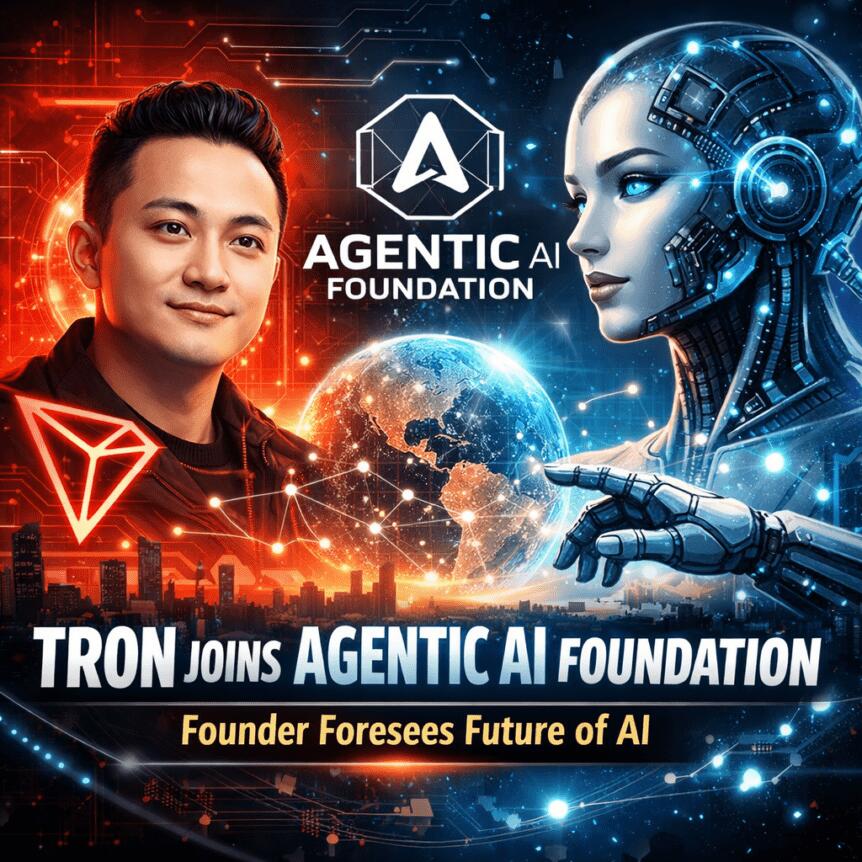
Tron (CRYPTO: TRX) DAO has joined the Agentic AI Foundation, signaling a strategic tilt toward AI agents and scalable, open on-chain infrastructure. In a Monday announcement, the Tron DAO stated that the network would become a member of AAIF and would hold a seat on its governance board. The move aligns with a broader industry push to develop interoperable standards for AI-enabled transactions, aiming to avoid fragmented ecosystems as agents operate across services.
The DAO argued that interoperable frameworks will play a critical role in enabling AI agents to operate across platforms without creating fragmented ecosystems. In recent weeks, industry commentary has emphasized the need for scalable blockchain infrastructure to support AI-powered automation, with Stripe executives noting a structural gap in capacity that must be addressed as AI agents gain traction (more from Cointelegraph). The integration of AAIF underscores Tron’s view that open standards and collaboration are essential to realizing this vision.
The AAIF is steered by the Linux Foundation and is designed to foster open-source development for agentic AI, while establishing governance, safety, and interoperability standards for the space. Tron joins a growing cohort of members that includes Circle and JPMorgan, a signal that traditional finance and crypto players are converging on shared, cross-chain AI infrastructure.
Tron’s founder, Justin Sun, has framed AI as a defining priority for 2026, arguing that the network’s speed, scalability, and low transaction costs make it well suited to host AI-driven agent transactions. The project also points to concrete steps already in motion, such as the Bank of AI—a financial layer built for AI agents by AINFT—which launched on Tron and BNB Chain in mid-February (see announcement).
According to DeFiLlama, Tron has been a standout in network revenue across recent windows, a signal that AI-related activity could be contributing to usage. The latest figures show Tron revenue around $1.01 million over the past 24 hours, $6.54 million over the past seven days, and $25.58 million over the past 30 days, underscoring robust real-world activity even before broader AI deployments fully unfold.
Sun has been vocal about the link between AI-driven demand and network usage, noting that “AI is scaling fast. When agents transact, demand shows up in the network metrics. TRON keeps leading on real usage.” The remarks reflect a broader industry expectation that AI agents will push throughput and liquidity considerations to the forefront of blockchain planning.
Industry observers have pointed to infrastructure shortcomings as AI agents scale, with Stripe’s leadership highlighting the need for more robust blockchain ecosystems. A Cointelegraph piece cited by Stripe leadership framed AI agent activity as a driver of demand that will require blockchains capable of handling billions of transactions per second, a benchmark many networks are racing toward as real-time AI-enabled automation expands.
Looking ahead, proponents say AAIF-backed standards could unlock more scalable, cross-chain workflows for AI agents, while Tron’s ongoing collaboration with other backbone platforms aims to reduce interoperability friction. The Bank of AI initiative, along with continued development of cross-chain tools and governance mechanisms, could help set the pace for how AI agents operate in mainstream crypto ecosystems.
Key takeaways
- Tron formally joins the Agentic AI Foundation and secures a seat on its governance board, signaling a strategic emphasis on AI-driven on-chain activity.
- The AAIF, run by the Linux Foundation, pursues open-source development and governance standards for agentic AI, emphasizing interoperability and safety.
- Circle and JPMorgan are among the notable peers already participating, highlighting a growing convergence of traditional finance and crypto on shared AI infrastructure.
- Tron’s leadership frames 2026 as a pivotal year for AI, citing speed, scalability, and low fees as competitive advantages for hosting AI agent transactions.
- The Bank of AI, launched on Tron and BNB Chain, demonstrates concrete actions toward enabling AI agents to operate within financial rails.
- Industry analysis points to a broader need for scalable infrastructure as AI agents push blockchain usage higher, aligning with evolving governance and interoperability standards.
Market context: The development of open, interoperable AI infrastructure is now a major theme across crypto and fintech, with industry voices calling for scalable, cross-chain frameworks to support AI agents’ growing transaction load. The Stripe reference and AAIF’s governance framework underscore a shift toward standardized tooling and safety regimes as AI-enabled automation becomes more prevalent in on-chain ecosystems.
Why it matters
The move places Tron at the center of a broader industry shift toward AI-native blockchain infrastructure. By aligning with AAIF, Tron signals a commitment to open standards that could reduce fragmentation as AI agents operate across ecosystems. For developers, this could translate into more interoperable tooling and safer, more accessible AI-enabled transaction flows. For investors and users, the coordination around governance and safety standards may improve confidence in deploying AI agents on public blockchains, potentially driving increased usage and liquidity.
From a builder’s perspective, the collaboration with AAIF and the Bank of AI demonstrates a path to scalable, real-world AI on-chain experiences. The emphasis on interoperability could lower integration costs and accelerate cross-chain AI workflows, while the Linux Foundation-backed governance framework seeks to balance experimentation with oversight. This balance matters for risk management, regulatory alignment, and long-term adoption of agentic AI across decentralized networks.
Finally, the involvement of established financial players such as Circle and JPMorgan suggests that traditional finance is increasingly eyeing AI-enabled on-chain operations. As AI agents become more capable, the market will closely watch how governance, safety, and interoperability standards evolve, and which ecosystems emerge as the most reliable environments for scalable AI-driven transactions.
What to watch next
- AAIF governance milestones and interoperability standard updates in the coming quarters.
- TRON’s cross-chain activity metrics and throughput as AI agent usage grows on the network.
- Adoption metrics for the Bank of AI across Tron and BNB Chain and any subsequent integrations with other networks.
- Additional AAIF members announced and their collaboration plans with existing participants.
- Regulatory signals and policy developments affecting open-infrastructure projects for AI on-chain ecosystems.
Sources & verification
- Tron DAO announcement of AAIF membership and governance seat: https://x.com/justinsuntron/status/2031241691064316309
- AINFT Bank of AI launch on Tron and BNB Chain: https://x.com/OfficialAINFT/status/2023026587088851265
- DeFiLlama revenue data for Tron: https://defillama.com/revenue/chains
- Stripe’s infrastructure gap discussion linked to AI agents (Cointelegraph): https://cointelegraph.com/news/stripe-ai-agents-will-require-blockchains-hit-1b-transactions-per-second
Tron anchors AI-driven interoperability on-chain
Tron (CRYPTO: TRX) DAO’s latest collaboration with the Agentic AI Foundation marks a deliberate shift toward building a cooperative AI-enabled ecosystem. The decision to join AAIF and secure a seat on its governance board underscores a belief that future AI agents will demand robust, cross-platform interoperability rather than bespoke, siloed systems. The Linux Foundation-backed foundation positions itself as a hub for open-source development, safety standards, and governance protocols—an environment where major players in both crypto and traditional finance co-create the scaffolding for AI agents to transact reliably and at scale.
In practical terms, the partnership signals an emphasis on standardization and shared infrastructure that could reduce friction for developers building AI agents across networks. Tron’s leadership argues that their platform’s speed and cost advantages render it particularly suitable for processing high-velocity AI transactions, while the ongoing Bank of AI initiative demonstrates concrete steps toward bridging AI-coded workflows with real-world financial rails. As the AI landscape evolves, observers will be watching for how AAIF’s governance and cross-industry collaboration translate into tangible benefits for users and builders alike.
This article was originally published as Tron Joins Agentic AI Foundation; Founder Foresees Future of AI on Crypto Breaking News – your trusted source for crypto news, Bitcoin news, and blockchain updates.


You May Also Like

Ethereum Whales Flood Binance With 225,000 ETH In Largest Inflow Since 2022

Bitcoin Drops Just 2.2% Despite Largest Liquidations in Three Months




