Trump’s Decisive Strike: 10 Deactivated Minelaying Ships Destroyed in Strait of Hormuz Showdown
BitcoinWorld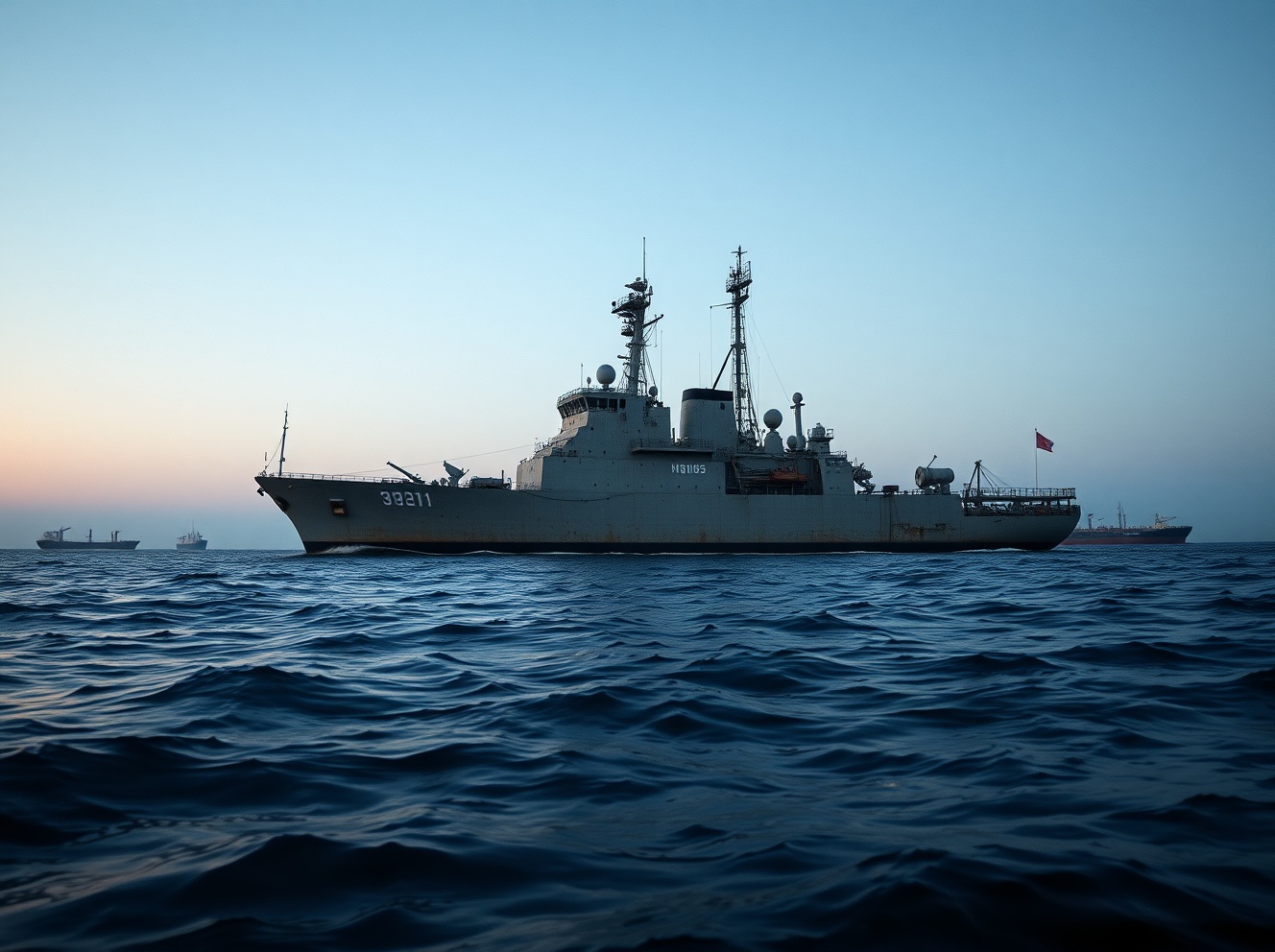
Trump’s Decisive Strike: 10 Deactivated Minelaying Ships Destroyed in Strait of Hormuz Showdown
WASHINGTON, D.C. — In a dramatic escalation of Persian Gulf tensions, President Donald Trump announced the complete destruction of ten deactivated minelaying vessels, marking a decisive military response to Iran’s threats against international shipping lanes. This strategic action follows explicit warnings about unprecedented consequences for mine-laying operations in the critical Strait of Hormuz, through which approximately 20% of global oil shipments transit daily.
Trump’s Military Action Against Minelaying Threats
President Trump confirmed the destruction operation during a White House briefing, stating that further strikes would follow if necessary. The targeted vessels, previously decommissioned from various naval fleets, represented potential tools for disrupting one of the world’s most vital maritime choke points. Military analysts immediately recognized this action as a proportional but forceful demonstration of U.S. commitment to freedom of navigation principles.
Furthermore, the Pentagon released additional details about the operation’s precision and timing. Satellite imagery confirmed successful strikes on all ten vessels within a 48-hour window. Naval experts noted the careful selection of deactivated ships minimized collateral damage while sending an unambiguous message. Consequently, regional allies received advance notification through established security channels.
Strategic Importance of the Strait of Hormuz
The Strait of Hormuz represents arguably the world’s most significant oil transit corridor. Approximately 21 million barrels of crude oil and refined products pass through this narrow waterway daily. This volume represents about one-third of all seaborne traded oil globally. Therefore, any disruption creates immediate global economic consequences.
Key statistics about the Strait of Hormuz:
- Width at narrowest point: 21 nautical miles
- Two-mile-wide shipping lanes in each direction
- Transit time: Approximately 5-6 hours for tankers
- Primary exporters using the strait: Saudi Arabia, Iran, UAE, Kuwait, Iraq
- Major importers dependent on this route: China, India, Japan, South Korea
Historically, Iran has repeatedly threatened to close the strait during regional tensions. The country’s military possesses significant asymmetric warfare capabilities in these confined waters. These include coastal defense missiles, fast attack craft, and submarine forces. Mine warfare represents particularly concerning due to its covert nature and disruptive potential.
Historical Context of Gulf Mining Incidents
Mine warfare in the Persian Gulf has precedent that informs current tensions. During the 1980s Tanker War, both Iran and Iraq employed mines against commercial shipping. Notably, the USS Samuel B. Roberts struck an Iranian mine in 1988, suffering significant damage. This incident triggered Operation Praying Mantis, the U.S. Navy’s largest surface engagement since World War II.
More recently, in 2019, multiple commercial vessels experienced mining attacks near Fujairah. Investigations pointed toward Iranian involvement, though Tehran denied responsibility. These incidents demonstrated how relatively low-cost mining operations could create disproportionate economic disruption. Insurance premiums for vessels transiting the region increased by 300% following those attacks.
Technical Analysis of Minelaying Vessels
The destroyed vessels represented various classes of minelayers, primarily from Cold War-era inventories. These ships typically feature reinforced hulls and specialized equipment for storing, transporting, and deploying naval mines. While deactivated, they retained theoretical utility for non-state actors or adversarial nations seeking deniable mining capabilities.
Common characteristics of minelaying vessels:
- Displacement: 500-2,000 tons typically
- Speed: 12-18 knots for most converted vessels
- Mine capacity: 50-300 mines depending on class
- Deployment methods: Stern ramps, side doors, or conveyor systems
- Crew requirements: Minimal for basic operations (10-30 personnel)
Naval warfare experts emphasize that while modern mines often deploy from submarines or aircraft, converted surface vessels offer advantages for certain scenarios. Specifically, they provide larger payload capacities and longer endurance for area denial operations. Their destruction eliminates potential tools for harassing commercial shipping.
International Law and Freedom of Navigation
The U.S. action operates within complex legal frameworks governing international waterways. The United Nations Convention on the Law of the Sea (UNCLOS) guarantees transit passage through straits used for international navigation. While the United States hasn’t ratified UNCLOS, it recognizes most provisions as customary international law.
Legal scholars note that threatening to lay mines in international shipping lanes potentially violates multiple principles. These include the right of innocent passage and freedom of navigation. Additionally, mining without notification violates the Hague Convention VIII of 1907, which requires belligerents to notify danger zones. However, the legal status of preemptive strikes against deactivated vessels remains debated among international law experts.
Regional Security Implications
Gulf Cooperation Council (GCC) states responded cautiously to the U.S. action. Saudi Arabia and the United Arab Emirates, both major oil exporters through Hormuz, privately welcomed the demonstration of security commitment. Conversely, Oman and Qatar emphasized diplomatic solutions, reflecting their more nuanced regional relationships.
Simultaneously, European powers expressed concern about escalating tensions. France and Germany called for restraint from all parties. Meanwhile, China and Russia criticized what they termed unilateral U.S. military action. This divergence highlights the complex geopolitical landscape surrounding Persian Gulf security.
Economic Impact Assessment
Energy markets reacted moderately to the news, with Brent crude increasing 2.3% following the announcement. Analysts attributed this relatively muted response to several factors. First, the action targeted potential threats rather than active hostilities. Second, global oil inventories remain at comfortable levels. Third, alternative shipping routes exist, though at significantly higher costs.
Potential economic consequences of Strait closure:
- Immediate oil price spike: Estimated 50-100% increase
- Increased shipping costs: 300-500% for rerouted vessels
- Global GDP impact: 0.5-1.5% reduction according to IMF models
- Regional economic disruption: Gulf states losing $100-200 billion annually
- Insurance market turmoil: Marine war risk premiums becoming prohibitive
Energy economists emphasize that while complete closure seems unlikely, even perceived threats create market volatility. The 2019 attacks demonstrated how limited incidents trigger disproportionate economic responses. Therefore, preemptive actions aim to stabilize expectations about transit security.
Military Readiness and Future Projections
The U.S. Fifth Fleet maintains robust mine countermeasure capabilities in Bahrain. These include Avenger-class minesweepers, MH-53E Sea Dragon helicopters, and Marine Mammal Systems using dolphins. Additionally, allied nations contribute specialized assets through the International Mine Countermeasures Exercise (IMCMEX) series.
Looking forward, military planners anticipate continued focus on unmanned systems for mine warfare. The Navy’s Unmanned Influence Sweep System (UISS) represents next-generation capabilities. Furthermore, seabed warfare concepts are evolving rapidly. However, traditional surface minelayers retain relevance for certain operational scenarios, justifying their targeted elimination.
Conclusion
President Trump’s destruction of ten deactivated minelaying vessels represents a calculated response to Iranian threats against Strait of Hormuz shipping. This action demonstrates U.S. commitment to freedom of navigation while minimizing immediate escalation risks. The strategic importance of this waterway justifies robust protective measures, though long-term stability requires diplomatic engagement alongside military preparedness. Global energy security continues depending on uninterrupted transit through this critical choke point, making its protection an enduring international priority.
FAQs
Q1: What exactly are minelaying vessels?
Minelaying vessels are naval ships specifically designed or converted to deploy sea mines. They feature specialized storage, handling, and deployment systems for placing explosive mines in waterways to deny access to enemy vessels.
Q2: Why would deactivated ships pose a threat?
Deactivated minelaying vessels retain physical capabilities for mine deployment if reactivated or captured. Non-state actors or adversarial nations could potentially use them for deniable mining operations, making preemptive destruction a preventive security measure.
Q3: Has Iran actually laid mines recently?
While Iran hasn’t conducted overt mining operations recently, it has repeatedly threatened to close the Strait of Hormuz. The U.S. action responds to these threats and follows historical precedent of Iranian mining during the 1980s Tanker War.
Q4: What legal authority supports destroying these vessels?
The action operates under self-defense principles in international law, specifically anticipatory self-defense against imminent threats to freedom of navigation. The U.S. cites its inherent right to protect vital international waterways from mining threats.
Q5: How does this affect global oil prices?
Initial market reactions showed moderate price increases (2-3%), reflecting recognition that the action prevents rather than creates disruption. Sustained effects depend on whether tensions escalate or de-escalate following this demonstration.
This post Trump’s Decisive Strike: 10 Deactivated Minelaying Ships Destroyed in Strait of Hormuz Showdown first appeared on BitcoinWorld.


You May Also Like

Alphabet (GOOGL) Stock Nears $5 Trillion Market Cap Ahead of Google I/O Tuesday

Bonk Price Prediction: Is $BONK Entering a Bounce Zone After 80% Crash?