Some Investors Are Looking at a New Bitcoin Reward Infrastructure

The post Some Investors Are Looking at a New Bitcoin Reward Infrastructure appeared first on Coinpedia Fintech News
Crypto investors who have been through enough market cycles develop a specific kind of radar. They stop chasing tokens and start asking harder questions. Where does the yield actually come from? What generates the rewards when the hype fades? Who verified the team? Which firm audited the contract?
Bitcoin Everlight has been passing those tests with a segment of the investor community that asks exactly that kind of question. The platform runs a Bitcoin reward infrastructure built around a live validation network, distributes BTC sourced from real transaction fees after mainnet, and has a presale currently open in Phase 1. The investors looking at it right now are the ones who read before they move.
How The Reward Infrastructure Is Built
Bitcoin Everlight is a decentralized validation network that allows users to participate in securing blockchain infrastructure while earning Bitcoin rewards.
The reward infrastructure starts at the node level. The platform runs a Transaction Validation Node network — a distributed system that validates transactions, routes them through the network, and generates the fee activity that drives BTC distribution after mainnet launches. These nodes form the technical backbone of the platform and were operating before the presale window opened.
Above that node layer sits the shard system — the participation mechanism that connects users to the infrastructure without requiring them to operate anything directly. Everlight Shards are activation units within the node network. When a user’s BTCL token balance crosses a tier threshold, their shard activates automatically and begins contributing to the validation layer.
What draws investors to this architecture is the reward chain it creates. Nodes validate transactions and generate fees. Shards connect participants to those nodes. Fees flow back through the network and get distributed to active shard holders in BTC. Every link in that chain is already built and already running.
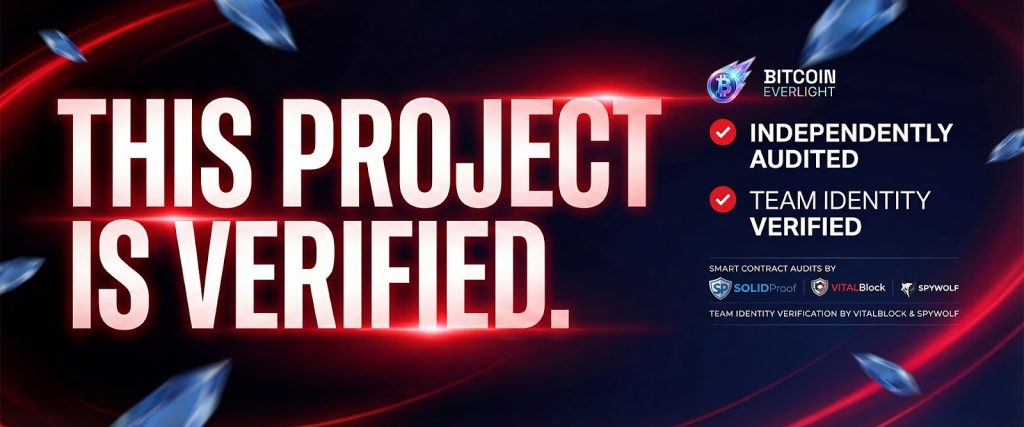
The smart contracts have been independently audited by Spywolf and Solidproof, and team identity has been verified through KYC processes completed by both Spywolf and Vital Block.
Entering The Infrastructure During BTCL Presale
The path from first token purchase to active shard position follows four steps.
Buy BTCL tokens. Phase 1 is live now with 472,500,000 tokens available at $0.0008 per token. Participation opens from $50, letting investors begin building toward a tier threshold at whatever pace fits their strategy.
Cross an activation threshold. Shards activate the moment the cumulative USD value committed reaches a tier level. The commitment triggers it — no separate purchase, no manual activation process.
Hold a position inside the validation layer. The activated shard connects to the Transaction Validation Node network and begins contributing to the infrastructure independently. The investor holds the position. The node framework runs the technical side.
Earn from the moment of activation. Fixed BTCL rewards begin accumulating immediately — calculated as stake multiplied by APY multiplied by days active divided by 365, distributed continuously throughout the presale period.

The Economics Of Each Tier
Three activation tiers sit within the shard system, and the investors looking at Bitcoin Everlight have been studying the economics of each one carefully.
The Azure Shard activates at $500 and earns 12% APY during presale. It is the entry point — the tier where participants establish their first position in the validation infrastructure at the lowest threshold. The Violet Shard activates at $1,500 and earns 18% APY, representing a deeper commitment to the network. The Radiant Shard activates at $3,000 and carries 28% APY — the highest fixed rate in the presale and the tier for participants making the strongest alignment with the infrastructure.
Investors who begin from $50 hold a dormant shard position within the ecosystem from the first purchase. That dormant position upgrades to active status automatically the moment the balance crosses the next tier threshold.
During the presale, tokens are locked and commitments are final and non-reversible. Because balances cannot move, shard tiers cannot drop during this period. The tier activated at entry holds for the full presale duration regardless of market conditions outside the platform. When mainnet launches, tiers become balance-dependent — maintained based on the USD-equivalent BTCL held at any given time, adjusting automatically if balances shift. Tier thresholds themselves are governed through a formal, transparent protocol process, structured to preserve long-term ecosystem balance if market conditions require adjustments.

The BTC Distribution Formula Investors Are Studying
The post-mainnet reward model is the part of Bitcoin Everlight that has been holding up most strongly under investor scrutiny — because the mechanics behind it are specific and traceable.
After mainnet launches, fixed APY closes and active shards begin earning a share of real Bitcoin. The distribution formula is driven by network volume multiplied by the fee rate, divided across all active shards. More transactions on the network generate more fees. More fees increase the total BTC available for distribution. Individual shard holder rewards scale with both the size of their position and how much the network is actually used.
Most yield-generating crypto projects distribute rewards in their own token. The return on those rewards depends entirely on what that token does in the secondary market — a dynamic that has collapsed enough times across enough projects to make experienced investors approach it with caution. Bitcoin Everlight’s post-mainnet distribution is denominated in BTC, sourced from real fee generation, and tied to actual network activity. The reward infrastructure runs on the same logic as the network itself — usage drives fees, and fees drive distribution.

The Presale Window For Phase 1
Bitcoin Everlight is in Phase 1 of its presale. Each phase runs for six days, and 472,500,000 tokens are available at $0.0008 per token. Investors who activate shards during this window lock in current pricing, earn fixed APY from day one, and carry those positions into mainnet — already holding established infrastructure positions when live BTC distribution begins.
The investors looking at this platform right now are the ones who move before the broader market arrives at the same conclusion. The window for Phase 1 is still open.
Start here:
https://bitcoineverlight.com/btc-digital


You May Also Like

Top 7 AI Crypto Trading Bots Reviewed And Tested in 2026

Pi Network Faces Debate as V23 Testnet Timeline Sparks “Slow or Strategic” Discussion