The post Crypto investor loses $3M in advanced phishing attack appeared on BitcoinEthereumNews.com. An unidentified crypto investor has lost over $3 million in a highly coordinated phishing attack after unknowingly authorizing a malicious contract. On Sept. 11, blockchain investigator ZachXBT first flagged the incident, revealing that the victim’s wallet was drained of $3.047 million in USDC. The attacker quickly swapped the stablecoins for Ethereum and funneled the proceeds into Tornado Cash, a privacy protocol often used to obscure the flow of stolen funds. How the exploit occurred SlowMist founder Yu Xian explained that the compromised address was a 2-of-4 Safe multi-signature wallet. He explained that the breach originated from two consecutive transactions in which the victim approved transfers to an address that mimicked their intended recipient. The attacker crafted the fraudulent contract so that its first and last characters mirrored the legitimate one, making it difficult to detect. Xian added that the exploit took advantage of the Safe Multi Send mechanism, disguising the abnormal approval inside what appeared to be a routine authorization. He wrote: Wall Street Doesn’t Want You to See This… Get 5 days of high-level strategies the pros use to win in crypto. Limited seats available — claim yours now. Brought to you by CryptoSlate Nice 😎 Your first lesson is on the way. Please add [email protected] to your email whitelist. “This abnormal authorization was hard to detect because it wasn’t a standard approve.” According to Scam Sniffer, the attacker had prepared the ground well in advance. They deployed a fake but Etherscan-verified contract nearly two weeks earlier, programming it with multiple “batch payment” functions to look legitimate. On the day of the exploit, the malicious approval was executed through the Request Finance app interface, giving the attacker access to the victim’s funds. In response, Request Finance acknowledged that a malicious actor had deployed a counterfeit version of its Batch… The post Crypto investor loses $3M in advanced phishing attack appeared on BitcoinEthereumNews.com. An unidentified crypto investor has lost over $3 million in a highly coordinated phishing attack after unknowingly authorizing a malicious contract. On Sept. 11, blockchain investigator ZachXBT first flagged the incident, revealing that the victim’s wallet was drained of $3.047 million in USDC. The attacker quickly swapped the stablecoins for Ethereum and funneled the proceeds into Tornado Cash, a privacy protocol often used to obscure the flow of stolen funds. How the exploit occurred SlowMist founder Yu Xian explained that the compromised address was a 2-of-4 Safe multi-signature wallet. He explained that the breach originated from two consecutive transactions in which the victim approved transfers to an address that mimicked their intended recipient. The attacker crafted the fraudulent contract so that its first and last characters mirrored the legitimate one, making it difficult to detect. Xian added that the exploit took advantage of the Safe Multi Send mechanism, disguising the abnormal approval inside what appeared to be a routine authorization. He wrote: Wall Street Doesn’t Want You to See This… Get 5 days of high-level strategies the pros use to win in crypto. Limited seats available — claim yours now. Brought to you by CryptoSlate Nice 😎 Your first lesson is on the way. Please add [email protected] to your email whitelist. “This abnormal authorization was hard to detect because it wasn’t a standard approve.” According to Scam Sniffer, the attacker had prepared the ground well in advance. They deployed a fake but Etherscan-verified contract nearly two weeks earlier, programming it with multiple “batch payment” functions to look legitimate. On the day of the exploit, the malicious approval was executed through the Request Finance app interface, giving the attacker access to the victim’s funds. In response, Request Finance acknowledged that a malicious actor had deployed a counterfeit version of its Batch…

Crypto investor loses $3M in advanced phishing attack

For feedback or concerns regarding this content, please contact us at crypto.news@mexc.com

An unidentified crypto investor has lost over $3 million in a highly coordinated phishing attack after unknowingly authorizing a malicious contract.

On Sept. 11, blockchain investigator ZachXBT first flagged the incident, revealing that the victim’s wallet was drained of $3.047 million in USDC.

The attacker quickly swapped the stablecoins for Ethereum and funneled the proceeds into Tornado Cash, a privacy protocol often used to obscure the flow of stolen funds.

How the exploit occurred

SlowMist founder Yu Xian explained that the compromised address was a 2-of-4 Safe multi-signature wallet.

He explained that the breach originated from two consecutive transactions in which the victim approved transfers to an address that mimicked their intended recipient.

The attacker crafted the fraudulent contract so that its first and last characters mirrored the legitimate one, making it difficult to detect.

Xian added that the exploit took advantage of the Safe Multi Send mechanism, disguising the abnormal approval inside what appeared to be a routine authorization.

He wrote:

According to Scam Sniffer, the attacker had prepared the ground well in advance. They deployed a fake but Etherscan-verified contract nearly two weeks earlier, programming it with multiple “batch payment” functions to look legitimate.

On the day of the exploit, the malicious approval was executed through the Request Finance app interface, giving the attacker access to the victim’s funds.

In response, Request Finance acknowledged that a malicious actor had deployed a counterfeit version of its Batch Payment contract. The company noted that only one customer was affected and stressed that the vulnerability has since been patched.

Still, Scam Sniffer highlighted broader concerns about the phishing incident.

The blockchain security firm warned that similar exploits could stem from several vectors, including app vulnerabilities, malware or browser extensions modifying transactions, compromised front-ends, or DNS hijacking.

More importantly, the use of verified contracts and near-identical addresses illustrates how attackers are refining their methods to bypass user scrutiny.

Mentioned in this article

Source: https://cryptoslate.com/new-sophisticated-phishing-exploit-drains-3m-in-usdc-from-multi-sig-wallet/
Market Opportunity
Threshold Logo
Threshold Price(T)
$0.006738
$0.006738$0.006738
-2.48%
USD
Threshold (T) Live Price Chart
Disclaimer: The articles reposted on this site are sourced from public platforms and are provided for informational purposes only. They do not necessarily reflect the views of MEXC. All rights remain with the original authors. If you believe any content infringes on third-party rights, please contact crypto.news@mexc.com for removal. MEXC makes no guarantees regarding the accuracy, completeness, or timeliness of the content and is not responsible for any actions taken based on the information provided. The content does not constitute financial, legal, or other professional advice, nor should it be considered a recommendation or endorsement by MEXC.

You May Also Like

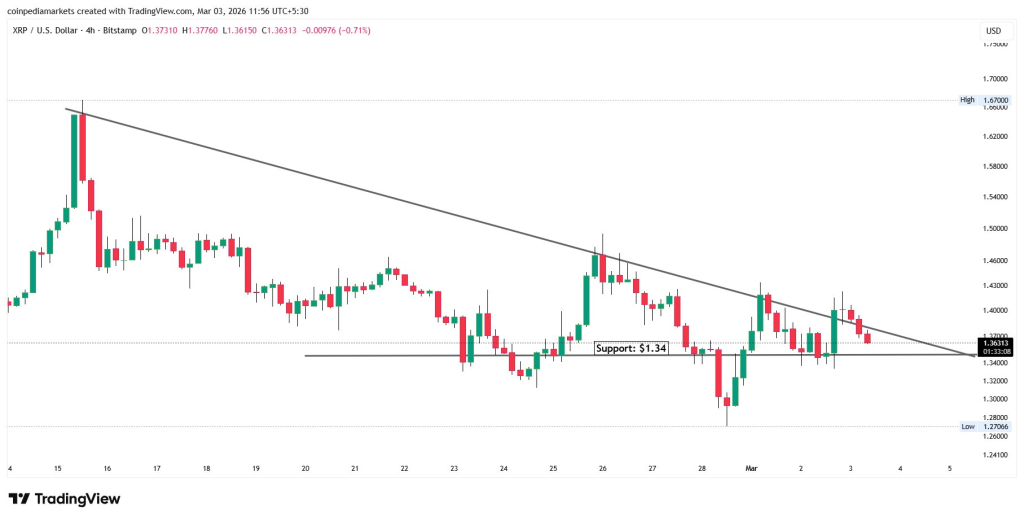
Warning Signs Flash for $XRP as $1.34 Support Gets Tested

Warning Signs Flash for $XRP as $1.34 Support Gets Tested

XRP lagged behind Bitcoin and Ethereum during yesterday’s relief bounce. In fact, BTC and ETH pushed higher over $70K and $2K respectively, but XRP only managed
Share
Captainaltcoin2026/03/03 14:49
PiDex Testnet Launch: What It Means for Pi Network and Picoin Value

PiDex Testnet Launch: What It Means for Pi Network and Picoin Value

Pi Network’s decentralized exchange, PiDex, went live on the testnet, marking a significant technical milestone for the ecosystem. Despite the launch, the m
Share
Hokanews2026/03/03 14:27
UK and US Seal $42 Billion Tech Pact Driving AI and Energy Future

UK and US Seal $42 Billion Tech Pact Driving AI and Energy Future

The post UK and US Seal $42 Billion Tech Pact Driving AI and Energy Future appeared on BitcoinEthereumNews.com. Key Highlights Microsoft and Google pledge billions as part of UK US tech partnership Nvidia to deploy 120,000 GPUs with British firm Nscale in Project Stargate Deal positions UK as an innovation hub rivaling global tech powers UK and US Seal $42 Billion Tech Pact Driving AI and Energy Future The UK and the US have signed a “Technological Prosperity Agreement” that paves the way for joint projects in artificial intelligence, quantum computing, and nuclear energy, according to Reuters. Donald Trump and King Charles review the guard of honour at Windsor Castle, 17 September 2025. Image: Kirsty Wigglesworth/Reuters The agreement was unveiled ahead of U.S. President Donald Trump’s second state visit to the UK, marking a historic moment in transatlantic technology cooperation. Billions Flow Into the UK Tech Sector As part of the deal, major American corporations pledged to invest $42 billion in the UK. Microsoft leads with a $30 billion investment to expand cloud and AI infrastructure, including the construction of a new supercomputer in Loughton. Nvidia will deploy 120,000 GPUs, including up to 60,000 Grace Blackwell Ultra chips—in partnership with the British company Nscale as part of Project Stargate. Google is contributing $6.8 billion to build a data center in Waltham Cross and expand DeepMind research. Other companies are joining as well. CoreWeave announced a $3.4 billion investment in data centers, while Salesforce, Scale AI, BlackRock, Oracle, and AWS confirmed additional investments ranging from hundreds of millions to several billion dollars. UK Positions Itself as a Global Innovation Hub British Prime Minister Keir Starmer said the deal could impact millions of lives across the Atlantic. He stressed that the UK aims to position itself as an investment hub with lighter regulations than the European Union. Nvidia spokesman David Hogan noted the significance of the agreement, saying it would…
Share
BitcoinEthereumNews2025/09/18 02:22