Thinking about mining Bitcoin full-time? It might sound like a fast track to financial freedom, but there’s more to it than what the internet shows and the “easy passive income”. Here’s what you really need to know. Imagine this: “You walk into a room filled with computers and blinking lights, all running nonstop to turn electricity into Bitcoin.” Sounds exciting, but full-time mining isn’t as simple or easy as it seems. How Bitcoin Mining Works At its core, Bitcoin mining is solving really complex math problems using computers. When your machine successfully solves a problem, you earn Bitcoin. Simple idea, but complicated in practice. You can’t mine Bitcoin on a regular laptop anymore. Today, specialized machines called ASICs (Application-Specific Integrated Circuits) do almost all the work. They’re fast, efficient, and… expensive. And they consume huge amounts of electricity, which is one of the biggest hidden costs of mining. The Real Costs of Full-Time Mining Mining sounds like “free money,” but it’s far from it. Here’s what most people forget: Hardware costs: A single ASIC can cost anywhere from $1,500 to $10,000. If you want meaningful returns, you’ll need several. Electricity: These machines use a ton of energy. If your power isn’t cheap, your profits can evaporate fast. Heat and noise: ASICs are basically giant fans that never stop. Expect a noisy, hot room. Maintenance: Fans fail, dust accumulates, machines overheat. Mining rigs need constant attention. Add it all up, and full-time mining is less “easy money” and more “high-maintenance business.” Who Can Make It Work Full-time mining only works for people who can scale. This usually means: Cheap or free electricity. Space to run multiple machines — sometimes dozens. Money to cover hardware and maintenance. Comfort with fluctuating Bitcoin prices. Even professional miners sometimes have to shut down rigs during bear markets because mining suddenly becomes unprofitable. So, Is It Worth It? For most people, probably not. Unless you meet all the requirements above, mining full-time can be expensive, stressful, and unpredictable. That doesn’t mean you’re out of luck if you want to profit from Bitcoin. Buying Bitcoin directly or using cloud mining/trading platforms is often simpler, safer, and just as profitable, without turning your home into a data center. A Better Alternative? If your goal is to be part of the Bitcoin world without dealing with hardware headaches, trading and investing can be a much better option. Tools like TradingView let you track Bitcoin prices, watch trends, and make informed decisions. You don’t need to think about electricity bills or noisy machines, you just need smart strategies. If you want to check this out yourself, click the link below and get a free $15 bonus when you sign up to TradingView: Join TradingView — Daily Crypto Invest Disclaimer: “This is an affiliate link, which means I may earn a small commission at no extra cost to you.” What You Need to Know Before Mining Bitcoin Full-Time was originally published in Coinmonks on Medium, where people are continuing the conversation by highlighting and responding to this storyThinking about mining Bitcoin full-time? It might sound like a fast track to financial freedom, but there’s more to it than what the internet shows and the “easy passive income”. Here’s what you really need to know. Imagine this: “You walk into a room filled with computers and blinking lights, all running nonstop to turn electricity into Bitcoin.” Sounds exciting, but full-time mining isn’t as simple or easy as it seems. How Bitcoin Mining Works At its core, Bitcoin mining is solving really complex math problems using computers. When your machine successfully solves a problem, you earn Bitcoin. Simple idea, but complicated in practice. You can’t mine Bitcoin on a regular laptop anymore. Today, specialized machines called ASICs (Application-Specific Integrated Circuits) do almost all the work. They’re fast, efficient, and… expensive. And they consume huge amounts of electricity, which is one of the biggest hidden costs of mining. The Real Costs of Full-Time Mining Mining sounds like “free money,” but it’s far from it. Here’s what most people forget: Hardware costs: A single ASIC can cost anywhere from $1,500 to $10,000. If you want meaningful returns, you’ll need several. Electricity: These machines use a ton of energy. If your power isn’t cheap, your profits can evaporate fast. Heat and noise: ASICs are basically giant fans that never stop. Expect a noisy, hot room. Maintenance: Fans fail, dust accumulates, machines overheat. Mining rigs need constant attention. Add it all up, and full-time mining is less “easy money” and more “high-maintenance business.” Who Can Make It Work Full-time mining only works for people who can scale. This usually means: Cheap or free electricity. Space to run multiple machines — sometimes dozens. Money to cover hardware and maintenance. Comfort with fluctuating Bitcoin prices. Even professional miners sometimes have to shut down rigs during bear markets because mining suddenly becomes unprofitable. So, Is It Worth It? For most people, probably not. Unless you meet all the requirements above, mining full-time can be expensive, stressful, and unpredictable. That doesn’t mean you’re out of luck if you want to profit from Bitcoin. Buying Bitcoin directly or using cloud mining/trading platforms is often simpler, safer, and just as profitable, without turning your home into a data center. A Better Alternative? If your goal is to be part of the Bitcoin world without dealing with hardware headaches, trading and investing can be a much better option. Tools like TradingView let you track Bitcoin prices, watch trends, and make informed decisions. You don’t need to think about electricity bills or noisy machines, you just need smart strategies. If you want to check this out yourself, click the link below and get a free $15 bonus when you sign up to TradingView: Join TradingView — Daily Crypto Invest Disclaimer: “This is an affiliate link, which means I may earn a small commission at no extra cost to you.” What You Need to Know Before Mining Bitcoin Full-Time was originally published in Coinmonks on Medium, where people are continuing the conversation by highlighting and responding to this story

What You Need to Know Before Mining Bitcoin Full-Time

2025/09/12 18:46
3 min read
For feedback or concerns regarding this content, please contact us at crypto.news@mexc.com

Thinking about mining Bitcoin full-time? It might sound like a fast track to financial freedom, but there’s more to it than what the internet shows and the “easy passive income”. Here’s what you really need to know.

Imagine this: “You walk into a room filled with computers and blinking lights, all running nonstop to turn electricity into Bitcoin.”

Sounds exciting, but full-time mining isn’t as simple or easy as it seems.

How Bitcoin Mining Works

At its core, Bitcoin mining is solving really complex math problems using computers. When your machine successfully solves a problem, you earn Bitcoin. Simple idea, but complicated in practice.

You can’t mine Bitcoin on a regular laptop anymore. Today, specialized machines called ASICs (Application-Specific Integrated Circuits) do almost all the work. They’re fast, efficient, and… expensive. And they consume huge amounts of electricity, which is one of the biggest hidden costs of mining.

The Real Costs of Full-Time Mining

Mining sounds like “free money,” but it’s far from it. Here’s what most people forget:

  • Hardware costs: A single ASIC can cost anywhere from $1,500 to $10,000. If you want meaningful returns, you’ll need several.
  • Electricity: These machines use a ton of energy. If your power isn’t cheap, your profits can evaporate fast.
  • Heat and noise: ASICs are basically giant fans that never stop. Expect a noisy, hot room.
  • Maintenance: Fans fail, dust accumulates, machines overheat. Mining rigs need constant attention.

Add it all up, and full-time mining is less “easy money” and more “high-maintenance business.”

Who Can Make It Work

Full-time mining only works for people who can scale. This usually means:

  • Cheap or free electricity.
  • Space to run multiple machines — sometimes dozens.
  • Money to cover hardware and maintenance.
  • Comfort with fluctuating Bitcoin prices.

Even professional miners sometimes have to shut down rigs during bear markets because mining suddenly becomes unprofitable.

So, Is It Worth It?

For most people, probably not. Unless you meet all the requirements above, mining full-time can be expensive, stressful, and unpredictable.

That doesn’t mean you’re out of luck if you want to profit from Bitcoin. Buying Bitcoin directly or using cloud mining/trading platforms is often simpler, safer, and just as profitable, without turning your home into a data center.

A Better Alternative?

If your goal is to be part of the Bitcoin world without dealing with hardware headaches, trading and investing can be a much better option.

Tools like TradingView let you track Bitcoin prices, watch trends, and make informed decisions. You don’t need to think about electricity bills or noisy machines, you just need smart strategies.

If you want to check this out yourself, click the link below and get a free $15 bonus when you sign up to TradingView:

Join TradingView

— Daily Crypto Invest

Disclaimer: “This is an affiliate link, which means I may earn a small commission at no extra cost to you.”


What You Need to Know Before Mining Bitcoin Full-Time was originally published in Coinmonks on Medium, where people are continuing the conversation by highlighting and responding to this story.

Disclaimer: The articles reposted on this site are sourced from public platforms and are provided for informational purposes only. They do not necessarily reflect the views of MEXC. All rights remain with the original authors. If you believe any content infringes on third-party rights, please contact crypto.news@mexc.com for removal. MEXC makes no guarantees regarding the accuracy, completeness, or timeliness of the content and is not responsible for any actions taken based on the information provided. The content does not constitute financial, legal, or other professional advice, nor should it be considered a recommendation or endorsement by MEXC.

You May Also Like

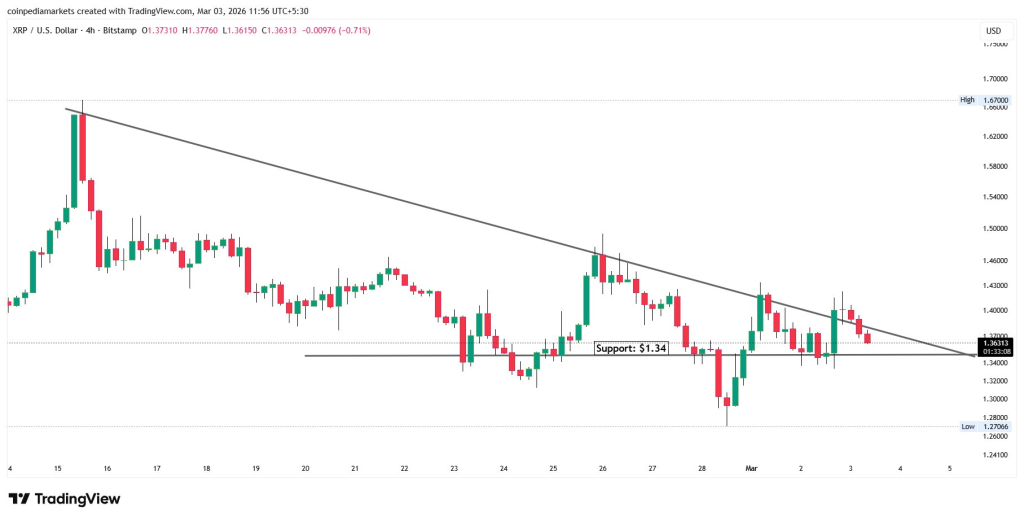
Warning Signs Flash for $XRP as $1.34 Support Gets Tested

Warning Signs Flash for $XRP as $1.34 Support Gets Tested

XRP lagged behind Bitcoin and Ethereum during yesterday’s relief bounce. In fact, BTC and ETH pushed higher over $70K and $2K respectively, but XRP only managed
Share
Captainaltcoin2026/03/03 14:49
PiDex Testnet Launch: What It Means for Pi Network and Picoin Value

PiDex Testnet Launch: What It Means for Pi Network and Picoin Value

Pi Network’s decentralized exchange, PiDex, went live on the testnet, marking a significant technical milestone for the ecosystem. Despite the launch, the m
Share
Hokanews2026/03/03 14:27
UK and US Seal $42 Billion Tech Pact Driving AI and Energy Future

UK and US Seal $42 Billion Tech Pact Driving AI and Energy Future

The post UK and US Seal $42 Billion Tech Pact Driving AI and Energy Future appeared on BitcoinEthereumNews.com. Key Highlights Microsoft and Google pledge billions as part of UK US tech partnership Nvidia to deploy 120,000 GPUs with British firm Nscale in Project Stargate Deal positions UK as an innovation hub rivaling global tech powers UK and US Seal $42 Billion Tech Pact Driving AI and Energy Future The UK and the US have signed a “Technological Prosperity Agreement” that paves the way for joint projects in artificial intelligence, quantum computing, and nuclear energy, according to Reuters. Donald Trump and King Charles review the guard of honour at Windsor Castle, 17 September 2025. Image: Kirsty Wigglesworth/Reuters The agreement was unveiled ahead of U.S. President Donald Trump’s second state visit to the UK, marking a historic moment in transatlantic technology cooperation. Billions Flow Into the UK Tech Sector As part of the deal, major American corporations pledged to invest $42 billion in the UK. Microsoft leads with a $30 billion investment to expand cloud and AI infrastructure, including the construction of a new supercomputer in Loughton. Nvidia will deploy 120,000 GPUs, including up to 60,000 Grace Blackwell Ultra chips—in partnership with the British company Nscale as part of Project Stargate. Google is contributing $6.8 billion to build a data center in Waltham Cross and expand DeepMind research. Other companies are joining as well. CoreWeave announced a $3.4 billion investment in data centers, while Salesforce, Scale AI, BlackRock, Oracle, and AWS confirmed additional investments ranging from hundreds of millions to several billion dollars. UK Positions Itself as a Global Innovation Hub British Prime Minister Keir Starmer said the deal could impact millions of lives across the Atlantic. He stressed that the UK aims to position itself as an investment hub with lighter regulations than the European Union. Nvidia spokesman David Hogan noted the significance of the agreement, saying it would…
Share
BitcoinEthereumNews2025/09/18 02:22