DeFi Lobby Drops Airdrop Lawsuit Against SEC Over Crypto Shift
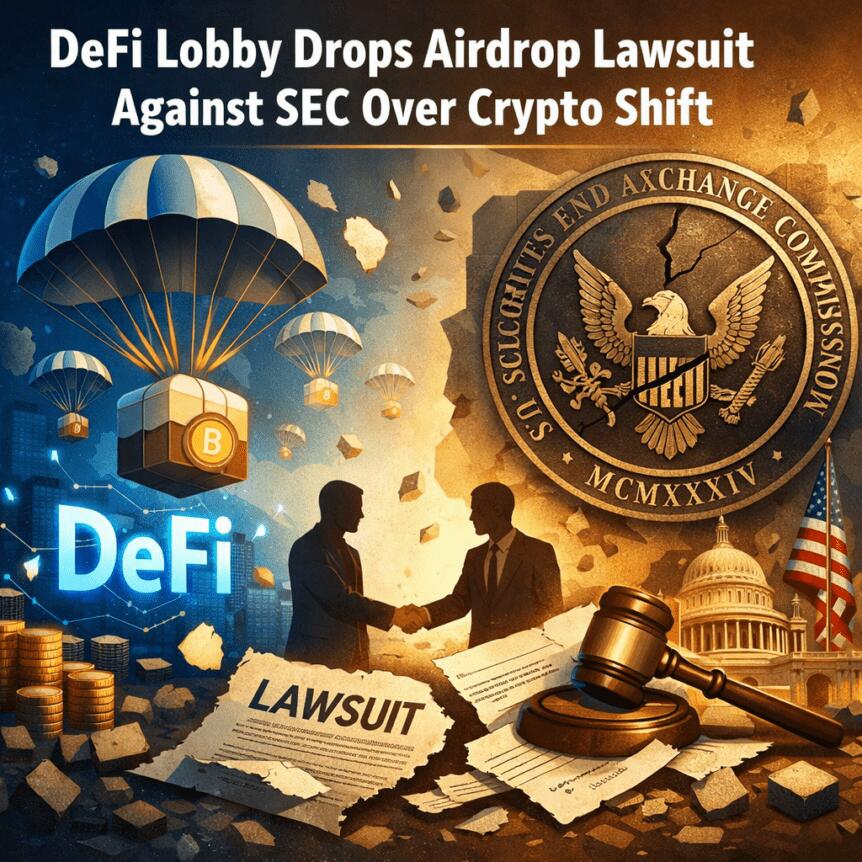
Texas-based apparel brand Beba and the DeFi Education Fund have withdrawn a 2024 pre-enforcement challenge against the SEC related to the agency’s approach to crypto airdrops. The voluntary dismissal, filed in the Western District of Texas, arrives as policymakers and industry observers monitor a shift in how the regulator talks about and treats token distributions. In March 2024, Beba launched a free token airdrop, prompting the lawsuit, which alleged the SEC had adopted a digital asset enforcement framework without formal notice-and-comment rulemaking. The withdrawal signals that the parties see benefits in waiting for clearer regulatory guidance as the SEC’s stance appears to be moving away from a purely enforcement-driven posture.
Key takeaways
- The case was dismissed without prejudice, preserving the right to refile if guidance materializes or if the parties deem it necessary.
- The filing highlights the SEC Crypto Task Force’s work and statements by Commissioner Hester Peirce, which suggest airdropped tokens may not be securities under certain circumstances.
- A January White House executive action reportedly encouraged the regulator to establish a “safe harbor for certain airdrops,” aligning with the evolving discourse on crypto policy.
- DeFi Education Fund described the decision as a response to the changing regulatory environment and the likelihood that forthcoming guidance could address the foundational issues raised in the suit.
- The move occurs amid broader signals of regulatory recalibration in the crypto space, including the recent handling of long-running enforcement actions and other high-profile cases.
Sentiment: Neutral
Market context: The landscape for crypto regulation in the United States has been shifting, with advocates calling for formal rulemaking rather than enforcement-by-litigation. The departure of a long-standing line of arguments from prosecutors and the appearance of a more consultative approach—evidenced by task-force commentary and executive actions—have added a layer of nuance to how projects conduct token distributions and how exchanges classify assets.
Why it matters
For investors and builders, the voluntary dismissal signals a potential near-term reduction in regulatory friction around airdrops, at least pending forthcoming guidance. If the SEC Crypto Task Force delivers a clear framework or if a safe harbor emerges, teams may design token distributions with greater legal clarity, potentially accelerating legitimate experimentation while preserving compliance safeguards.
From a policy standpoint, the case underscores the central role of the SEC’s Task Force in shaping enforcement and rulemaking trajectories. The speeches and discussions around whether certain airdrops can be exempt from security classifications directly influence how projects structure distributions, how custodians and exchanges classify tokens, and how investors assess risk in new token launches.
While the narrative suggests a potential easing of some enforcement pressures, the absence of formal, binding rulemaking means industry participants should remain vigilant. The interplay between public statements, proposed exemptions, and actual regulatory actions will likely determine how quickly the market adapts and how confidently projects can proceed with token drops without triggering unintended compliance pitfalls.
What to watch next
- The SEC Crypto Task Force’s forthcoming guidance or rulemaking related to airdrops and token distributions.
- Any formal White House or agency announcements outlining safe harbors or exemptions for crypto distributions.
- Whether the plaintiffs refile their challenge if new guidance does not materialize or proves incomplete.
- Subsequent enforcement actions or settlements that illustrate the regulator’s current stance post-change in leadership and policy signals.
- Ongoing discussions around BitClout-related litigation and other crypto cases highlighted in policy discourse and industry coverage.
Sources & verification
- Notice of voluntary dismissal in Beba LLC and DeFi Education Fund v. Securities and Exchange Commission filed in the Western District of Texas. source
- SEC Crypto Task Force work and statements by Commissioner Hester Peirce cited in related discussions. source
- Recent coverage on regulatory shifts and enforcement actions, including ongoing debates about crypto exemptions and rulemaking. source
- Nader Al-Naji BitClout case dismissal and related regulatory developments. source
- Analyses of the SEC’s evolving approach to crypto law, including discussions on the potential for exemptions and safe harbors. source
Regulatory shifts prompt voluntary dismissal of crypto-airdrop lawsuit
The voluntary dismissal of the Beba and DeFi Education Fund lawsuit encapsulates a broader moment for crypto regulation in the United States. The case itself arose from a perceived disconnect between how the SEC polices crypto issues and how policy makers imagine legitimate distribution mechanisms. In March 2024, Beba launched a free token airdrop, setting the backdrop for a challenge that accused the commission of moving forward with a digital asset enforcement framework without formal notice-and-comment procedures mandated by the Administrative Procedure Act. The plaintiffs argued that the SEC’s actions reflected a departure from the traditional rulemaking process, a concern that resonated with others in the fast-moving crypto ecosystem that seeks predictability in compliance standards.
What prompted the move to dismiss appears to be twofold. First, the parties cited the work of the SEC Crypto Task Force and the remarks delivered by Commissioner Hester Peirce over the past year, which suggested that not all airdrops should be treated as securities. Peirce’s public discussions highlighted the possibility of an exemption framework for airdrops, signaling a potential regulatory path forward that could reduce legal ambiguity for legitimate token distributions. Second, the White House’s January executive action, which encouraged the regulator to explore a safe harbor for certain airdrops, added political and administrative momentum to a more nuanced regulatory posture. Together, these factors created a landscape in which continuing litigation might prove unnecessary if the regulatory framework were to evolve in a way that addresses the core concerns raised by the plaintiffs.
In the court filing, the DeFi Education Fund stressed that the SEC’s evolving stance justified stepping back—at least temporarily. “Given the good work done by the SEC Crypto Task Force and recent speeches that suggest a change in the Commission’s position regarding free airdrops, we decided continuing was unnecessary for the time being and we can re-file if we need to later on,” the group stated in a post on X. The DEF also signaled its expectation that the Task Force would soon address airdrops more explicitly—the central issue at the heart of the lawsuit. The filing further notes the possibility of refile if the agency’s forthcoming guidance fails to materialize or proves inadequate, preserving the litigants’ rights without foreclosing future action.
Beyond the specifics of this case, the shift aligns with broader regulatory dynamics that unfolded after the tenure of former SEC Chair Gary Gensler. Historically, critics argued that policy tended to emerge through enforcement actions and settlements rather than open-rulemaking. The narrative shifted again with leadership changes and a series of enforcement actions that were dismissed or resolved in the months that followed. The combination of task-force work, public speeches, and executive signaling points to a more deliberate, if still evolving, framework for distinguishing securities from non-securities in the crypto space. For participants, this means a growing expectation that the SEC may offer more defined guardrails, even if not yet codified in formal rules.
In practical terms, the case illustrates how policy dialogue can influence corporate tactics. Projects considering airdrops must weigh the risk of classification as securities against the possibility of exemptions or safe harbors that may be introduced in the near term. Exchanges and developers will likely watch for formal guidance before committing to complex token-distribution schemes, especially those that resemble traditional fundraising activities. While the dismissal removes an immediate legal challenge, it does not erase the fundamental questions about how the SEC will define and regulate token distributions over the coming quarters.
This article was originally published as DeFi Lobby Drops Airdrop Lawsuit Against SEC Over Crypto Shift on Crypto Breaking News – your trusted source for crypto news, Bitcoin news, and blockchain updates.


You May Also Like
Republicans are in freefall —and there's no way to stop it
Roaring Kitty hack drains $2.8M from traders