

Revolut SUI Staking: A Game-Changing Move for Mainstream Crypto Adoption

BitcoinWorld
Revolut SUI Staking: A Game-Changing Move for Mainstream Crypto Adoption
London, UK – March 2025: In a significant development for cryptocurrency accessibility, neobanking giant Revolut has integrated direct staking for the Sui (SUI) token within its popular financial application. This strategic move potentially bridges traditional finance with decentralized blockchain rewards for millions of users. Consequently, it marks a pivotal moment for both the Sui ecosystem and mainstream digital asset adoption.
Revolut SUI Staking: A Detailed Breakdown
Revolut, a leading digital banking platform, now enables its users to stake SUI tokens directly. The company announced this feature through an official post on the Sui network’s X account. This integration allows customers to participate in network validation and earn rewards without transferring assets to external wallets. Therefore, it significantly simplifies the staking process for retail investors.
Staking represents a core function of proof-of-stake (PoS) blockchains like Sui. Users lock their tokens to support network operations, including transaction validation and governance. In return, they receive additional tokens as rewards. Traditionally, this process required technical knowledge and interaction with specialized platforms. Revolut’s implementation removes these barriers entirely.
The neobank has steadily expanded its crypto offerings since first introducing trading in 2017. Its current suite includes buying, selling, and holding for dozens of major cryptocurrencies. The addition of staking, particularly for a Layer 1 blockchain like Sui, signals a deeper commitment to Web3 services. Moreover, it aligns with a broader industry trend where fintech platforms evolve into comprehensive crypto gateways.
The Strategic Importance for Sui and Revolut
This partnership delivers substantial benefits for both entities. For the Sui Network, developed by Mysten Labs, gaining exposure to Revolut’s vast user base provides immense value. Sui utilizes a novel object-centric data model and the Move programming language for enhanced scalability and security. Increased staking participation directly strengthens network security and decentralization.
For Revolut, adding SUI staking enhances its competitive edge against rivals like Coinbase and Kraken. It also creates a new revenue stream through potential staking fee structures. The company has over 40 million customers worldwide, many of whom are already engaged with its crypto products. This feature directly caters to their demand for yield-generating opportunities within a trusted interface.
Key features of the integration include:
- Direct in-app staking without external wallet requirements
- Real-time display of estimated annual percentage yield (APY)
- Integrated tracking of staking rewards within the Revolut portfolio view
- Streamlined process matching the user experience of traditional banking products
Expert Analysis on Market Impact
Industry analysts view this development as a critical step toward normalization. “When major neobanks integrate native staking, it signals maturation,” notes a fintech researcher from a leading consultancy. “It moves crypto yield from a niche, technical activity to a standard banking feature. This could influence regulatory perceptions and accelerate institutional adoption.”
Data from 2024 shows consistent growth in staking participation across all major PoS networks. The total value locked (TVL) in staking protocols exceeded $100 billion globally. Revolut’s entry could funnel a significant portion of its user assets into this ecosystem. However, the actual impact depends on the staking terms, such as lock-up periods and reward rates, which Revolut will control.
| Platform | Method | Custody | User Action Required |
|---|---|---|---|
| Traditional Exchange | Via separate staking portal | Mostly custodial | Multiple steps, external navigation |
| Native Wallet | Direct delegation to validators | Non-custodial | Technical setup, key management |
| Revolut (New) | In-app one-click function | Custodial | Single tap within familiar banking app |
Regulatory and Security Considerations
Revolut operates under strict financial regulations across multiple jurisdictions, including the UK’s FCA and the European Union’s MiCA framework. Its custodial staking model means the bank holds the private keys for staked assets. This approach offers user convenience and recovery options but contrasts with decentralized, self-custody principles. The company must ensure robust security measures and clear communication about risks.
Regulatory clarity around staking remains evolving. The SEC’s position on whether staking constitutes a securities offering continues to influence global markets. Revolut’s compliance teams have likely structured this product to align with current guidance in its operational regions. This careful navigation could set a precedent for other licensed financial institutions considering similar features.
The Broader Trend of Banking and Blockchain Convergence
Revolut’s move is not isolated. Several traditional and digital banks are exploring crypto staking services. For instance, N26 and Monzo have reportedly investigated similar integrations. This trend reflects a fundamental shift: banks are transitioning from mere crypto conduits to active participants in blockchain economies. They are leveraging their trust, distribution, and regulatory standing to capture value in the Web3 stack.
The success of SUI staking on Revolut could trigger a domino effect. Other Layer 1 and Layer 2 blockchains may seek partnerships with neobanks and traditional financial institutions. This competition could improve staking yields, user interfaces, and product features for consumers. Ultimately, it fosters a more integrated and accessible digital asset landscape.
Conclusion
Revolut’s support for SUI staking represents a landmark integration of decentralized finance mechanics into a mainstream financial application. It lowers the technical barrier for millions, potentially driving significant new capital and participants into the Sui ecosystem. This development underscores the accelerating convergence between traditional fintech and blockchain networks. As such, it serves as a powerful indicator of crypto’s ongoing journey toward normalized financial utility. The Revolut SUI staking feature will be closely watched as a bellwether for broader adoption and regulatory acceptance.
FAQs
Q1: What is SUI staking on Revolut?
SUI staking on Revolut allows users to lock their SUI tokens within the Revolut app to help secure the Sui blockchain network. In return, users earn staking rewards, similar to earning interest, paid in additional SUI tokens.
Q2: How does Revolut’s staking differ from using a crypto exchange?
Revolut integrates staking directly into its primary banking interface, offering a seamless experience familiar to its users. It typically involves fewer steps than a dedicated exchange and operates under Revolut’s existing regulatory and security framework.
Q3: Are there any risks associated with staking SUI on Revolut?
Yes, risks include the potential volatility of SUI’s price, network slashing penalties (though managed by Revolut’s validator choice), and the custodial nature of the service where users do not control the private keys. Revolut’s terms will outline specific lock-up periods and conditions.
Q4: Do I need a separate wallet to stake SUI on Revolut?
No. The staking process is entirely custodial and occurs within your existing Revolut account. You do not need to set up or manage an external cryptocurrency wallet like a MetaMask or Sui Wallet.
Q5: What does this mean for the future of crypto in traditional banking?
Revolut’s SUI staking feature signals a shift where banks are moving beyond simple crypto trading to offering yield-generating, blockchain-native services. This trend could lead to more banks integrating DeFi-like features, further blurring the lines between traditional and decentralized finance.
This post Revolut SUI Staking: A Game-Changing Move for Mainstream Crypto Adoption first appeared on BitcoinWorld.


You May Also Like
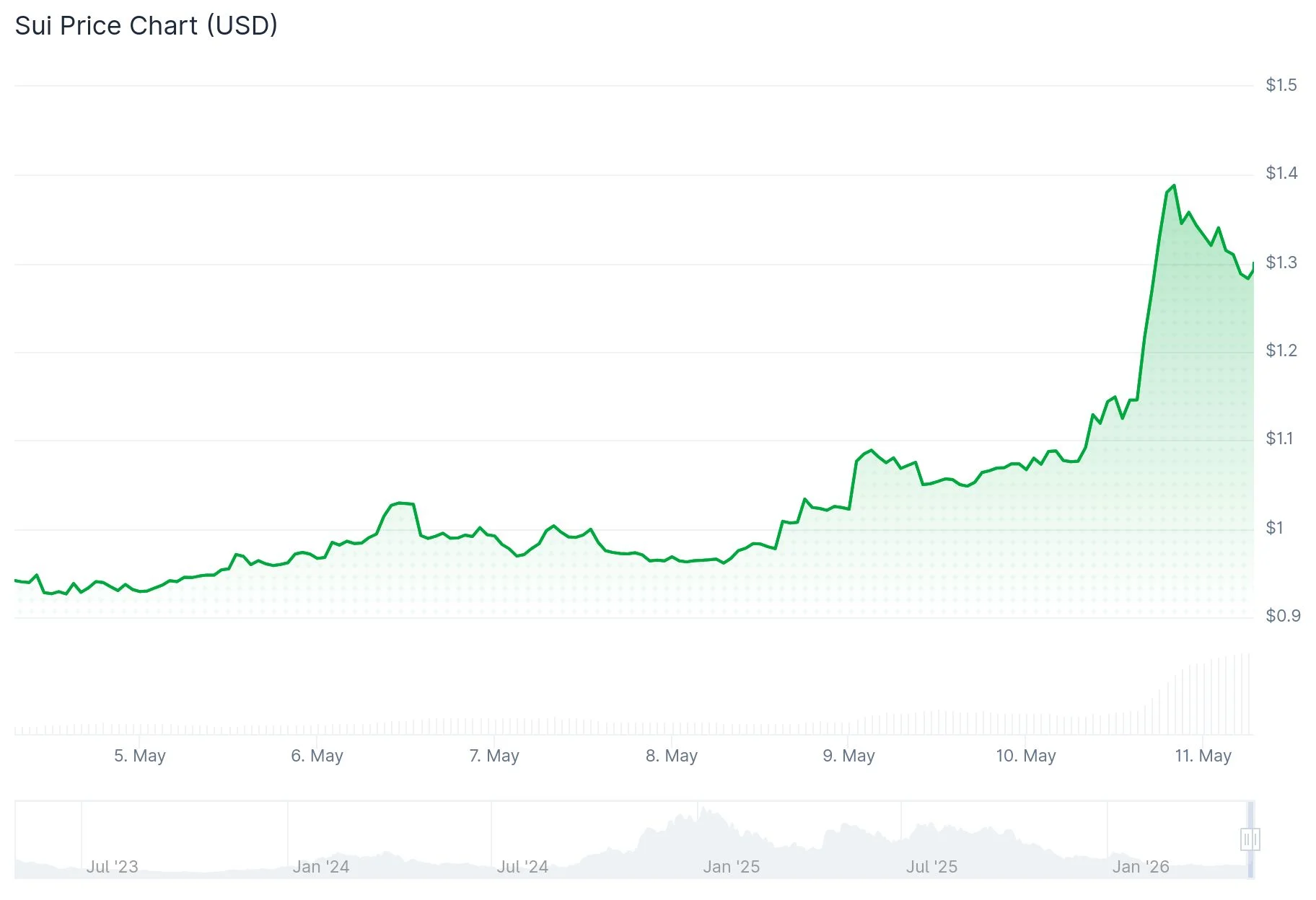
Sui (SUI) Token Rockets 50% Weekly on Institutional Staking and Privacy Tech Rollout

UK backs World Bank’s $1bn funding for Egypt




